Temporary drinking-water lines — bypass mains, camp and event supplies, emergency relief after floods — put hose in contact with water people will drink. Buyers rightly ask whether the hose is approved for it, and in much of the world the answer they look for is NSF/ANSI/CAN 61. It is a meaningful certification, but a narrow one, and the listing details matter. This guide explains what it covers, how to check it, and how it relates to the approvals used in the UK and Europe.
/01What NSF/ANSI/CAN 61 covers.
NSF/ANSI/CAN 61, Drinking Water System Components — Health Effects, is published by NSF International and adopted as an American National Standard and a National Standard of Canada. It covers products that contact drinking water — pipes and hoses, fittings, tanks, gaskets and seals, coatings and linings, process media and mechanical devices — and tests them for contaminants that leach into the water, judged against health-based limits. Certification is done by accredited third-party bodies: a review of the product’s formulation, laboratory testing, a factory inspection, and then ongoing audits and retesting, usually annually. A change of formulation must be reported.
/02What it does not cover.
- Pressure and performance. NSF 61 sets no requirements for pressure rating, burst or durability — check the hose’s own rating separately. See lay flat hose pressure ratings.
- Taste, odour and microbial growth. Not part of NSF 61 (they are part of the UK’s BS 6920 testing).
- Lead content. Assessed under the separate NSF/ANSI/CAN 372. Under the US Safe Drinking Water Act, “lead free” means no more than 0.25% lead, weighted average, across wetted surfaces.
- Installation hygiene. A certified hose still has to be stored clean, flushed and disinfected to the water authority’s procedure before use.
/03How to check a listing.
Certification belongs to a specific product, made at a specific plant, in specific sizes, for specific conditions. Look the product up in the certifier’s online listing — NSF’s database searches by company, trade name and product type — and check the exact row:
| Check | What to look for |
|---|---|
| Product and trade name | The exact hose you are buying, not a related product from the same maker |
| Size | Your bore is in the listed sizes |
| Water contact temperatureHighlighted | CLD 23 (cold, 23 °C), D. HOT (60 °C) or C. HOT (82 °C) — the listing must cover your water temperature |
| Footnotes and restrictions | Limits on surface area to volume, end use or conditions |
| Currency | The listing is current; certifiers advise confirming with them |
/04Where it is accepted.
In the United States, the major model plumbing codes require NSF 61-certified products, and a 2019 survey of state drinking-water agencies found 49 states requiring it through law, regulation or policy; in Canada, 11 of 13 provinces and territories. In the UK, the route is different: WRAS approval under the water fittings regulations, with non-metallic materials tested to BS 6920 (which adds odour and flavour, appearance and microbial growth), and for products used by water companies in public supply, approval by the Drinking Water Inspectorate under Regulation 31. In Europe, Germany, France, the Netherlands and Denmark harmonise their acceptance testing through the 4MS initiative, applied through each country’s own law. In the Gulf, requirements are set by each country’s water authority — ask the authority or your consultant which approval it accepts before you order.
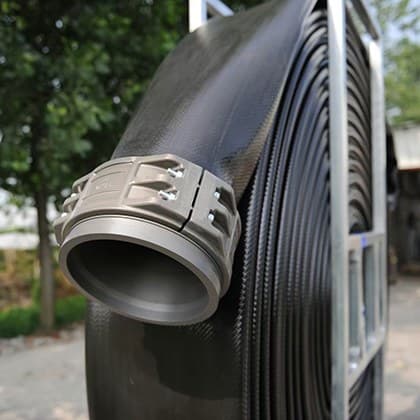
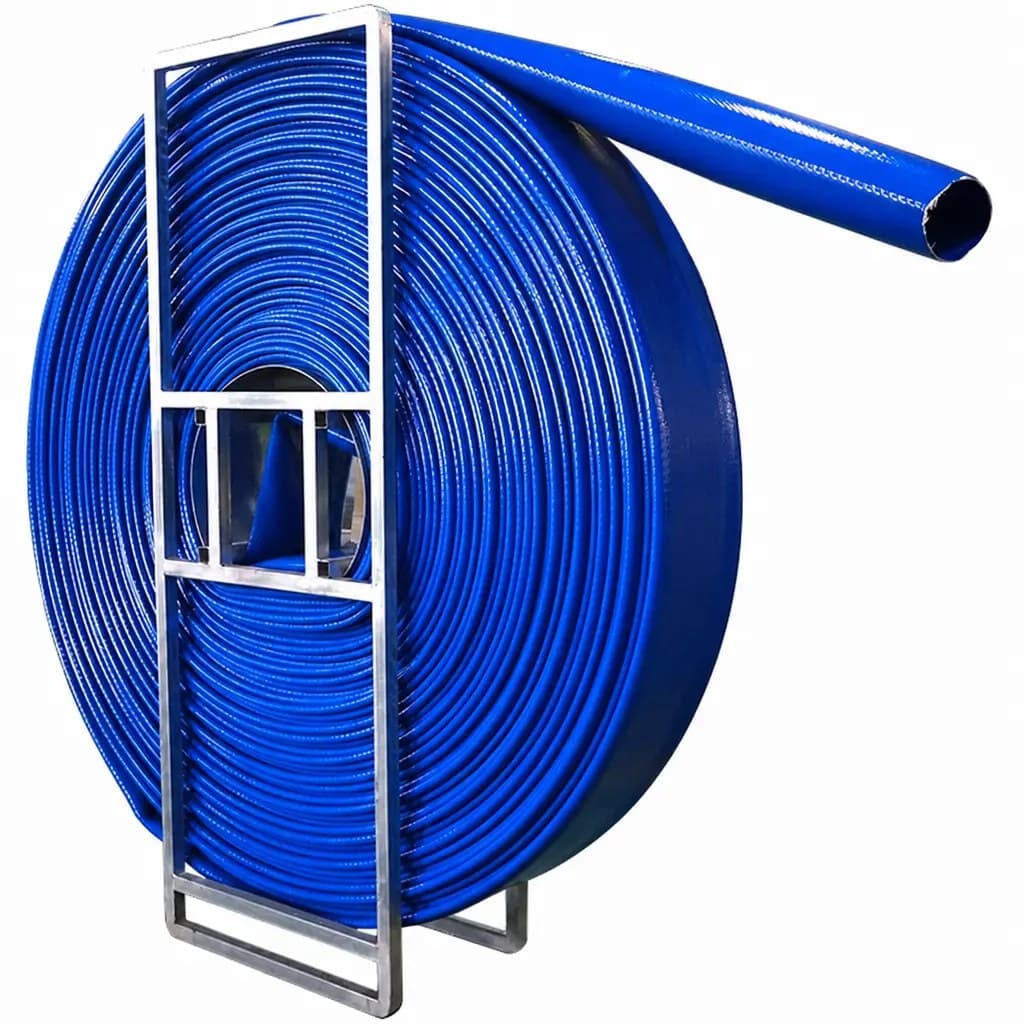
Our TPU drinking-water hose is blue for identification, and its manufacturer lists NSF/ANSI 61 certification; ask for the certificate with your quotation and check it as above. It is not a WRAS, Regulation 31 or 4MS-country approval — if your project needs one of those, tell us before ordering. For using it as a temporary main, see over-pumping and water main bypass.
Common questions
- Is NSF 61 the same as WRAS approval?
- No. NSF/ANSI/CAN 61 is the North American health-effects standard; WRAS approval and BS 6920 testing are the UK route, and Regulation 31 applies to products used in public water supply in England and Wales.
- Does NSF 61 mean the hose is lead free?
- Lead content is assessed separately under NSF/ANSI/CAN 372; the US limit is 0.25% weighted average on wetted surfaces.
- Does NSF 61 certify the hose’s pressure rating?
- No. It covers health effects only. Check the hose’s pressure rating separately.
- Can NSF 61 hose be used with hot water?
- Only if the listing covers that temperature — check the water-contact temperature code: cold (23 °C), domestic hot (60 °C) or commercial hot (82 °C).
- How do I verify an NSF 61 claim?
- Ask for the certificate, then look the exact product, size and temperature up in the certifier’s online listing.