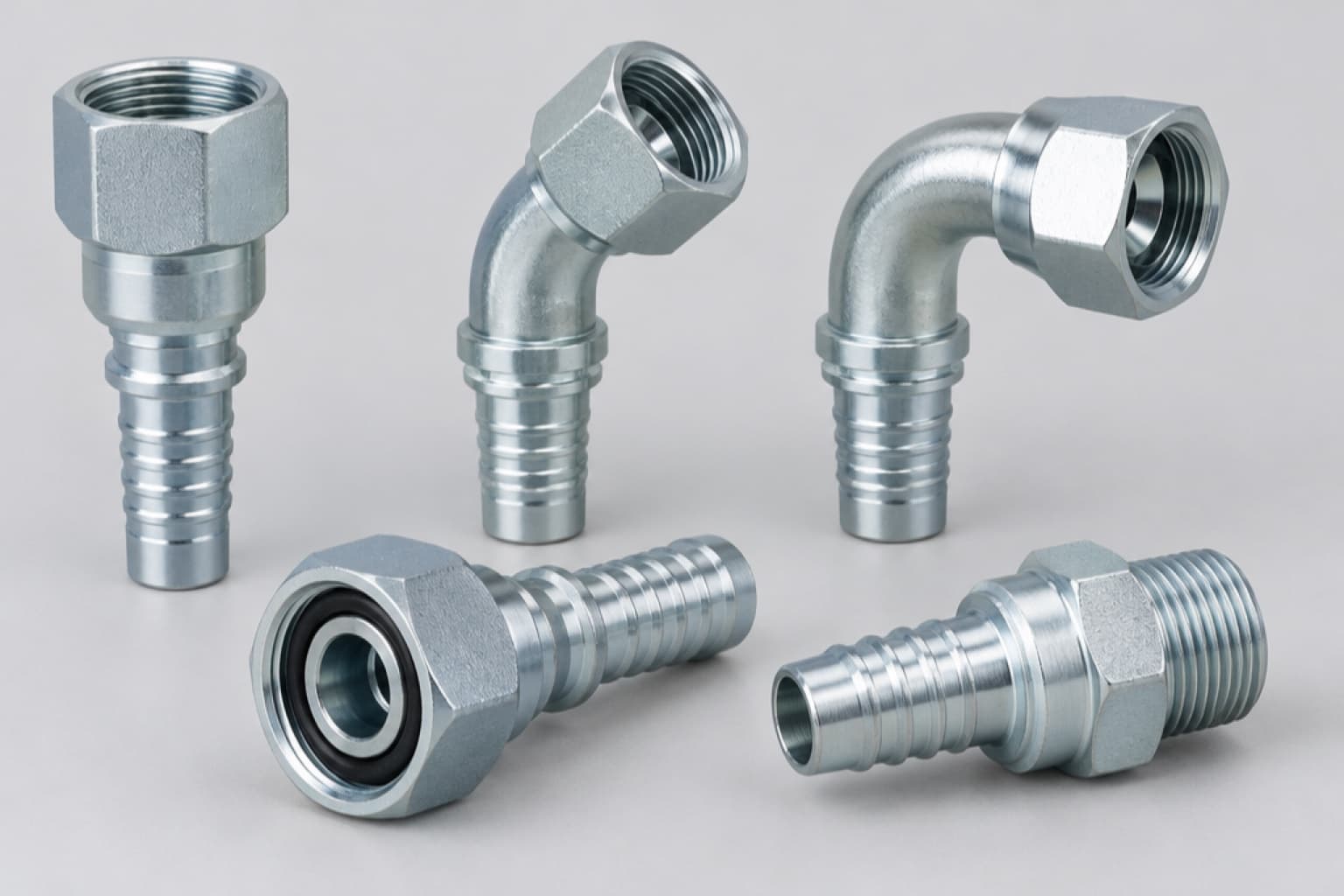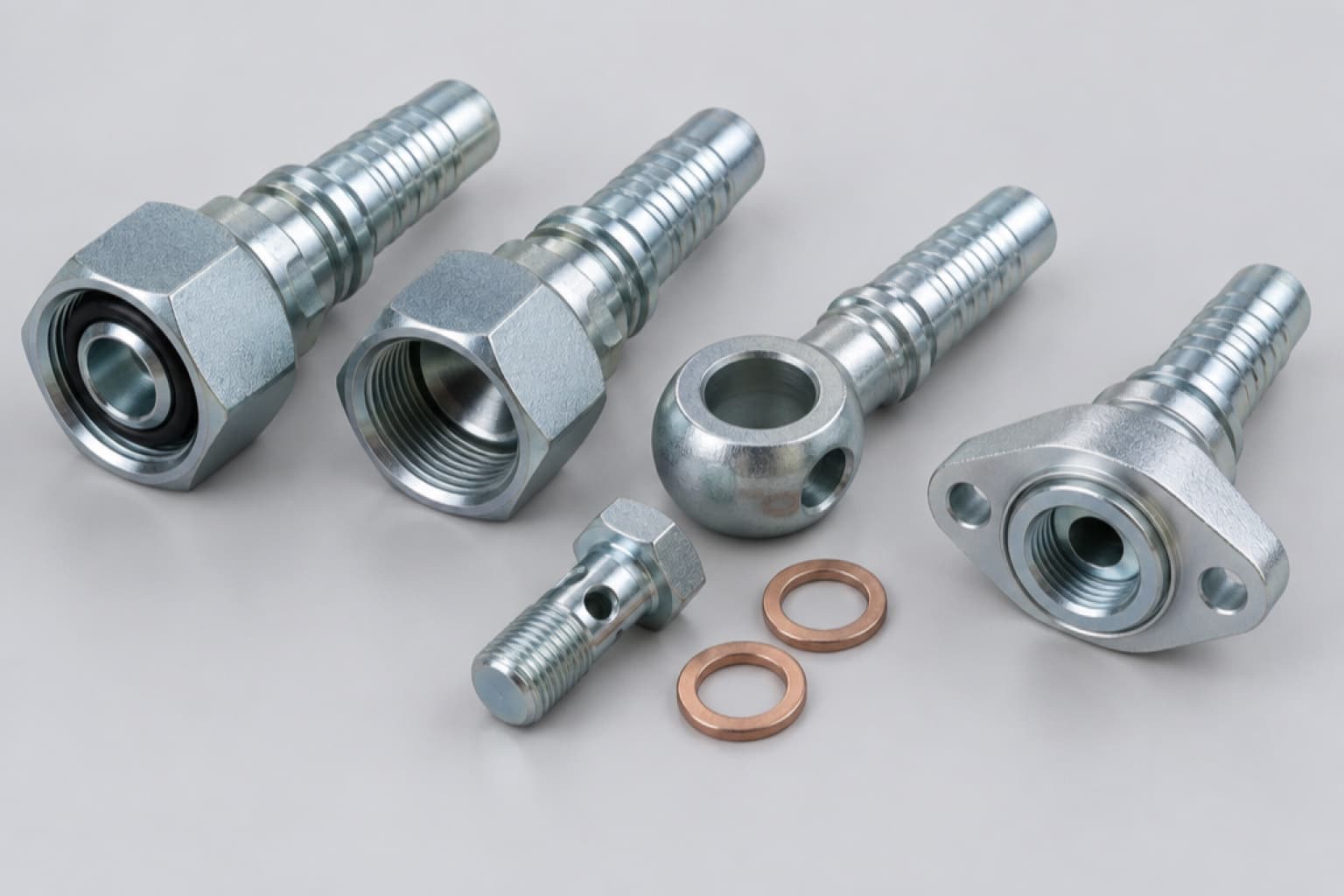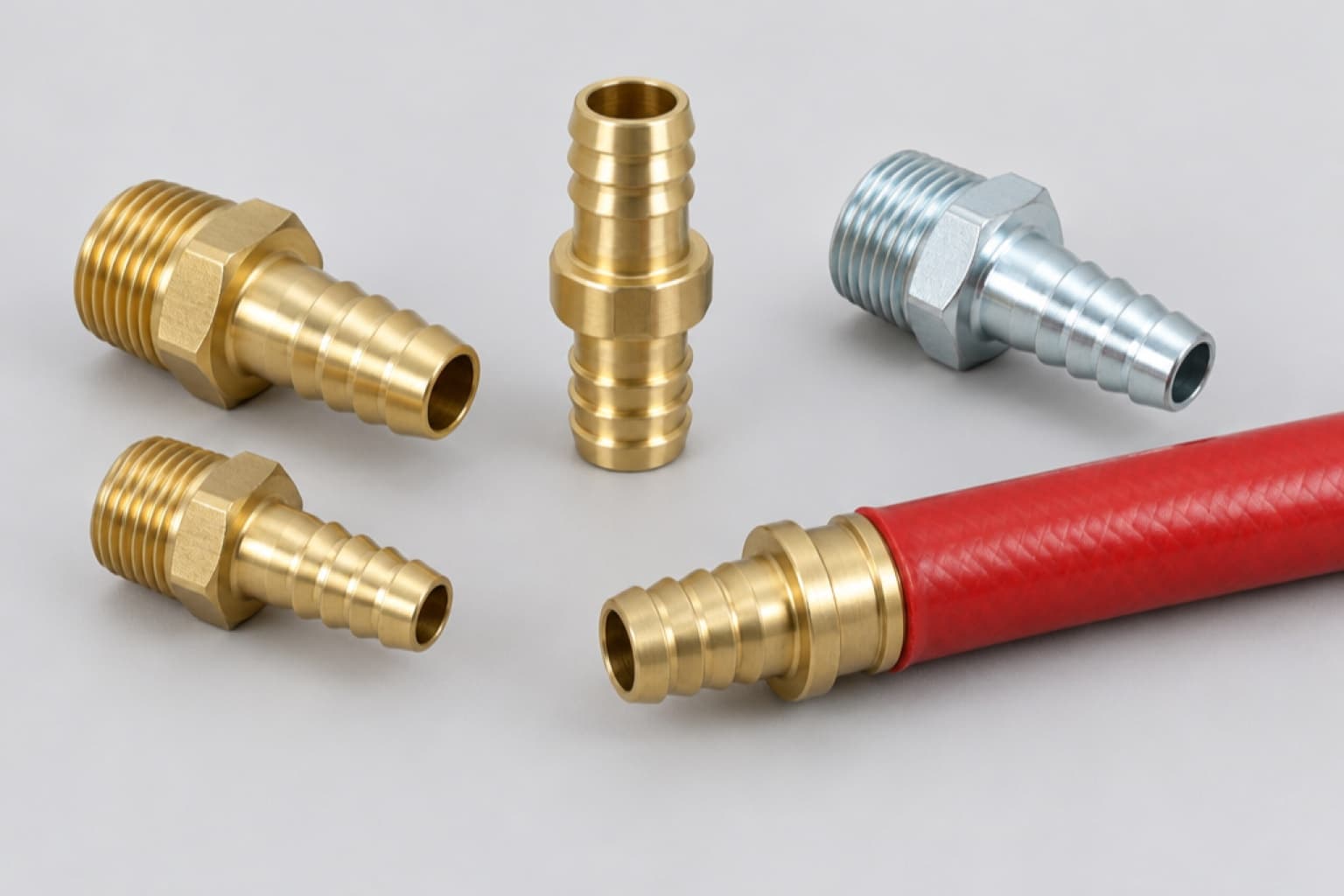
Not every hose on a machine is a pressure hose. Air, coolant, lubrication, fuel, case drains, tank returns and breathers all run at low pressure, and for those a barbed end is quicker, cheaper and repairable on site. The catch is that a barb is only as strong as the hose and the way it is held. This guide covers the brass and steel barb range and where each belongs; for stainless barbs see stainless hose barbs and push-on fittings.
/01Barb, push-lock or beaded barb.
| End | Holds the hose by | Needs | Typical use |
|---|---|---|---|
| Brass hose barb | Ridges inside the hose | A hose clamp | Air, water, fuel, coolant |
| Brass push-lock barbHighlighted | Barb profile gripped by self-gripping hose | Push-lock hose — no clamp | Air, lubrication, coolant, low-pressure oil |
| Steel beaded barb | A bead that resists pull-off | Push-on hose rated for the medium | Case drains, returns, breathers on hydraulic ports |
Parker describes its Push-Lok range as the self-grip hose system for low-pressure applications: no clamps or special tools, with fittings in brass, steel and stainless and DIN, BSP, SAE, JIC and ORFS ends. The grip depends entirely on the hose — push ordinary rubber or PVC hose onto a push-lock barb and you have a barbed joint with no clamp. Menders (elbows and tees with barbs on every leg) join or branch hose on site without a threaded fitting.
/02What sets the pressure.
| Size | Max working pressure | Minimum burst |
|---|---|---|
| -4, -6Highlighted | 350 psi (2.4 MPa) | 1,400 psi |
| -8, -10, -12 | 300 psi (2.1 MPa) | 1,200 psi |
| -16 | 200 psi (1.4 MPa) | 800 psi |
Parker’s other push-lock hoses — for high-temperature water, phosphate ester and fire-resistant fluids — are rated roughly 150 to 300 psi. No rating is published for the barb alone, because the hose fails first; our listings say the same: an assembly is rated to the lower of the hose and the end. On a clamped barb, use the hose maker’s figure for clamped connections and stay well below it where the line can be pulled or knocked.
/03The threaded ends.
The value of a barb fitting is its other end. Our brass barbs carry NPTF male (fixed and swivel, straight, 45° and 90°), NPSM female swivel with ball or gasket seat, SAE 45° flare male and female swivel, dual-seat female swivels, inverted flare male and female swivels, JIC 37° male and female swivel, BSPP female swivel, NPT female, tube shank and garden-hose threads. The steel beaded barbs carry NPTF and ORB male ends, the ORB with a nitrile O-ring. Each end seals the way its family does — tapered NPTF on the thread with sealant, SAE flare and JIC on their cones, ORB on its O-ring — so read brass flare fittings and ORB ports before mixing families.
Common questions
- What is the difference between a hose barb and a push-lock fitting?
- A plain barb needs a clamp to hold the hose. A push-lock barb is shaped to be gripped by push-lock hose, so it needs no clamp — but only with that hose.
- What pressure can a push-lock fitting take?
- The hose decides. Parker’s Push-Lok 801PLUS hose is rated 350 psi at -4 and -6, 300 psi at -8 to -12 and 200 psi at -16.
- Do push-lock fittings need clamps?
- Not with hose designed for them. On ordinary hose they behave like any barb and need a clamp.
- Can I use a barbed fitting for a hydraulic case drain?
- Yes, within the hose rating and if the drain line is genuinely low pressure — a steel beaded barb with an ORB end is made for that. Check the motor or pump maker’s case pressure limit.
- Brass or steel barbs?
- Brass for air, water, fuel and coolant and where corrosion matters; zinc-plated steel beaded barbs with ORB ends for low-pressure oil on hydraulic ports.
- What is a hose mender?
- A barbed elbow or tee with barbs on every leg, used to join or branch low-pressure hose without a threaded fitting.
What we list
Brass hose barbs and menders, brass push-lock barbs, and steel beaded barb adapters — including Tompkins-made parts:
- Brass Hose Barb × NPTF Male Swivel
- Brass Hose Barb × NPSM Female Swivel
- Brass Hose Barb × NPTF Male 90° Elbow
- Brass Hose Barb × NPTF Male 45° Elbow
- Brass Hose Barb × SAE 45° Flare Male
- Brass Hose Barb × Dual-Seat Female Swivel (SAE 45° / JIC 37°)
- Brass Hose Barb × SAE 45° Flare Female Swivel
- Brass Hose Barb × JIC 37° Female Swivel
- Brass NPSM Male × NPTF Male Ball-Seat Adapter
- Brass NPSM Male × NPSM Male Ball-Seat Adapter
- Brass Hose Barb Mender, 90° Elbow
- Brass Hose Barb Mender, Tee
- Brass Push-Lock Hose Barb × NPTF Male Swivel
- Brass Push-Lock Hose Barb × NPTF Male
- Brass Push-Lock Hose Barb × NPTF Male 90° Elbow
- Brass Push-Lock Hose Barb × NPSM Female Swivel, Ball Seat
- Brass Push-Lock Hose Barb × NPSM Female Swivel, Gasket Seal
- Brass Push-Lock Hose Barb × SAE 45° Flare Male
- Brass Push-Lock Hose Barb × SAE 45° Flare Female Swivel
- Brass Push-Lock Hose Barb × JIC 37° Male
- Brass Push-Lock Hose Barb × Dual-Seat Female Swivel (SAE 45° / JIC 37°)
- Brass Push-Lock Hose Barb × Inverted Flare Male Swivel
- Brass Push-Lock Hose Barb × Inverted Flare Female
- Brass Push-Lock Hose Barb × Tube Shank
- Brass Push-Lock Hose Barb × JIC 37° Female Swivel
- Brass Push-Lock Hose Barb × NPT Female
- Brass Push-Lock Hose Barb × Garden Hose Male
- Brass Push-Lock Hose Barb × Garden Hose Female Swivel
- Brass BSPP Female Swivel × Push-Lock Hose Barb
- Steel Beaded Hose Barb × NPTF Male 90° Elbow
- Steel Beaded Hose Barb × NPTF Male 45° Elbow
- Steel Beaded Hose Barb Mender Tee
- Steel Beaded Hose Barb × ORB Male 90° Elbow
- Steel Beaded Hose Barb × ORB Male 45° Elbow
- Steel Beaded Hose Barb × ORB Male Adapter
- Tompkins 4444 Hose Barb × Male NPTF Adapter
- Tompkins 4445 Hose Barb × Female JIC 37° Swivel Adapter
Hose barbs and push-lock fittings
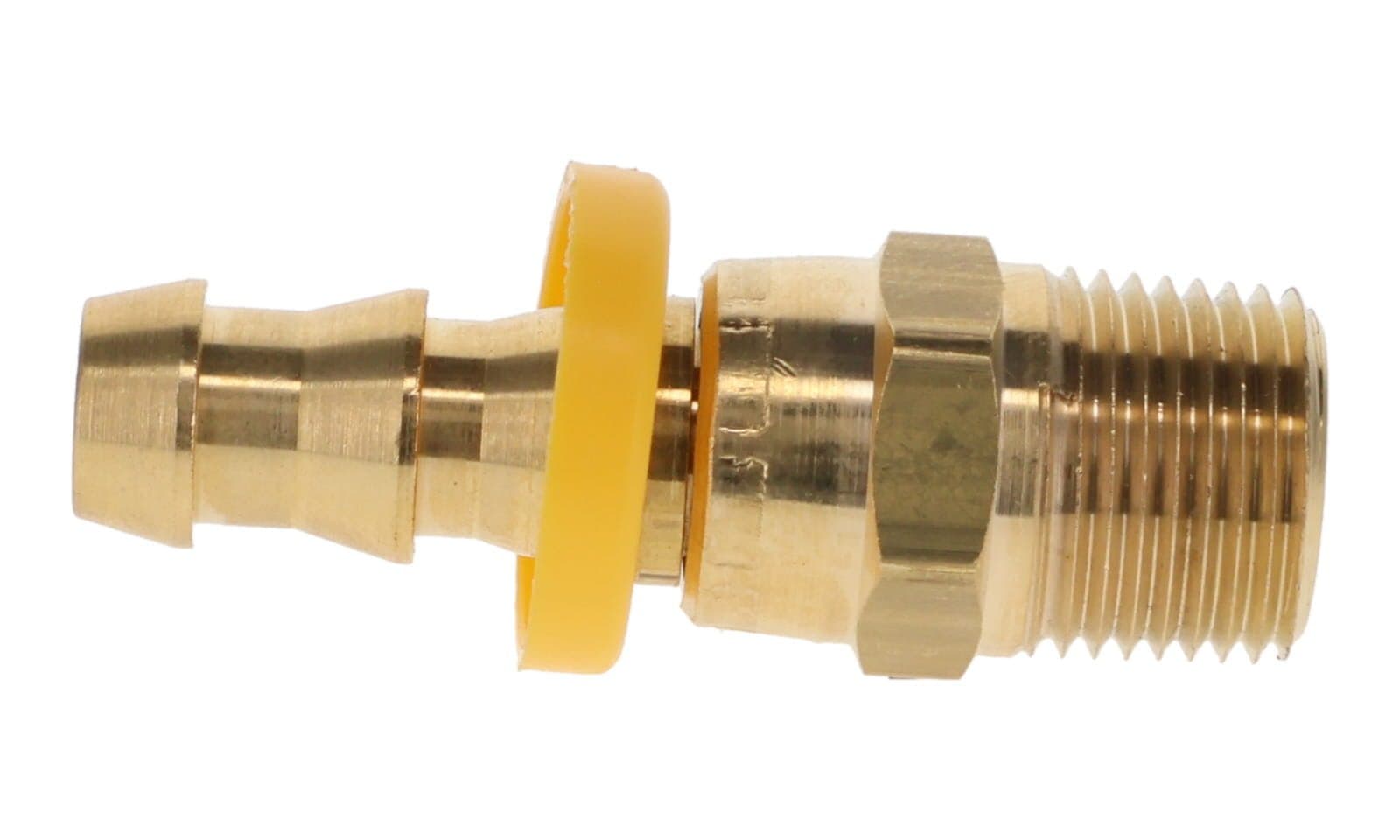 IH-BR-271Brass Push-Lock Hose Barb × NPTF Male SwivelIndus Hydraulics
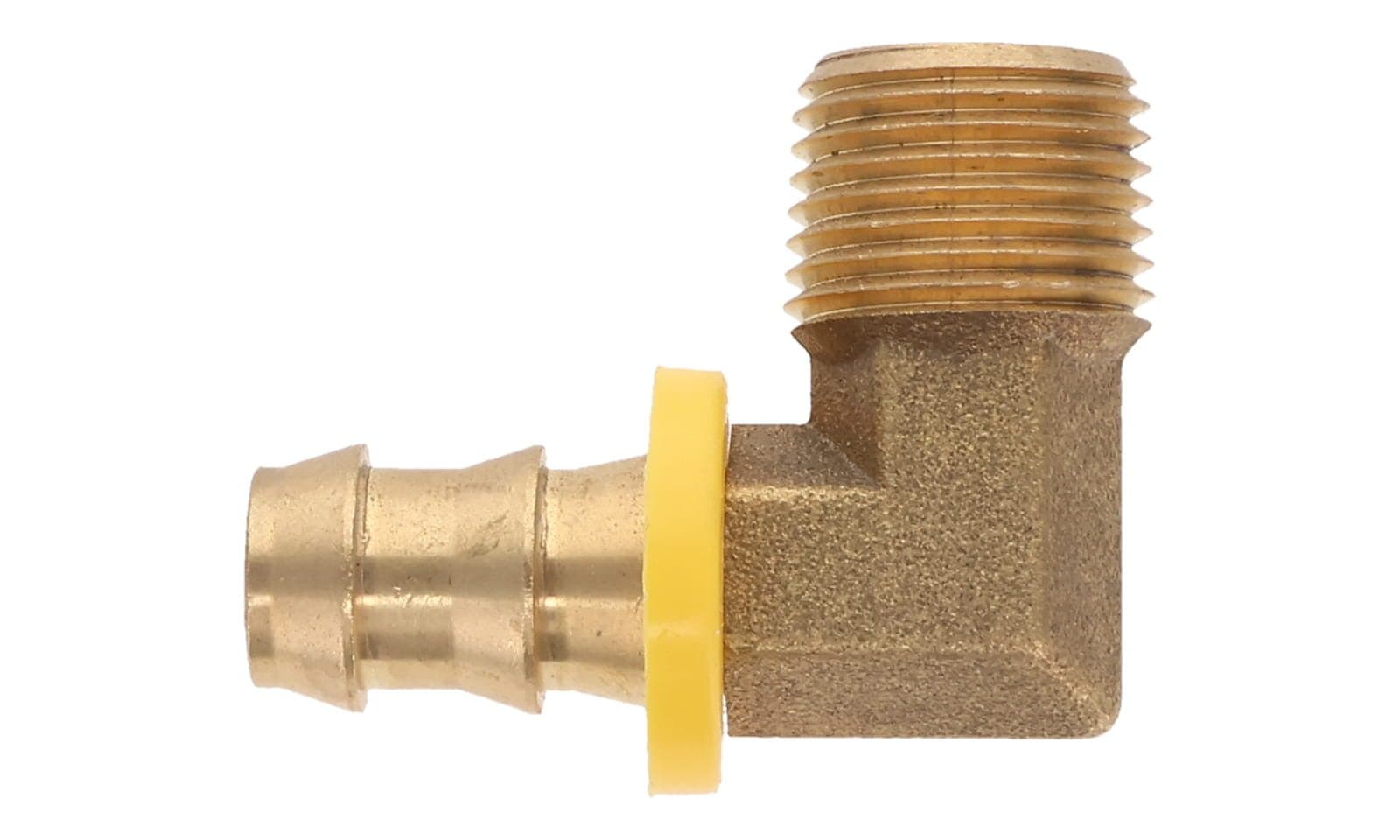 IH-BR-273Brass Push-Lock Hose Barb × NPTF Male 90° ElbowIndus Hydraulics
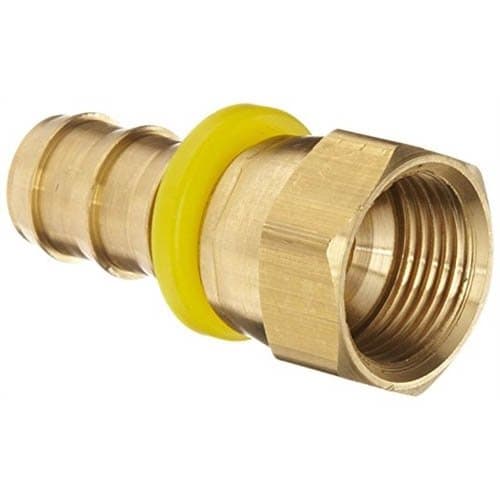 IH-BR-4311Brass Push-Lock Hose Barb × JIC 37° Female SwivelIndus Hydraulics
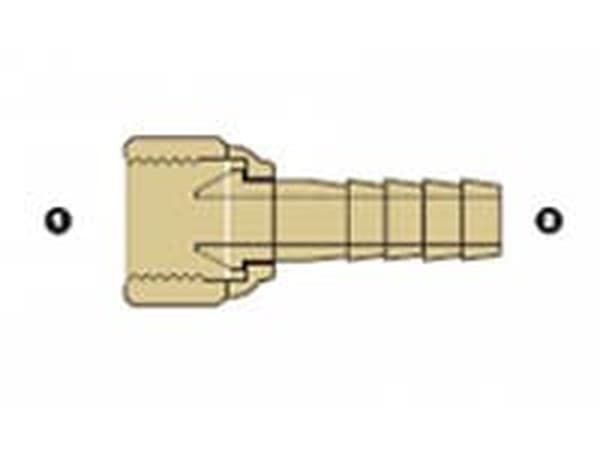 IH-BR-8900Brass BSPP Female Swivel × Push-Lock Hose BarbIndus Hydraulics
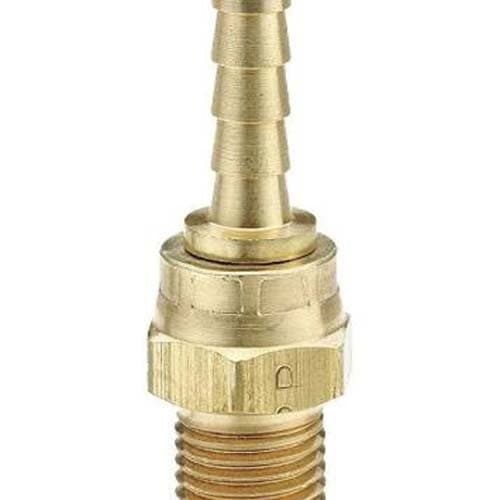 IH-BR-103Brass Hose Barb × NPTF Male SwivelIndus Hydraulics
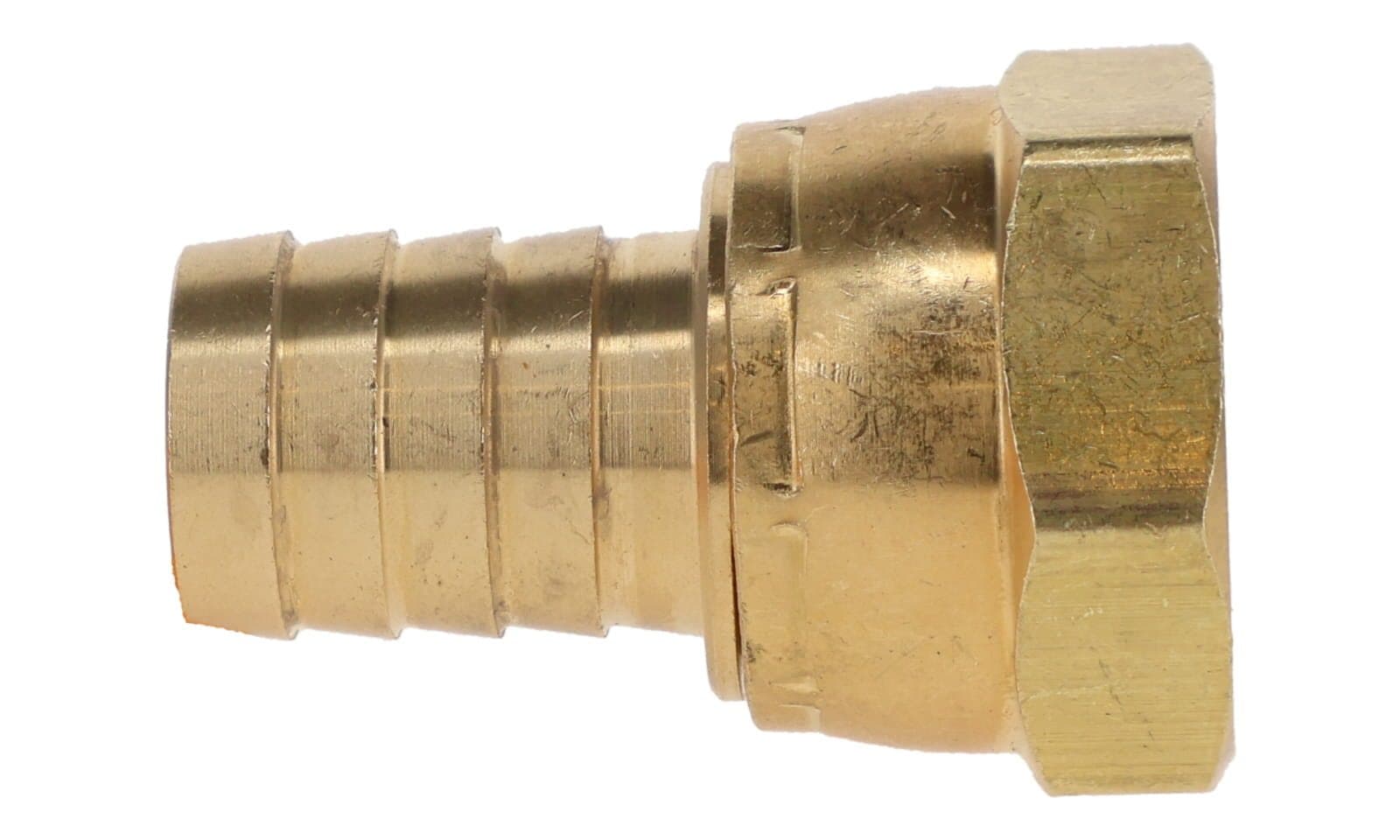 IH-BR-145Brass Hose Barb × JIC 37° Female SwivelIndus Hydraulics
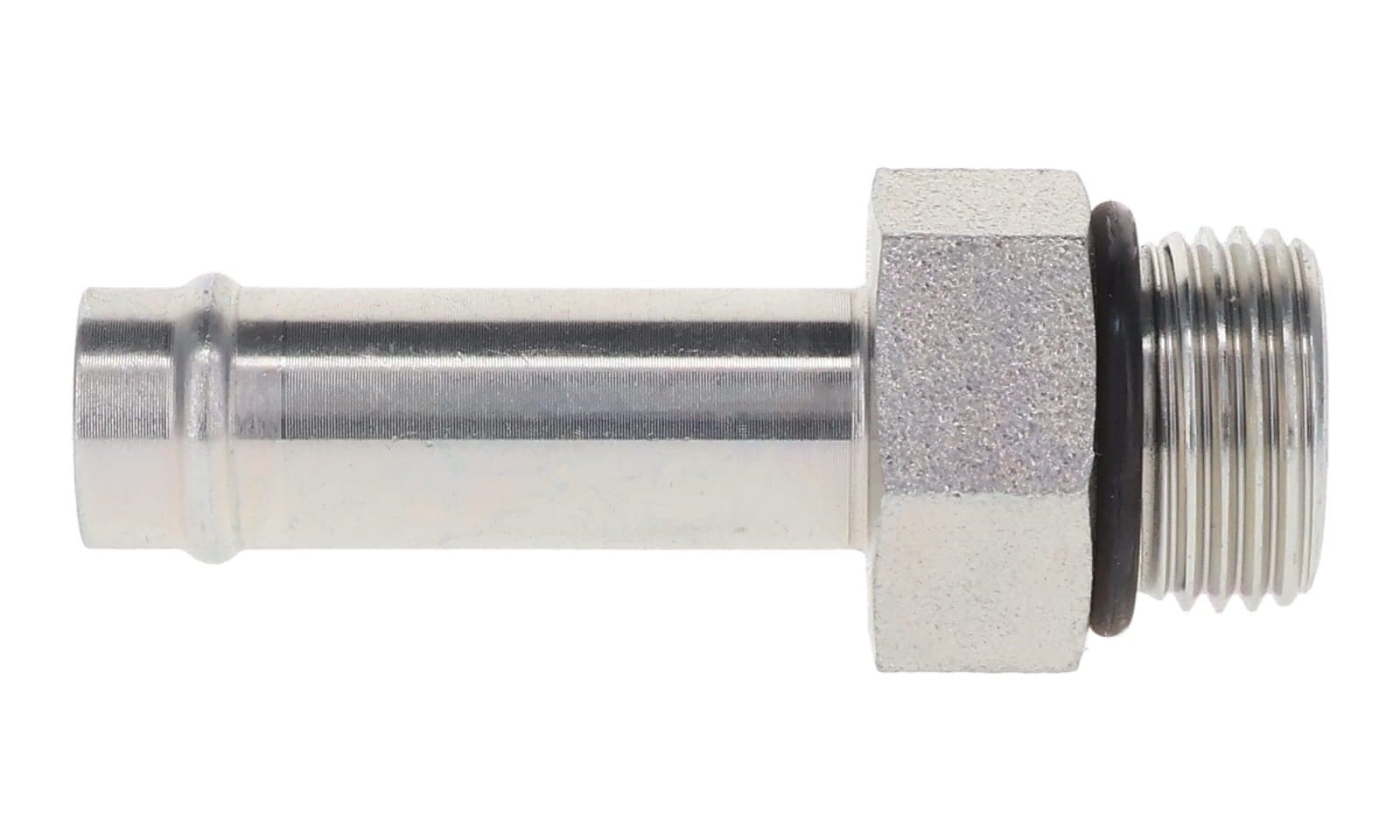 IH-ST-4604Steel Beaded Hose Barb × ORB Male AdapterIndus Hydraulics
- IH-ST-4601Steel Beaded Hose Barb × ORB Male 90° ElbowIndus Hydraulics
Sources
- 1.Parker. Push-Lok Hoses and Fittings — the self-grip hose system for low-pressure applications (B4480-B176). ↗