
Skip to content

Topic

Stainless steel fittings

Stainless is bought to stop one thing — corrosion — and lost to a dozen others: a 304 elbow in a 316 line, a cast 150# fitting where the pressure needed forged 3000#, a sanitary clamp with the wrong gasket, a stainless JIC nut that galled on its first make-up. These guides cover the standards, grades and details that decide whether a stainless line outlasts the plant or becomes the weakest part of it.

Articles
13
Reading
81 min
Updated
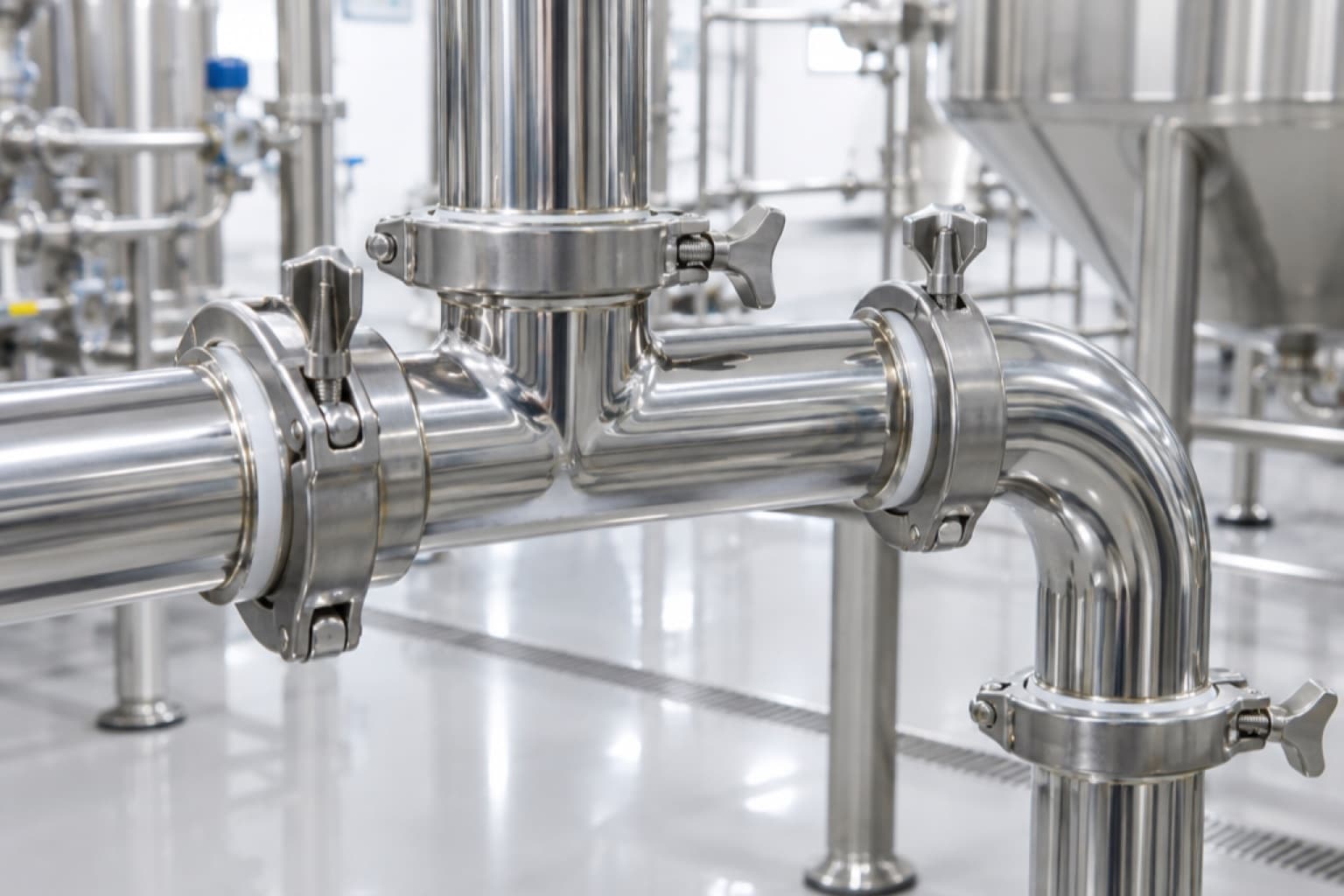
Polished sanitary tubing in a process plant joined by tri-clamp connections with white gaskets, a tee and an elbow

Start here

Sanitary tri-clamp fittings: sizes, clamps, gaskets, finishes and pressure ratings

A tri-clamp joint is two identical ferrules, a gasket and a clamp — and almost every problem with one comes from treating it as simpler than that. How clamp sizes map to tube OD (and why a 1" and a 1½" ferrule share a clamp), what the clamp is really rated for, which gasket survives steam, CIP or fat, what 3-A and ASME BPE actually cover, and how the other hygienic unions differ.

11 min read

Topic guide

The short version

Which stainless fitting family fits the job
FamilyJoinsTypical service
Butt-weld (B16.9)HighlightedPipe by full-penetration weldProcess, chemical and water piping
Forged threaded / socket-weld (B16.11)Pipe to 4" by thread or fillet weldHigher-pressure small-bore piping
Cast 150# threadedPipe by NPT threadWater, air and chemical at moderate pressure
Flanges (B16.5)Pipe to valves and vessels, boltedAnywhere a joint must come apart
Sanitary tri-clampPolished tube by clamp and gasketFood, dairy, beverage and pharma
Hydraulic adaptersHose, tube and portsOffshore, marine and washdown hydraulics

Specifying a stainless line?

Send the sizes, grade, end connections, pressure and temperature. We will quote the fittings, flanges and adapters in one grade, with mill certificates if the project needs them.

Plant-down? Call +971 52 2477942 — 24/7