

Every mooring line ends on a fitting, and the fitting has to hold whatever the line puts into it — in a gust, a passing ship's wash or a falling tide. Bollards come in a handful of shapes, and the shape follows from where the line comes from: along a deck, up from a quay, or at a steep angle from a high-sided ship.
/01Ship bollards.
| Type | Pattern standards we list | Sizes |
|---|---|---|
| Double bollardHighlighted | GB/T 554 Types A, B, C; JIS F 2001; DIN 82607; ISO 13795 Types A and B; NS 2584 | DN 100 to DN 800 (GB/T 554 Type A) |
| Cross bollard | GB/T 554 Types D, DH, DL, E; JIS F 2804; GB 10106 A and B; CB/T 3845 | 100 mm to 400 mm (CB/T 3845) |
| Welded inclined bollard | CB/T 169 | 8 sizes |
| Stainless cross bollards | GB/T 554 Type D; DR and DS types | 50 mm to 100 mm; 4" to 8" |
A double bollard is two hollow posts on a common base plate welded to the deck; a mooring line is belayed around both in figure-eights, so friction rather than a knot holds it. Cross bollards have a single post with a horizontal bar, which keeps the line from riding up and suits smaller lines and vessels. The pattern standard fixes the dimensions and the plate thicknesses, and the rating comes with the pattern and size — the CB/T 3845 cross bollards on our listings run from 50 kN WLL at 100 mm to 650 kN at 400 mm.
/02Dock bollards.
| Type | Head shape | WLL range |
|---|---|---|
| T-headHighlighted | Cross-shaped head that stops the line lifting off | 10 t to 200 t |
| Stag horn and twin horn | Two horns for several lines and steep angles | 10 t to 200 t |
| Single bitt | Single post | 20 t to 200 t |
| Inclined double bitts | Two inclined posts | 20 t to 200 t |
| R type, J type, K head | Other dock bollard head patterns | 10 t to 200 t; 10 t to 50 t; 15 t to 200 t |
Dock bollards are cast in steel or iron and anchored into the quay structure. Their heads are shaped so that a line led up at a steep angle from a high-sided ship, or around the bollard from several directions, stays on: the T-head's cross arm and the horns of stag horn and twin horn bollards do that job. They are rated by working load limit in tonnes, and the anchor bolts and the quay itself must carry the same load — a 200 t bollard on a quay edge that was designed for 50 t is a 50 t bollard.
/03Cleats, fairleads and chocks.
Small craft and workboats use smaller fittings. Our stainless cleats — boat cleats, rope cleats and blue water cleats, AISI 316 on most — take lines belayed by hand; Skene-type fairleads and straight chocks lead a line cleanly off the deck edge without chafe; and bow rollers carry an anchor rode over the stem. They are sized to the line and the boat rather than given a WLL on our listings, so treat them as boat hardware, not as rated lifting or towing points.
/04Choosing and ordering.
Shipboard fittings follow the vessel's mooring arrangement and its class requirements, so give the pattern standard, type and size from the drawing. For a quay, give the bollard type, the required WLL, the quay construction and the fixing method. Fenders for the same berth are covered in types of marine fenders, and the lines themselves in fibre rope materials compared.
Frequently asked questions
- What is the difference between a bollard and a bitt?
- The terms overlap. On our listings, bitts are single or paired posts on a quay, and bollards include both shipboard double and cross bollards and shaped dock bollards such as T-head and stag horn types.
- How are dock bollards rated?
- By working load limit in tonnes. Ours run from 10 t to 200 t depending on type. The fixings and the quay must carry the same load.
- What is a T-head bollard?
- A dock bollard with a cross-shaped head that stops the mooring line lifting off at steep angles. Ours are rated 10 t to 200 t WLL.
- Which standards cover ship double bollards?
- Our listings include GB/T 554, JIS F 2001, DIN 82607, ISO 13795 and NS 2584 patterns. Use the standard on the vessel's drawing.
Bollards and mooring fittings
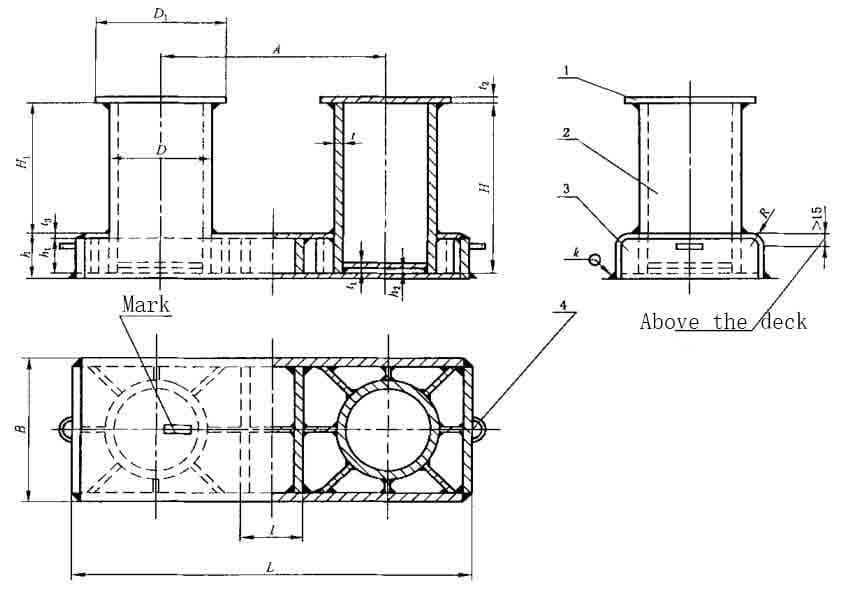 IH-LR-BM-MDBG55420Marine Double Bollard GB/T 554-2008 Type A
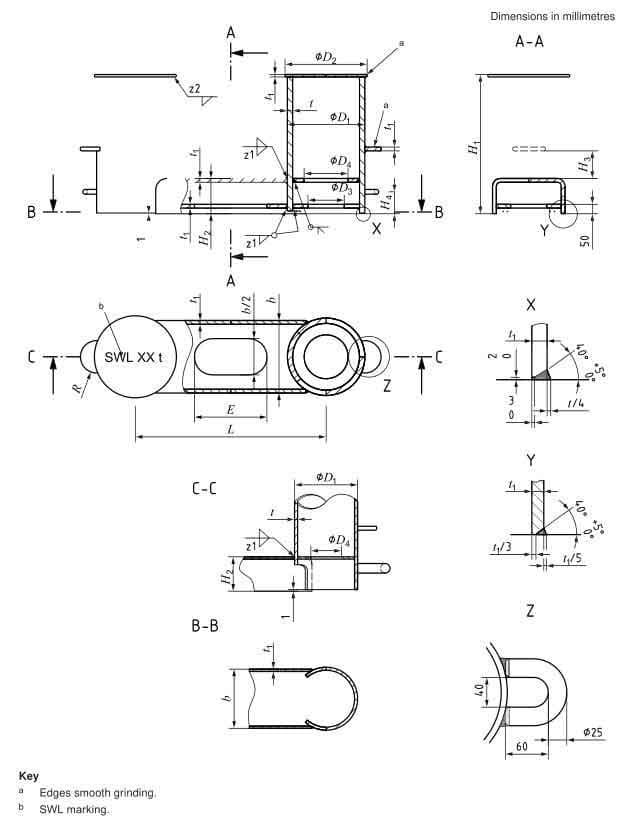 IH-LR-BM-MDBI137952Marine Double Bollard ISO 13795 Type A
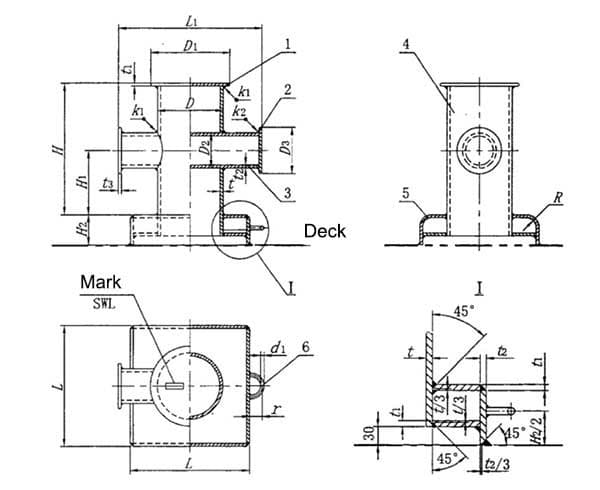 IH-LR-BM-MSCBCBT38Marine Single Cross Bollard CBT3845-2013
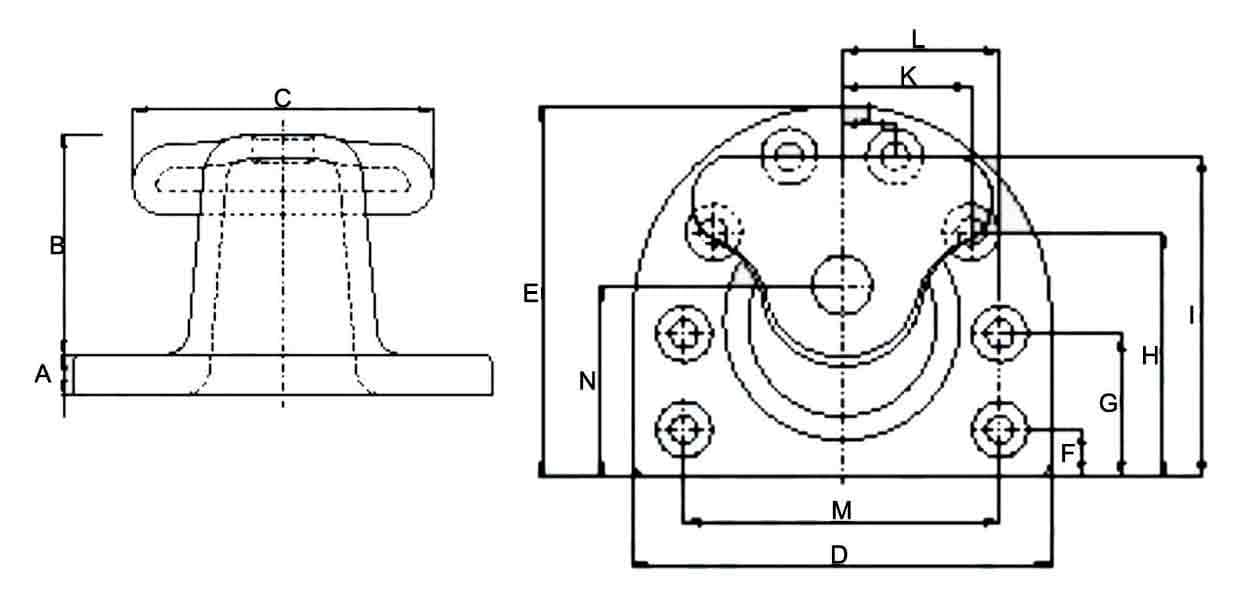 IH-LR-BM-THDBT Head Dock Bollard
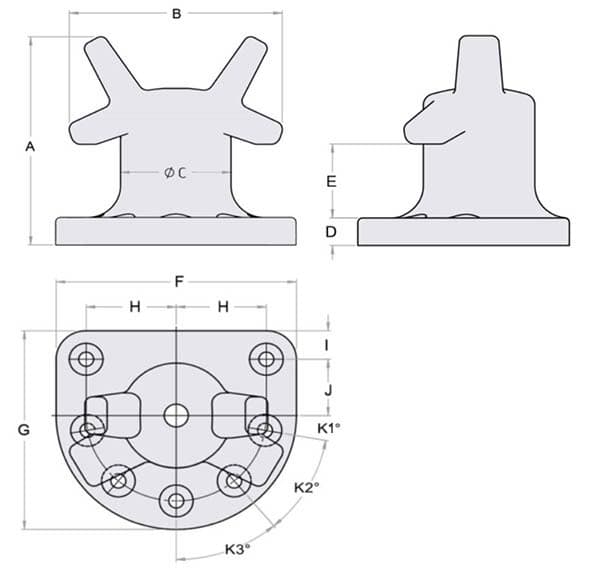 IH-LR-BM-SHBStag Horn Type Bollard
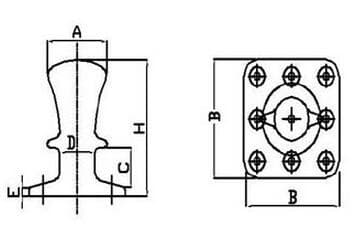 IH-LR-BM-SBBSingle Bitt Bollard
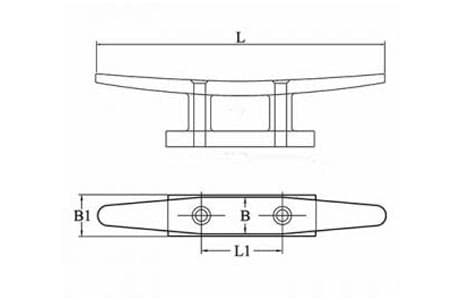 IH-LR-BM-SSBCStainless Steel Boat Cleat
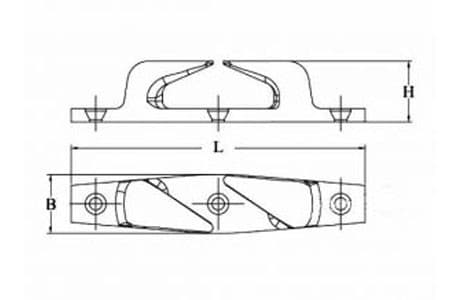 IH-LR-BM-SSSFStainless Steel Skene Type Fairlead