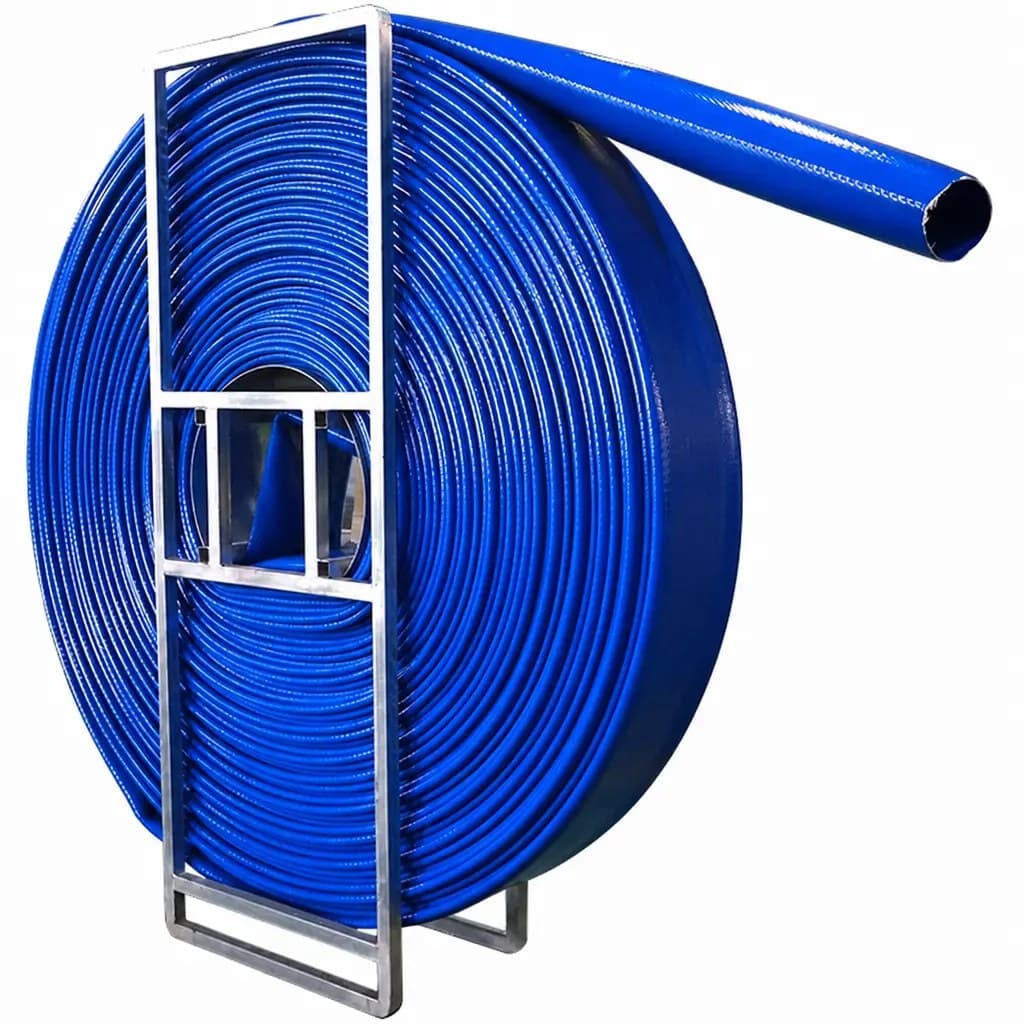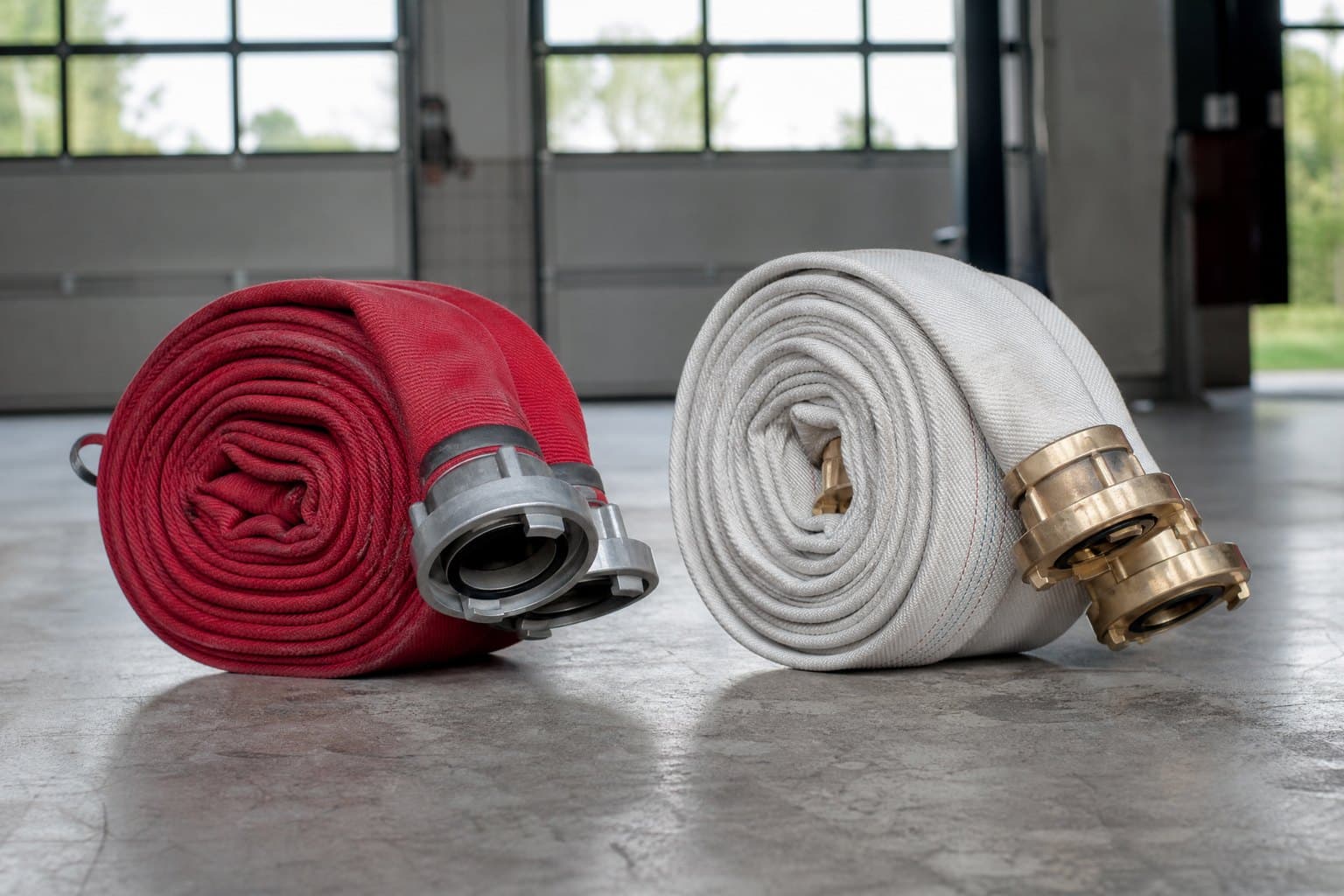
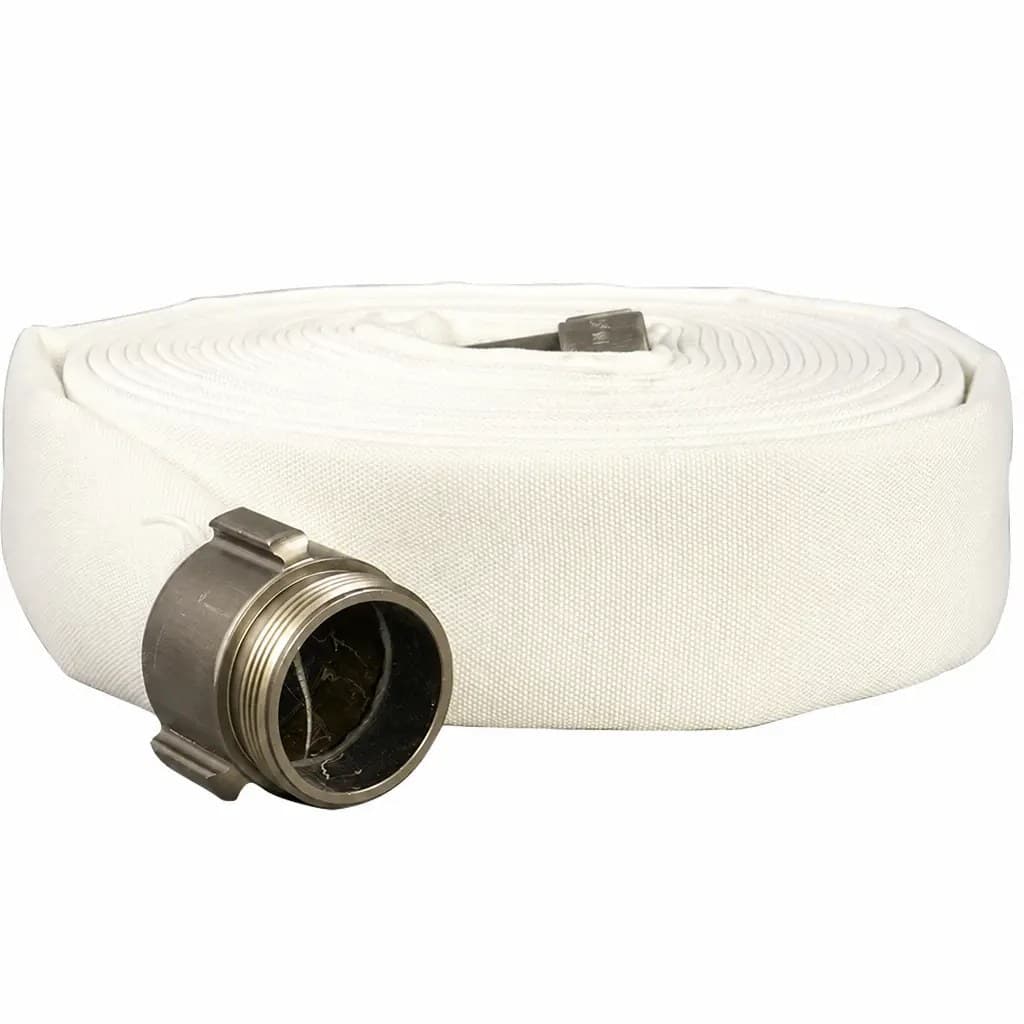
Lay a single jacket and a double jacket fire hose of the same bore side by side and the difference is easy to see: the double jacket hose is thicker, heavier and stiffer. Cut one open and the reason is obvious — under the outer woven jacket sits a second complete jacket, and only then the liner. Whether that second layer is worth carrying depends on who uses the hose, how often, and over what.
/01How they are built.
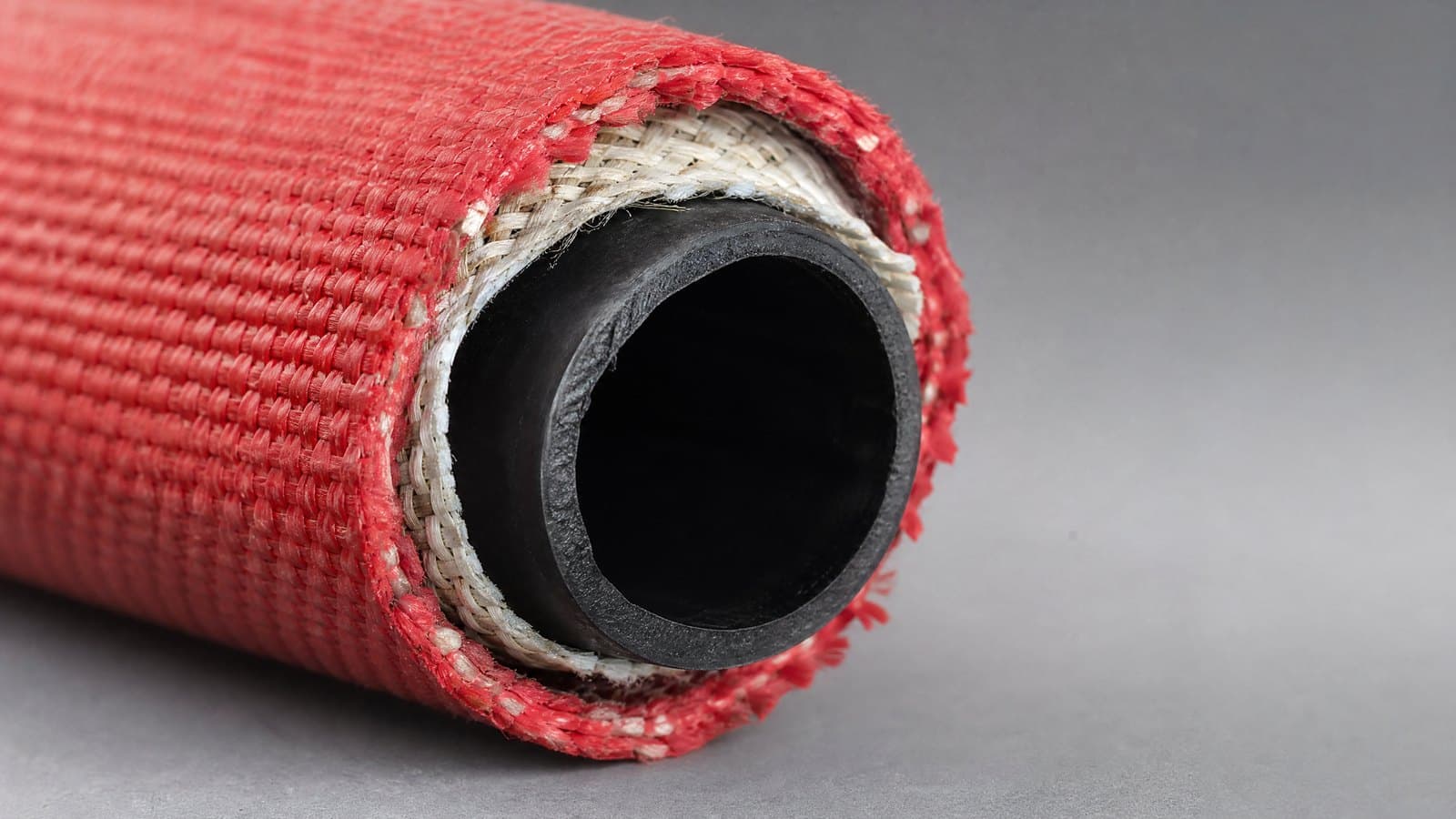
In both types the liner — EPDM, natural rubber or polyurethane — seals the water in, and woven polyester carries the pressure. A single jacket hose has one woven jacket over the liner; some are coated on the outside for abrasion and to stop the jacket soaking up water. A double jacket hose has two, one inside the other. The outer jacket takes the scuffing on concrete and gravel and protects the inner one; if the outer jacket is cut or burned through, the inner jacket keeps the hose in service. Our guide to fire hose liner materials covers what sits inside.
| Property | Single jacket | Double jacket |
|---|---|---|
| Construction | Liner + one woven jacket (coated or uncoated) | Liner + two woven jackets |
| Weight and roll size | Lighter, more compact | Heavier, bulkier |
| Abrasion and cut resistanceHighlighted | Moderate | High — the outer jacket is sacrificial |
| Service life under hard use | Shorter | Longer |
| Cost | Lower | Higher |
| Typical users | Building occupants, hose stations, forestry crews | Fire brigades, industrial fire teams, refineries |
/02How the standards classify hose.
Standards classify fire hose by use and performance, not by jacket count. In North America, NFPA 1961 — consolidated in 2024 into NFPA 1960 — covers attack hose for trained firefighters, occupant-use hose on standpipes for untrained occupants, forestry hose for wildland fires and large-diameter supply hose from the water source to the apparatus. Hose is marked with its service test pressure; the factory proof test is twice that. NFPA 1962 sets the in-service tests: at least 300 psi for attack and forestry hose and 200 psi for supply hose, or the marked service test pressure.
In Europe, EN 14540 covers non-percolating lay flat hose for fixed systems — 25 to 52 mm bore, up to 15 bar — the hose used in EN 671-2 wall-mounted hose systems for occupants. In the UK, BS 6391 covers non-percolating lay flat delivery hose for firefighting, also to 15 bar. In the GCC, the rules are set by civil defence: the UAE Fire and Life Safety Code requires double-jacket, synthetic-fibre reinforced hose on Class I standpipes and dry risers — the 65 mm outlets used by Civil Defence — while occupant hose racks carry 40 mm hose. See fire hose requirements in the UAE.
/03Which one, where.
Single or double jacket?
IfFire brigade or industrial attack line, dragged hard and used often?
Double jacket, EPDM or rubber lined.
IH-LF-FDEIfClass I standpipe or dry riser hose in a UAE building?
Double jacket, to the code and Civil Defence listing.
IH-LF-FDNIfMust it be light and compact, with oil and chemical resistance?
Double jacket, polyurethane lined.
IH-LF-FDUIfOccupant-use rack, cabinet or hose box?
Single jacket, polyurethane lined.
IH-LF-FRUIfPlant hose station or mill hose?
Single jacket, rubber lined.
IH-LF-FSNIfWildland or forestry work, carried over rough ground?
Single jacket forestry hose.
IH-LF-FFE
In practice most industrial sites in the Gulf use both: double jacket EPDM-lined hose on the fire water ring main and with the site fire team, and single jacket cabinet hose in buildings. For long storage in hot plant rooms, the liner matters as much as the jacket; for frequent dragging, the jacket matters most. Couplings are a separate choice — expansion ring couplings in NST, NPSH or BAT threads, or instantaneous and Storz patterns to match the hydrants and appliances on site.
Common questions
- Is double jacket fire hose better?
- For hard use, yes: it resists abrasion and cuts better and lasts longer. For occupant-use cabinets and carried forestry hose, single jacket is usually the better choice because it is lighter and more compact.
- Does double jacket hose carry more pressure?
- The second jacket adds strength and protection, but the rating depends on the specific hose. Check the marked service test pressure, or the standard it is made to.
- What fire hose does the UAE code require for dry risers?
- The UAE Fire and Life Safety Code calls for double-jacket, synthetic-fibre reinforced hose on Class I standpipes and dry risers, approved and listed by Civil Defence.
- What is occupant-use hose?
- Hose kept in cabinets or on racks for building occupants to use before the fire service arrives — usually single jacket and light. NFPA 1962 sets its own inspection and test intervals.
- Do these hoses carry an approval?
- No approval is published for these lines. Tell us the standard and authority listing you need and we will confirm what can be supplied against it.
Single and double jacket fire hose
 IH-LF-FDEDouble-Jacket Fire Hose, EPDM LinerIndus Hydraulics
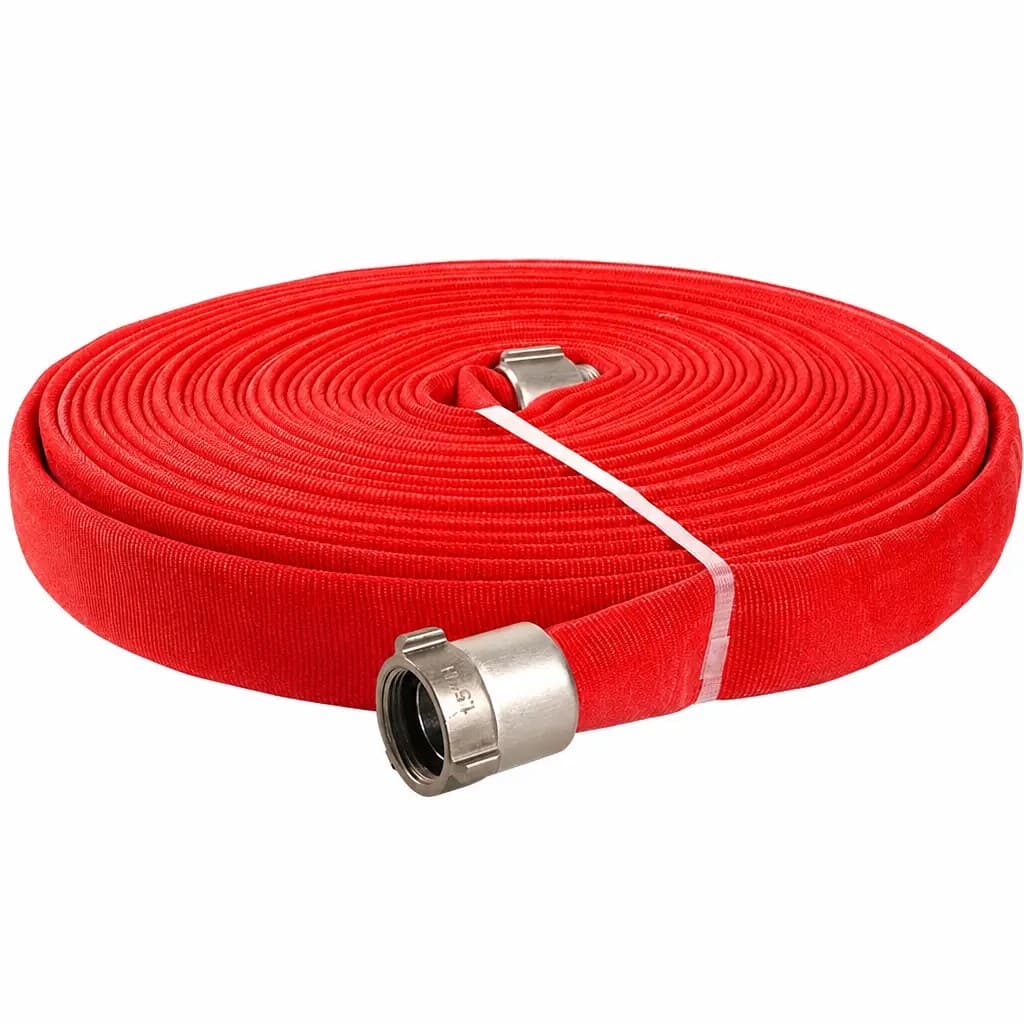
 IH-LF-FDNDouble-Jacket Fire Hose, Natural Rubber LinerIndus Hydraulics
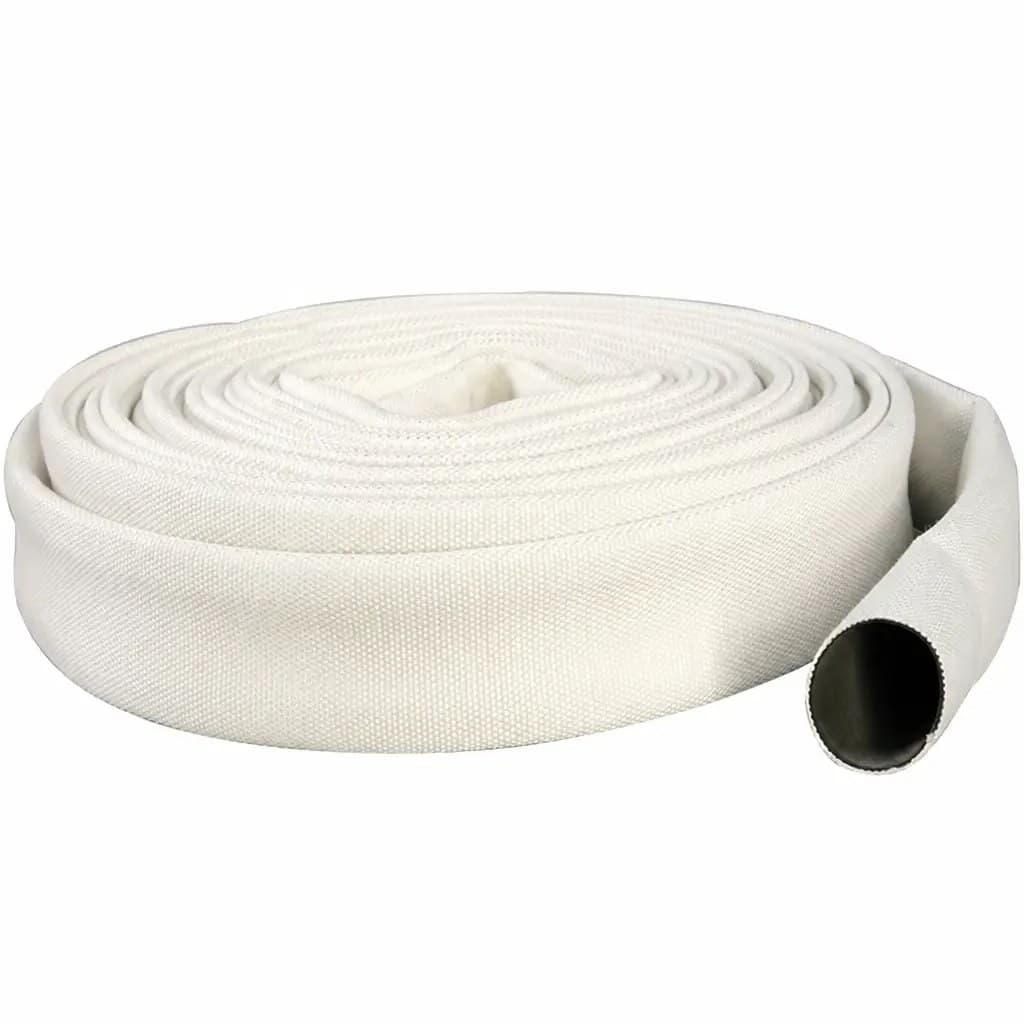
 IH-LF-FDUDouble-Jacket Fire Hose, Polyurethane LinerIndus Hydraulics
 IH-LF-FSNSingle-Jacket Fire Hose, Natural Rubber LinerIndus Hydraulics
 IH-LF-FSUSingle-Jacket Fire Hose, Polyurethane LinerIndus Hydraulics
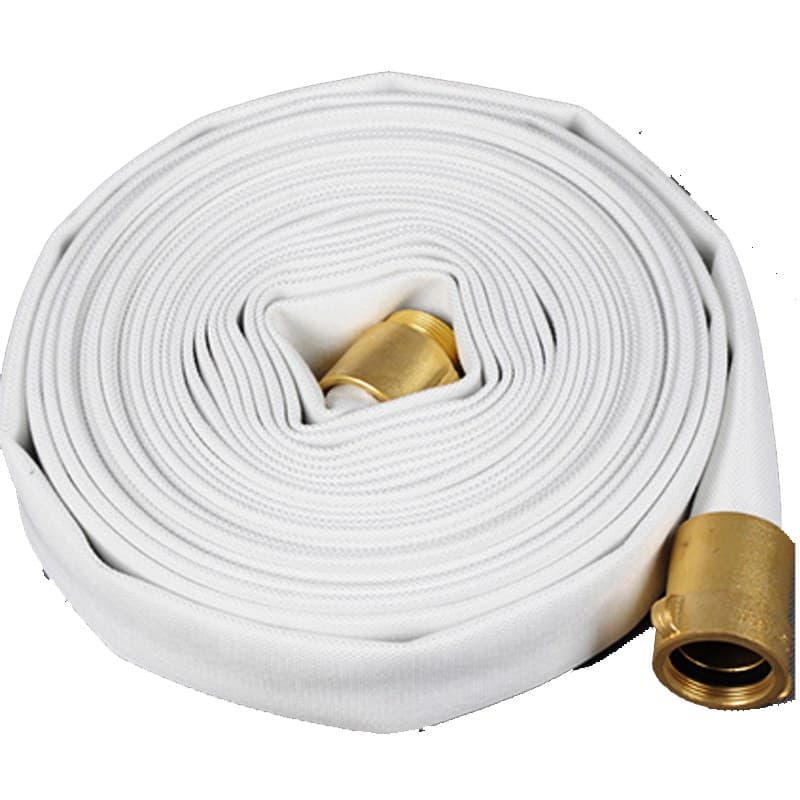 IH-LF-FRURack and Cabinet Fire Hose, Polyurethane LinerIndus Hydraulics
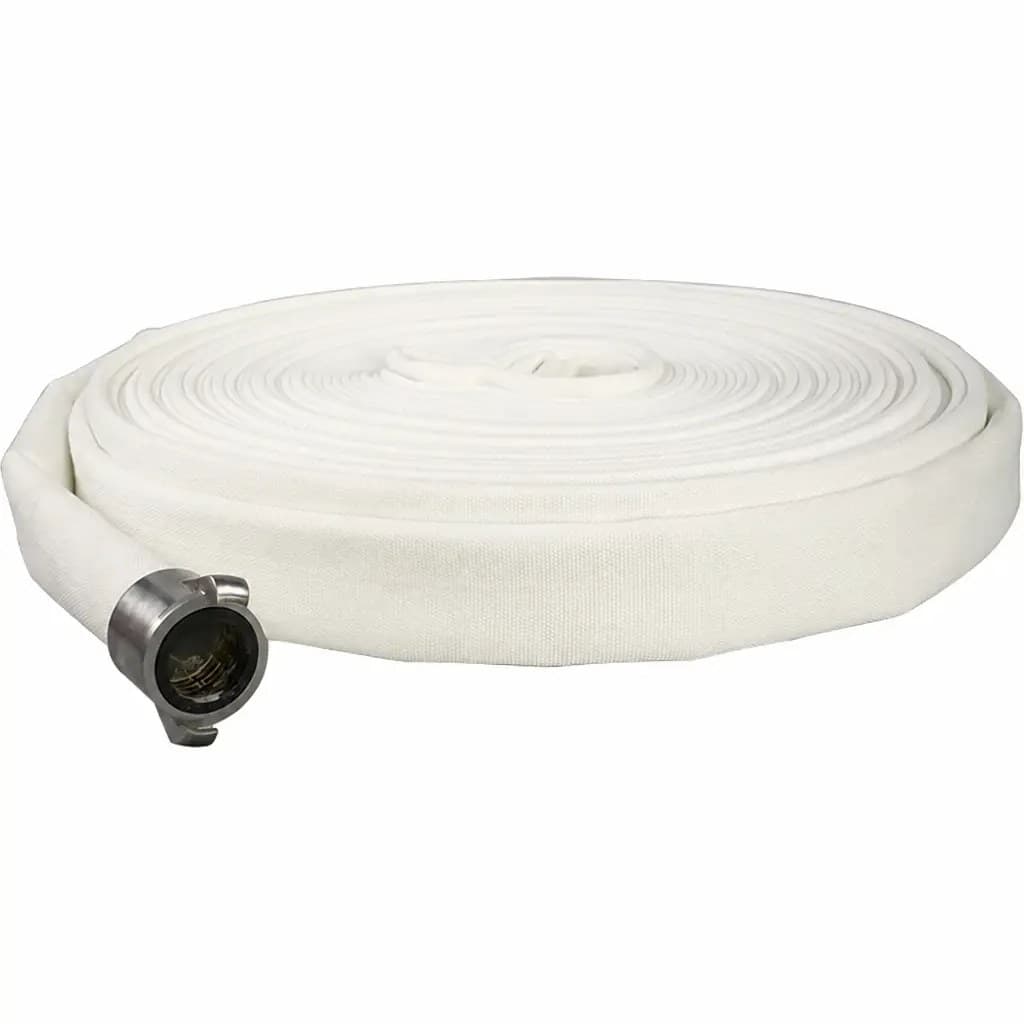 IH-LF-FFEForestry Fire Hose, Single Jacket, EPDM LinerIndus Hydraulics
 IH-LF-CERExpansion Ring Fire Hose Coupling, 1" to 2-1/2"Indus Hydraulics