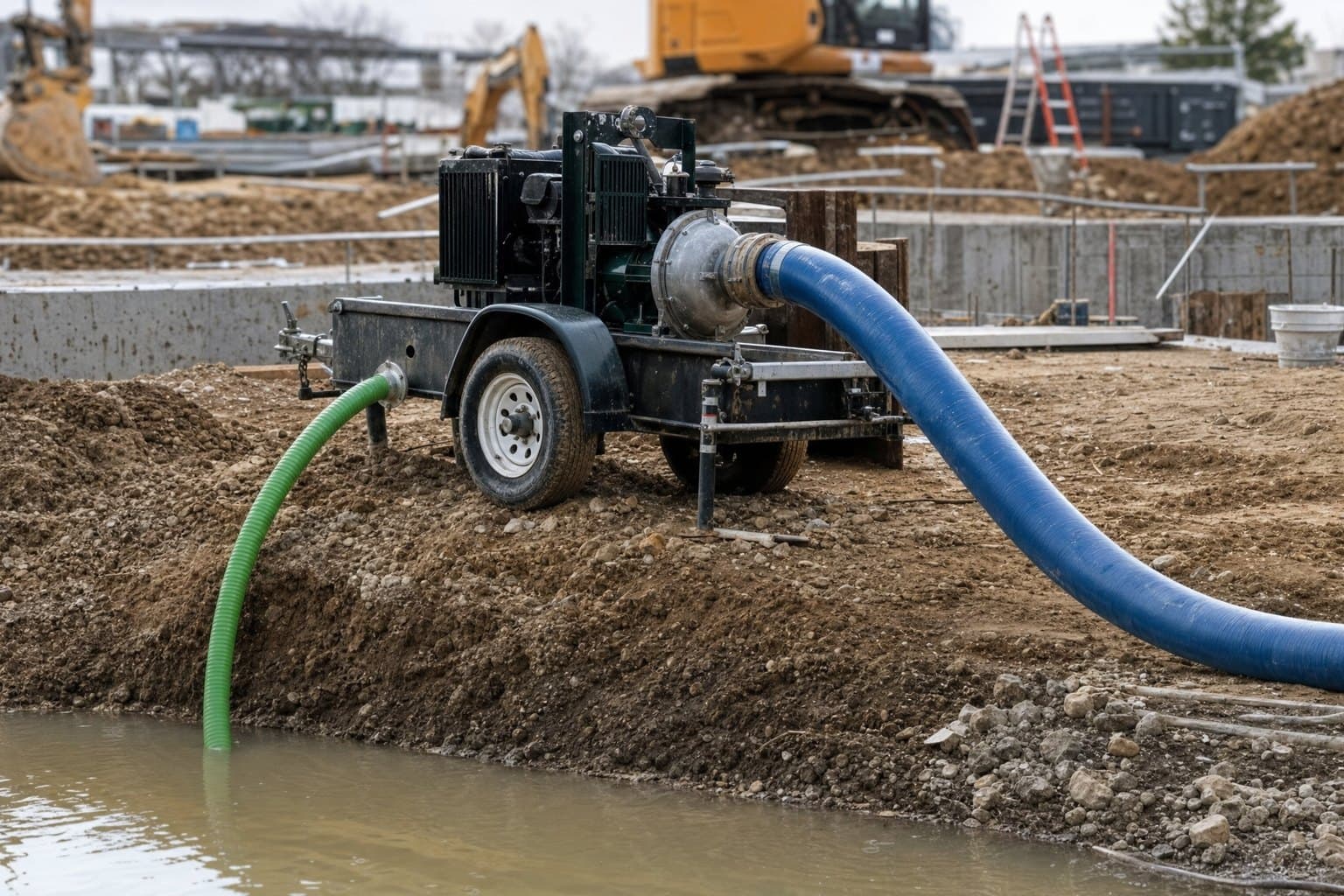
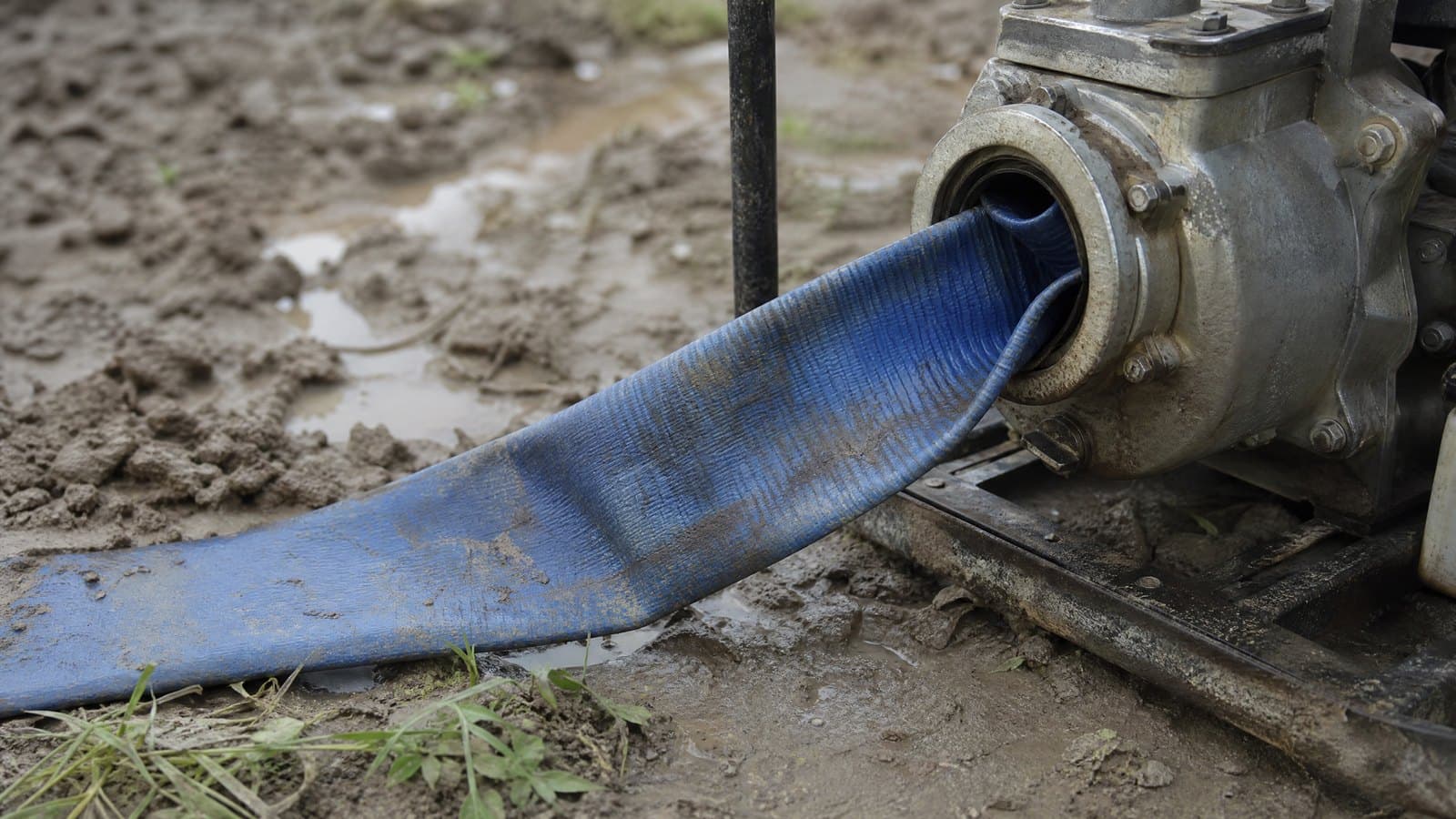
It is one of the most common mistakes on a dewatering job: a pump arrives with a coil of lay flat, someone puts a length on the inlet as well as the outlet, and the pump runs dry within seconds. The hose is not faulty. It is doing exactly what lay flat hose does under vacuum — and it is the reason every lay flat system includes a second, very different kind of hose.
/01Why lay flat collapses on suction.
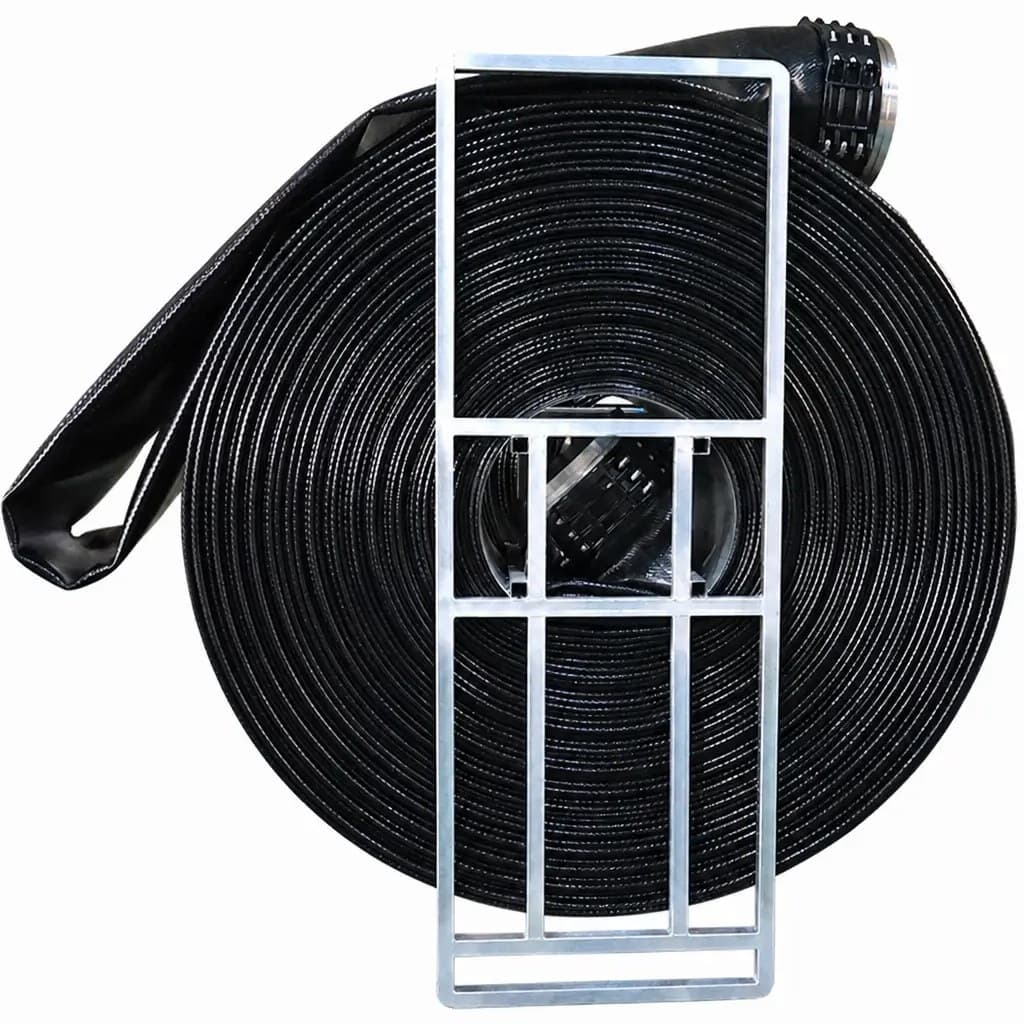
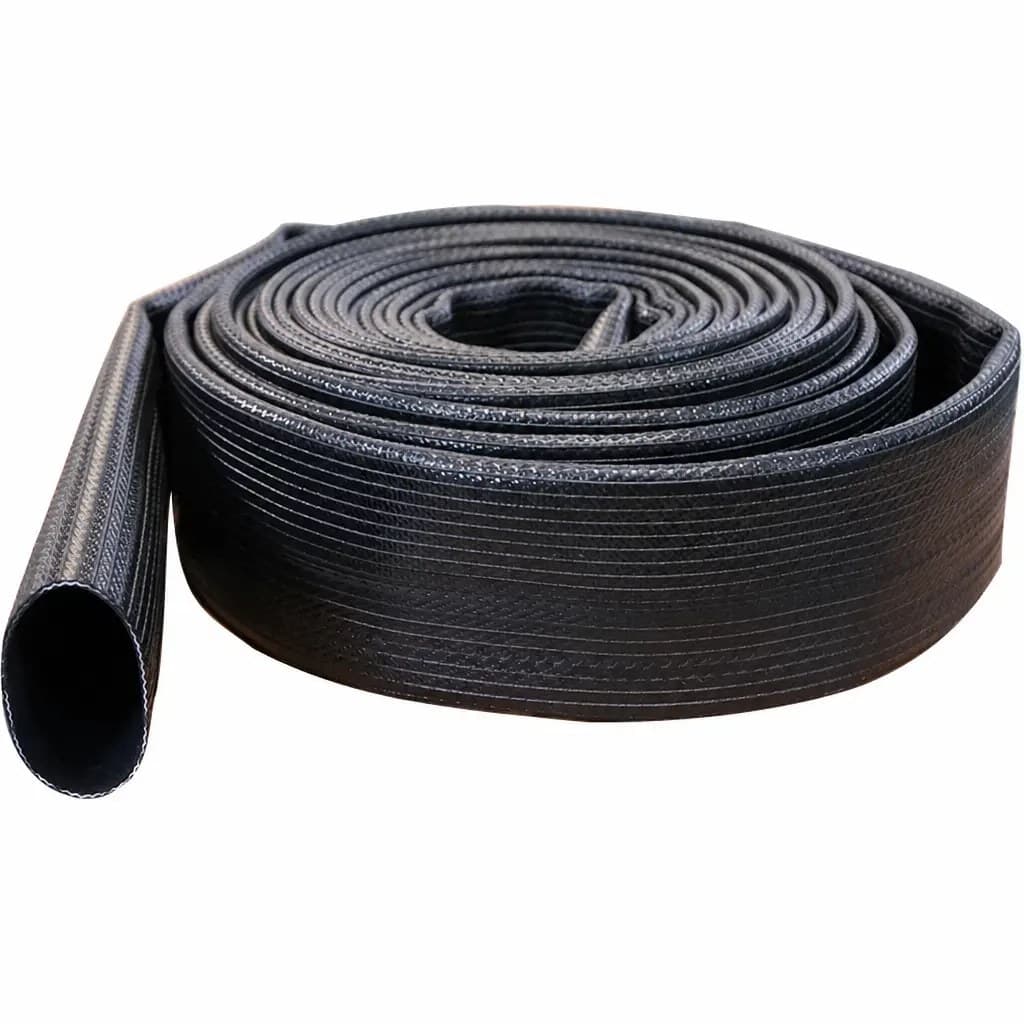
A pump does not pull water. It lowers the pressure in its inlet, and the atmosphere pushes water up the suction line to fill the gap. That means the suction hose spends its working life with more pressure outside than inside — the opposite of a discharge hose. Lay flat hose is a woven tube that relies on internal pressure to hold its shape; with the pressure reversed, there is nothing to stop it collapsing.
/02What a suction hose does differently.
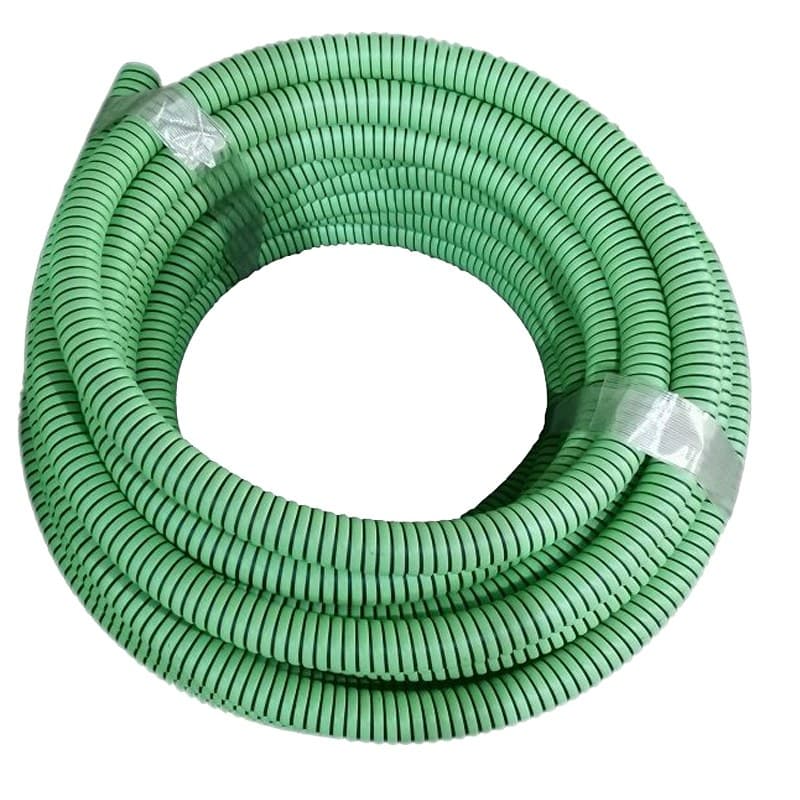
A suction hose carries a rigid helix — a spiral of hard plastic or steel wire — built into its wall. The helix holds the bore open against external pressure while the wall between the turns keeps the hose flexible. Our EPDM/PE suction hose uses a rigid polyethylene helix in an EPDM/PE compound and is rated for vacuum at every size:
| Bore | Vacuum rating | Working pressure | Min bend radius |
|---|---|---|---|
| 1" | 0.95 bar | 3.0 bar | 60 mm |
| 1-1/2" and 1-3/4" | 0.95 bar | 2.4 bar | 80 to 105 mm |
| 2" | 0.95 bar | 2.4 bar | 125 mm |
| 3" | 0.88 bar | 2.1 bar | 180 mm |
| 4" | 0.88 bar | 1.7 bar | 300 mm |
| 6" | 0.81 bar | 1.4 bar | 510 mm |
Notice the trade: the suction hose carries little positive pressure. It is built to resist collapse, not to carry a pumped main — which is exactly why the discharge side should be lay flat or another pressure hose.
| Property | Rigid-helix suction hose | Lay flat hose |
|---|---|---|
| Holds vacuumHighlighted | Yes | No — collapses |
| Positive pressure | Low (1.4 to 3 bar in our suction hose) | High (10 to 40 bar transfer and riser hose) |
| Shape when empty | Round | Flat |
| Typical length | Short — up to about 30 m | Long — up to 400 m per length |
| Where it goes | Pump inlet | Pump outlet and onward line |
/03How much suction lift you can expect.
Atmospheric pressure at sea level can support a column of about 10.3 m of water in a perfect vacuum. No pump gets close to that: friction in the suction line, the pump’s own inlet requirement (its NPSH) and the vapour pressure of the water all eat into it. For practical planning, allow about 7 to 8 m of suction lift for cold water at sea level, and less when:
- The water is warm. Warmer water boils at a lower vacuum — relevant on Gulf sites, where sump water can be well above 30 °C.
- The site is high. Atmospheric pressure falls with altitude, and so does the possible lift.
- The suction line is long or narrow. Every metre of hose and every bend adds friction on the side where you can least afford it.
- The water carries solids. Slurry and sludge need more margin.
If the water level is deeper than the pump can lift, move the pump down, use a submersible pump, or use a borehole pump with a lay flat riser — which works on the pressure side and is not limited by suction lift.
/04Laying out a pump.
- Place the pump as close to the water and as low as practical. Every metre saved on the suction side is worth several on the discharge side.
- Keep the suction hose short and straight, rising steadily to the pump with no high points where air can collect, and never bent tighter than its minimum bend radius.
- Fit a strainer or foot valve sized to the pump’s solids handling.
- Make every suction joint airtight. An air leak on the suction side starves the pump and can make it lose prime.
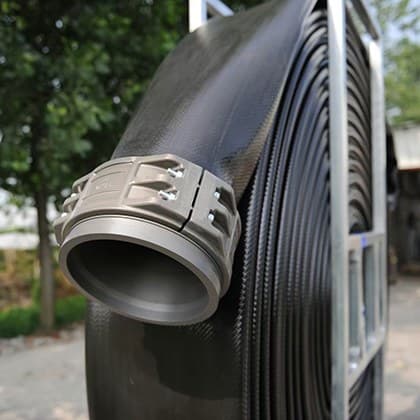
- Run lay flat on the discharge, sized for the flow and line length — see our friction loss guide — with couplings matched to the pump outlet.
On a wellpoint system the same rule applies to every connection between wellpoint, header and pump; our guide to construction dewatering hose in the GCC walks through a full system.
Common questions
- Why does my lay flat hose go flat when the pump starts?
- It is on the suction side. The pump lowers the pressure inside the hose and the atmosphere flattens it. Replace that section with a rigid-helix suction hose.
- Can I use suction hose for the discharge as well?
- Yes, within its working pressure — our EPDM/PE suction hose is rated 1.4 to 3 bar depending on size at 40 °C. For long or higher-pressure discharge lines, lay flat hose carries far more pressure and is easier to handle in long lengths.
- How long can a suction hose be?
- As short as possible. Our suction hose is supplied in lengths up to 30 m, but every extra metre adds friction where the pump can least afford it. Move the pump closer to the water rather than lengthening the suction.
- What is the maximum suction lift for a dewatering pump?
- Plan on about 7 to 8 m for cold water at sea level; less for warm water, high sites, long suction lines or slurry. Beyond that, use a submersible pump.
- Is a suction hose the same as a discharge hose with a helix?
- A suction hose is built to resist collapse under vacuum. Many are also rated for modest positive pressure and can serve both sides, but a pressure-only hose such as lay flat cannot be used for suction.