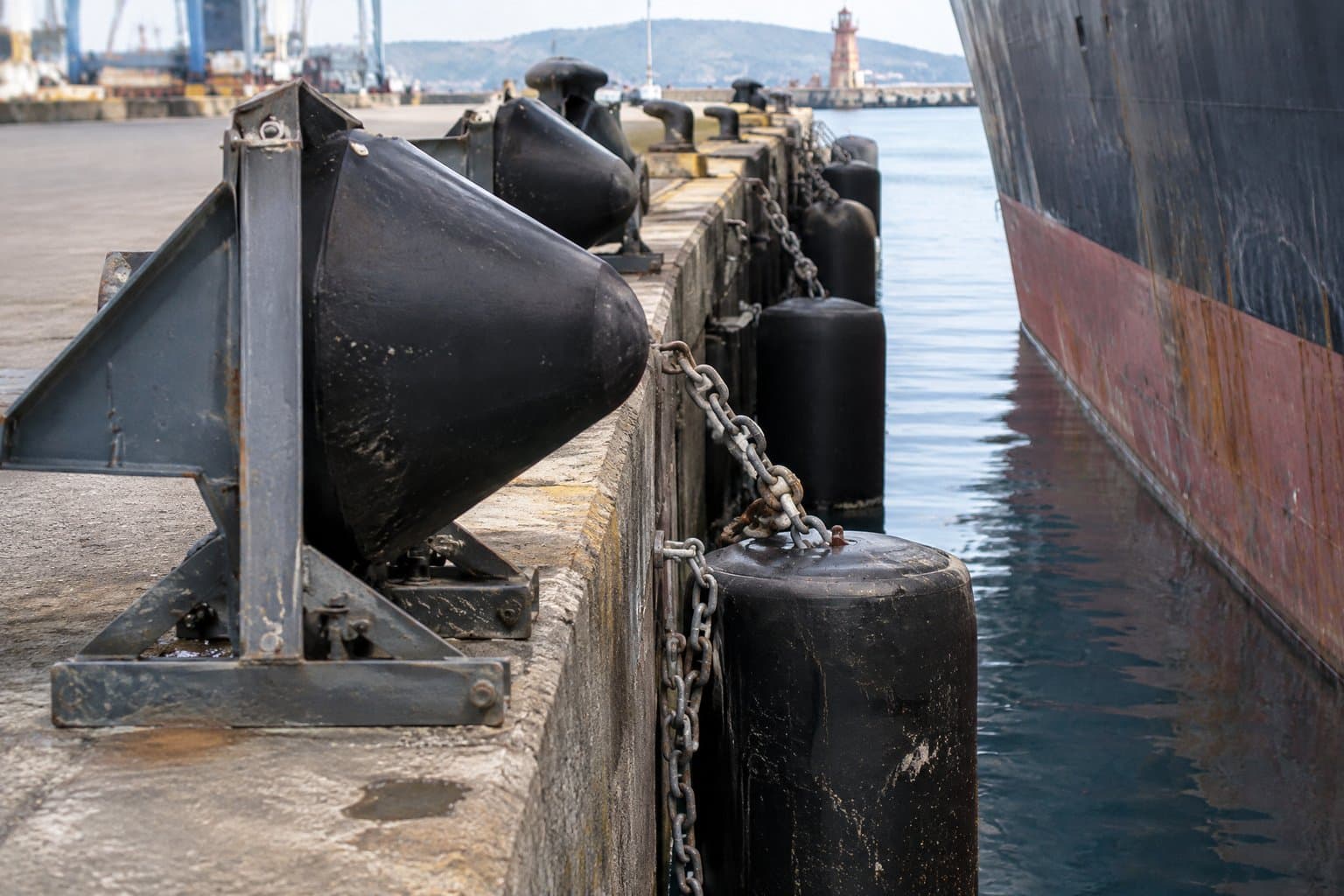
A ship coming alongside at a fraction of a metre per second still carries an enormous amount of energy, and all of it has to go somewhere. A fender absorbs that energy by deflecting, and the price is a reaction force pushed back into the hull and the quay structure. Every fender type is a different trade between how much energy it takes, how hard it pushes back and where it can be mounted.
/01Fender types and where they go.
| Type | Typical use | Sizes we list |
|---|---|---|
| Cone (SCB)Highlighted | Large berths, usually with a steel frontal panel | 500H to 2000H |
| Cell (SCA) | Large berths and high-energy quays, with a frontal panel | 500H to 3000H |
| Arch and arch DA | Medium berths, bolted directly to the quay | 150H to 400H (arch); 150H to 1000H (DA) |
| Leg (element) | Modular fenders for quays and dolphins | 300H to 1600H |
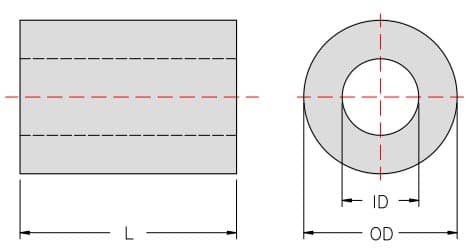
| Cylindrical | Tugs, small berths, hung on chain or bar | 150 × 75 to 2000 × 1000 mm |
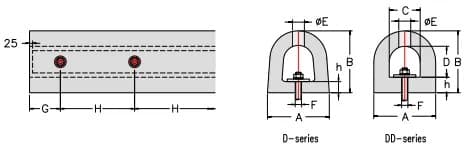
| D, square, W, M, wing | Boats, pontoons and tug sides | D and square 100 to 500 mm; W and M to 3,000 mm long |
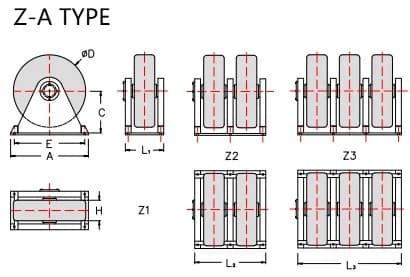
| Roller | Corners and entrances, guiding vessels past | 600 × 200 to 2400 × 800 mm |
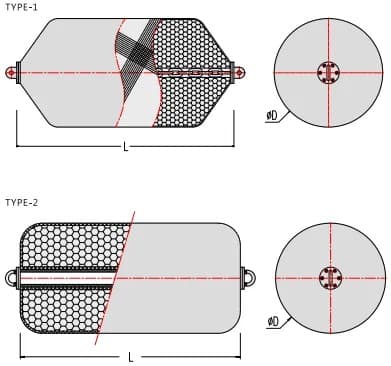
| Pneumatic | Floating; ship-to-ship transfer, temporary berths | 300 × 500 to 4500 × 9000 mm |
| Foam-filled | Floating; stays afloat if the skin is cut | 300 × 500 to 4500 × 9000 mm |
/02Energy and reaction.
The two performance figures for any fender are the energy it absorbs at its rated deflection and the reaction force it generates while doing so. The design aim is to take the berthing energy with a reaction low enough for the quay and for the hull plating, which is why large fenders are fitted with steel frontal panels that spread the force over a bigger area. Our pneumatic, foam and cylindrical listings give both figures per size — the 1000 × 2000 mm pneumatic fender, for example, is listed at 38 kNm and 217 kN. Those are the maker's figures at its own rated deflection, which differs between fender types, so compare types on their datasheet performance curves rather than on one listed point.
/03Fixed fenders.
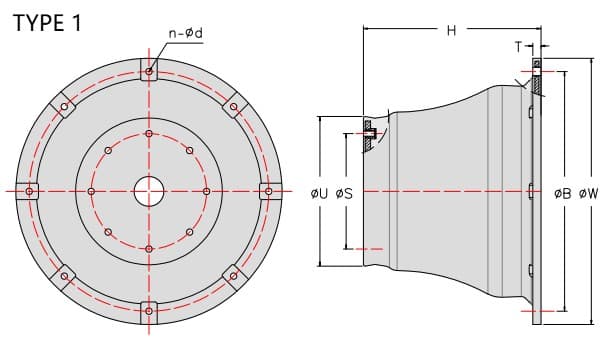
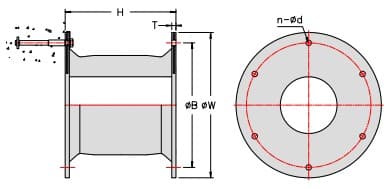
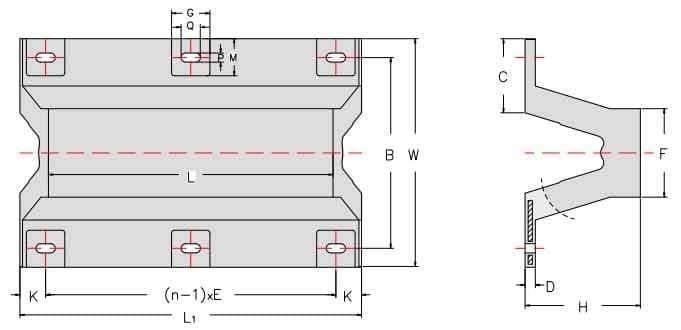
Cone and cell fenders are moulded rubber units bolted to the quay with a steel panel in front; cone fenders are generally valued for their behaviour at berthing angles, cell fenders for high energy. Arch fenders bolt directly to the quay face without a panel and suit small and medium vessels. Leg or element fenders are modular units that can be combined along a quay or on a dolphin. The profile fenders — D, square, W, M and wing — are extruded or moulded sections fixed along pontoons, small quays and the sides of tugs, and roller fenders turn as a vessel brushes past a corner or a lock entrance.
/04Floating fenders.
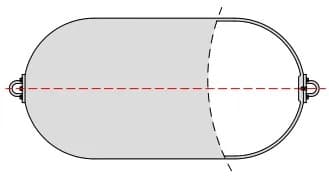
Pneumatic fenders are air-filled rubber bodies that float between two ships or between ship and quay, and they are the standard fender for ship-to-ship transfers. Our sling-type pneumatic fenders run from 300 × 500 mm to 4500 × 9000 mm (diameter × length). Foam-filled fenders do the same job with a closed-cell foam core under an elastomer skin, so a cut or puncture does not sink them; ours are listed in the same size span. Floating fenders are moored with chains or slings to fittings rated for the load, which on a quay usually means the bollards — see types of mooring bollards.
/05Ordering.
For fixed fenders, send the fender type and size, the quay construction and the fixing arrangement, and whether frontal panels and chains are needed. For floating fenders, send the size, the vessels involved and the mooring arrangement. Where the design energy is not yet known, send the largest vessel's displacement, the expected approach speed and the berth layout, and we will match a fender family to it.
Frequently asked questions
- What is the difference between a cone fender and a cell fender?
- Both are large moulded rubber fenders used with steel frontal panels on big berths. Cone fenders are generally chosen for their performance at berthing angles; cell fenders for high energy absorption. Our cone fenders run 500H to 2000H and cell fenders 500H to 3000H.
- Which fenders are used for ship-to-ship transfer?
- Floating fenders — normally pneumatic. Foam-filled fenders are an alternative that stays afloat if punctured.
- What do energy absorption and reaction force mean on a fender?
- Energy absorption is how much berthing energy the fender takes at its rated deflection, in kNm. Reaction force is the force it passes to the hull and quay while doing so, in kN.
- Where are roller fenders used?
- At quay corners, lock entrances and narrow passages, where they turn and guide a vessel past rather than stopping it.