
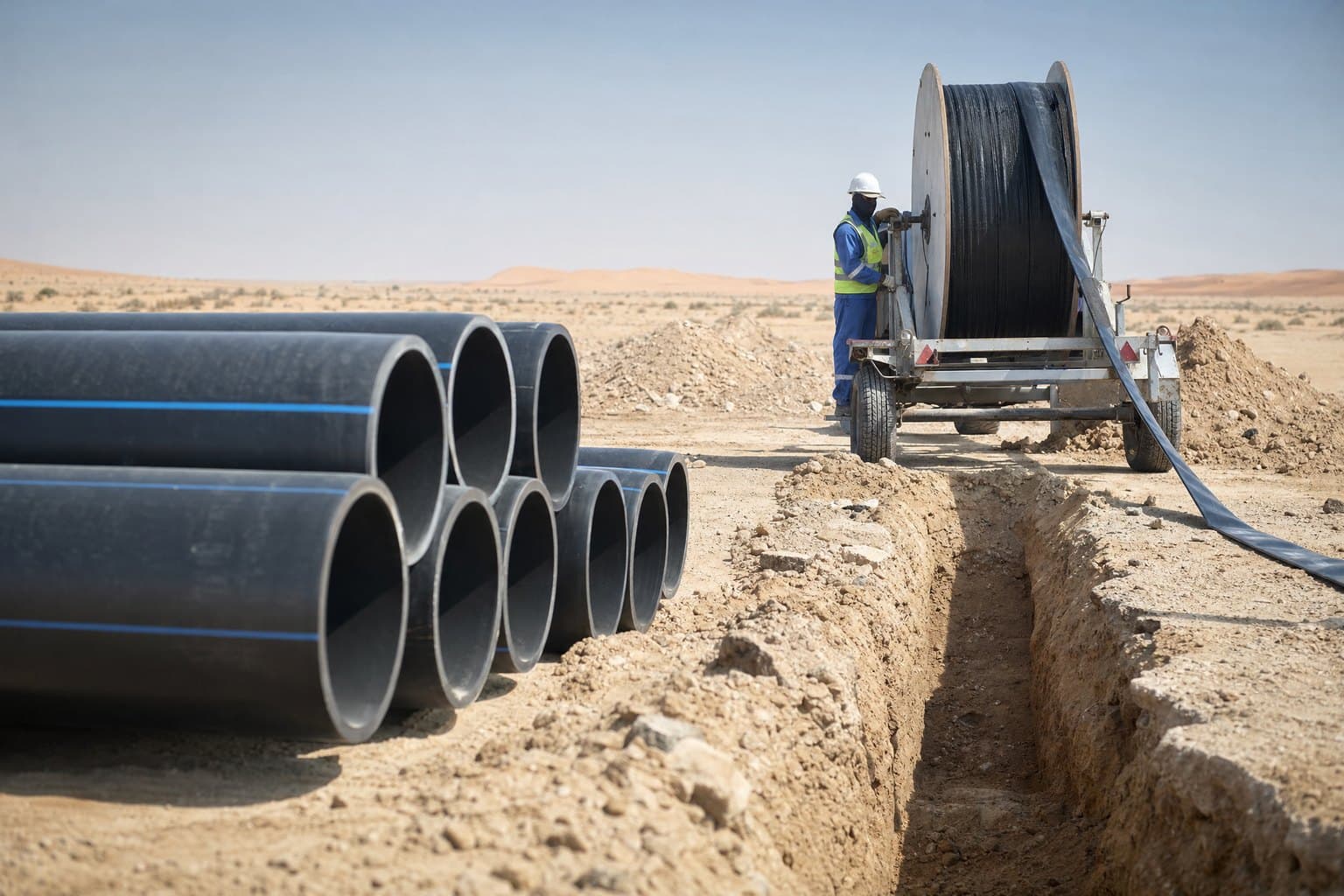
Temporary water lines — dewatering mains, frac water transfer, bypass pumping around a water main, flood relief — used to be built from rigid pipe because nothing else carried the flow. Large-bore lay flat hose changed that. The question on most projects now is not which is better in general, but which is better for a line of this length, this life and this route.
/01The short answer.
| Property | TPU lay flat hose | HDPE pipe (PE100 SDR 17) |
|---|---|---|
| Weight | 4.6 kg/m (12", 305 mm bore) | About 17 kg/m (315 mm OD) |
| Pressure | 14 bar working, 42 bar burst | PN 10 at 20 °C |
| Lengths and jointsHighlighted | Up to 400 m per length; two couplings | 6 or 12 m sticks; a joint every stick |
| Installation | Reel off a trailer, tractor or truck | Fuse or couple each joint, then place |
| Transport and storage | Rolls flat onto a reel | Bulky; sticks or large coils |
| Suction and vacuum | No — collapses | Yes |
| Buried service and traffic | Above ground only; protect at crossings | Can be buried |
| Reuse | Recovered and redeployed many times | Reusable, but slower to recover |
/02Where lay flat wins.
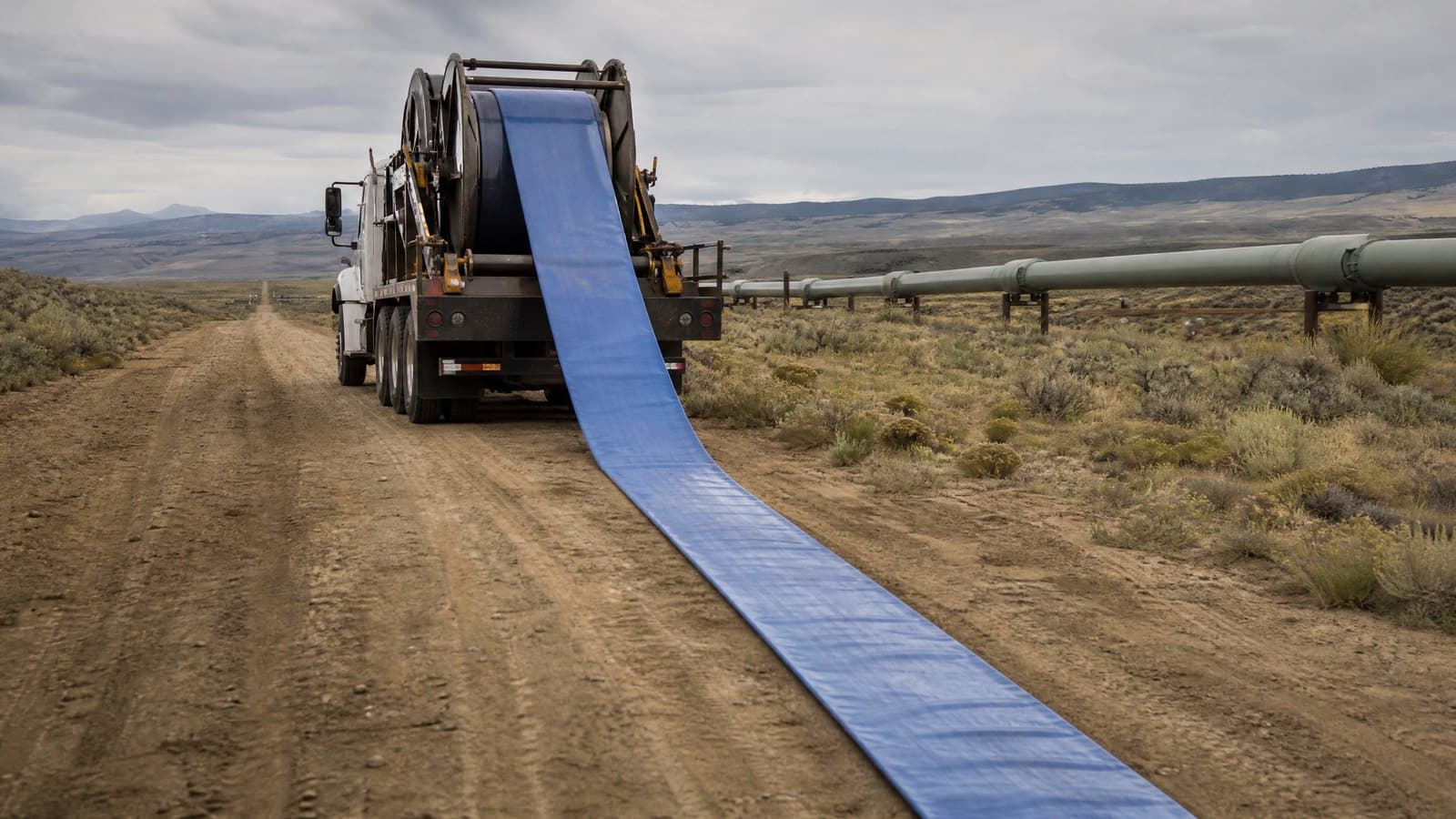
Speed. A 400 m length of TPU lay flat hose is laid in the time it takes a vehicle to drive the route, with a coupling at each end. The rigid alternative is dozens of joints — each one fused or clamped, checked and supported. On emergency work, such as pumping out a flooded site or bypassing a burst main, that difference is measured in days.
Logistics. Empty lay flat is flat. Several hundred metres of large-bore hose travel on one reel and store in a container corner; the same length of pipe needs flatbeds and laydown space. At 4.6 kg per metre, a 12" hose is roughly a quarter of the weight of pipe of the same bore, so it moves with lighter equipment — a tractor-mounted reel, a portable winder or a hose mover.
Changing routes. Construction dewatering moves as the excavation moves; frac water lines move from pad to pad; agricultural mains move field to field. Lay flat is recovered as fast as it was laid and redeployed, so one stock of hose serves many jobs. It also follows uneven ground without bends or supports.
Fewer leak points. Fewer joints means fewer places to leak and less pressure lost at couplings. With full-bore lay flat couplings at each end, a long length is close to a continuous pipe.
/03Where HDPE wins.
- Long service life in one place. If a line will run for years, HDPE’s lower cost per year and buried installation usually win.
- Buried or trafficked routes. Lay flat is an above-ground product; buried lines and heavy traffic crossings are pipe territory, or need protected crossings.
- Suction and vacuum. Lay flat collapses under vacuum. Suction lines need rigid pipe or rigid-helix suction hose.
- Gravity and low-velocity flow. A lay flat hose needs pressure to stay round; a gravity line or a line that drains and refills often is better in pipe.
- Exposure to sharp debris and vandalism over long unattended periods.
/04Cost: compare the whole job.
Price per metre of material rarely decides it. Compare the full cost of the line over its life on the project:
- Transport to site and between sites.
- Installation labour and equipment — fusion machines and crews against a reel and two people.
- Time to first water: on dewatering and emergency work, every day the line is not running has a cost.
- Recovery, cleaning and storage at the end.
- Number of redeployments — a hose reused across many jobs spreads its cost.
- Pumping energy: the bore sets friction loss; see our friction loss guide.
On short-life, frequently moved lines the labour, transport and time savings of lay flat usually outweigh its higher price per metre. On a line that will run untouched for years, HDPE typically comes out ahead.
/05Using both.
Many projects combine them: a permanent HDPE main with lay flat spurs to pumps that move, or lay flat across a temporary stretch joining two pipe sections. Grooved-end and flanged lay flat couplings join hose to grooved or flanged pipe spools without improvised adapters.
Lay flat or HDPE?
IfWill the line be buried or run under heavy traffic?
HDPE.
IfDoes the line carry suction or vacuum anywhere?
HDPE or rigid-helix suction hose on that section.
IH-LF-SEPIfWill it stay in one place for years?
Usually HDPE.
IfMust it be running within days, move during the job, or be recovered?
Lay flat hose.
IH-LF-TDWIfDoes it cross rough or changing terrain above ground?
Lay flat hose, with couplings to join pipe where needed.
IH-LF-CVG
On sewer and water main work the same choice comes up as over-pumping and temporary bypass; see over-pumping and water main bypass.
Common questions
- Can lay flat hose replace HDPE for frac water transfer?
- Yes, and it is widely used for it: large-bore TPU lay flat hose is laid between ponds and well pads in hours and recovered for the next pad. Check the working pressure of the bore against the transfer pumps.
- How long does lay flat hose last compared with HDPE pipe?
- HDPE is designed for decades in place. TPU lay flat is designed for repeated deployment; its life depends on handling, abrasion and sun. For temporary, mobile lines it typically gives many deployments.
- Can lay flat hose be buried?
- It is designed for use above ground. For road crossings use hose ramps or sleeves; for a buried section use pipe and join it to the hose with grooved or flanged couplings.
- Is lay flat hose cheaper than HDPE?
- Per metre of material, usually not. Over a temporary job, often yes, once transport, installation labour, time to first water and reuse are counted.
- Does lay flat hose have the same pressure rating as HDPE?
- At large bores they are comparable: our 12" TPU lay flat hose is rated 14 bar working, while PE100 SDR 17 pipe is PN 10. Always compare the rating for the specific bore.
For temporary lines
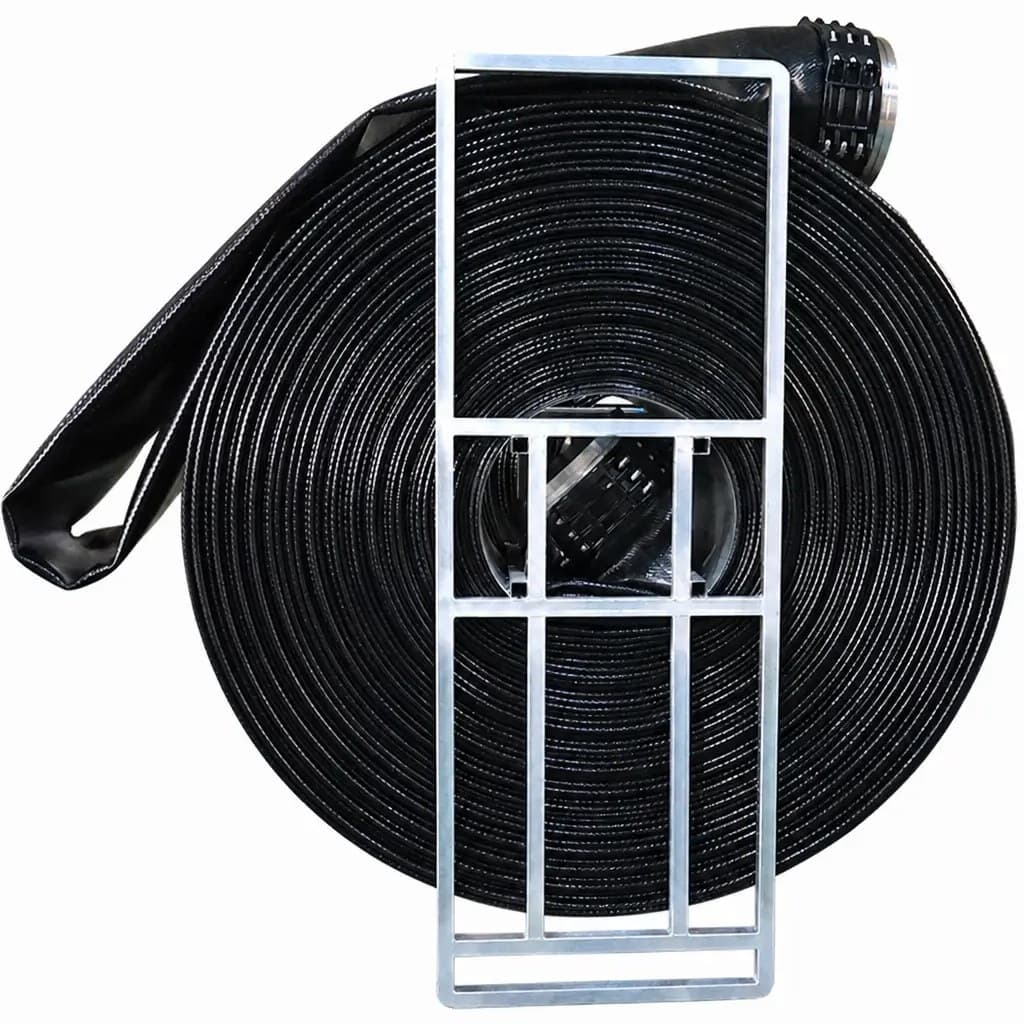 IH-LF-TDWTPU Lay Flat Dewatering and Water Transfer HoseIndus Hydraulics
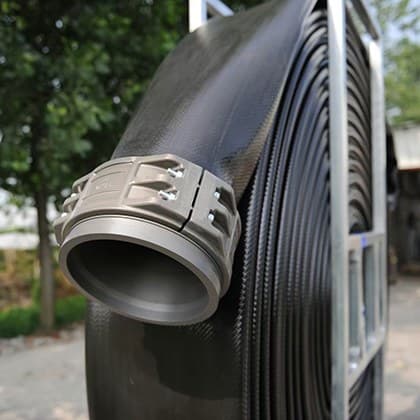 IH-LF-CVGLarge-Bore Lay Flat Hose Coupling, Grooved EndIndus Hydraulics
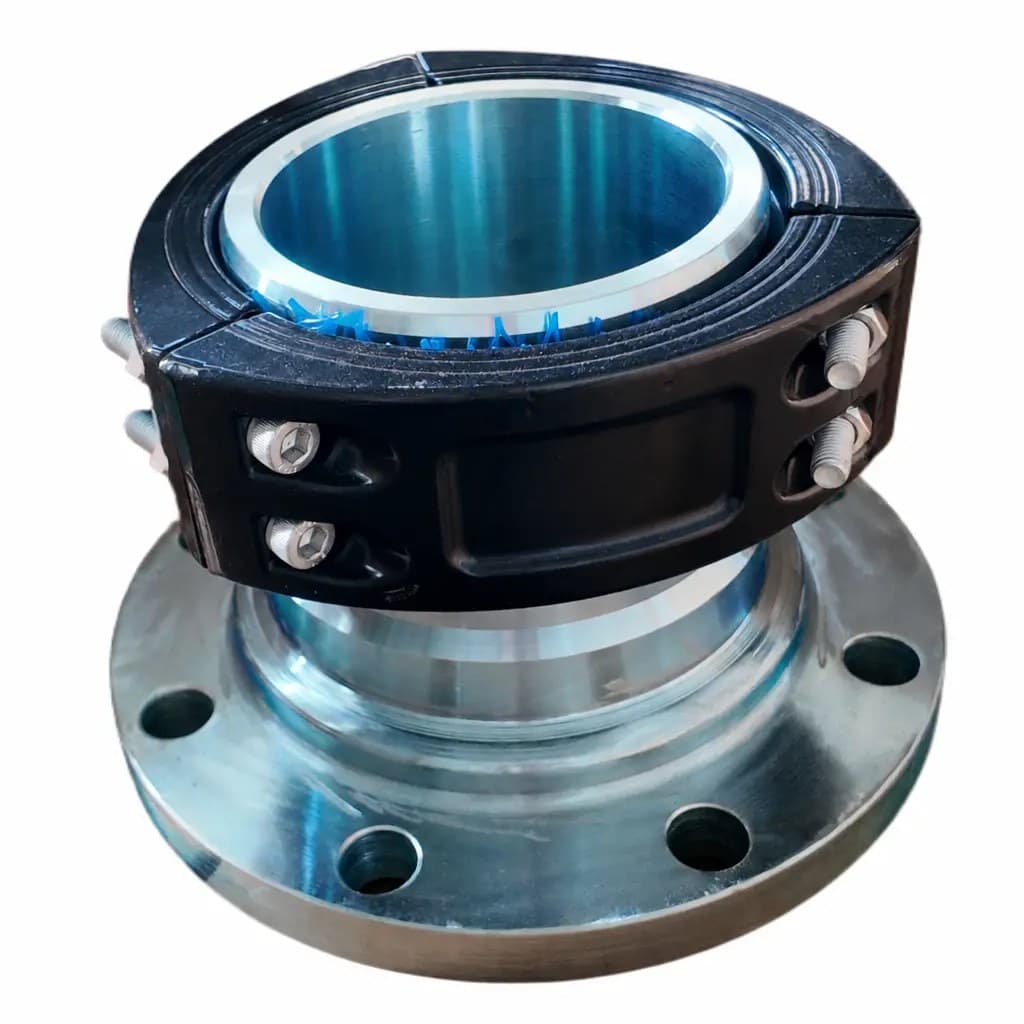 IH-LF-CFLLarge-Bore Flanged Lay Flat Hose CouplingIndus Hydraulics
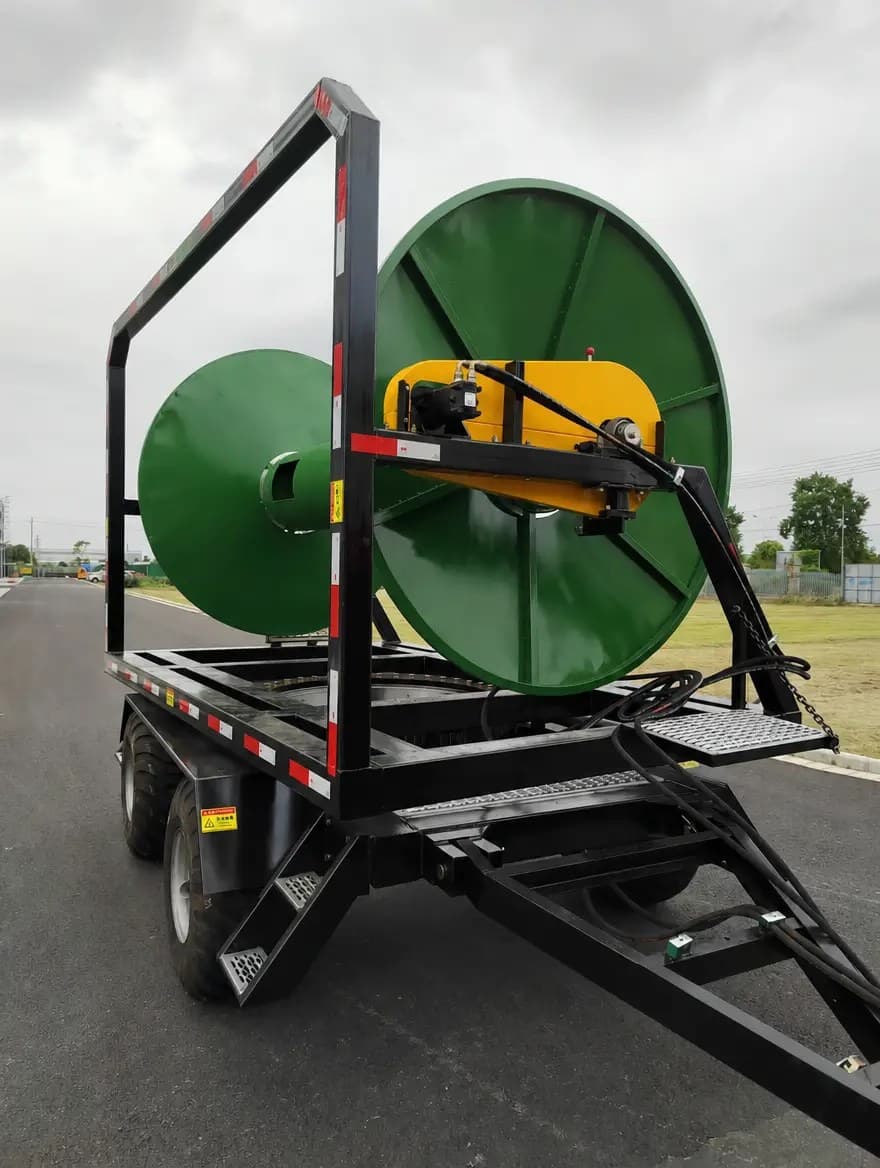 IH-LF-EHRTractor-Mounted Lay Flat Hose Reel, 3-Point HitchIndus Hydraulics
 IH-LF-EPWPortable Motorised Lay Flat Hose Winder, 6" to 12"Indus Hydraulics


