Stainless hydraulic fittings are bought for one reason — corrosion — and used in places where plated steel gives up: offshore decks, coastal plant, food and pharmaceutical washdown, chemical service. Our 316L range covers the same thread families as carbon steel, so a stainless upgrade rarely means changing the port. What it does change is how the parts are made up, and sometimes what they are rated for.
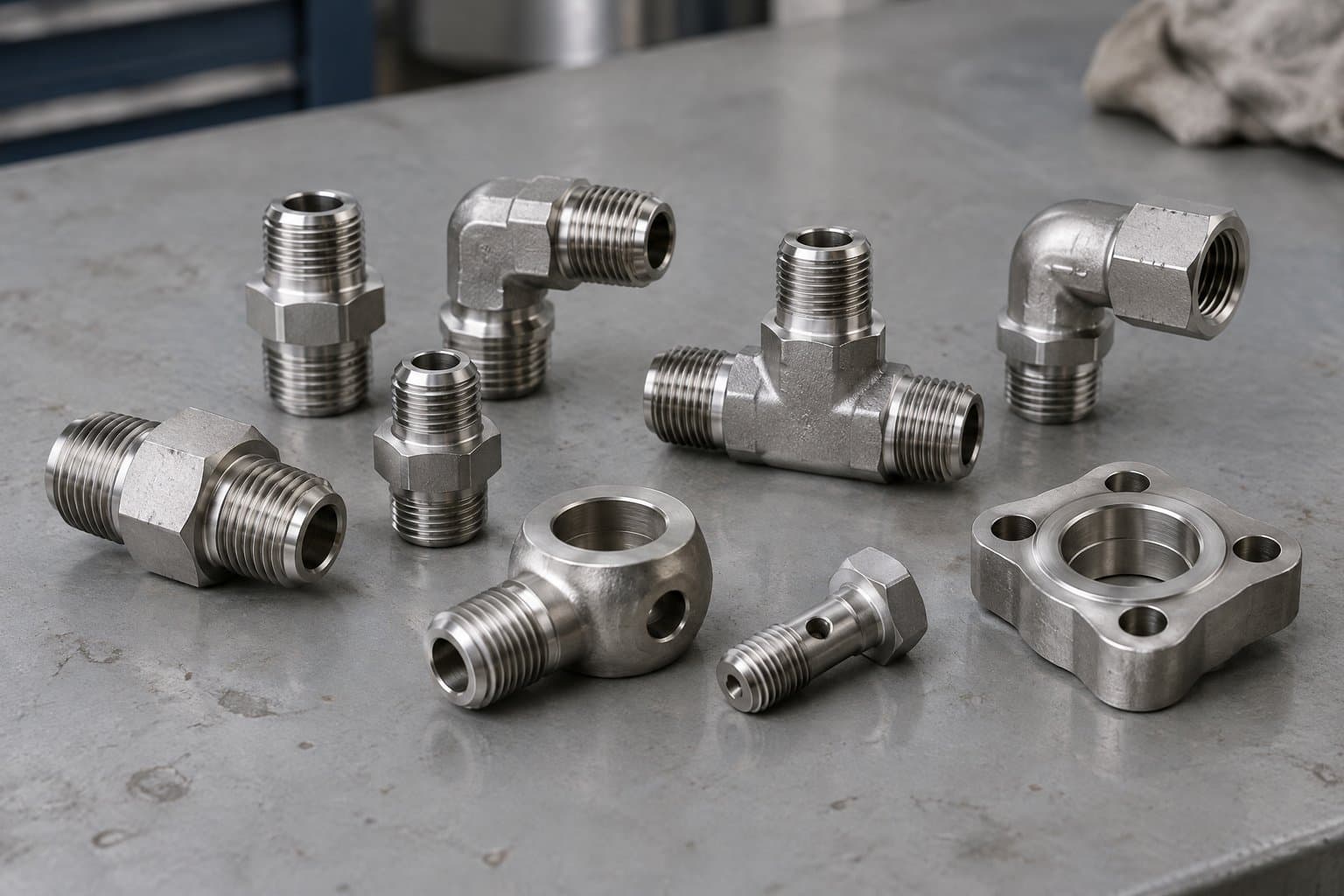
/01What is in the range.
| Family | Styles | Sizes | Standard (listing) |
|---|---|---|---|
| BSP | Swivel female 60° cone (± O-ring), flat seat, male 60°, BSPT male; straight, 45°, 90° | G1/8 – G2 | ISO 228-1, ISO 7-1 |
| JIC 37°Highlighted | Swivel female, male, male with O-ring; straight, 45°, 90° compact | −04 to −32 | SAE J514, ISO 8434-2 |
| ORFS | Swivel female, double-hex swivel, male; straight, 45°, 90° | −04 to −16 | SAE J1453, ISO 8434-3 |
| Metric 24° cone | Female swivel with O-ring, male stud; straight, 45° | M10×1 – M42×2 | ISO 8434-1, DIN 2353 |
| NPT / NPSM | NPT male; NPSM swivel female 60° cone, straight, 45°, 90° | 1/8" – 2" | ASME B1.20.1 |
| SAE J518 flange fittings | Code 61 straight, 45°, 90°; Code 62 straight, 45°, 90° | 1/2" – 2" | SAE J518, ISO 6162 |
| SAE flanges for hose | Flange, counter-flange, split flange, seal kits | 1/2" – 2" | SAE J518, ISO 6162 |
| Standpipes | DIN 2353 24° cone, gas tube, welding, double crimp | Tube OD 6 – 42 mm, L and S | DIN 2353, ISO 8434-1 |
| Banjos | BSP and metric banjos with bonded seals | G1/8 – G3/4; M10 – M22 | DIN 7642 |
Within those families the less common shapes are listed too: metric 24° cone female swivels and male studs, double-hexagon swivel females in BSP, JIC and NPSM, BSP and metric banjos, and the standpipes and nuts made for hydrowashing machines.
/02Flanges: the bolt grade matters.
Our 316L SAE flange fittings follow SAE J518 and ISO 6162. The Code 61 parts are rated up to 210 bar (3,000 psi) and bolted with SAE J429 Grade 5 bolts as a minimum; the Code 62 parts up to 415 bar (6,000 psi) with Grade 8 bolts. The flanges, counter-flanges and split flanges for hose are listed with an L-series rating of 210 bar and an S-series rating of 415 bar, and spare seal kits are sized by flange. The bolt grade is part of the rating: a Code 62 flange on Grade 5 bolts is not a 415 bar joint. The Code 61 / Code 62 distinction itself is covered in SAE J518 Code 61 and Code 62.
/03Galling, and how to avoid it.
Stainless threads cold-weld under load more readily than plated steel — the two surfaces pick up, the joint seizes during make-up, and both parts can be destroyed. The mitigations are ordinary: a suitable anti-seize paste on the threads and never on the sealing face, correct make-up by turns or flats from finger tight rather than brute force, and not repeatedly assembling and dismantling the same pair. A workshop meeting stainless for the first time should know this before its first seized joint.
/04Mixed metals and where to use it.
A stainless fitting screwed into a plated steel port makes a galvanic couple, and in salt air the plated side corrodes faster. Sometimes that is still the right trade; where the exposure is severe, match materials through the joint. The judgement of where stainless earns its cost — and where it is a downgrade — is in when stainless is worth it and galvanic corrosion in fittings.
Frequently asked questions
- Is 316L better than 304 for hydraulic fittings?
- For corrosive and chloride-bearing environments, generally yes: 316L contains molybdenum, which improves pitting resistance. Our stainless hydraulic range is 316L throughout.
- Are 316L fittings plated?
- No. They are passivated, leaving the steel's own corrosion-resistant oxide layer — there is no coating to wear off at the threads.
- What bolts do stainless SAE Code 62 flanges need?
- Our listings specify SAE J429 Grade 8 bolts for Code 62 (to 415 bar) and Grade 5 minimum for Code 61 (to 210 bar).
- Why do stainless fittings seize during assembly?
- Galling: stainless surfaces cold-weld under load. Use anti-seize on the threads, make up by turns rather than force, and avoid repeated assembly of the same pair.
316L hydraulic fittings
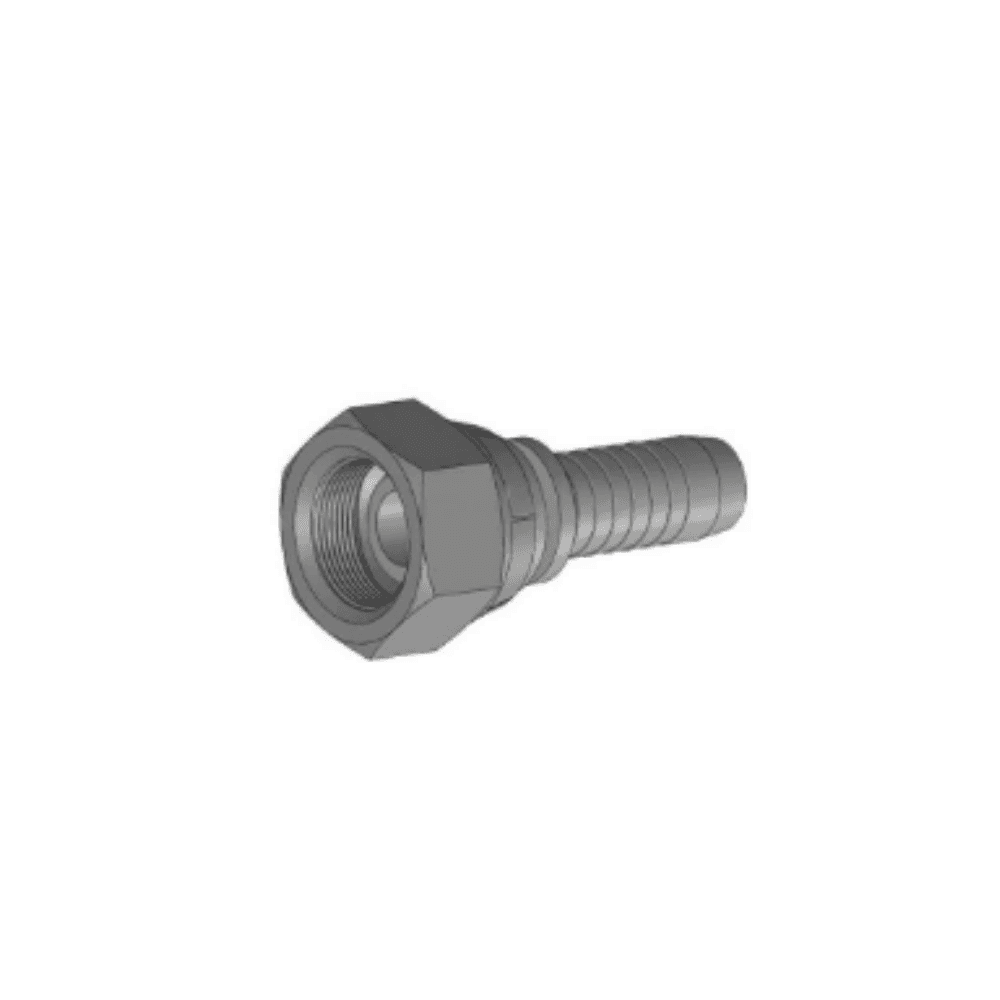 IH-SS-BSP-013BSP swivel female 60° coneIndus Hydraulics
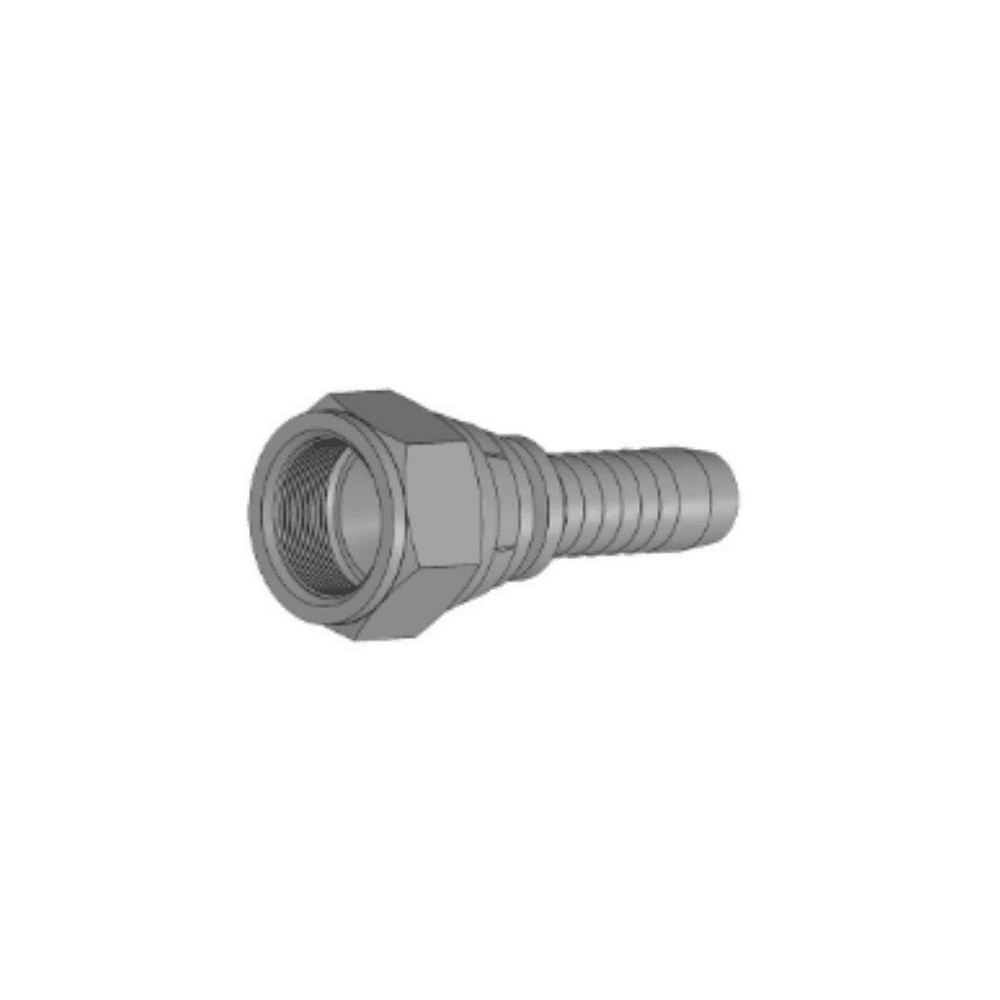 IH-SS-JIC-001JIC 37° swivel femaleIndus Hydraulics
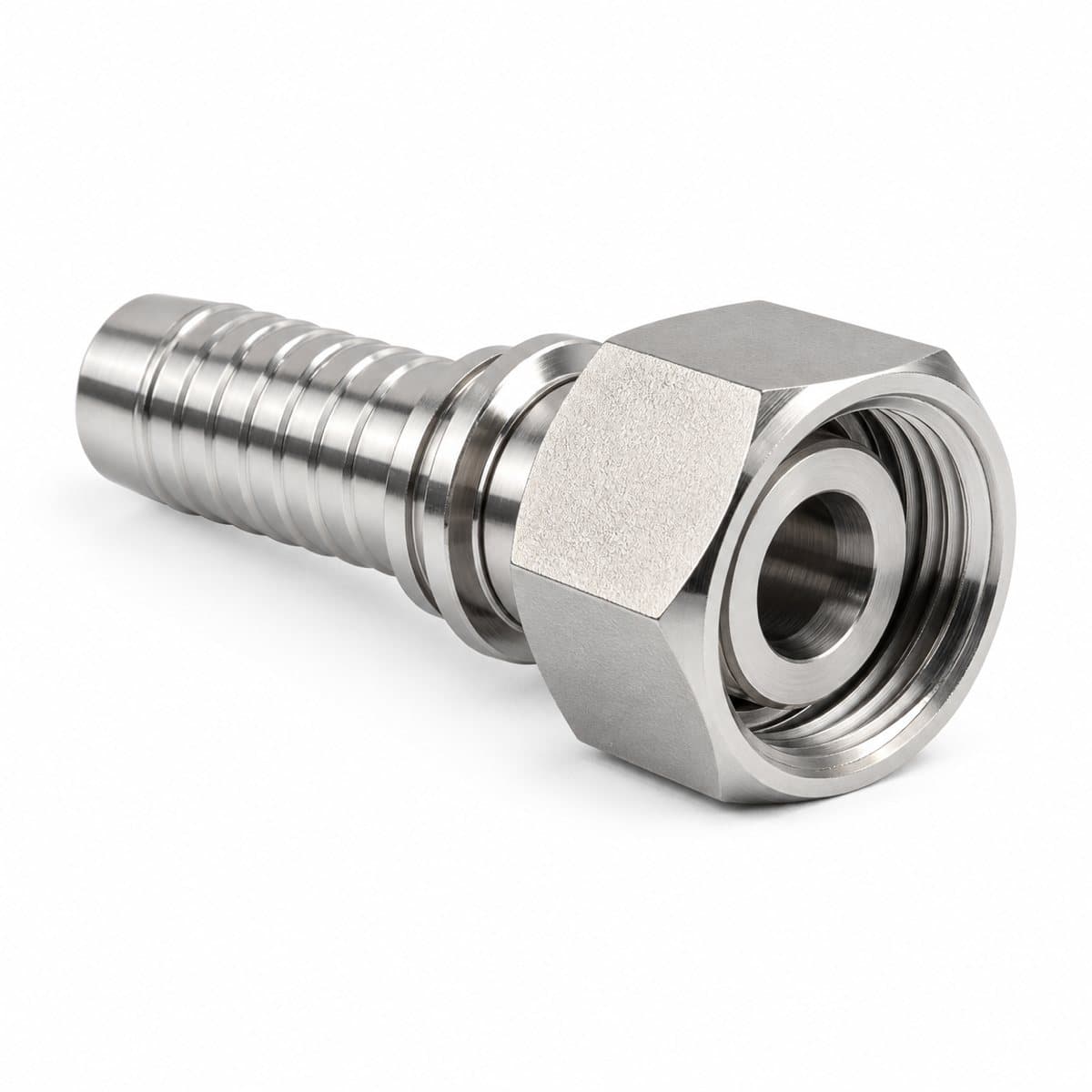 IH-SS-ORFS-005ORFS swivel female straightIndus Hydraulics
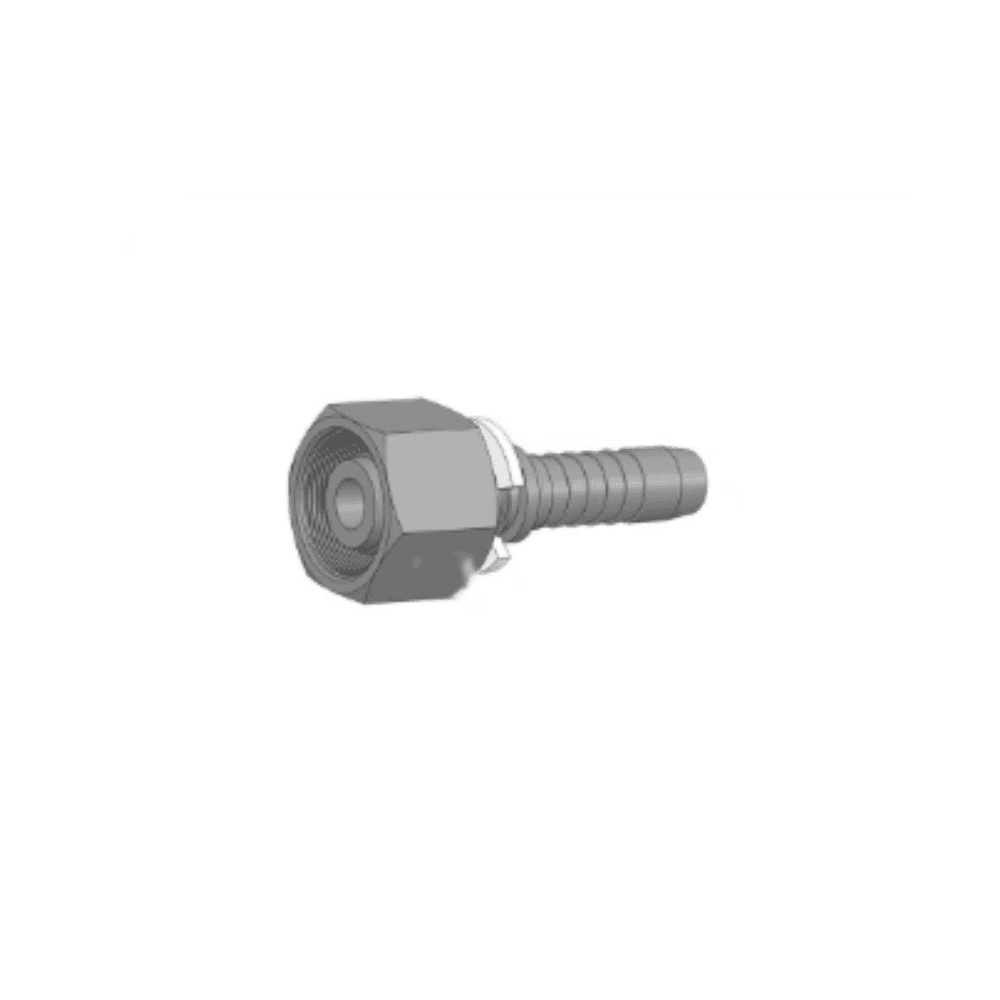 IH-SS-MET-001Metric female swivel with O-ring 24° coneIndus Hydraulics
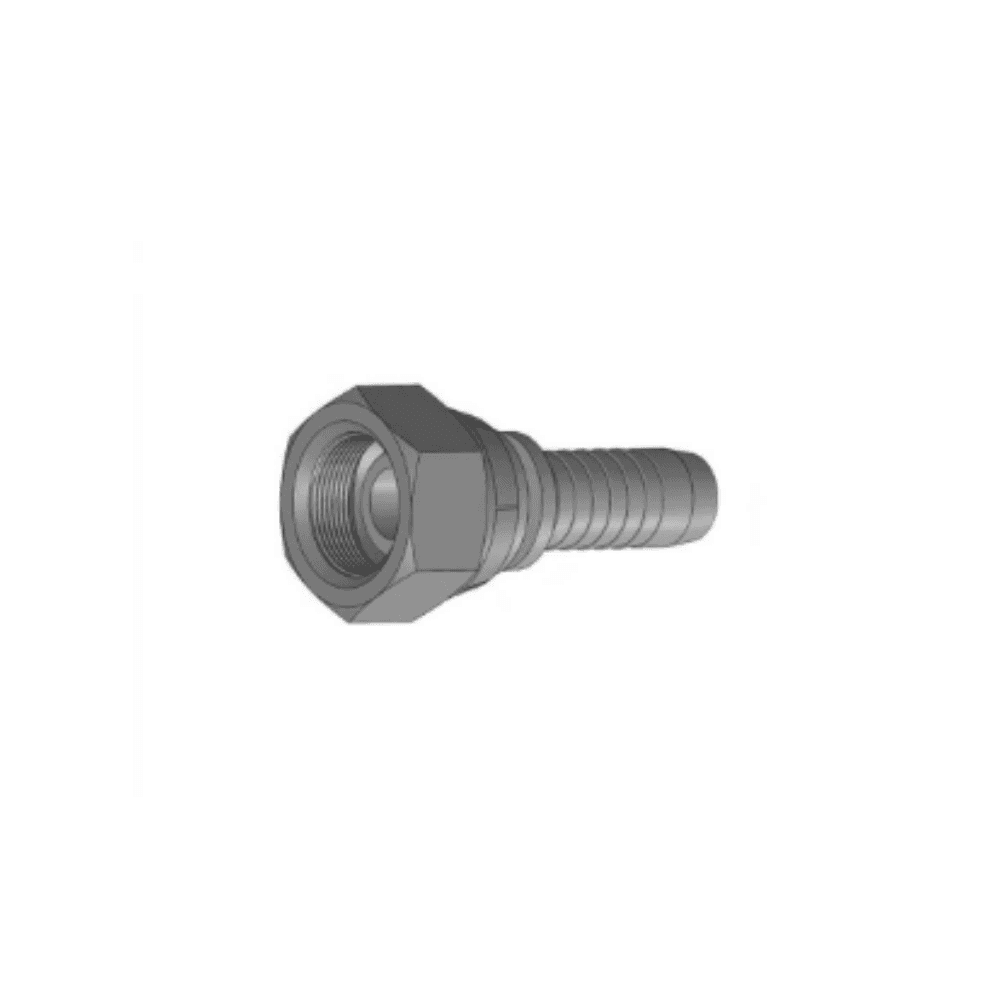 IH-SS-NPT-001NPSM swivel female 60° coneIndus Hydraulics
 IH-SS-SAE-0066000 psi SAE straight flange – code 62Indus Hydraulics
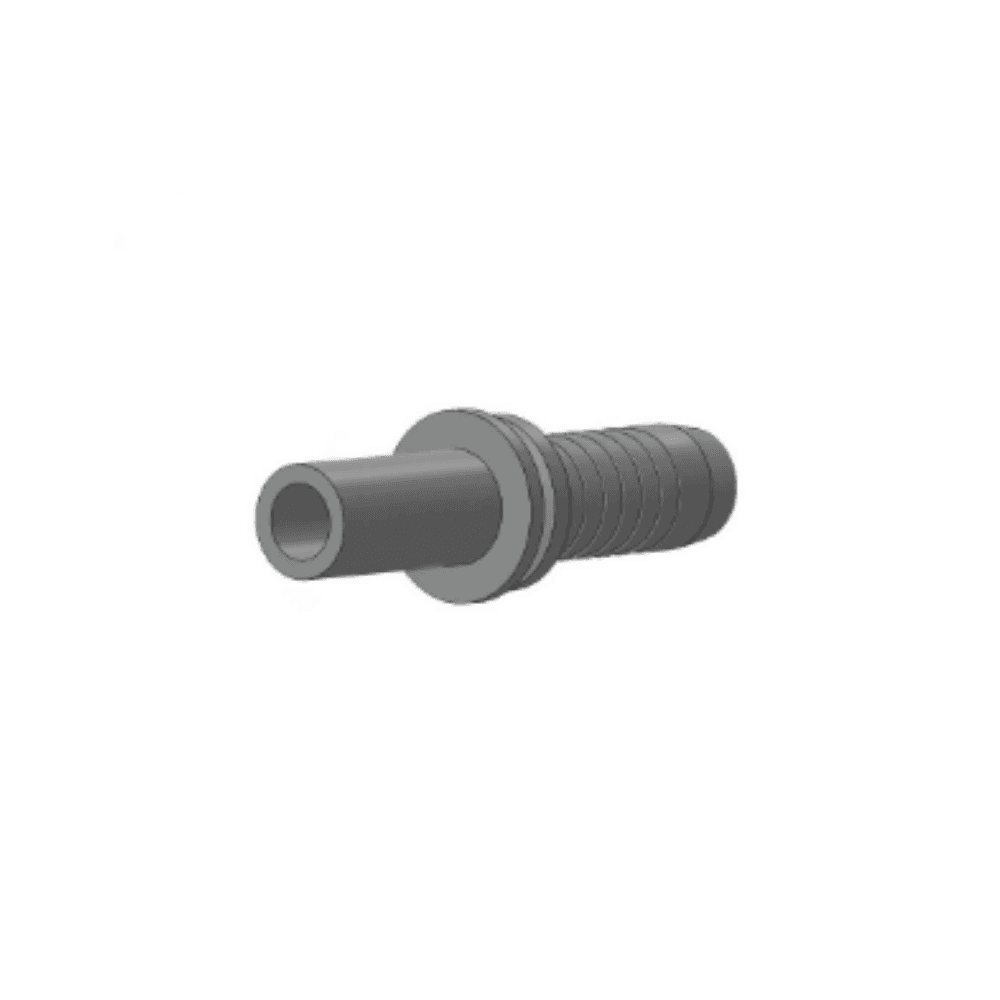 IH-SS-SP-006Metric standpipe for DIN 2353 fittingsIndus Hydraulics
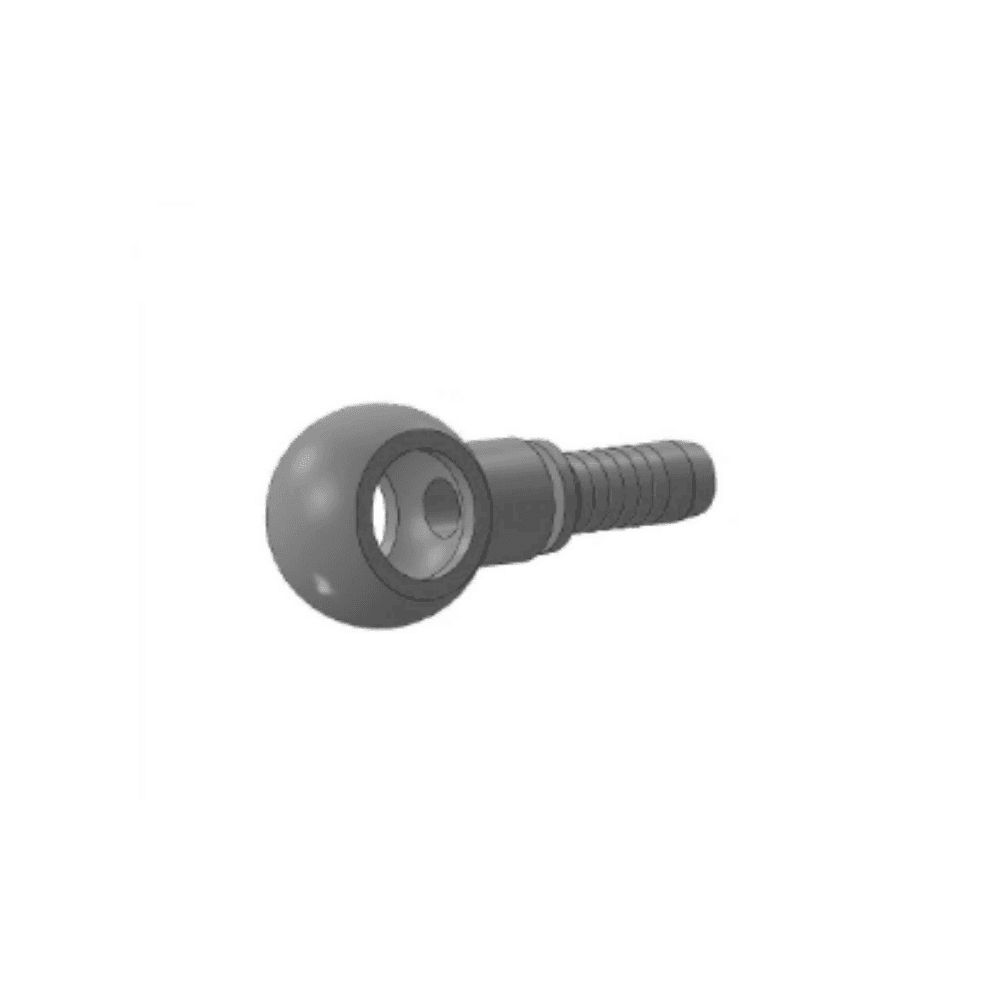 IH-SS-BJ-001Banjo BSPIndus Hydraulics