
A wheel loader concentrates its hydraulics in two places: the front end, where the work happens, and the articulation joint, where the whole machine bends. Almost every hose failure is in one or the other, and which one it is changes how the machine gets recovered.
Read the symptom.
| What the machine does | Likely circuit | Where to look first |
|---|---|---|
| Bucket will not lift, or sinks under load | Lift | Lift cylinder lines along the boom arms |
| Bucket will not curl or dump, lift fine | Tilt | Tilt cylinder lines and the linkage area |
| Steering heavy, slow, or gone | Steering | Hoses crossing the articulation joint |
| Everything slow, engine running normally | Pump supply or main pressure line | Between pump and main valve |
| Attachment dead, loader functions fine | Auxiliary | Auxiliary lines to the front couplers |
The articulation joint.
Every hose feeding the front of the machine has to cross the joint the machine steers on, which means it flexes through a large arc thousands of times a shift. It is the highest-cycle location on the machine and the least forgiving of a poor replacement.
Two things go wrong on replacement. The assembly is made to the straight-line distance rather than to the length the joint needs at full lock, so it is pulled tight at one extreme. Or it is made long enough and then routed so the slack rubs on the frame at the other extreme. Both fail, at opposite ends of the steering range.
What to send us.
Four things, and none of them is a part number
A dealer part number is convenient when you have it and never necessary.
If · The old hose is available
Photograph the layline and both fitting ends, and measure face to face.
That fully specifies the replacement, including the grade.
If · The hose crosses the articulation
Say so, and give the length at full lock.
We will build it to the working length rather than the parked one.
If · Either end is an elbow
State the angle between the two ends.
The most commonly omitted detail and the most common cause of a remake.
If · This position has failed before
Tell us — it changes what we recommend.
A repeat failure at the articulation is a length or routing problem, not a hose problem.
Grades used on loader circuits
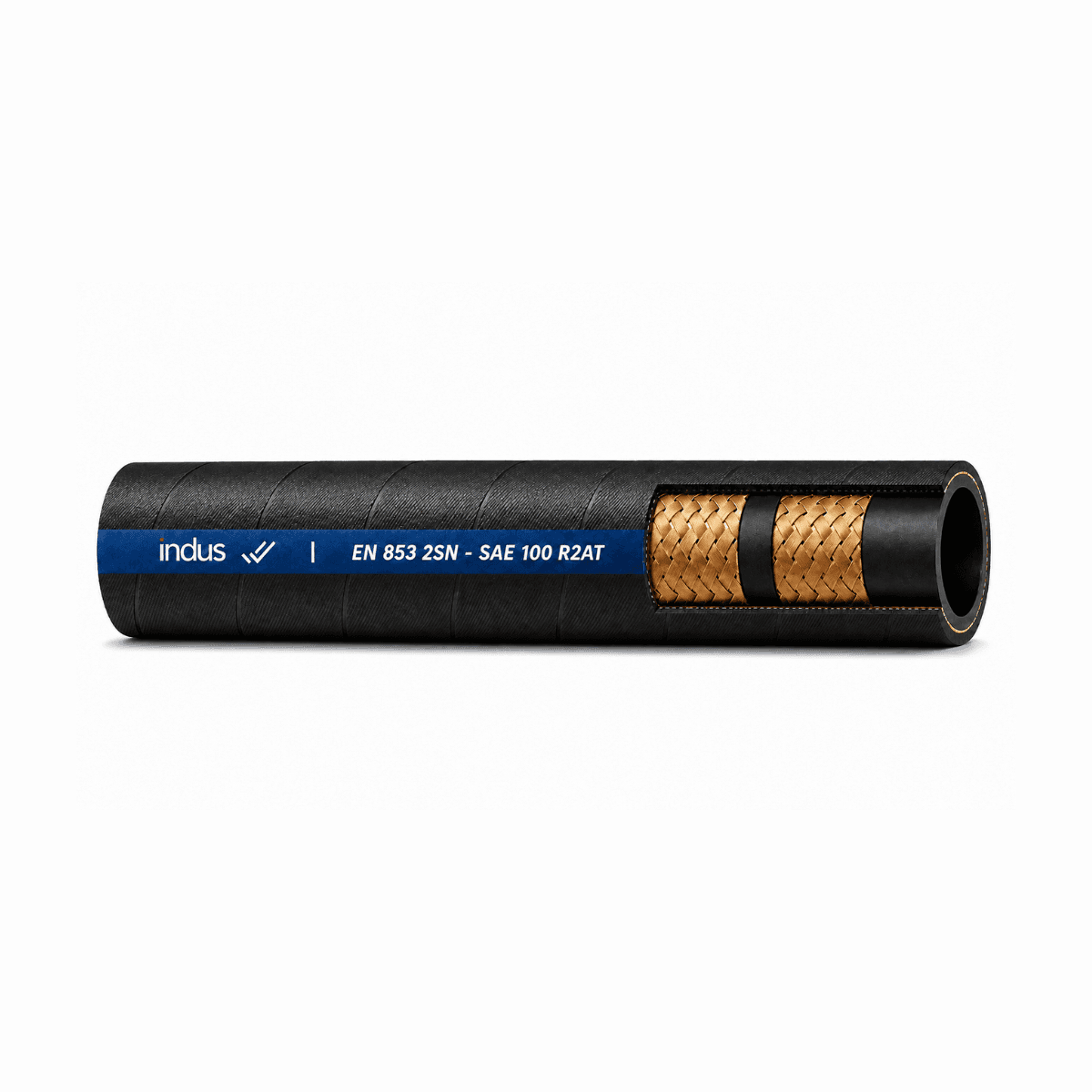
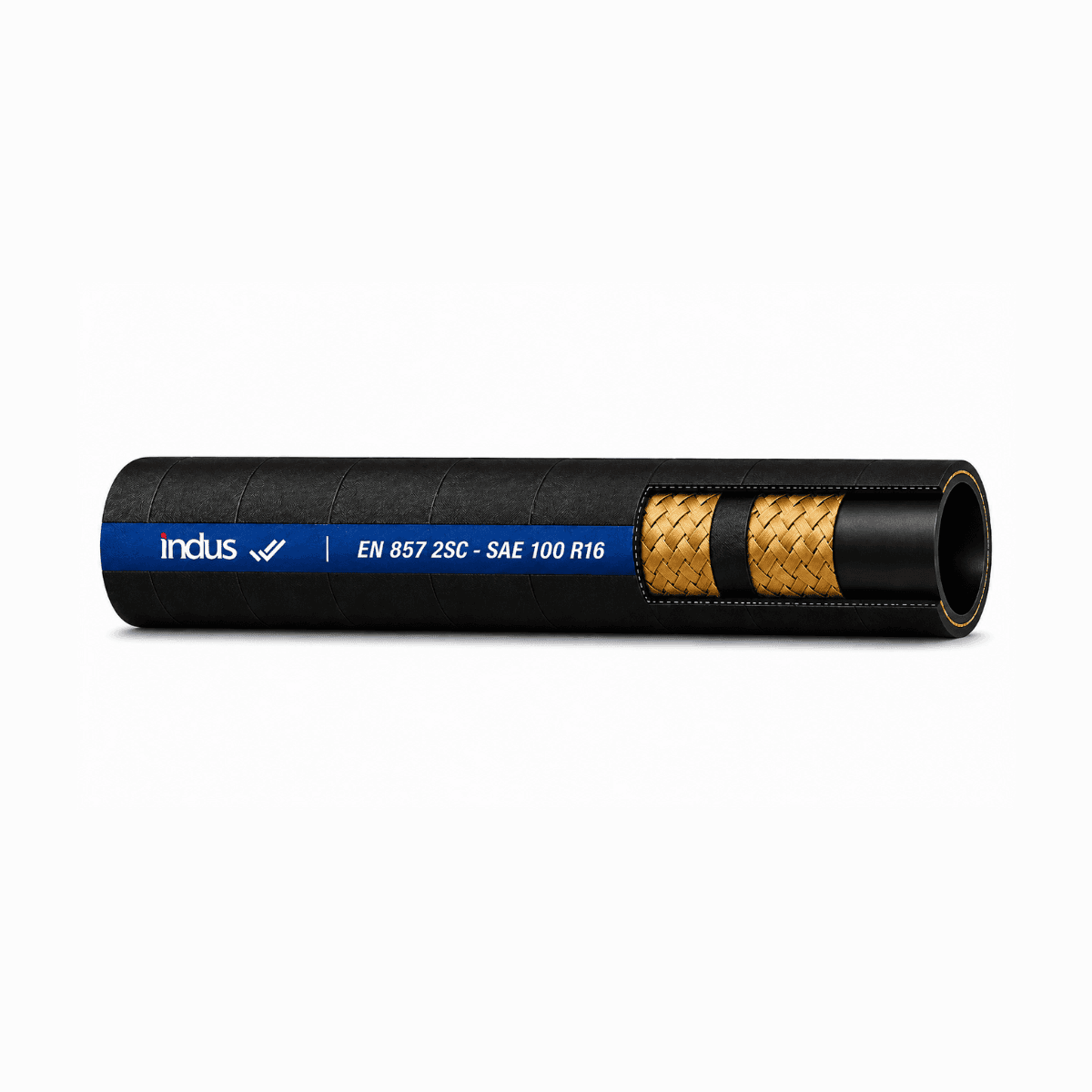
Hydraulic hose by grade
Assemblies built same day for stocked grades.
Clamps, sleeves and guards
For the articulation, where hoses meet frame.
Common questions
Which wheel loader hoses fail first?
The ones crossing the articulation joint, because they flex through the largest arc most often. After those, the tilt circuit at the linkage, where hoses are exposed to material coming off the bucket.
Can I use a compact hose to make routing easier at the joint?
Often yes — a compact construction bends to roughly half the radius at the same pressure class, which is exactly the constraint at an articulation. Confirm the pressure at the bore you need first.
The lift is slow but nothing is leaking. Is it a hose?
Usually not. Slow with no external leak points at internal leakage in a cylinder or valve, or at the pump. A collapsed suction hose is the one hose fault that presents this way.
Do you come to site?
Yes, across the UAE. For a machine stopped at the articulation that is normally faster than getting the machine anywhere.
Figures verified · Diagnostic guidance from our own field service practice. No model-specific part numbers or circuit pressures — those come from the machine’s own documentation.
Loader stopped?
Send a photograph of the failed hose and both ends. For stocked grades we build same day, and we come to site across the UAE.
Plant-down? Call +971 52 2477942 — 24/7