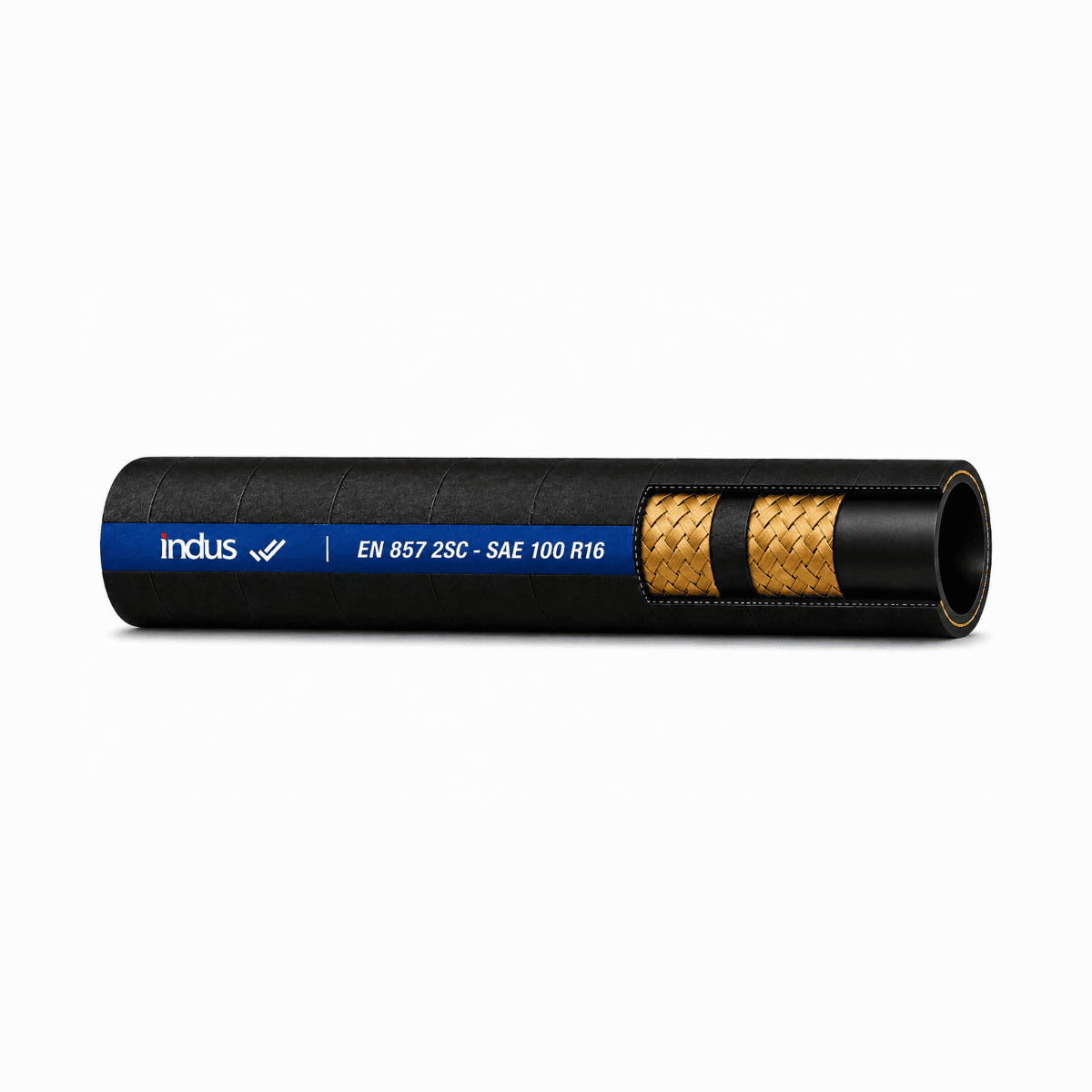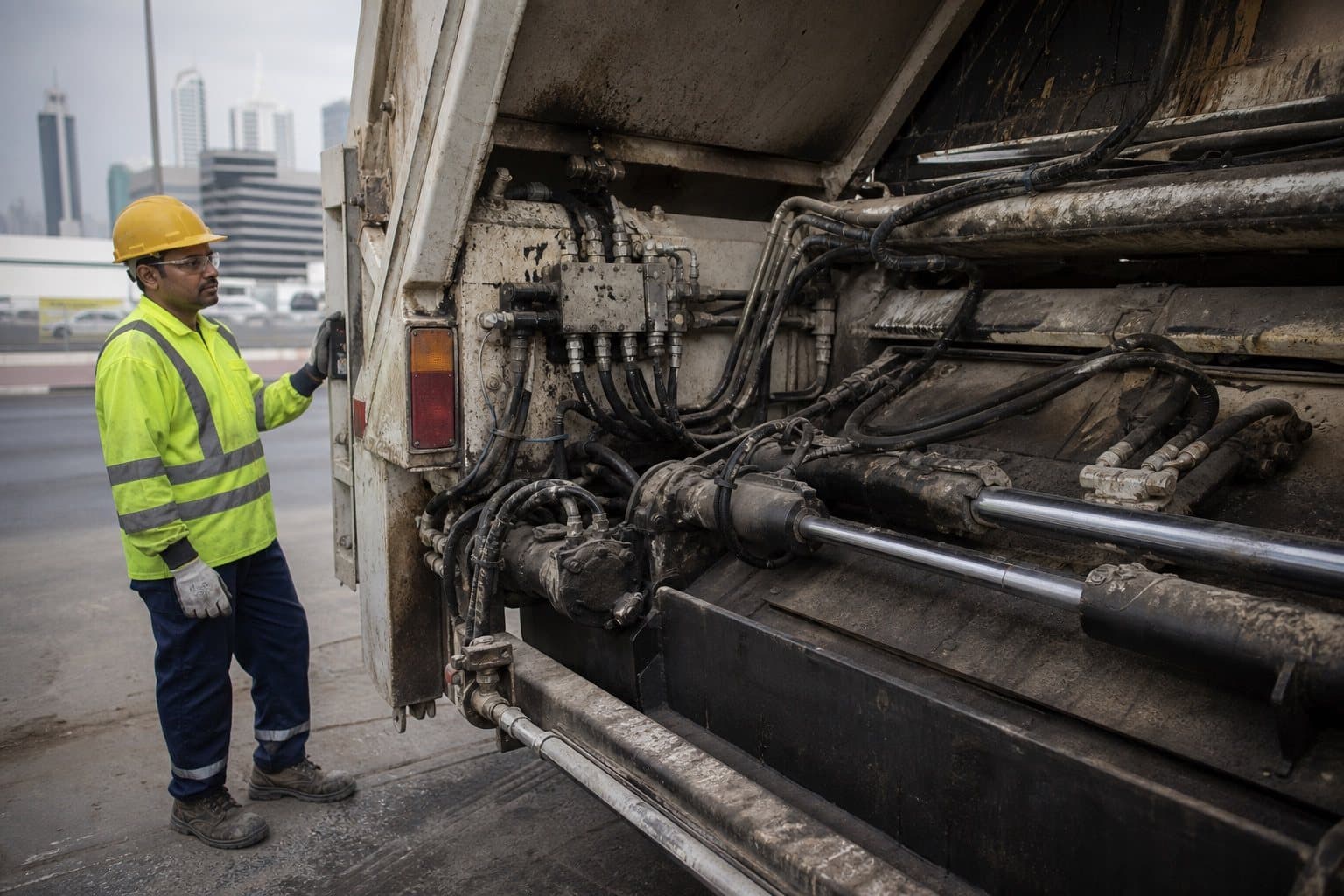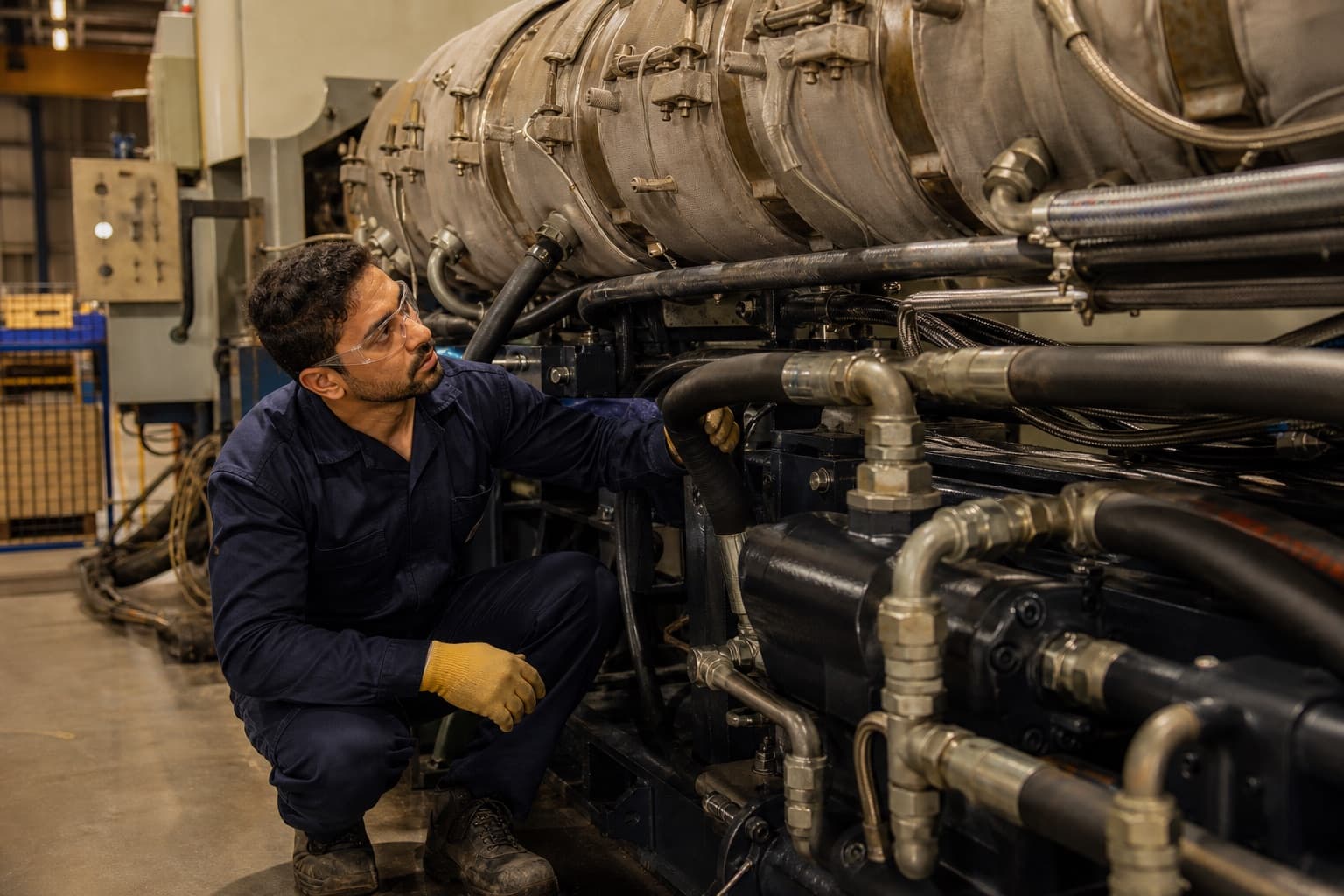
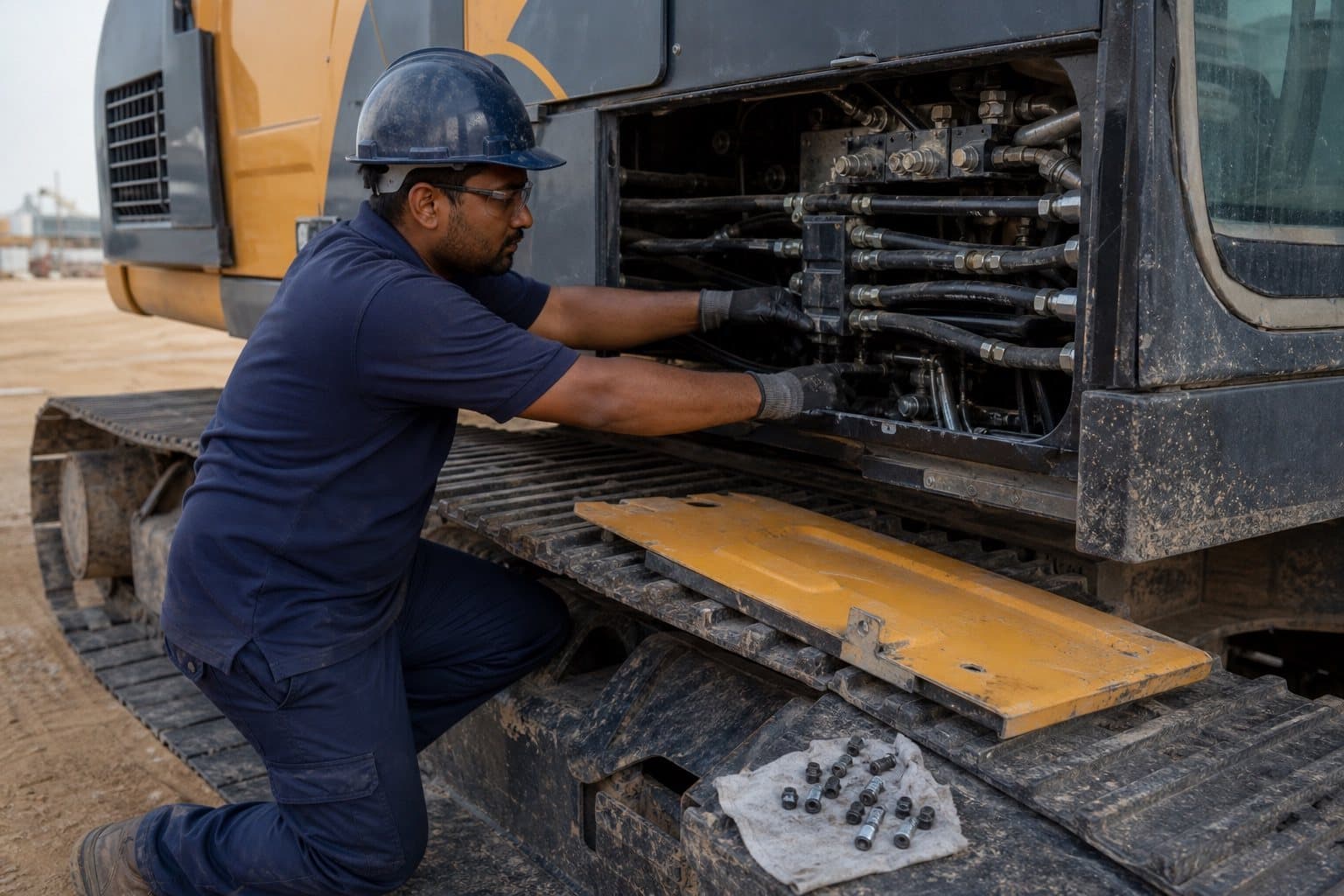
Older machines put their hoses on the outside. Modern ones route them through structure, behind trim, inside booms, past coolers and wiring looms, held in moulded clamp blocks that were fitted on a production line with the boom in a different position. The hose change is still ten minutes. Everything around it is the job. Before starting, have the replacement assembly, caps for every open port and any adapters or hose ends you may need on the bench.
/01Record before you dismantle.
| Photograph | What it saves you |
|---|---|
| Whole run, both ends visibleHighlighted | The overall path and which side of structure it passes |
| Every clamp block, before openingHighlighted | Which hose sits in which position in the block |
| Crossings and bundles | The order hoses cross each other in |
| Elbow clocking at both ends | The angle that decides whether the new one routes |
| Guards and trim, with fasteners visible | What came off, and in what order |
| Any rub marks on the old hoseHighlighted | Evidence of why it failed, which changes the rebuild |
/02Access, in the order that usually works.
Getting to the hose
Modern machines reward patience and punish force, mostly in the form of broken plastic.
IfPosition the machine first
Boom, arm and attachment where the hose is accessible and the machine is stable.
Then lower onto the ground or fit supports and depressurise. Positioning after depressurising is not possible, so think about it first.
IfRemove guards and trim rather than working around them
Bag and label the fasteners as you go.
Guards on modern machines are often structural to the routing — they hold the hose position as much as they protect it.
IfOpen clamp blocks carefully
They are moulded pairs, and the tabs snap cold.
A broken clamp block frequently has a long lead time. Warm them slightly if it is cold, and never lever them apart with a screwdriver.
IfFree the hose along its whole length before undoing the ends
So it can be withdrawn rather than pulled.
Pulling a hose through structure with the ends still attached is how looms and coolers get damaged.
IfThen break the joints, backing up the port
Two wrenches, always.
Confined access is exactly where people use one wrench and damage the port.
/03The things that go wrong.
| Outcome | Cause |
|---|---|
| Broken clamp block, machine waits for a partHighlighted | Levering a cold moulded clamp apart |
| New hose rubs through in monthsHighlighted | Rebuilt in the wrong order within the bundle |
| Damaged wiring loom | Hose pulled through structure rather than freed and withdrawn |
| Cracked port on a valve blockHighlighted | One wrench in a confined space |
| Guard will not refit | Hose routed on the wrong side of a bracket |
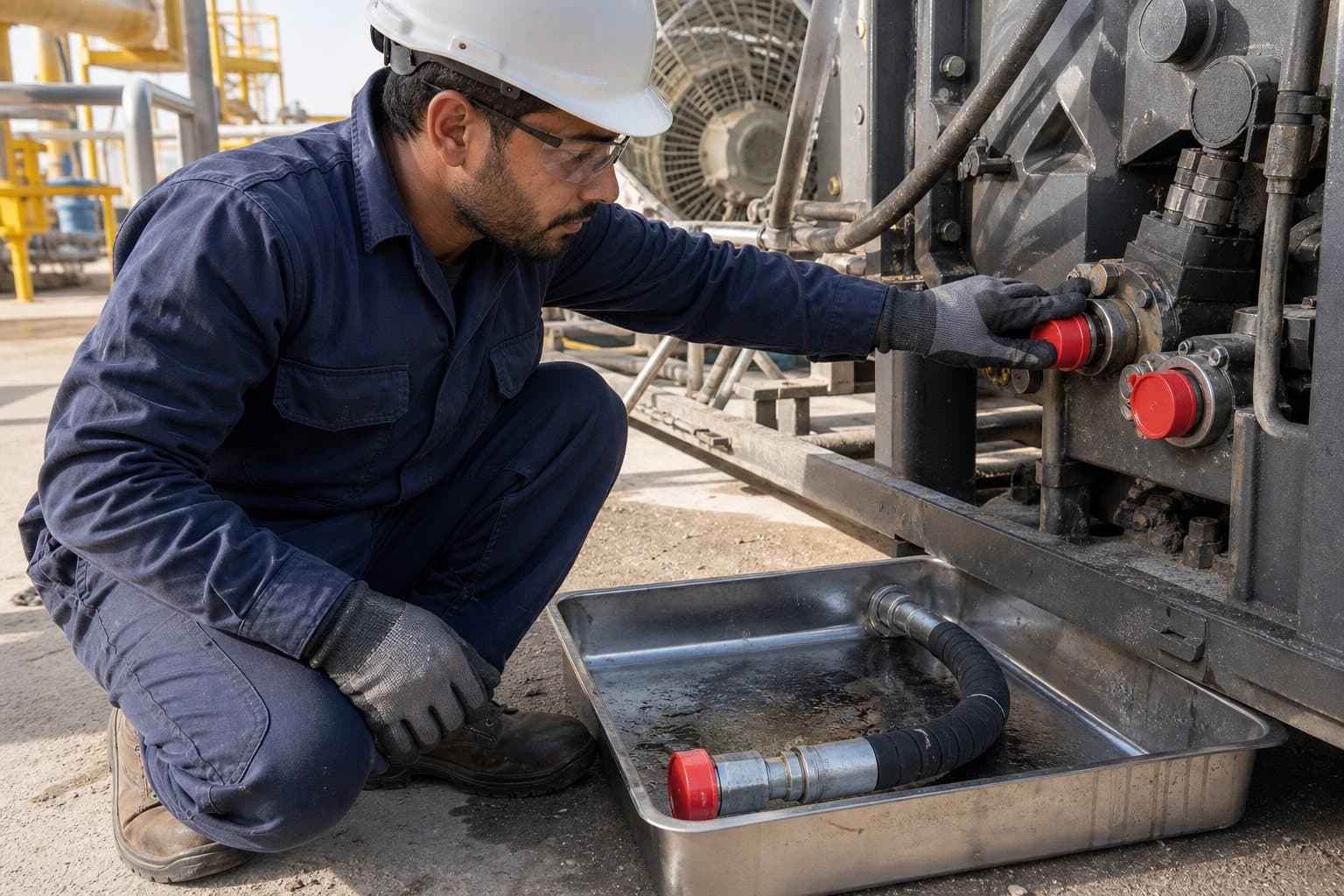
| Contamination fault weeks later | Ports left open in a dusty environment |
/04Putting it back.
| Check | Why |
|---|---|
| Same position within every clamp blockHighlighted | The block sets the spacing that stops hoses rubbing |
| Same crossing order in the bundleHighlighted | A hose on the wrong side of another wears through it |
| No twist — check the layline | A twisted hose loses a large fraction of its life |
| Full articulation test before releasing the machineHighlighted | Cycle everything slowly through the full range and watch the hose |
| Every guard and clip refitted | They are part of the routing, not just protection |
| Return filter changed | Ports were open in a dusty environment |
Common questions
- The hose will not come out even with both ends free. What now?
- Something fitted after it is in the way — usually a guard, a bracket or another hose in the bundle. Trace the path with a light rather than pulling; on many machines the hose was fitted before the structure around it.
- Can I cut the old hose to get it out?
- Yes, once both ends are off and it is being replaced, and it is often the sensible option in a confined route. Cap the ports first and catch the oil.
- A clamp block broke. Can I leave it out?
- No. Clamp blocks set the spacing that stops hoses rubbing on each other and on structure. Leaving one out is how the new hose fails early. Order the replacement.
- Does the new hose need to be exactly the same length?
- Yes, within a small tolerance. Too short puts the ends in tension; too long lets it move and rub. Measure the old one face to face lying straight.
- Should I test at full pressure before refitting the guards?
- Run and check for weeps with the guards off so you can see the joints, then refit them and cycle the machine through full articulation. Both steps, in that order.