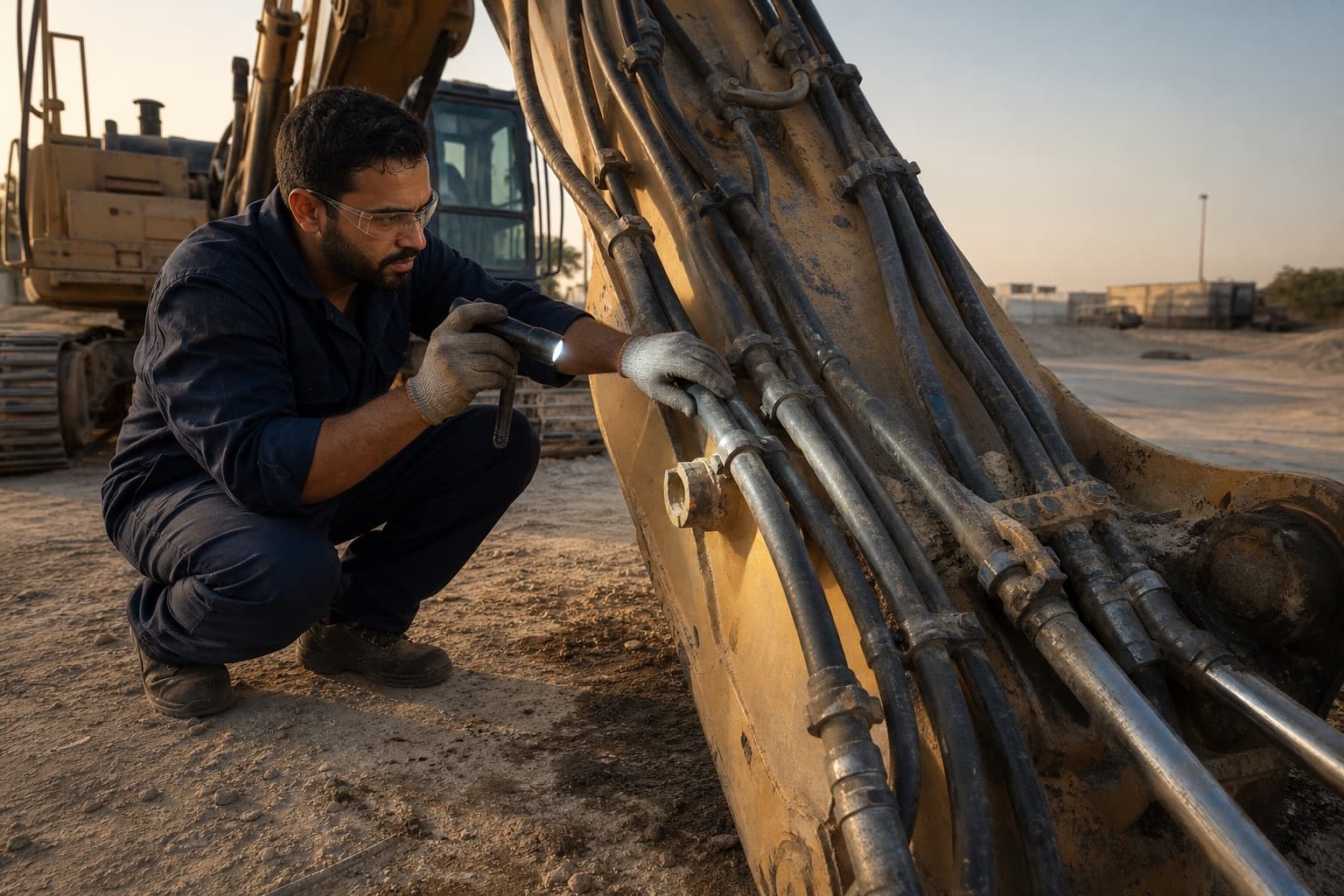
How often should hydraulic hoses be replaced?
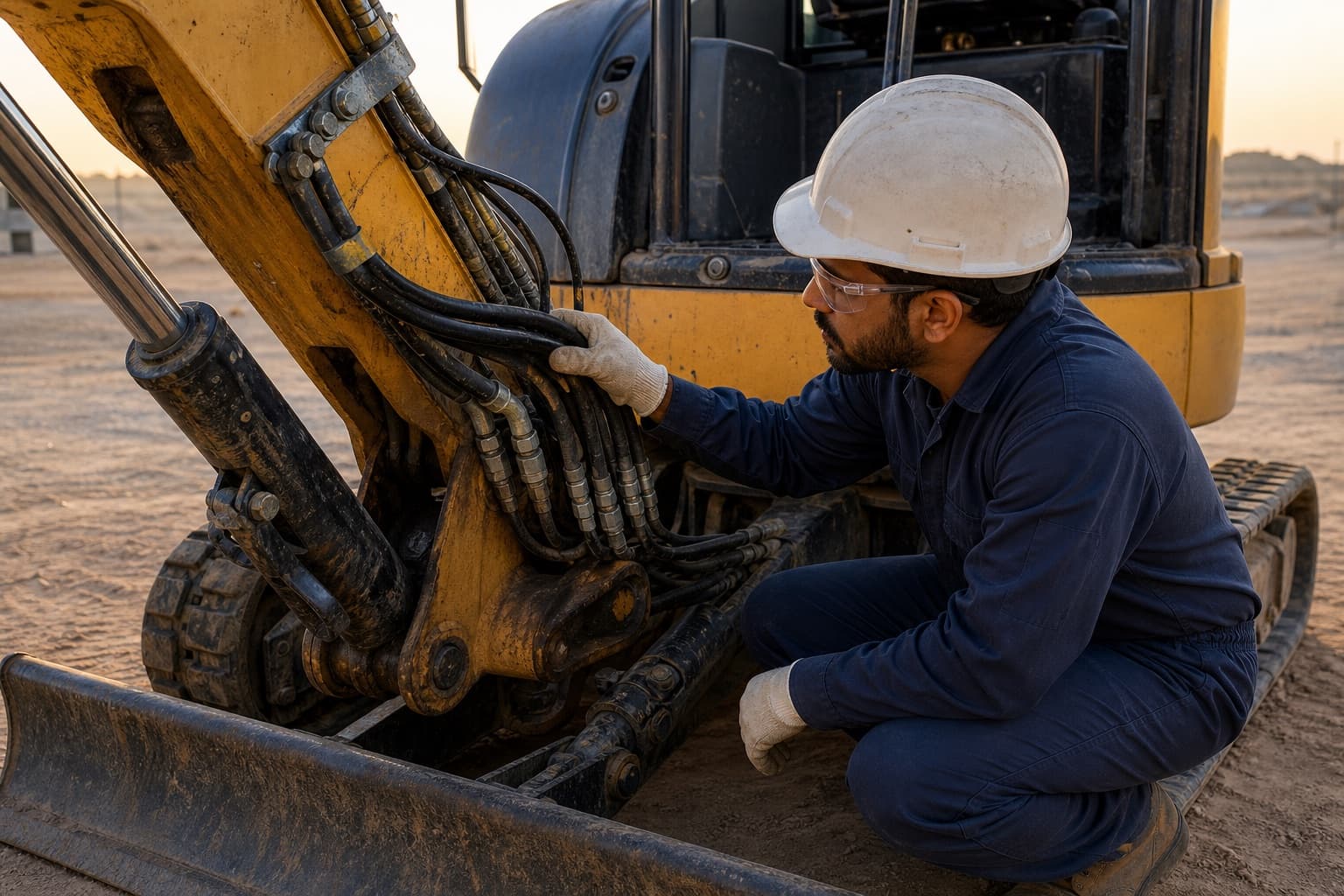
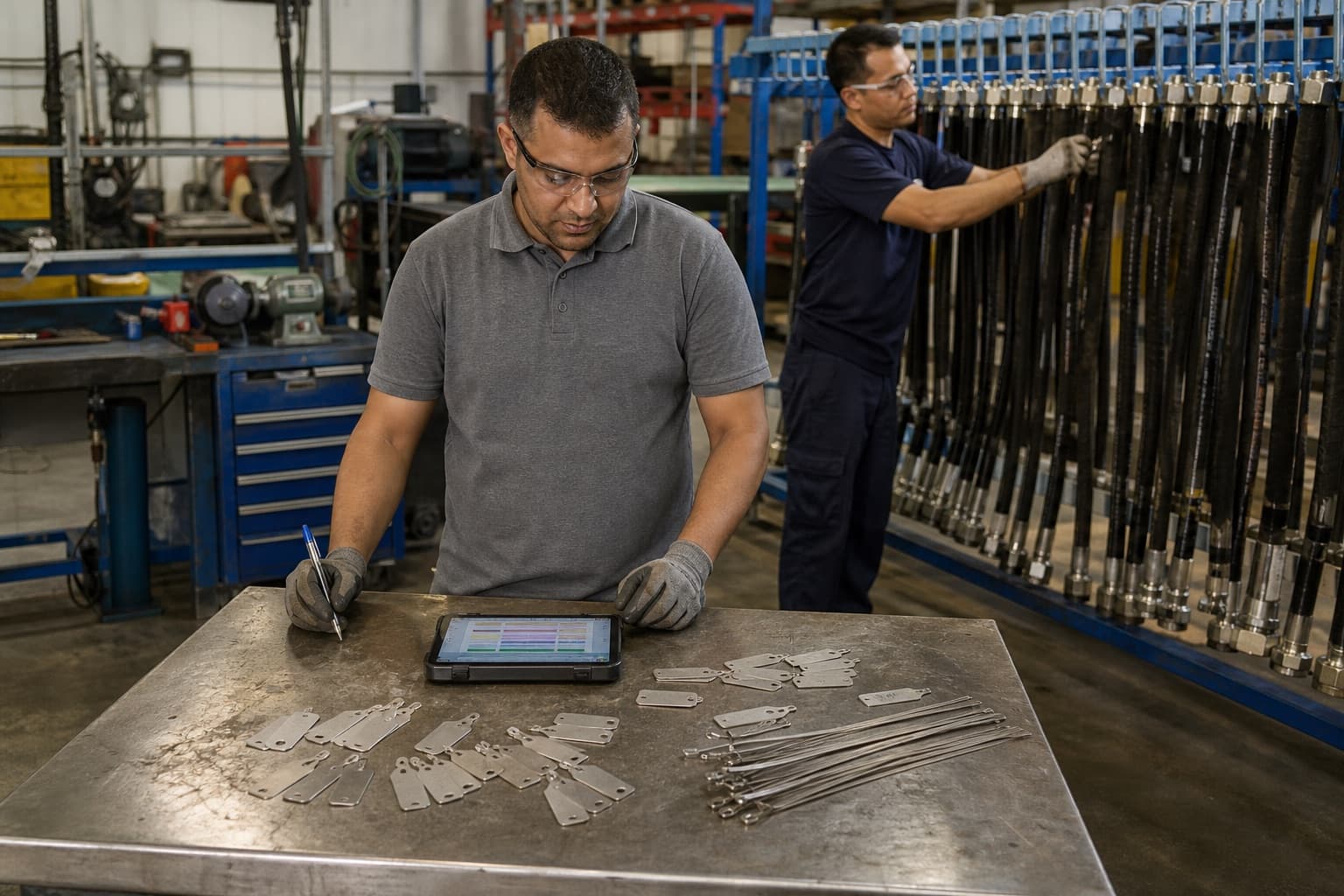
There is no universal interval — it depends on duty, temperature, flexing and environment. What works is a register: record every assembly with its build date and position, inspect on a set frequency, and replace on the evidence plus an age limit set for that machine. Without a register neither half is possible.
Unplanned hose failure is expensive not because the hose costs anything but because of what stops around it. The whole point of a register is converting that cost into a scheduled one.
| Field | Why |
|---|---|
| Position on the machine | Without it, no assembly can be found again |
| Build date | The only basis for age-based replacement |
| Grade, size and end types | Turns a replacement into a lookup rather than a measuring job |
| Last inspection and finding | Distinguishes a hose that was checked from one that was not |
| Failure history at that position | A position that fails twice has a routing problem, not a hose problem |
Starting a hose register?
We tag every assembly we build and can supply the schedule of what went where. On a fleet refit that record is worth more than the hoses.
Plant-down? Call +971 52 2477942 — 24/7