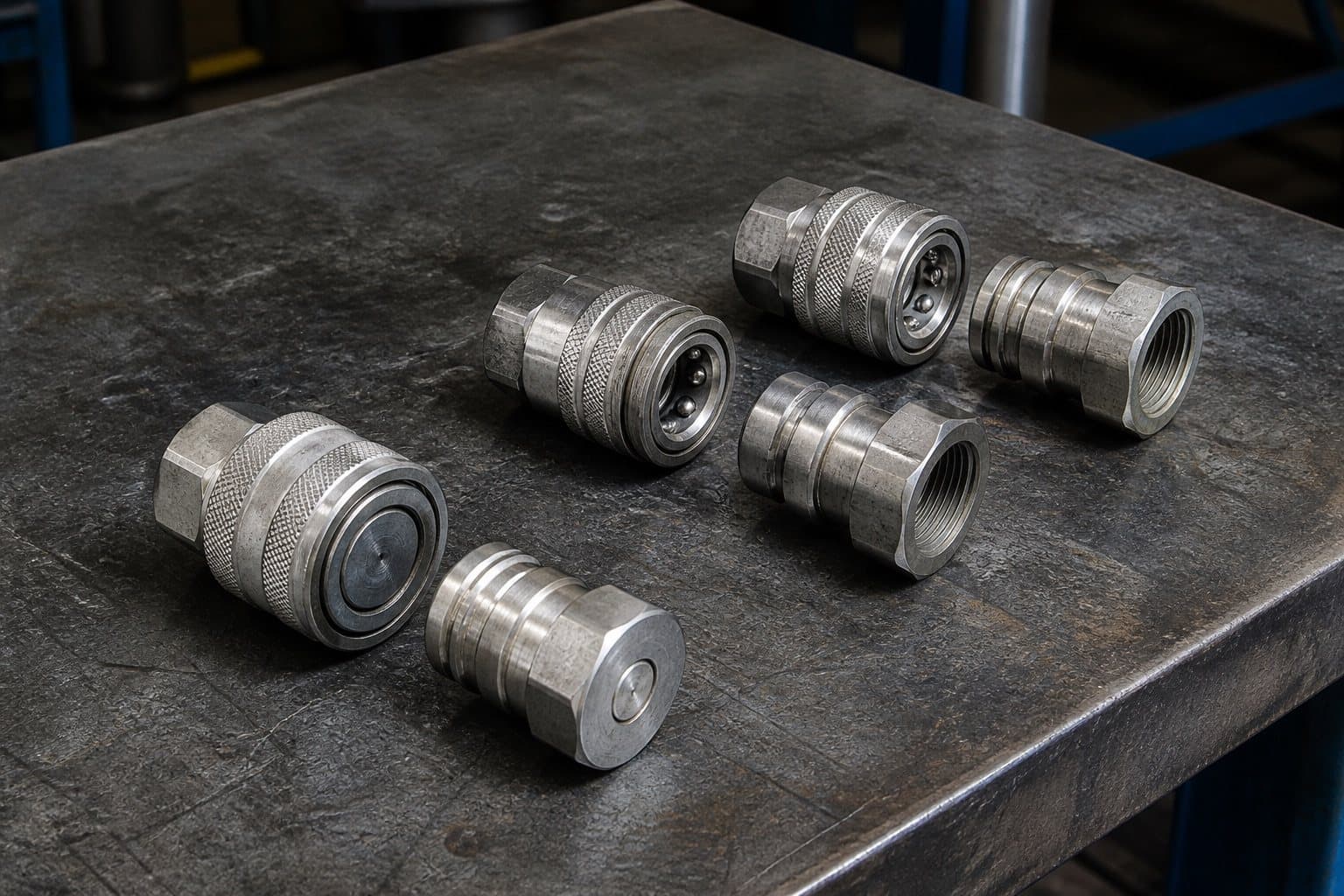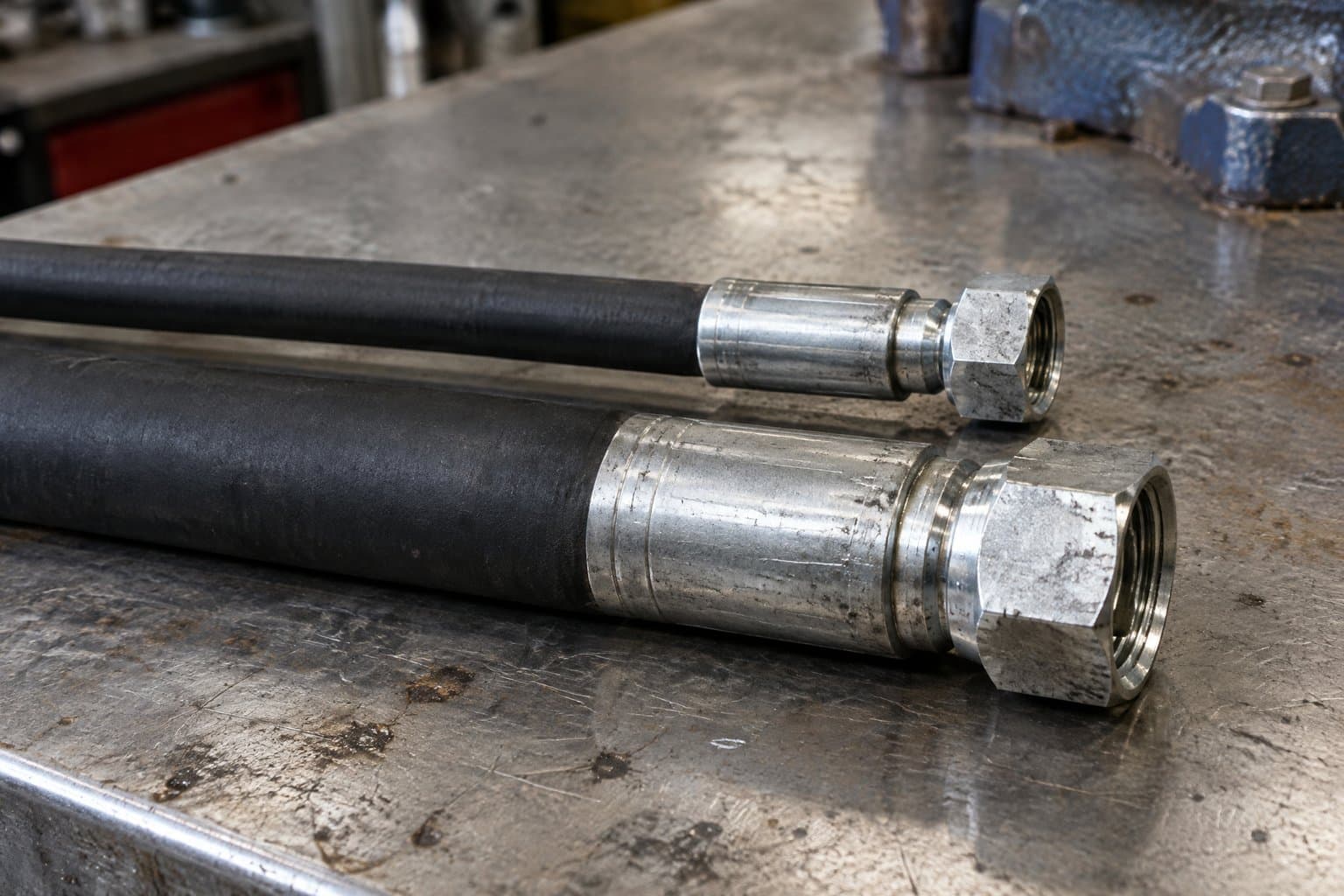
Two JIC 37° female swivels of the same size can sit side by side in a drawer and look identical from the nut end. One is made for two-wire braid, the other for four-spiral hose, and they are not interchangeable. The thread end of a hose fitting is chosen by the port; the crimp end is chosen by the hose, and that is the half people forget to specify.
/01Why there are two series.
Braided hose has one or two layers of interwoven wire; spiral hose has four layers laid in alternating helices, a thicker wall and a larger outside diameter for the same bore. The ferrule has to grip each construction differently — on spiral hose it typically has to bite into the wire layers to hold the pressure the hose is rated for — so the stem, the ferrule and the crimp diameter are designed for one construction. A braided-hose fitting crimped onto spiral hose, or the reverse, is an assembly no maker has a specification for.
| Property | Braided-hose crimp fittings | Spiral-hose crimp fittings |
|---|---|---|
| Hose (listing)Highlighted | EN 853 1SN, 2SN; SAE 100R1AT, 100R2AT, 100R16, 100R17 | EN 856 4SP; SAE 100R12 |
| Parker series cross-referenced | 43 series (e.g. 10643, 1JC43) | 71 series (e.g. 10671, 16A71) |
| JIC 37° female swivel | −04 to −32 | −06 to −32 |
| ORFS female swivel | −04 to −24 | Listed (straight, 45°, 90°, 90° long drop) |
| SAE flange heads | Code 61 and Code 62, straight, 45°, 90° | Code 61 and Code 62 (Code 62 −12 to −32) |
| Material | Carbon steel, zinc-plated Cr3+; 316 on request | Carbon steel, zinc-plated Cr3+; 316 on request |
/02The same end families in both.
Both series cover the same thread families, so the choice of series never limits the port you can reach: BSP female swivel 60° cone (straight, 45°, 90°), JIC 37° female swivel and male, ORFS female swivel, DIN light and heavy 24° cone female swivel and male, Komatsu JIS metric 30° and JIS BSP 30° female swivels, SAE 45° flare female, NPT male (rigid and swivel), SAE O-ring boss male, and SAE Code 61 and Code 62 flange heads. Our JIC ends follow SAE J514 and ISO 8434-2; ORFS SAE J1453 and ISO 8434-3; flange heads SAE J518 and ISO 6162.
/03Hoses outside both series.
4SH, R13 and R15 are heavier spiral constructions than 4SP and R12, and they are not on either listing. They take fittings and ferrules specified for them: our crimp ferrule shelf lists a skive interlock ferrule for 4SH, skive ferrules for 4SH in DN10 to DN16, a DIN 20023 skive ferrule for 4SH and R12 in −32, and a double-skive ferrule for R13. Compact 1SC and 2SC have a smaller outside diameter than standard braid, so confirm the ferrule specified for the compact hose before crimping.
/04Ordering the right one.
A hose fitting order needs five things: the thread family and size at the port, the gender, the shape (straight, 45°, 90°, long drop), and the hose the fitting goes on — grade and dash size. The last item picks the series. Where the old assembly is available, the hose layline answers it; where it is not, the hose outside diameter and wire layers seen at a cut end will. See the hose assembly guide for the full build.
Frequently asked questions
- Can I use a braided hose fitting on spiral hose?
- No. Braided-hose fittings are made for wire-braid hose; spiral hose needs a spiral series fitting and ferrule. There is no published crimp specification for the mismatch.
- Which hoses do your spiral hose fittings fit?
- EN 856 4SP and SAE 100R12, per our listings. 4SH, R13 and R15 take their own fittings and ferrules.
- What are Parker 43 and 71 series?
- Parker's crimp fitting series for braided and spiral hose respectively. Our braided and spiral fittings list the Parker part they cross-reference, such as 10643 or 10671.
- Do both series come in the same thread families?
- Yes — BSP, JIC, ORFS, DIN light and heavy, Komatsu and JIS 30°, SAE 45°, NPT, O-ring boss and SAE flange heads are listed in both.
Braided-hose crimp fittings
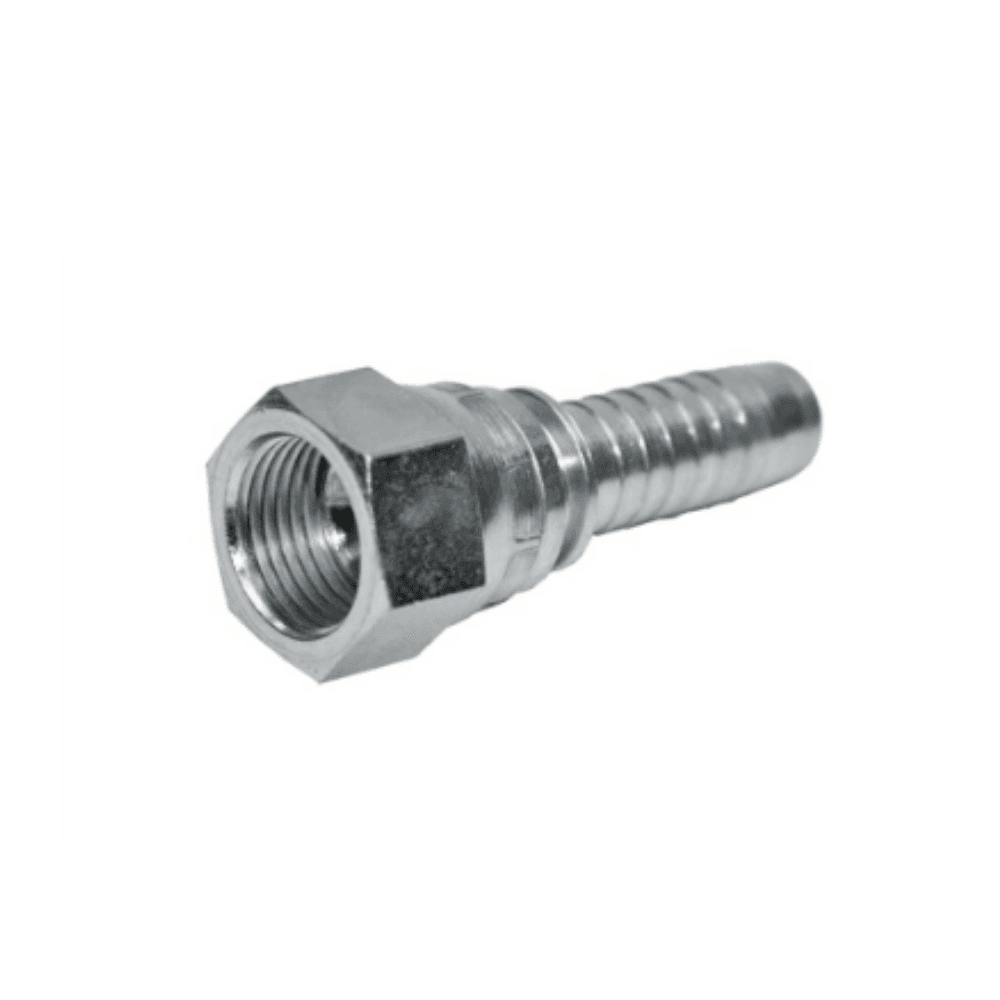 IH-CF43-JICFJIC 37° Female Swivel Crimp Fitting for Braided HoseIndus Hydraulics
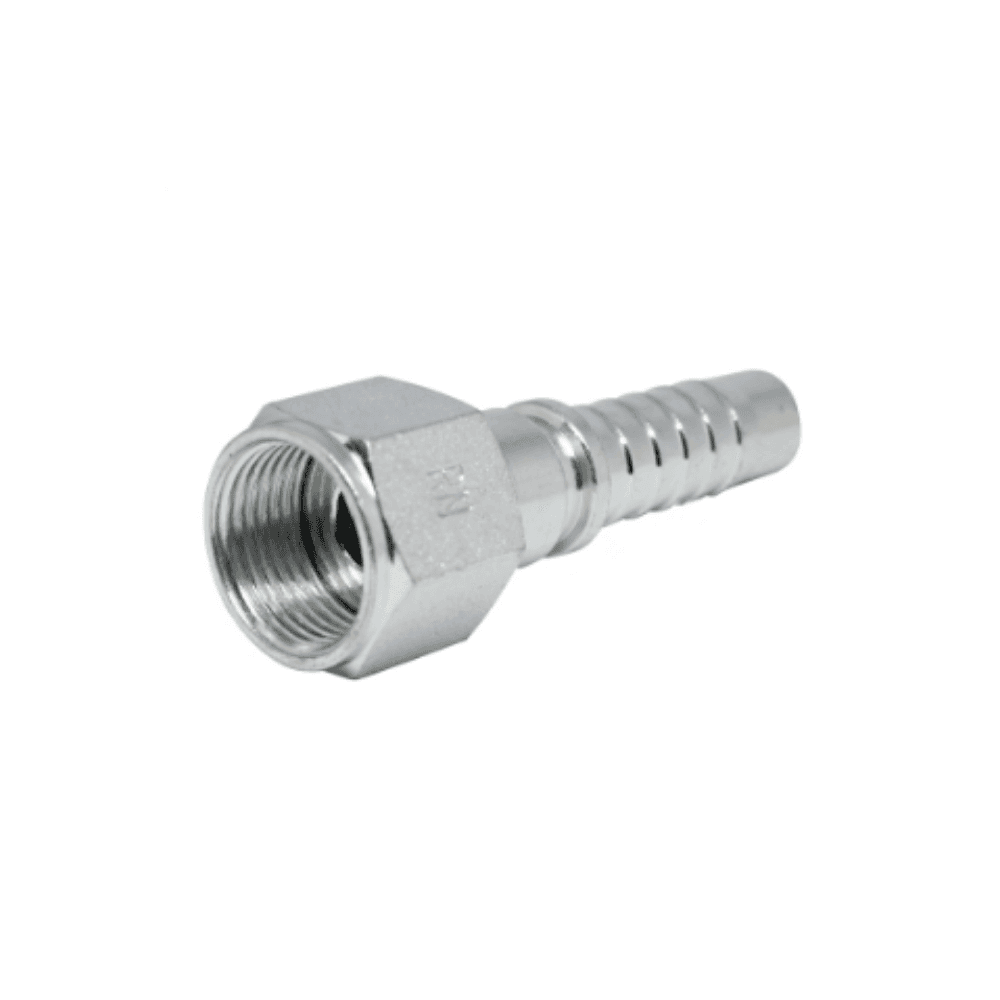 IH-CF43-ORFSFORFS Female Swivel Crimp Fitting for Braided HoseIndus Hydraulics
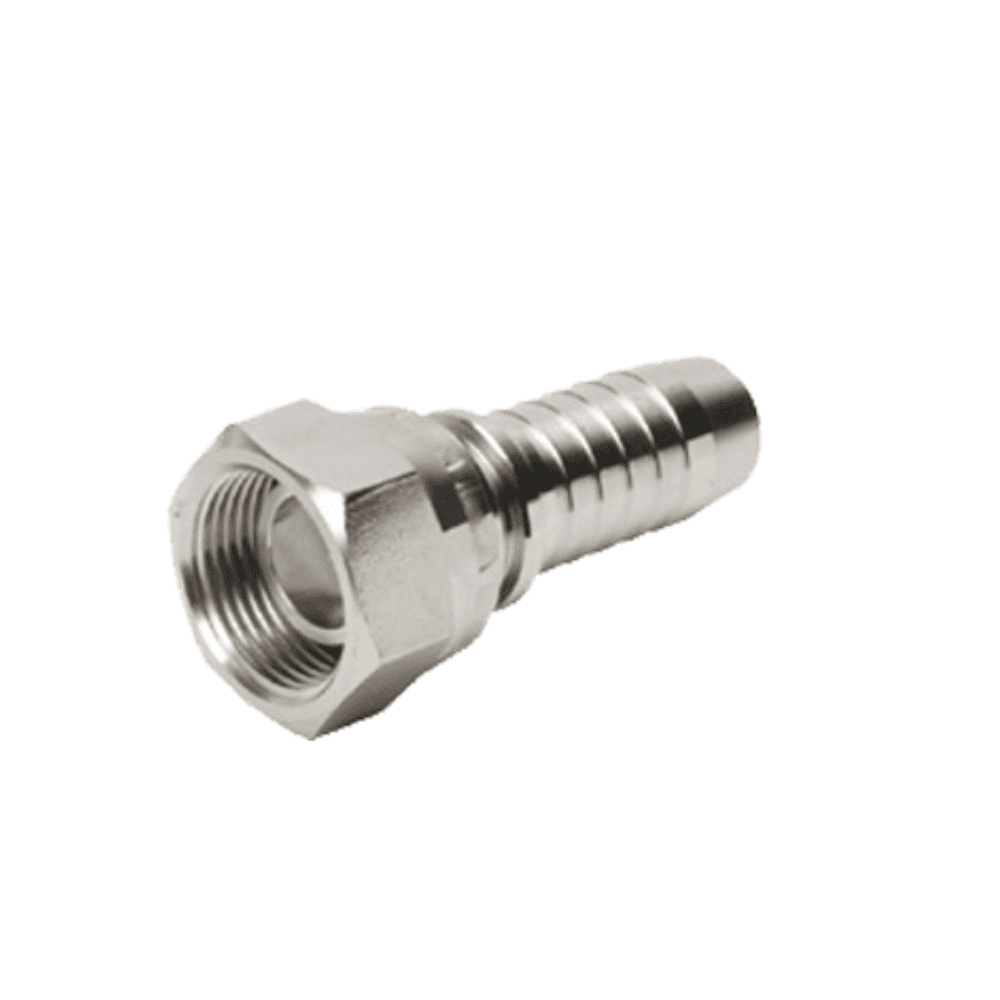 IH-CF43-BSPFBSP Female Swivel 60° Cone Crimp Fitting for Braided HoseIndus Hydraulics
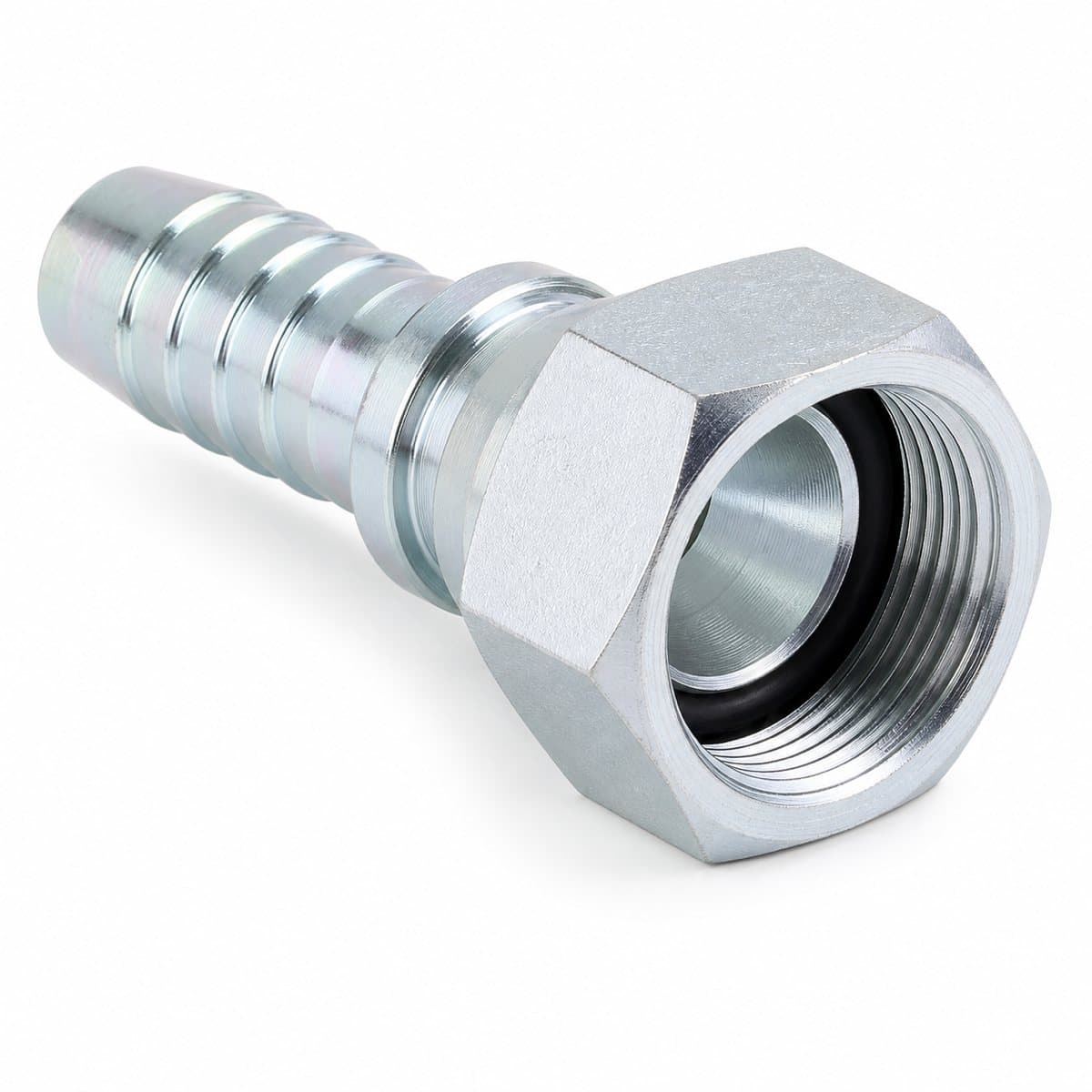 IH-CF43-DINHFDIN Heavy Metric 24° Female Swivel Crimp Fitting for Braided HoseIndus Hydraulics
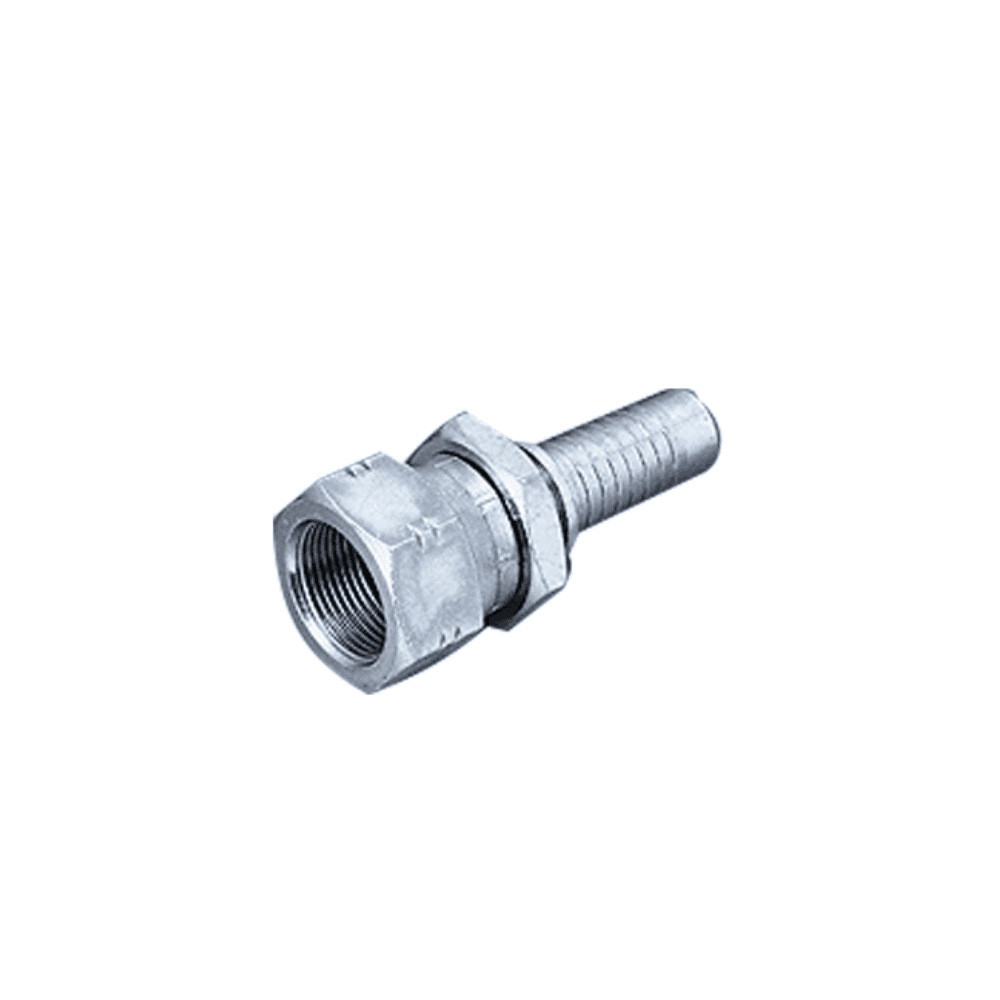 IH-CF43-KOMFKomatsu JIS Metric 30° Female Swivel Crimp Fitting for Braided HoseIndus Hydraulics
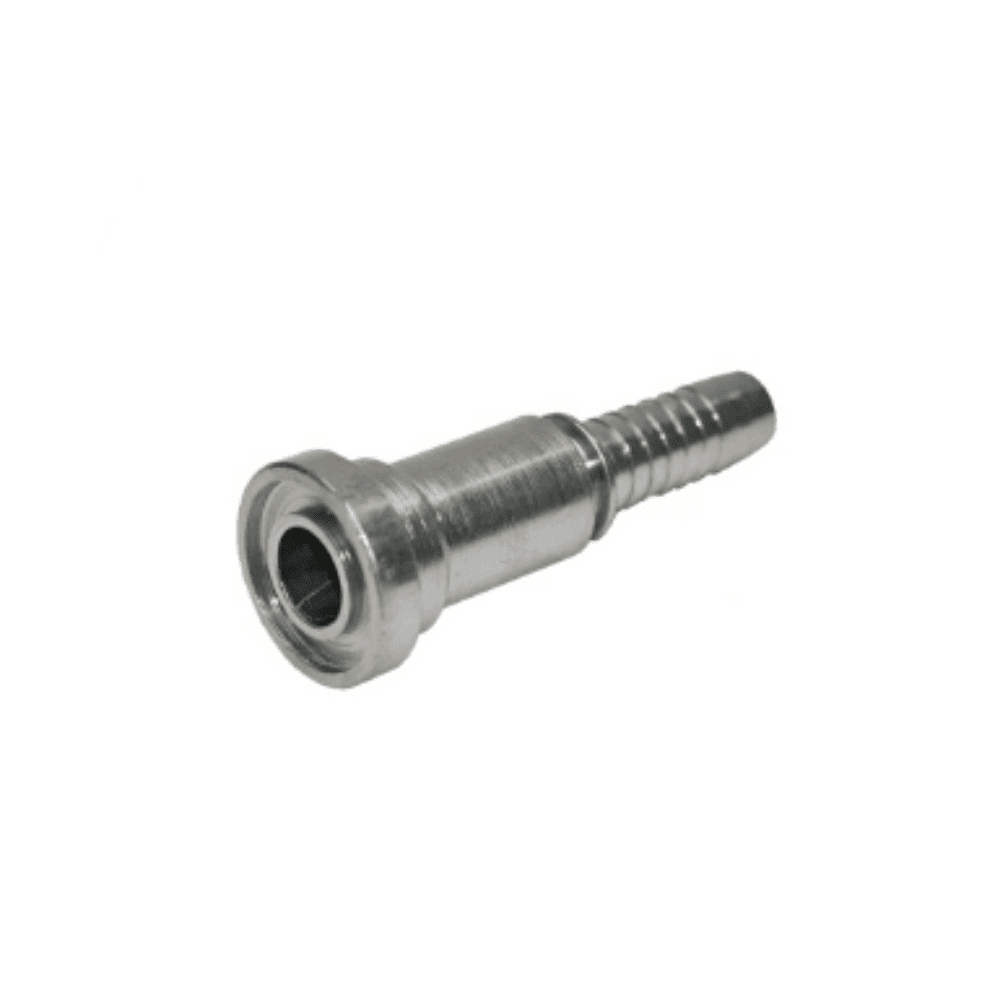 IH-CF43-C61SAE Code 61 Flange Head Crimp Fitting for Braided HoseIndus Hydraulics
Spiral-hose crimp fittings
- IH-CF71-JICFJIC 37° Female Swivel Crimp Fitting for Spiral HoseIndus Hydraulics
- IH-CF71-ORFSFORFS Female Swivel Crimp Fitting for Spiral HoseIndus Hydraulics
- IH-CF71-BSPFBSP Female Swivel 60° Cone Crimp Fitting for Spiral HoseIndus Hydraulics
- IH-CF71-DINHFDIN Heavy Metric 24° Female Swivel Crimp Fitting for Spiral HoseIndus Hydraulics
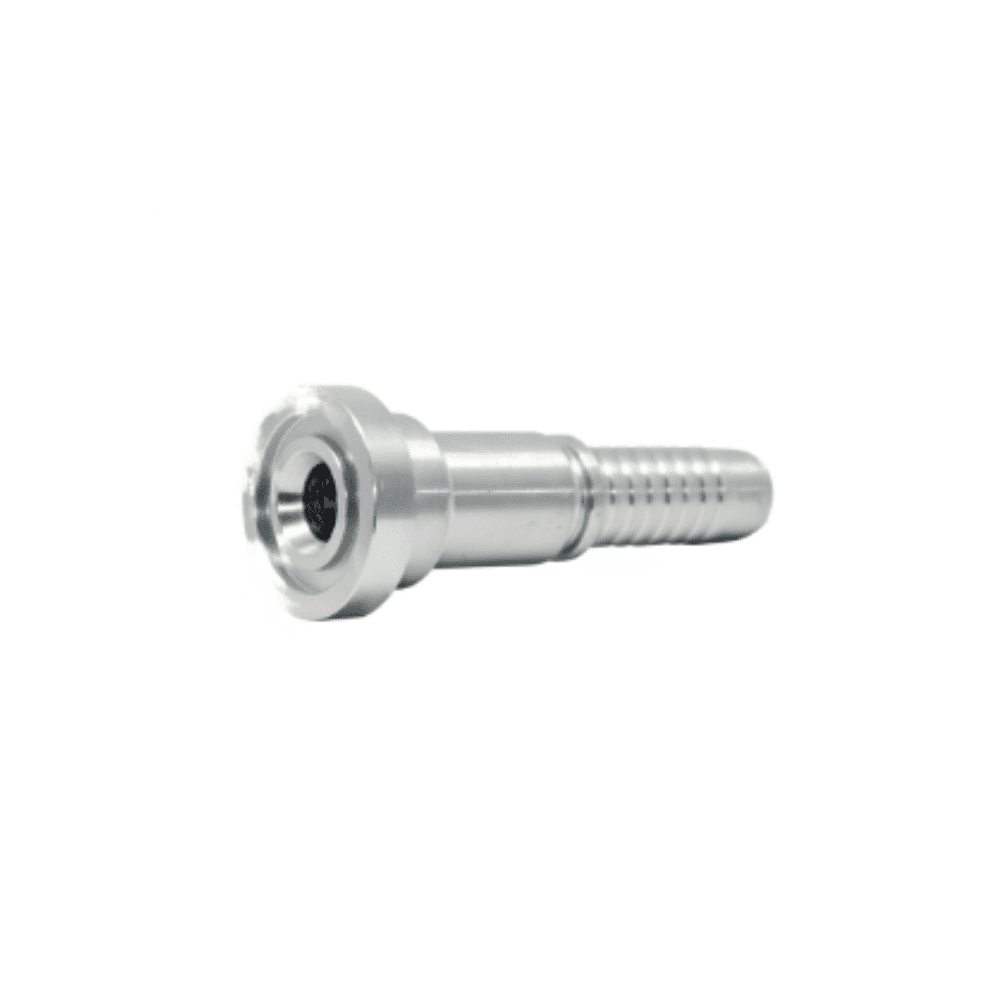 IH-CF71-C62SAE Code 62 Flange Head Crimp Fitting for Spiral HoseIndus Hydraulics
- IH-CF71-KOMFKomatsu JIS Metric 30° Female Swivel Crimp Fitting for Spiral HoseIndus Hydraulics