The 37° flare is the most common tube and hose end in North American hydraulics, and the one most often carried over into stainless when a system has to survive salt air. It is simple — a flared tube, a sleeve, a nut and a cone — but in stainless two details decide whether it seals: the rating of the particular shape, and the state of the nut thread.
/01How a 37° joint seals.
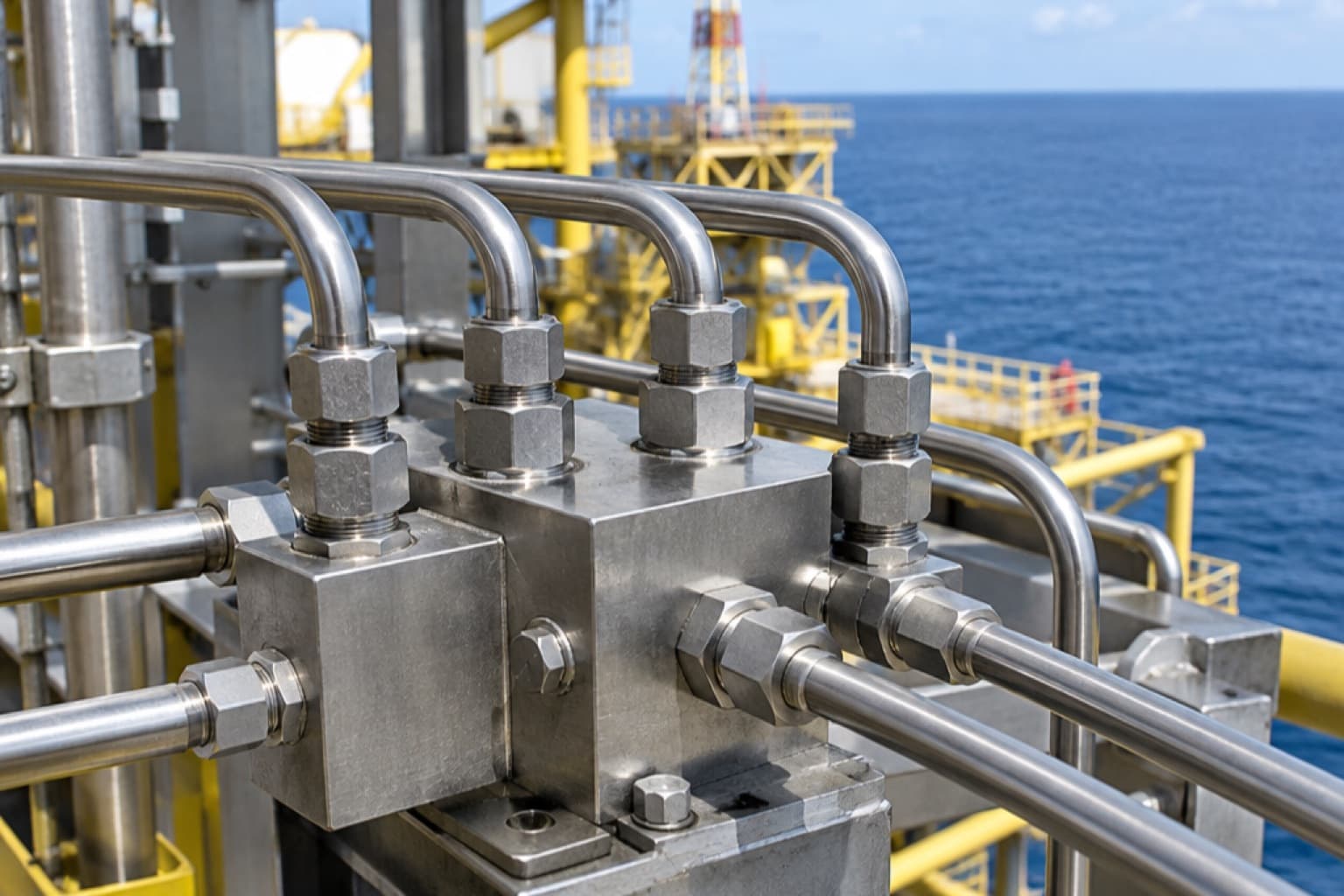
The tube is flared to 37° from its centreline — 74° included — and a sleeve and nut press that flare onto the matching cone of the fitting. Sealing is metal to metal, between the fitting nose and the inside of the flare; there is no elastomer. For stainless systems where that metal seat struggles, Parker offers a stainless-only variant with an O-ring in the 37° nose for improved seal reliability. Dash sizes and threads are the SAE J514 set:
| Dash | Tube OD | Thread | Dash | Tube OD | Thread |
|---|---|---|---|---|---|
| -2 | 1/8" | 5/16-24 | -12 | 3/4" | 1 1/16-12 |
| -4Highlighted | 1/4" | 7/16-20 | -16 | 1" | 1 5/16-12 |
| -6 | 3/8" | 9/16-18 | -20 | 1 1/4" | 1 5/8-12 |
| -8 | 1/2" | 3/4-16 | -24 | 1 1/2" | 1 7/8-12 |
| -10 | 5/8" | 7/8-14 | -32 | 2" | 2 1/2-12 |
/02Ratings: shape matters more than material.
| Dash | Tube OD | Steel | 316 stainless |
|---|---|---|---|
| -4Highlighted | 1/4" | 7,500 | 9,000 |
| -6 | 3/8" | 6,000 | 7,200 |
| -8 | 1/2" | 6,000 | 7,200 |
| -10 | 5/8" | 5,000 | 6,000 |
| -12 | 3/4" | 5,000 | 6,000 |
| -16 | 1" | 4,500 | 5,400 |
| -20 | 1 1/4" | 4,000 | 4,800 |
| -24 | 1 1/2" | 3,000 | 3,600 |
| -32 | 2" | 2,000 | 2,400 |
The same pattern holds for Parker’s 37° unions — -8 is 6,000 psi in steel and 7,200 in stainless. But it reverses on its elbows: a -8 elbow is 6,000 psi in steel and 5,400 in stainless, a -16 elbow 4,000 and 3,000. And with an NPTF end, steel and stainless carry the same rating (-16 at 3,000 psi), because the pipe thread limits both. These are 2017 catalogue figures for one maker; the current edition and other makers may differ, and our own stainless listings carry the manufacturer’s SAE J514 ratings for each size. A hose or tube assembly is rated to its weakest part.
/03Tube for flaring.
Parker’s tube table for 37° flare specifies stainless 304 or 316 to ASTM A213 or A269, seamless and fully annealed, with a maximum hardness of HRB 90 (welded-and-drawn tube to A249/A269 is the alternative). It warns that harder tube that is not fully annealed may crack at the flare, immediately or later, and its troubleshooting table gives "work-hardened tube; tube not annealed" as the cause of a cracked flare. Ask for the hardness on the tube certificate.
/04Making up stainless JIC.
Parker’s stainless 37° nuts carry a pre-applied anti-seize lubricant to prevent galling. With it in place, Parker’s torque table applies to "unlubricated carbon steel components and properly lubricated stainless steel components" — the same figures — and only brass and aluminium are reduced, to about 65%. For stainless and brass, Parker’s preferred method is flats from wrench resistance (FFWR): tighten until resistance rises, then turn the nut the stated number of hex flats.
| Dash | Thread | Torque | FFWR, tube | FFWR, swivel/hose |
|---|---|---|---|---|
| -4 | 7/16-20 | 13 ft-lb (155 in-lb) | 2½ | 2 |
| -6 | 9/16-18 | 22 ft-lb | 2 | 1½ |
| -8Highlighted | 3/4-16 | 42 ft-lb | 2 | 1½ |
| -10 | 7/8-14 | 60 ft-lb | 1½ | 1½ |
| -12 | 1 1/16-12 | 84 ft-lb | 1½ | 1¼ |
| -16 | 1 5/16-12 | 118 ft-lb | 1½ | 1 |
| -20 | 1 5/8-12 | 168 ft-lb | 1 | 1 |
| -32 | 2 1/2-12 | 265 ft-lb | 1 | 1 |
/05SAE flange adapters, Code 61 and 62.
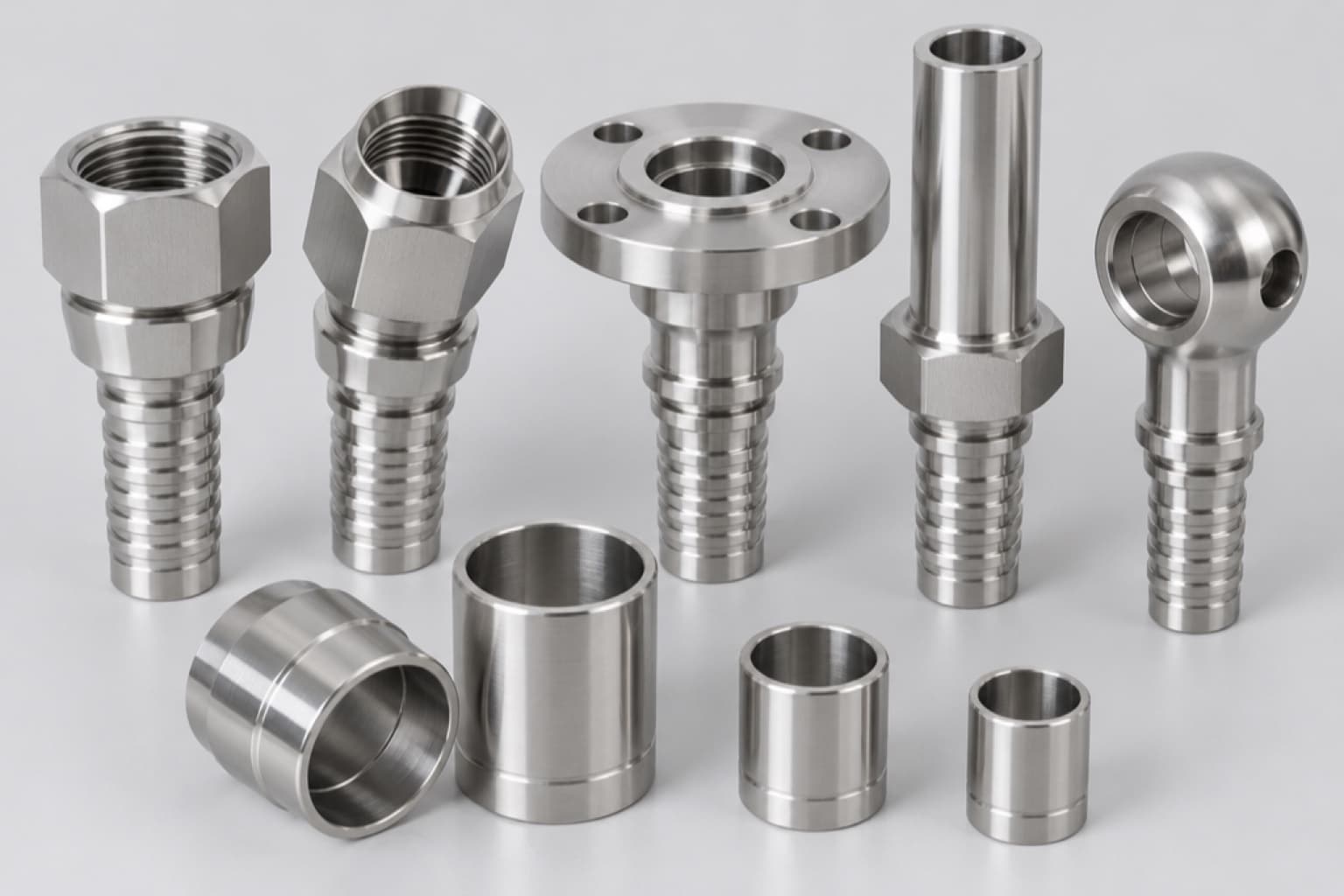
Above 1" or so, and on pump and valve ports, the four-bolt SAE flange (SAE J518 / ISO 6162-1 and -2) takes over from threads. A flange head on the adapter is clamped to the port by split flange halves and sealed by an O-ring. Parker describes the system as especially suited to larger sizes and higher pressures, with up to 6,000 psi through 2" in Code 62. A table citing SAE J518 gives:
| Size | Code 61 | Code 62 |
|---|---|---|
| ½", ¾", 1" | 5,000 psi (345 bar) | 6,000 psi (414 bar) |
| 1¼" | 4,000 psi (276 bar) | 6,000 psi (414 bar) |
| 1½", 2"Highlighted | 3,000 psi (207 bar) | 6,000 psi (414 bar) |
| 2½" | 2,500 psi (172 bar) | — |
Code 61 and Code 62 heads of the same nominal size are different dimensions and do not interchange. Our stainless JIC × Code 61 and Code 62 flange heads, and Code 61 split flange halves and kits, are listed below.
Common questions
- What pressure are stainless JIC fittings rated for?
- It depends on size and shape. In Parker’s 2017 tables a -4 stainless straight connector is 9,000 psi and a -16 is 5,400; stainless elbows are lower (-16 at 3,000 psi). Use the maker’s stainless rating for the exact part.
- What torque for a stainless JIC fitting?
- Parker uses the same torque as for steel, on a properly lubricated stainless nut: -4 13 ft-lb, -8 42 ft-lb, -16 118 ft-lb. It prefers the flats-from-wrench-resistance method for stainless.
- Why do stainless JIC nuts gall?
- Stainless threads forced together dry can locally weld. Makers coat or pre-lubricate stainless nuts to prevent it; keep that coating and do not mix in bare nuts.
- Can any 316 tube be flared to 37°?
- Use seamless, fully annealed 304 or 316 tube no harder than HRB 90. Harder, work-hardened tube can crack at the flare.
- What is the difference between SAE Code 61 and Code 62 flanges?
- Code 62 is the high-pressure series — 6,000 psi through 2" — with a thicker, larger flange head. Code 61 is rated 5,000 psi to 1", falling to 3,000 psi at 1½–2". They do not interchange.
- Is JIC the same as 37° flare?
- Yes. JIC, SAE 37° flare and SAE J514 37° refer to the same 37° flare, 74° included, metal-to-metal connection.
What we list
316L stainless 37° JIC fittings and stainless SAE flange adapters:
- Stainless Steel JIC 37° Male Union
- Stainless Steel JIC 37° Male Union, Large Hex
- Stainless Steel JIC 37° Male × NPT Male Connector
- Stainless Steel JIC 37° Male × Long NPT Male Connector
- Stainless Steel JIC 37° Male × NPT Female Connector
- Stainless Steel JIC 37° Female Swivel × JIC Male Reducer / Expander
- Stainless Steel JIC 37° Female Swivel × JIC Male Reducer, Short
- Stainless Steel JIC 37° Male Plug
- Stainless Steel JIC 37° Male Union 90° Elbow
- Stainless Steel JIC 37° Male × NPT Male 90° Elbow
- Stainless Steel JIC 37° Male × NPT Male 90° Elbow, Long
- Stainless Steel JIC 37° Male × NPT Female 90° Elbow
- Stainless Steel JIC 37° Male × NPT Male 45° Elbow
- Stainless Steel JIC 37° Male Union 45° Elbow
- Stainless Steel JIC 37° Male × NPT Male Branch Tee
- Stainless Steel JIC 37° Male × NPT Female Branch Tee
- Stainless Steel JIC 37° Male Union Tee
- Stainless Steel JIC 37° Male × NPT Male Run Tee
- Stainless Steel JIC 37° Male × NPT Female Run Tee
- Stainless Steel JIC 37° Male Union Cross
- Stainless Steel JIC 37° Male Bulkhead Union
- Stainless Steel JIC 37° Male Bulkhead Union 90° Elbow
- Stainless Steel JIC 37° Male Bulkhead Union 45° Elbow
- Stainless Steel JIC 37° Male Bulkhead Branch Tee
- Stainless Steel JIC 37° Male Bulkhead Run Tee
- Stainless Steel NPT Female × JIC 37° Male Bulkhead Connector
- Stainless Steel NPT Male × JIC 37° Male Bulkhead Connector
- Stainless Steel JIC 37° Female Cap
- Stainless Steel JIC 37° Bulkhead Locknut
- Stainless Steel JIC 37° Tube Nut
- Stainless Steel JIC 37° Tube Sleeve
- Stainless Steel JIC 37° Male × Tube Socket (Countersunk Bore) Connector
- Stainless Steel JIC 37° Male × JIC Female Swivel 90° Elbow
- Stainless Steel NPT Male × JIC 37° Female Swivel 90° Elbow
- Stainless Steel JIC 37° Male × JIC Female Swivel 45° Elbow
- Stainless Steel JIC 37° Male × JIC Female Swivel Connector
- Stainless Steel NPT Male × JIC 37° Female Swivel Connector
- Stainless Steel NPT Female × JIC 37° Female Swivel Connector
- Stainless Steel JIC 37° Female Swivel Union
- Stainless Steel JIC 37° Swivel Nut Branch Tee
- Stainless Steel JIC 37° Swivel Nut Run Tee
- Stainless Steel JIC 37° Male × SAE Code 61 Flange Head
- Stainless Steel JIC 37° Male × SAE Code 61 Flange Head 45° Elbow
- Stainless Steel JIC 37° Male × SAE Code 61 Flange Head 90° Elbow
- Stainless Steel JIC 37° Male × SAE Code 62 Flange Head
- Stainless Steel JIC 37° Male × SAE Code 62 Flange Head 45° Elbow
- Stainless Steel JIC 37° Male × SAE Code 62 Flange Head 90° Elbow
- Stainless Steel SAE Code 61 Split Flange Half
- Stainless Steel SAE Code 61 Split Flange Kit
Stainless JIC fittings
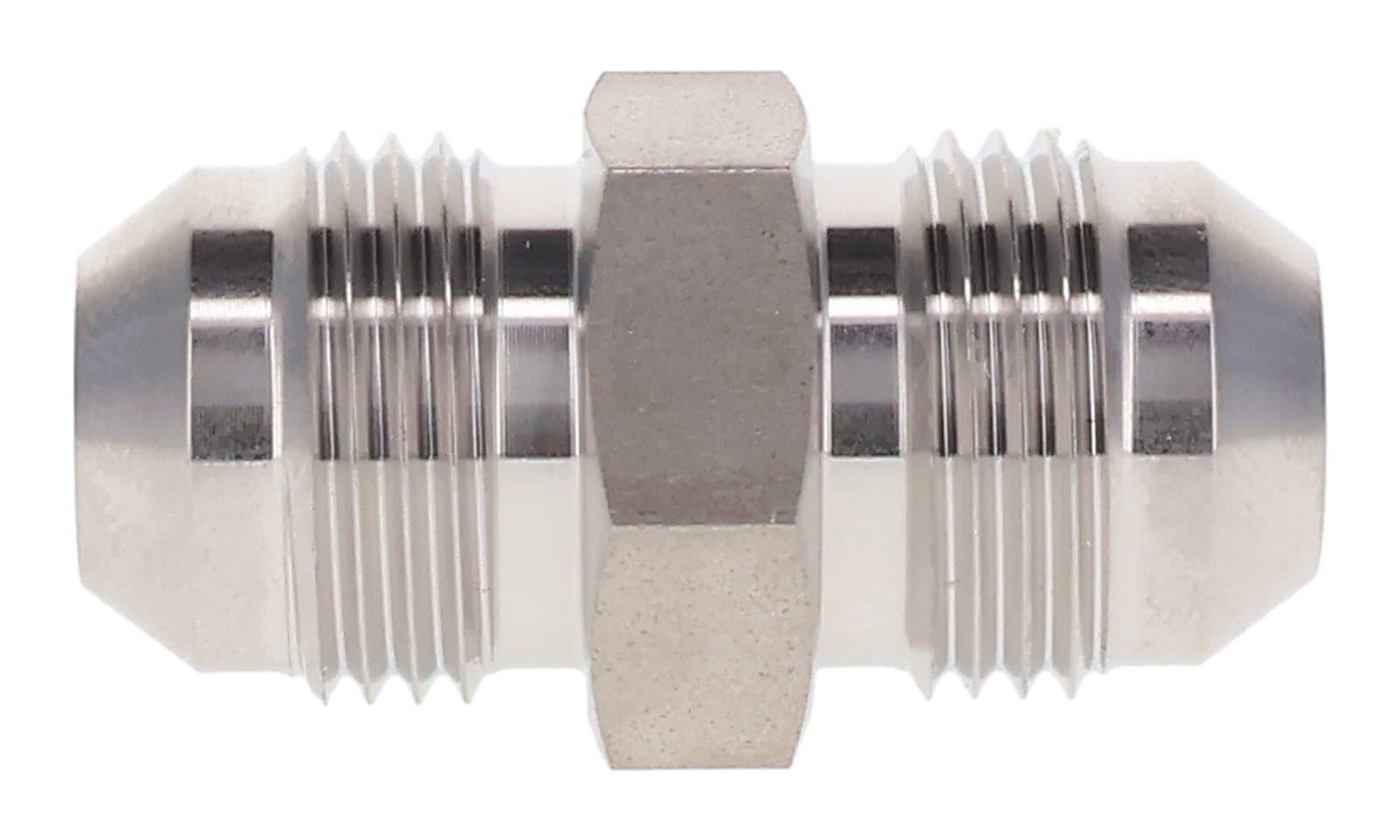 IH-SS-2403Stainless Steel JIC 37° Male UnionIndus Hydraulics
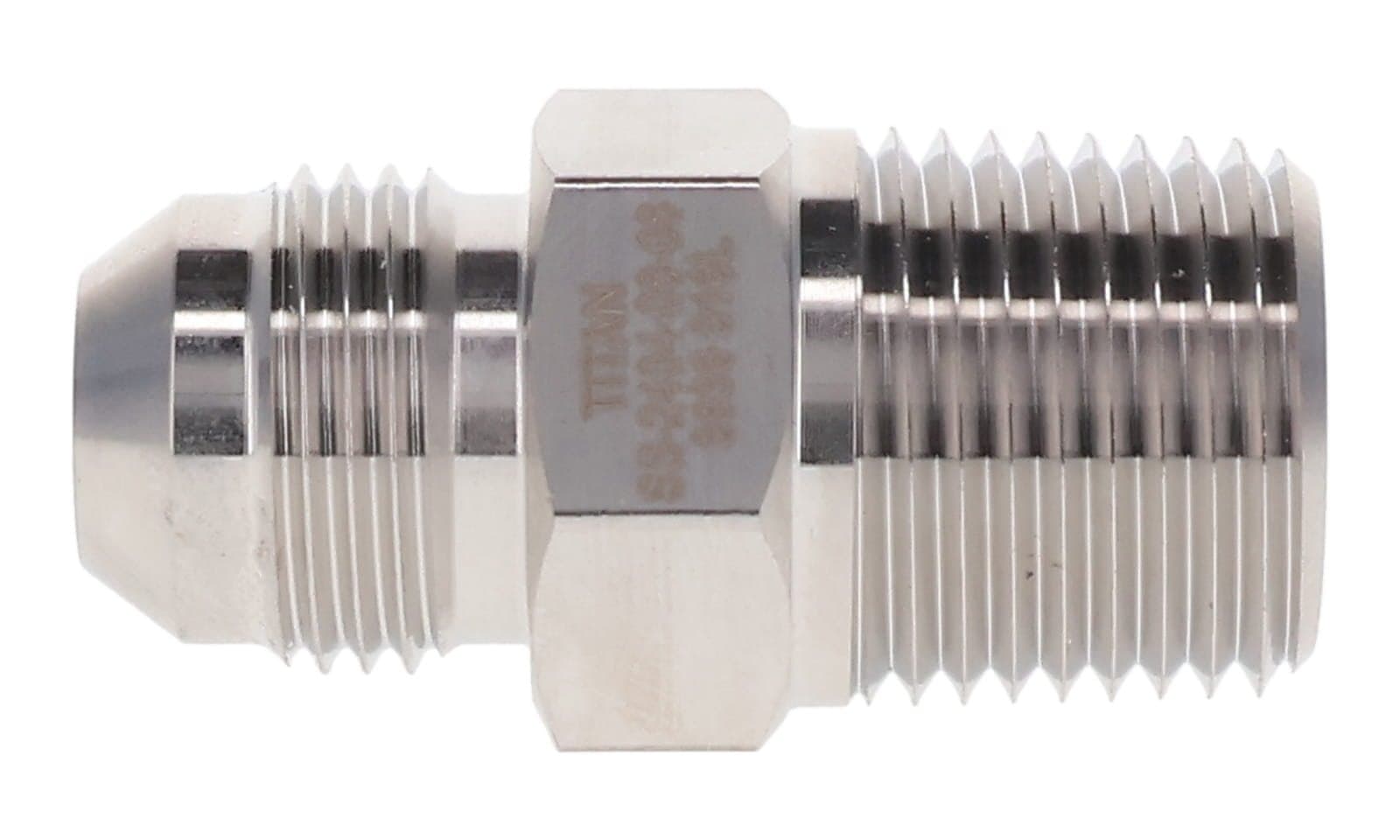 IH-SS-2404Stainless Steel JIC 37° Male × NPT Male ConnectorIndus Hydraulics
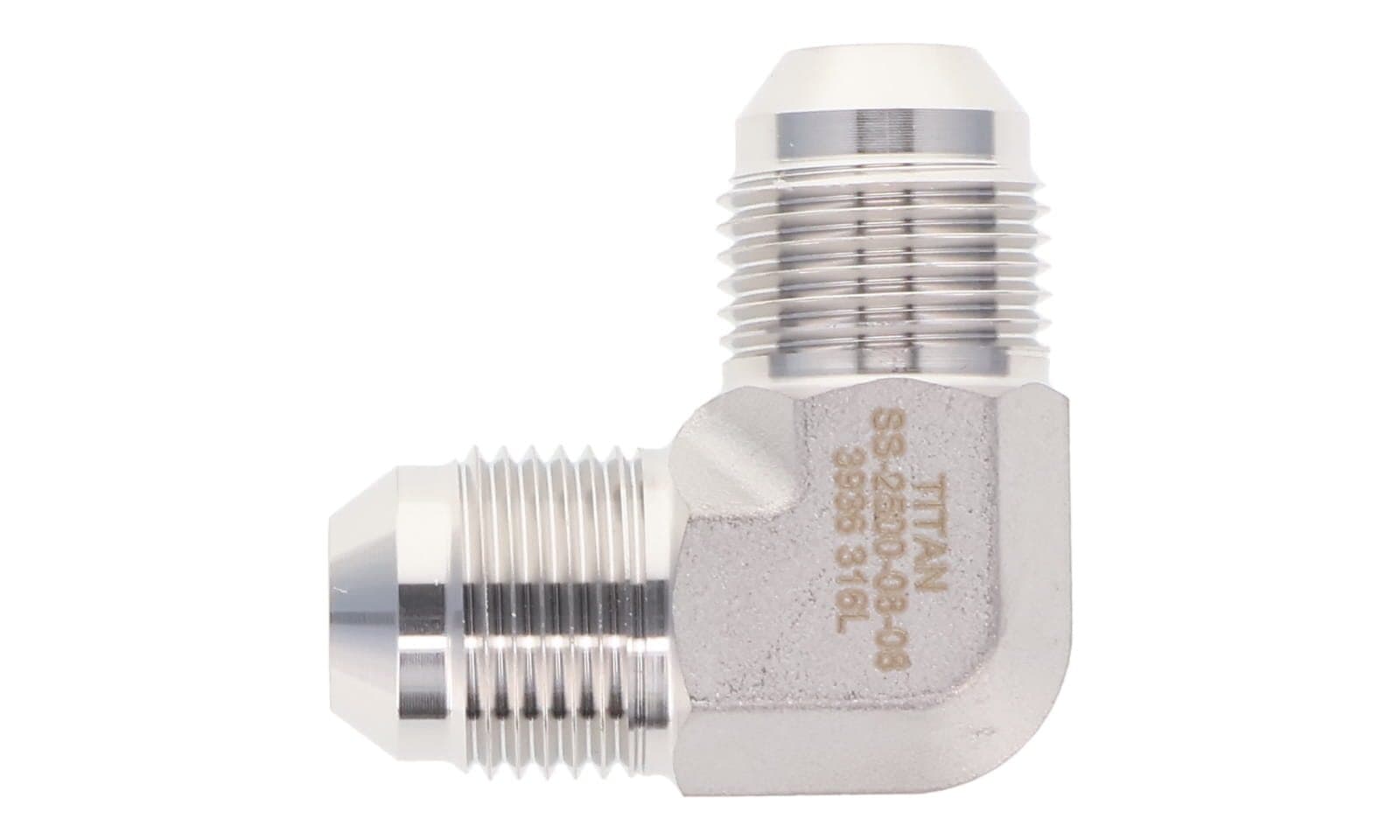 IH-SS-2500Stainless Steel JIC 37° Male Union 90° ElbowIndus Hydraulics
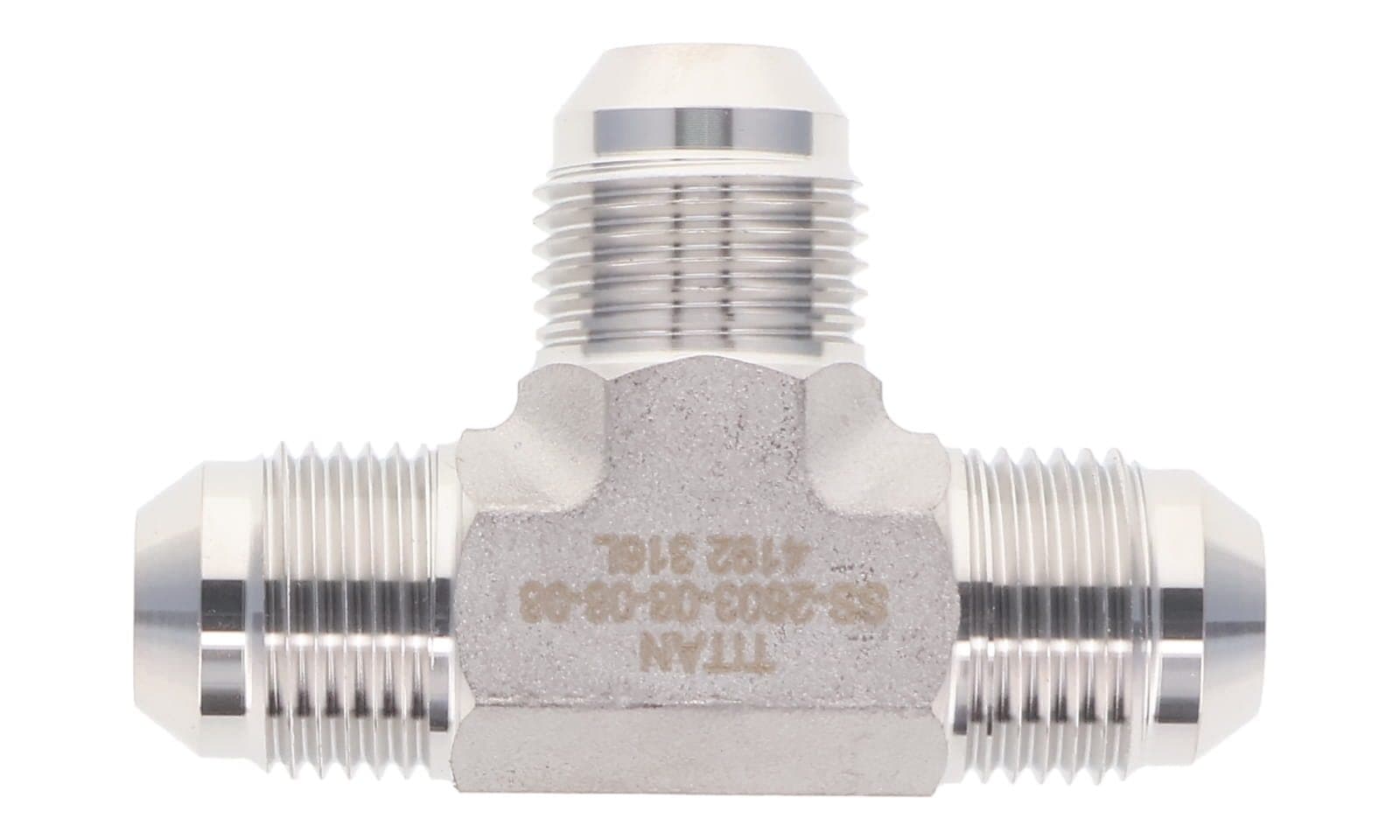 IH-SS-2603Stainless Steel JIC 37° Male Union TeeIndus Hydraulics
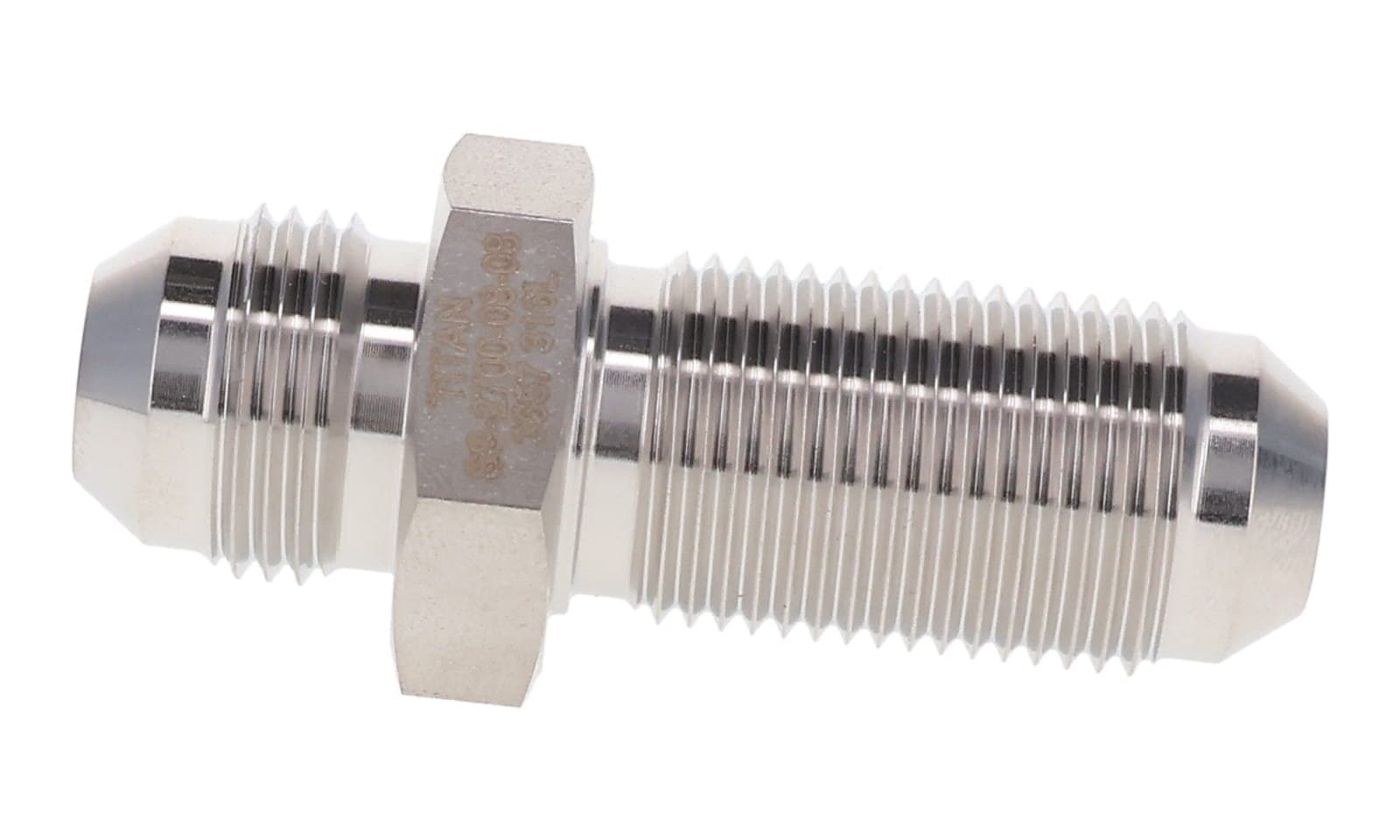 IH-SS-2700Stainless Steel JIC 37° Male Bulkhead UnionIndus Hydraulics
 IH-SS-6500Stainless Steel JIC 37° Male × JIC Female Swivel 90° ElbowIndus Hydraulics
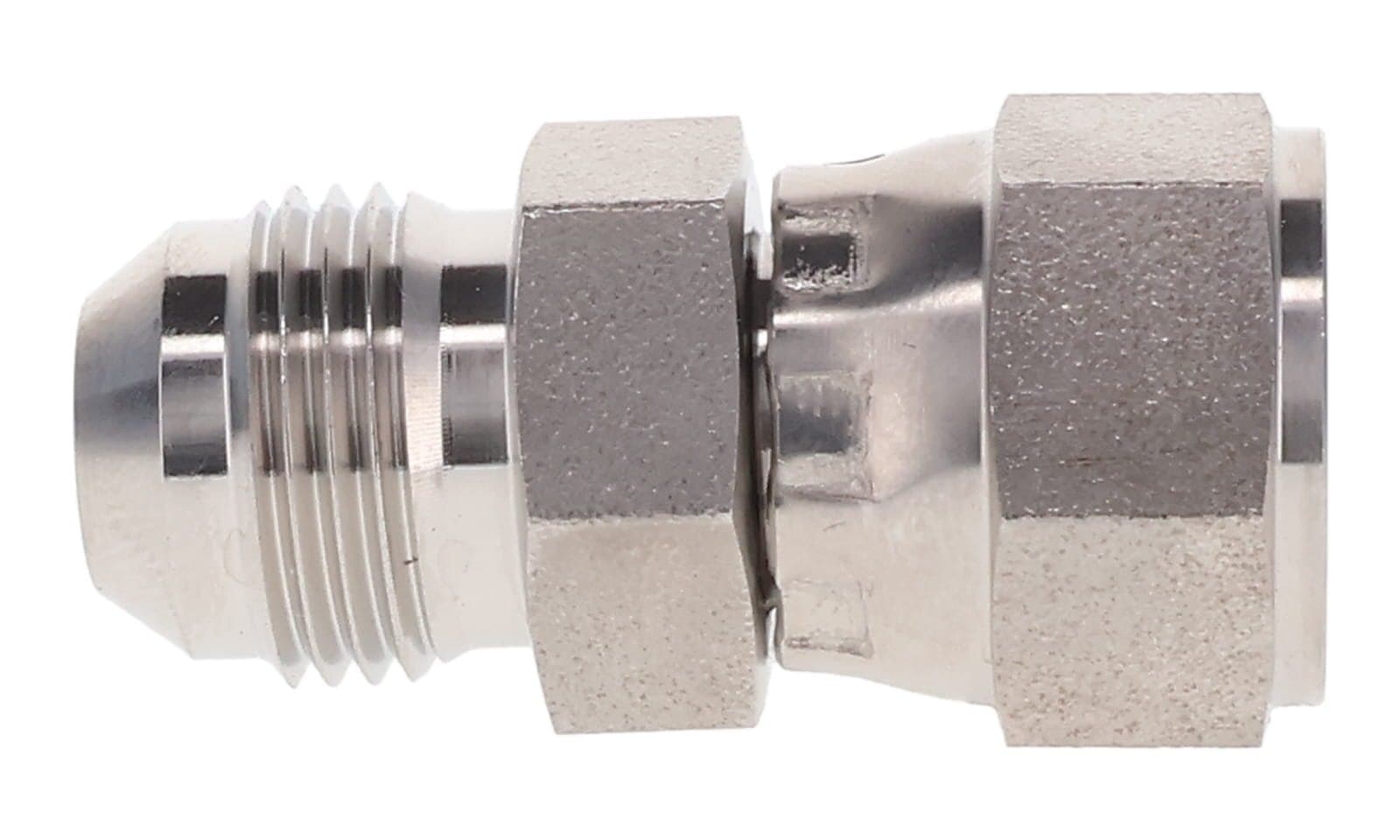 IH-SS-6504Stainless Steel JIC 37° Male × JIC Female Swivel ConnectorIndus Hydraulics
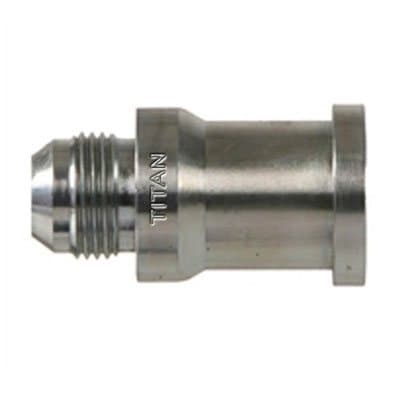 IH-SS-1800Stainless Steel JIC 37° Male × SAE Code 62 Flange HeadIndus Hydraulics