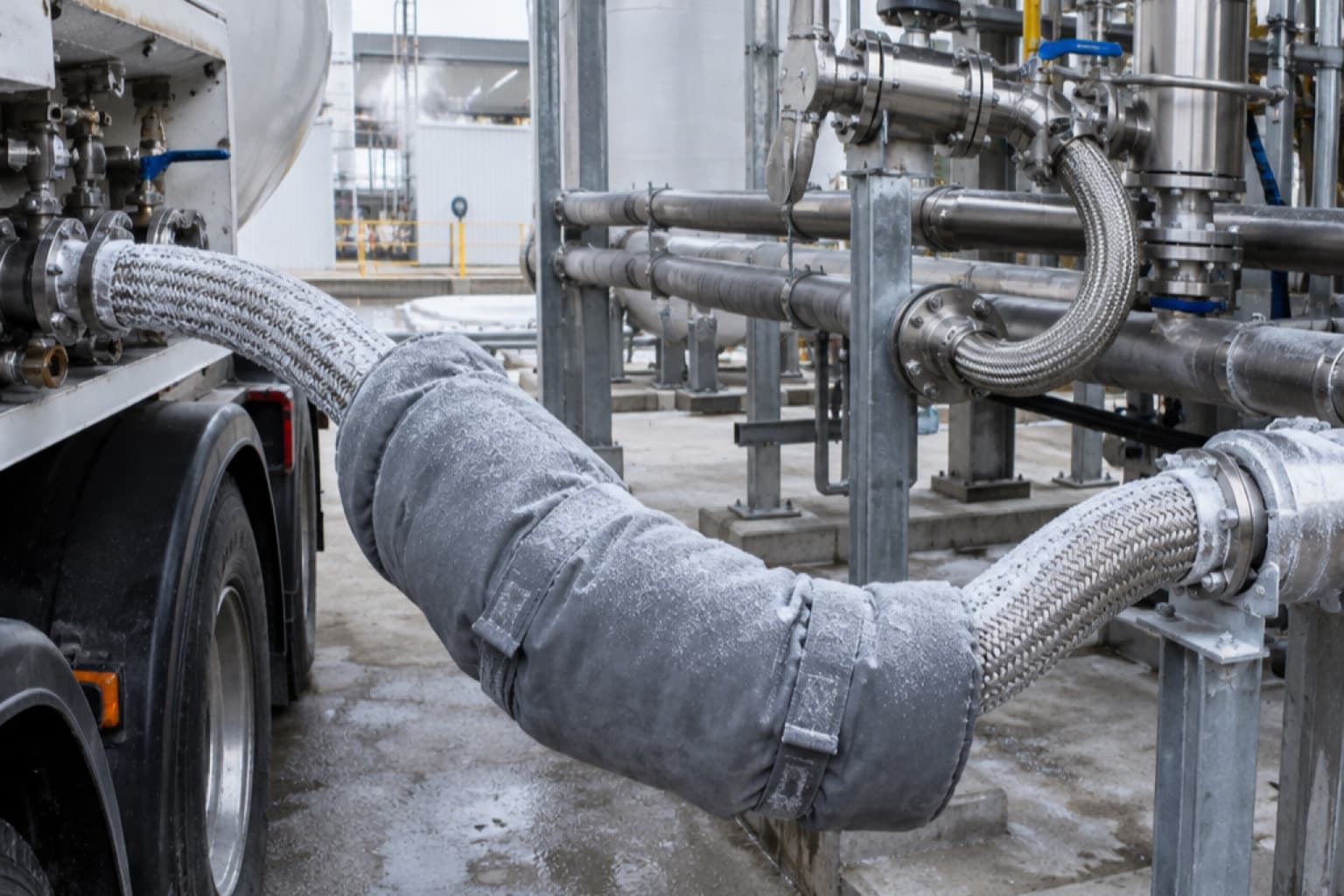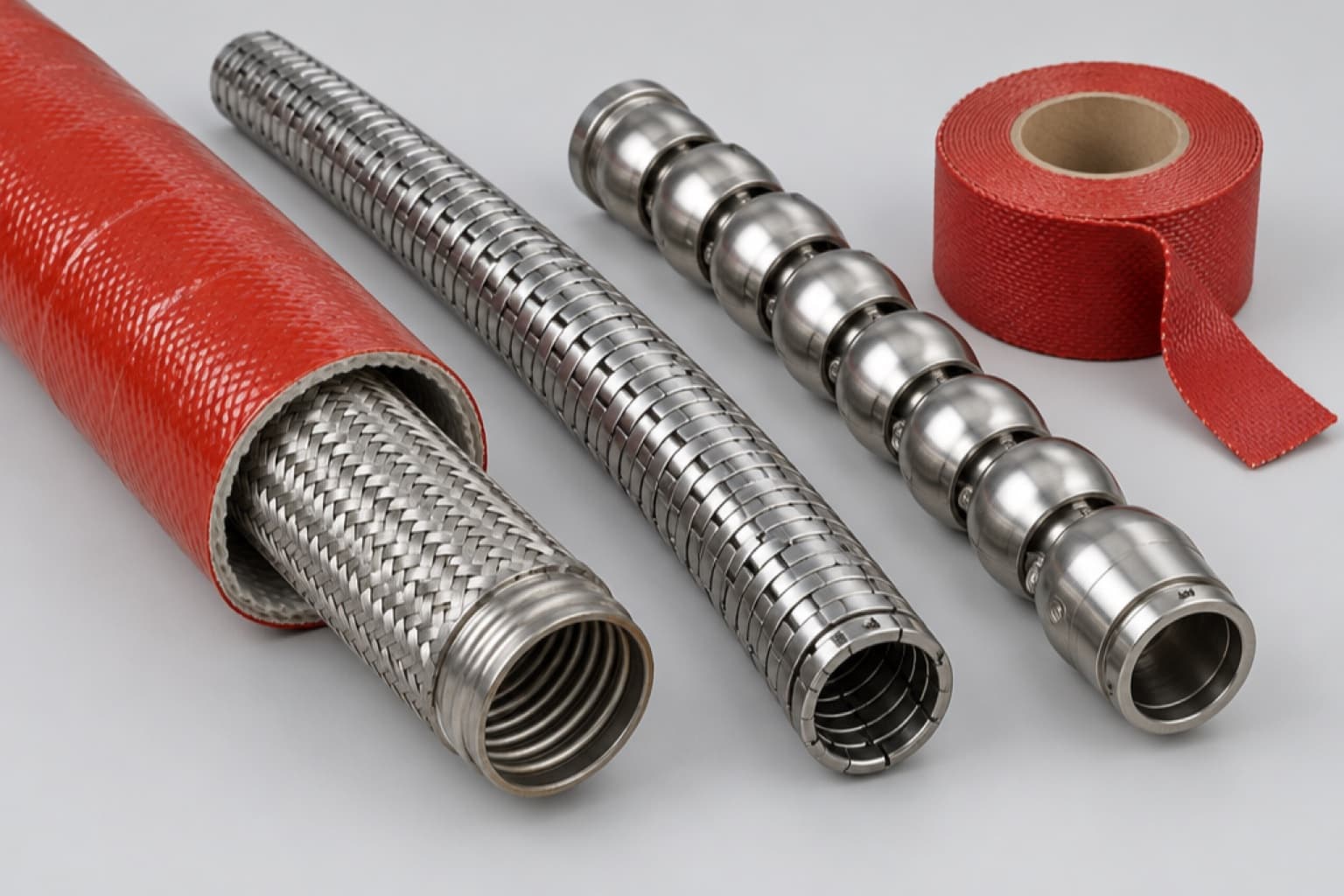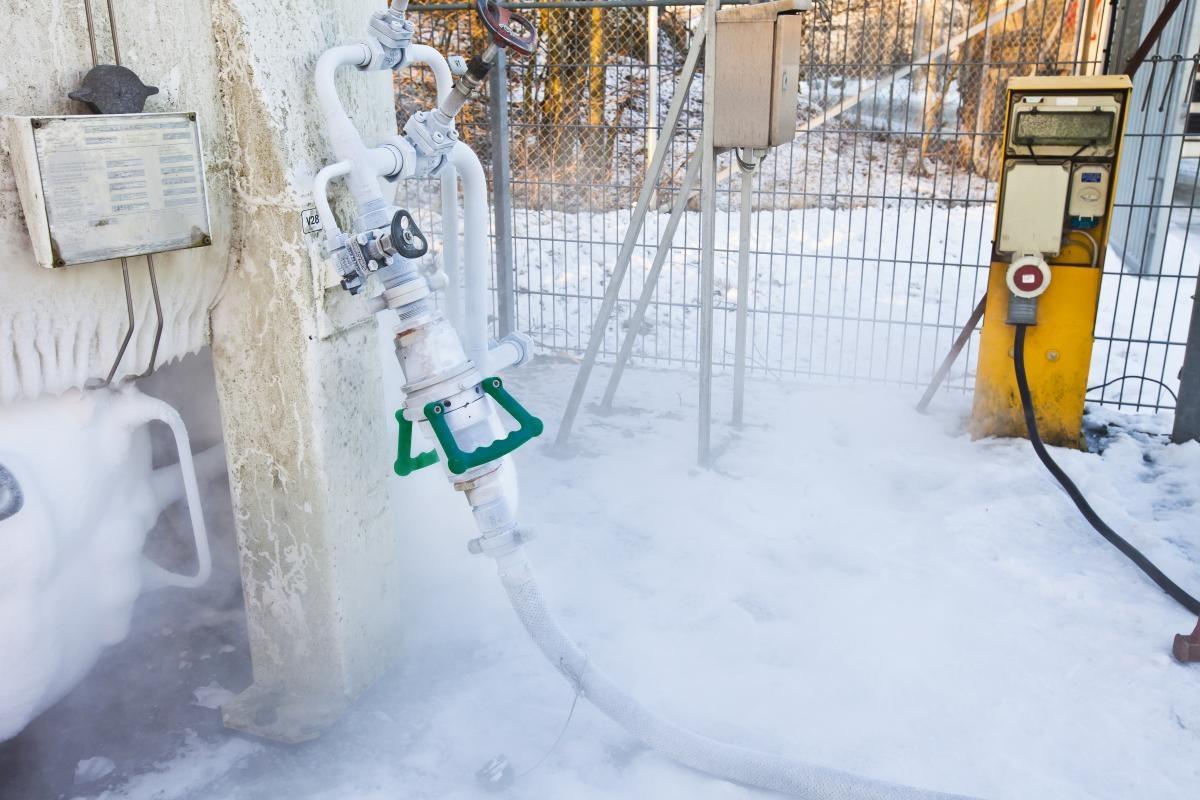
At -162 °C, LNG punishes every weak point in a transfer line: joints that loosen as they cool, seals that harden, and couplings that cannot be parted quickly when a ship moves. A bunkering line is therefore built as a system, from the coupling at the manifold to the release that protects both vessels. The hose itself is covered in cryogenic transfer hose; this article is about the couplings and the equipment around them.
/01Two coupling standards.
| Feature | DCC to ISO/TS 18683 (ASTM F3312) | DCC ISO to ISO 21593 |
|---|---|---|
| Sizes | DN 25 to DN 150 | 1" to 8" |
| Best fitHighlighted | Existing installations and most land-based LNG work | Ship-to-ship LNG bunkering |
| Purpose | Wider range of transfer jobs outside marine bunkering | Cross-manufacturer compatibility at sea |
| Service temperature | Down to -196 °C | Down to -196 °C |
| Body and seals | Stainless steel, PTFE seals | Stainless steel, PTFE seals |
MannTek uses the same bayonet principle and self-sealing valves as its dry disconnect couplings, and states that unlike a flanged or threaded joint the DCC needs no retightening during cool-down. It reports more than 10,000 connect and disconnect cycles in cryogenic testing.
/02Emergency release, in stages.
MannTek’s vessel separation device uses three wires of different length between the vessels:
- The shortest is a trip wire that sounds or shows an alarm when the vessels start to move.
- The middle wire triggers ESD 1: the on-board ESD system stops the pumps and closes the ESD valves.
- The longest triggers ESD 2, which is sent to the HPN2 release unit and activates the powered emergency release coupling.
The PERC then separates the line with both halves closed. Its release unit uses high-pressure nitrogen, and MannTek’s PLC control for the system has been assessed by DNV-GL as compliant with SIL2. After release, a friction fall arrest lowers the hose at a steady rate, and a Twin PERC can release the purge line together with the transfer line.
/03Around the hose string.
The rest of the line is what keeps it working between emergencies. Single or double hose saddles hold the hose and its bend radius on both vessels; hose buns and lifting devices handle it without kinking; Kevlar-reinforced covers protect it when dragged over a deck. Nitrogen purge lines, connected through a spool piece, clear the hose after transfer; insulation flanges break electrical continuity along the line. After the transfer, a heated parking device defrosts and dries the hose unit so it is ready again within minutes. The full range is gathered on our LNG and future fuels page.
Common questions
- Which coupling standard should I specify?
- The one the other half uses, or the one the terminal or vessel specifies. ISO 21593 for ship-to-ship bunkering; ISO/TS 18683 for most existing and land-based installations.
- Can ISO 21593 and ISO/TS 18683 couplings connect?
- No. They are different interfaces. Choose the version that matches the other half.
- What temperature are the couplings rated for?
- MannTek rates the DCC for cryogenic liquefied gases down to -196 °C.
- What triggers a PERC release?
- An ESD 2 signal, for example from a vessel separation device, or a manual override.
- Do you supply the hose and the equipment around it?
- Yes. MannTek transfer hose (composite or stainless, 1" to 10") and the saddles, fall arrest, purge lines and other equipment are quoted to order with the couplings.
LNG couplings and release
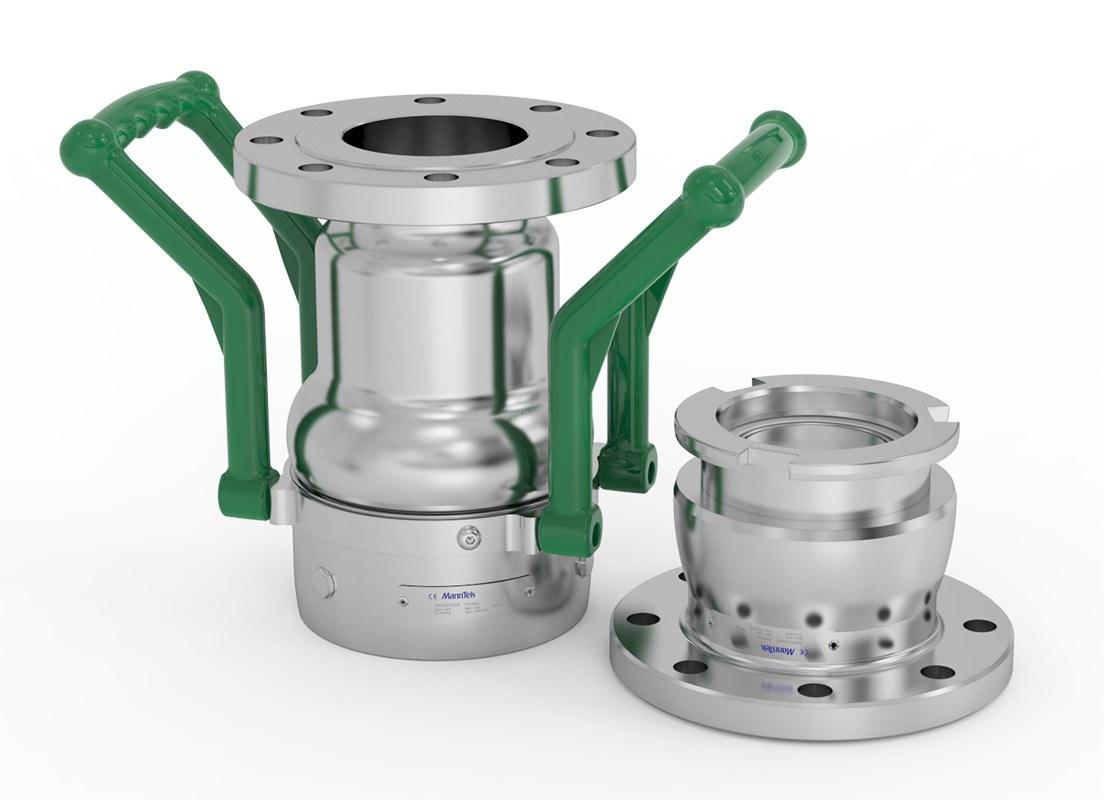 IH-MNT-DCC-TUMannTek DCC Dry Cryogenic Coupling for LNG, Tank Unit — 1" to 8"MannTek
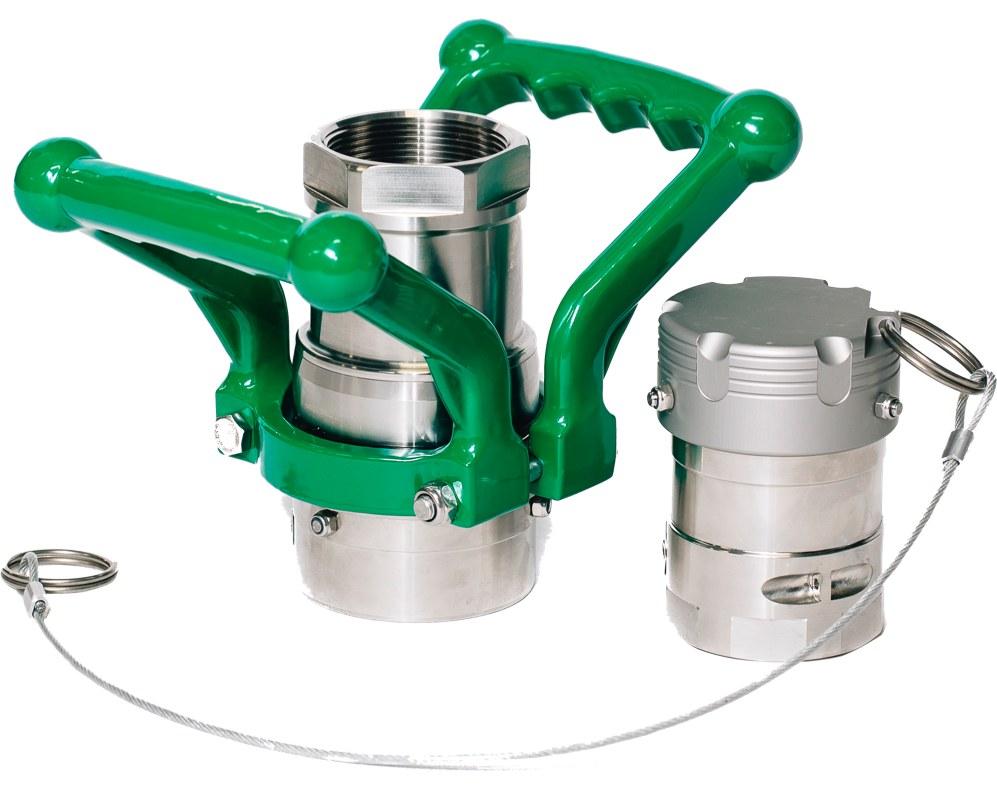 IH-MNT-DCC-HUMannTek DCC Dry Cryogenic Coupling for LNG, Hose Unit — 1" to 8"MannTek
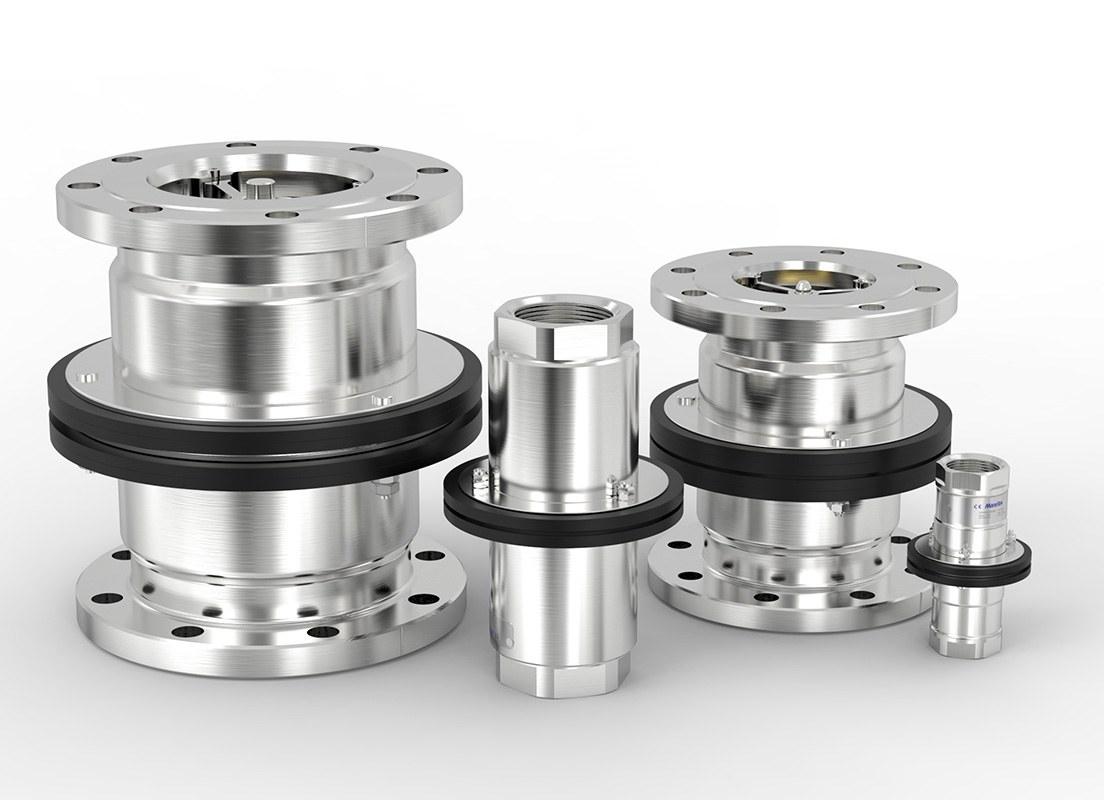 IH-MNT-CBCMannTek CBC Cryogenic Breakaway Coupling for LNG, Breaking-Bolt Type — DN 25 to DN 200MannTek
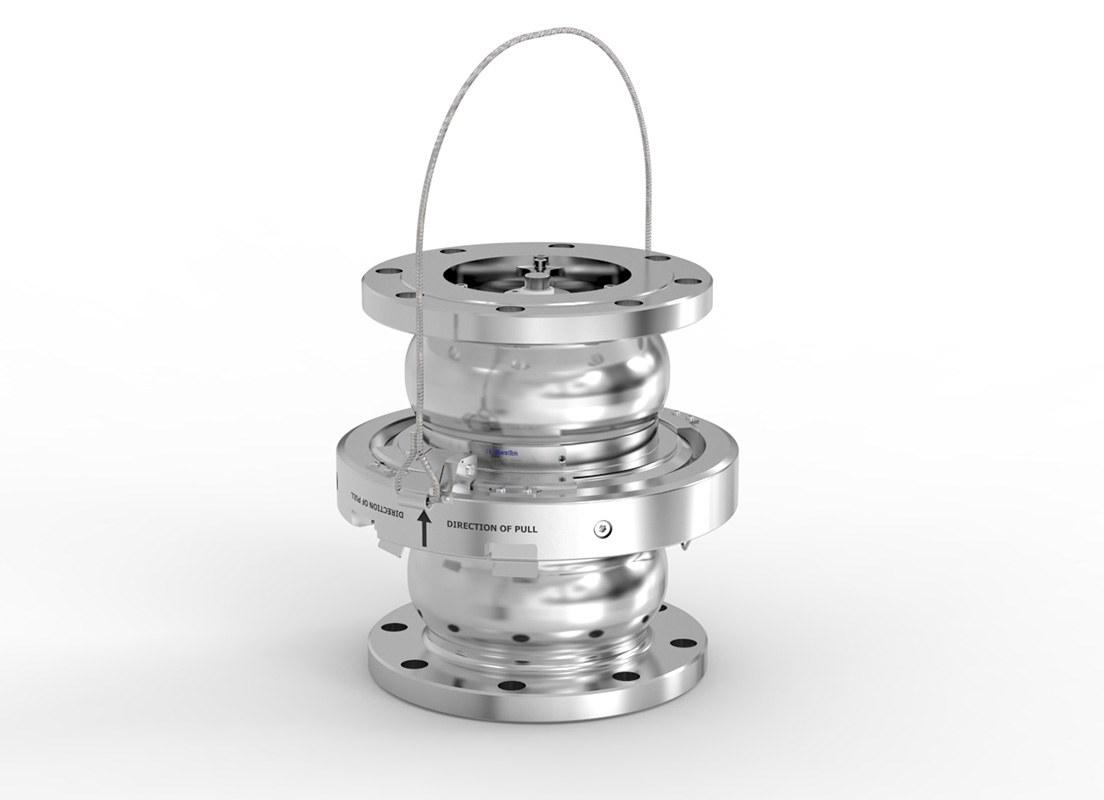 IH-MNT-CBCCMannTek CBC-C Cable-Release Cryogenic Breakaway Coupling for LNG — DN 50 to DN 150MannTek
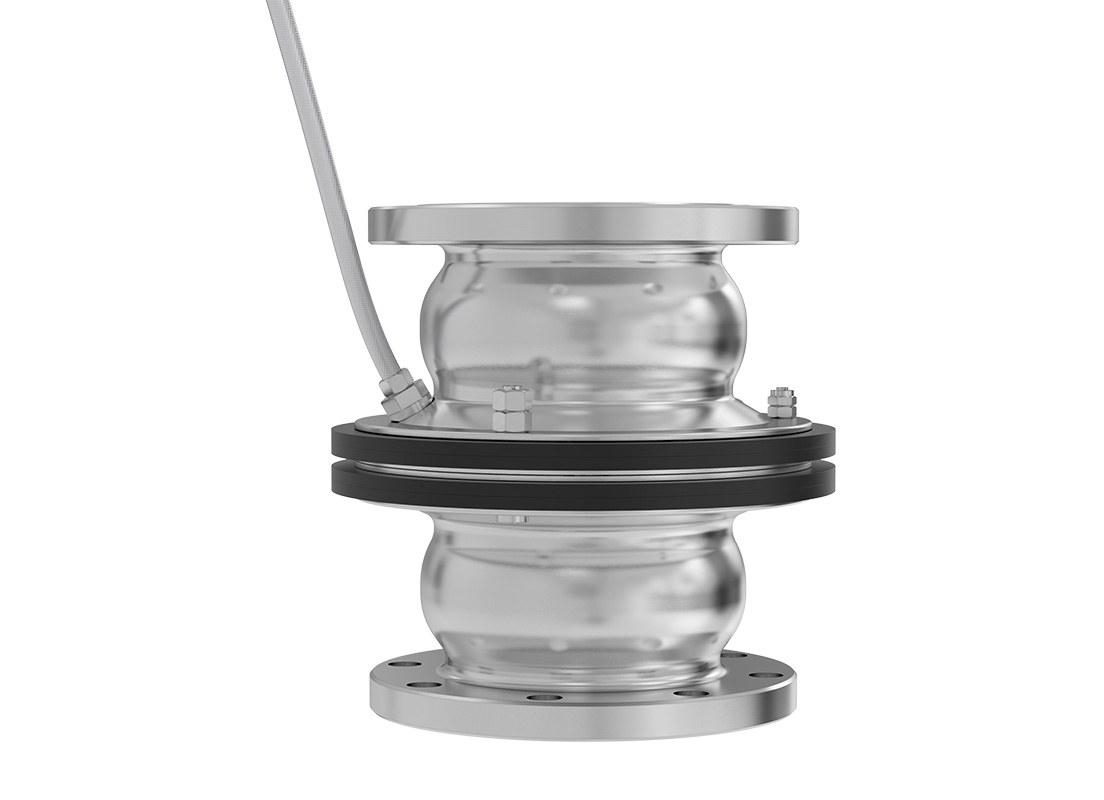 IH-MNT-PERCMannTek PERC Powered Emergency Release Coupling for LNG Bunkering — 2-1/2" to 8"MannTek