Stainless pipework is chosen to last, and it usually does — until one fitting in it was the wrong kind. A cast fitting where the line needed forged, a Sch 10S elbow in a Sch 40S line, a 304 tee on a coastal plant, a pipe-size clamp ferrule on sanitary tube. This guide maps the families of stainless fittings, so the right one gets ordered the first time; each section links to the detailed article.
/01The five families.
| Family | Standard | Sizes | Rated by | Use |
|---|---|---|---|---|
| Butt-weldHighlighted | ASME B16.9; MSS SP-43 (5S/10S) | NPS ½–48 | The matching pipe schedule | Process piping above small bore |
| Forged threaded / socket weld | ASME B16.11 | To NPS 4 (most to 2) | Class → matching schedule | Small-bore high-pressure lines |
| Cast threaded | MSS SP-114 Class 150 | 1/8"–4" | P–T table (300 psi ambient) | Water, air, utilities |
| Flanges | ASME B16.5 | NPS ½–24 | P–T table by class and group | Joints that must come apart |
| Sanitary clamp | 3-A 63, ASME BPE, DIN 32676 | By tube OD | Clamp maker’s table | Food, dairy, beverage, pharma |
- Butt-weld fittings become part of the pipe — full-penetration welds, a smooth bore, rated to the pipe of the same schedule. Butt-weld fittings, schedules and A403 grades.
- Threaded and socket-weld fittings serve small bore: cast Class 150 for moderate pressure, forged Class 3000 to B16.11 where pressure or vibration demand it. Cast 150# vs forged 3000#.
- Weld outlets take a small branch off a large run without a tee. Weldolets, sockolets and threadolets.
- Flanges make a joint that can be unbolted, rated by class and temperature. B16.5 flanges and ratings.
- Sanitary fittings join polished tube by clamp and gasket for hygienic plant. Tri-clamp fittings.
/02How each one is rated.
The families do not share a rating method, and confusing them is the most common specification error:
- A butt-weld fitting has no rating of its own: ASME B16.9 rates it to straight pipe of the same material and wall.
- A forged B16.11 fitting is rated to the pipe schedule its class matches — Sch 160 for Class 3000 threaded, Sch 80 for Class 3000 socket weld.
- A cast Class 150 fitting follows a pressure–temperature table: a maker table reproducing MSS SP-114 gives 300 psi up to 150 °F, falling to 150 psi at 350 °F.
- A flange follows the B16.5 table for its class and material group: a 316 Class 150 flange is 19.0 bar at ambient, 13.7 bar at 200 °C.
- A clamp joint is rated by the clamp maker by size and temperature: a standard 1–1½" clamp around 500 psi at 70 °F.
/03Sizes: pipe or tube.
Pipe fittings are sized by nominal pipe size (NPS) and wall schedule, to ASME B36.19M for stainless: every schedule of 2" pipe is 2.375" OD, and the schedule sets the wall — 0.109" for 10S, 0.154" for 40S. Sanitary fittings are sized by the actual tube OD: 2" sanitary tube is 2.000" OD. Instrument and hydraulic tube is also sized by OD. Mixing the two systems is a classic error; a "2-inch" sanitary ferrule will not go on 2-inch pipe.
/04Grade.
Almost every fitting is offered in 304 and 316. 316 adds 2–3% molybdenum and resists pitting and crevice corrosion in chlorides; 304 suits fresh water, food and indoor service. Specify an L grade (0.03% carbon max) for anything welded so the heat-affected zone does not sensitise. Both 304L and 316L can stress-corrosion crack in chlorides above about 60 °C. Full detail: 304 vs 316.
/05What an order must say.
| Item | Example |
|---|---|
| Family and standard | Butt-weld to ASME B16.9 / ASTM A403 |
| Size | 2" NPS (or 2" OD tube for sanitary) |
| Schedule or classHighlighted | Sch 40S; or Class 3000; or Class 150 flange |
| Grade | 316L (dual 316/316L) |
| End or face | Bevelled; NPT female; RF 125–250 AARH; clamp |
| Documents | EN 10204 3.1 mill certificate, if the project requires |
Common questions
- What are the main types of stainless steel pipe fittings?
- Butt-weld (ASME B16.9), forged socket-weld and threaded (ASME B16.11), cast threaded (MSS SP-114), flanges (ASME B16.5), weld outlets (MSS SP-97) and sanitary clamp fittings.
- Which stainless fitting is strongest?
- A butt-weld fitting in the same schedule as the pipe, which is rated the same as the pipe. Among threaded fittings, forged Class 3000 or 6000 is far stronger than cast Class 150.
- Are stainless pipe fittings sized by OD or ID?
- Pipe fittings by nominal pipe size and schedule (OD fixed per size); sanitary and tube fittings by actual tube OD.
- Should I use 304 or 316 fittings?
- 316 wherever chlorides are present — coastal air, brine, chlorinated water, salty product; 304 for fresh water and indoor service. Use L grades for welding.
- What certificates come with stainless fittings?
- Usually a mill test certificate to EN 10204 3.1 tracing the material heat; ask for it when you order if the project requires one.
Across the families
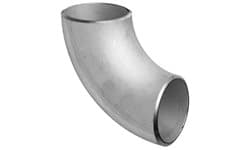 IH-PF-W490LES6316 Stainless Steel Butt-Weld 90° Long-radius Elbow, Sch 40Indus Hydraulics
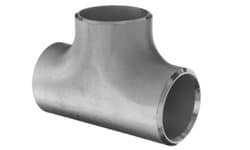 IH-PF-W4TS6316 Stainless Steel Butt-Weld Tee, Sch 40Indus Hydraulics
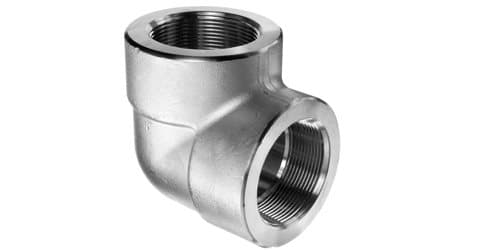 IH-PF-F90-J6316 Stainless Steel 3000# Forged Threaded 90° ElbowIndus Hydraulics
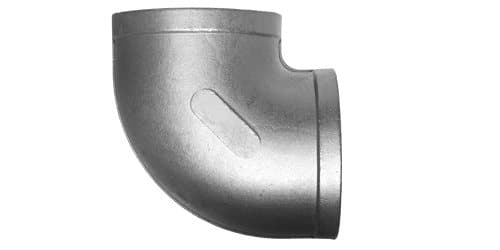 IH-PF-C90-B6316 Stainless Steel 150# Cast Threaded 90° ElbowIndus Hydraulics
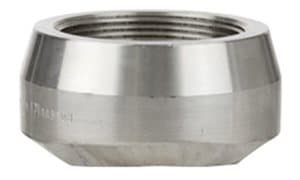 IH-PF-TWO-J6316 Stainless Steel 3000# Forged Threaded OutletIndus Hydraulics
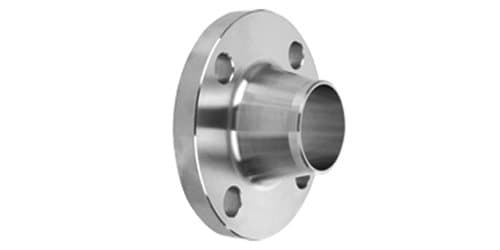 IH-PF-WNRF-316316 Stainless Steel Weld Neck Raised Face FlangeIndus Hydraulics
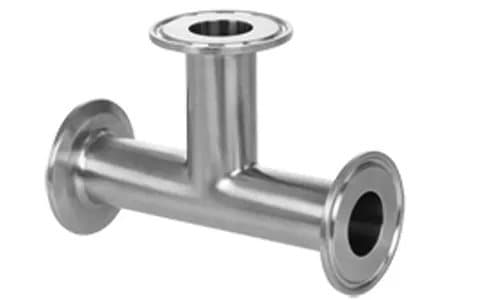 IH-PF-SF16CT316 Stainless Steel Sanitary Clamp-End TeeIndus Hydraulics
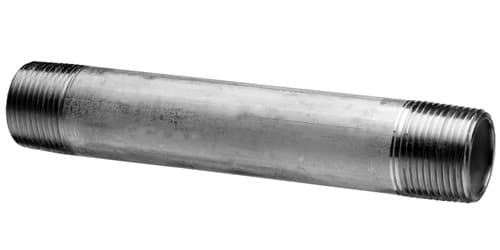 IH-PF-N6S8316 Stainless Steel NPT Pipe Nipple, Sch 80 SeamlessIndus Hydraulics