
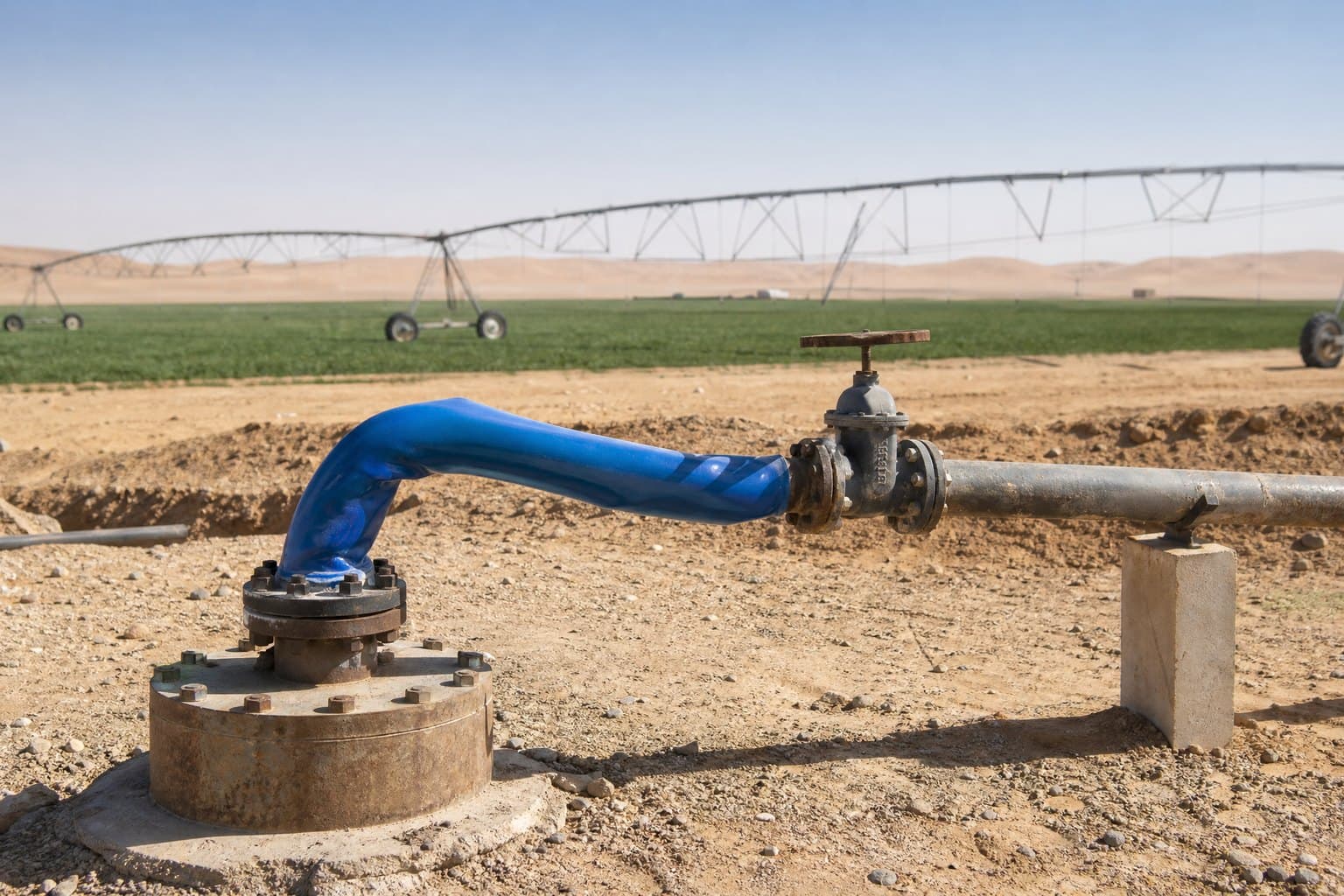
Every submersible borehole pump hangs from its rising main — the pipe that carries water up to the surface and holds the pump in place. For most of the last century that meant threaded steel column pipe, lifted in 3 m or 6 m lengths by a crane or pulling rig. Flexible lay flat riser hose does the same job in one continuous length, and on many Gulf wells it does it better.
/01Why Gulf wells are hard on column pipe.
Groundwater across the Arabian Peninsula is often old, mineralised and increasingly saline. Saudi Arabia’s centre-pivot farms, such as those in Wadi As-Sirhan, run on fossil groundwater pumped from deep aquifers. Studies of the Saq aquifer near Tabuk recorded water levels falling by roughly 2 to 10 metres a year where hundreds of deep wells drew on it, and on Oman’s Batinah coast seawater has moved into the aquifer that coastal farms rely on, salinising wells and land. Those conditions are hard on steel: saline and acidic water pits and corrodes column pipe and its threads, and mineral scale narrows the bore. And a falling water table means the pump has to be lowered — again and again.
/02Three rising mains compared.
| Property | Steel column pipe | uPVC / ABS column pipe | Flexible lay flat riser |
|---|---|---|---|
| Joints | Threaded joint every 3–6 m | Threaded joint every 3 m | None — one continuous length |
| Corrosion and scale | Corrodes in saline or acidic water; threads pit | Does not corrode | Does not corrode; smooth bore resists scale |
| Installation | Crane or pulling rig, joint by joint | Lighter, still joint by joint | Lowered off a reel or winding trailer |
| Weight (4" class)Highlighted | Heavy | Light | 1.45 kg/m empty |
| Load and pressure | Highest | Limited by joints and depth | Rated per size; heavy-duty class for heavier strings |
| Re-setting the pump | Pull, add or remove lengths, re-run | Same | Wind out, adjust length, wind back |
/03Sizing a riser: pressure.
The highest pressure in a rising main is at the bottom, at the pump outlet. It equals the total head the pump develops — setting depth plus the lift and friction above ground — and at a closed valve it rises to the pump’s shut-off head. Size the riser on shut-off head plus surge, not on duty head. Our TPU well riser hose is rated from 40 bar at 1-1/4" down to 18 bar at 10" (roughly 400 m to 180 m of head), with burst at 2.1 to 2.5 times working pressure.
/04Sizing a riser: tensile load.
The hose also carries everything hanging from it: the pump and motor, the water inside the hose, the hose itself, and the cable if it is strapped on. Each size of riser has a published tensile strength, from 3,700 kg at 1-1/4" to 60,900 kg at 10". Compare the hanging load with it and keep a healthy margin.
| Item | Value |
|---|---|
| Water inside 150 m of 104 mm bore | ≈ 1,270 kg |
| Hose, 150 m × 1.45 kg/m | ≈ 220 kg |
| Pump and motor (example) | ≈ 250 kg |
| Cable strapped to the hose (example) | ≈ 75 kg |
| Hanging loadHighlighted | ≈ 1,800 kg vs 18,200 kg tensile strength |
| Duty pressure at the pump (180 m head) | ≈ 18 bar vs 26 bar working pressure |
The example passes comfortably on load and leaves room on pressure if the pump’s shut-off head is no more than about 25% above duty. For deep wells with heavy multistage pumps, continuous duty or abrasive water, the heavy-duty riser hose has a reinforced jacket and tougher cover, and runs to 12"; send us the pump model and setting depth and we will confirm the rating.
/05Installing and recovering a flexible riser.
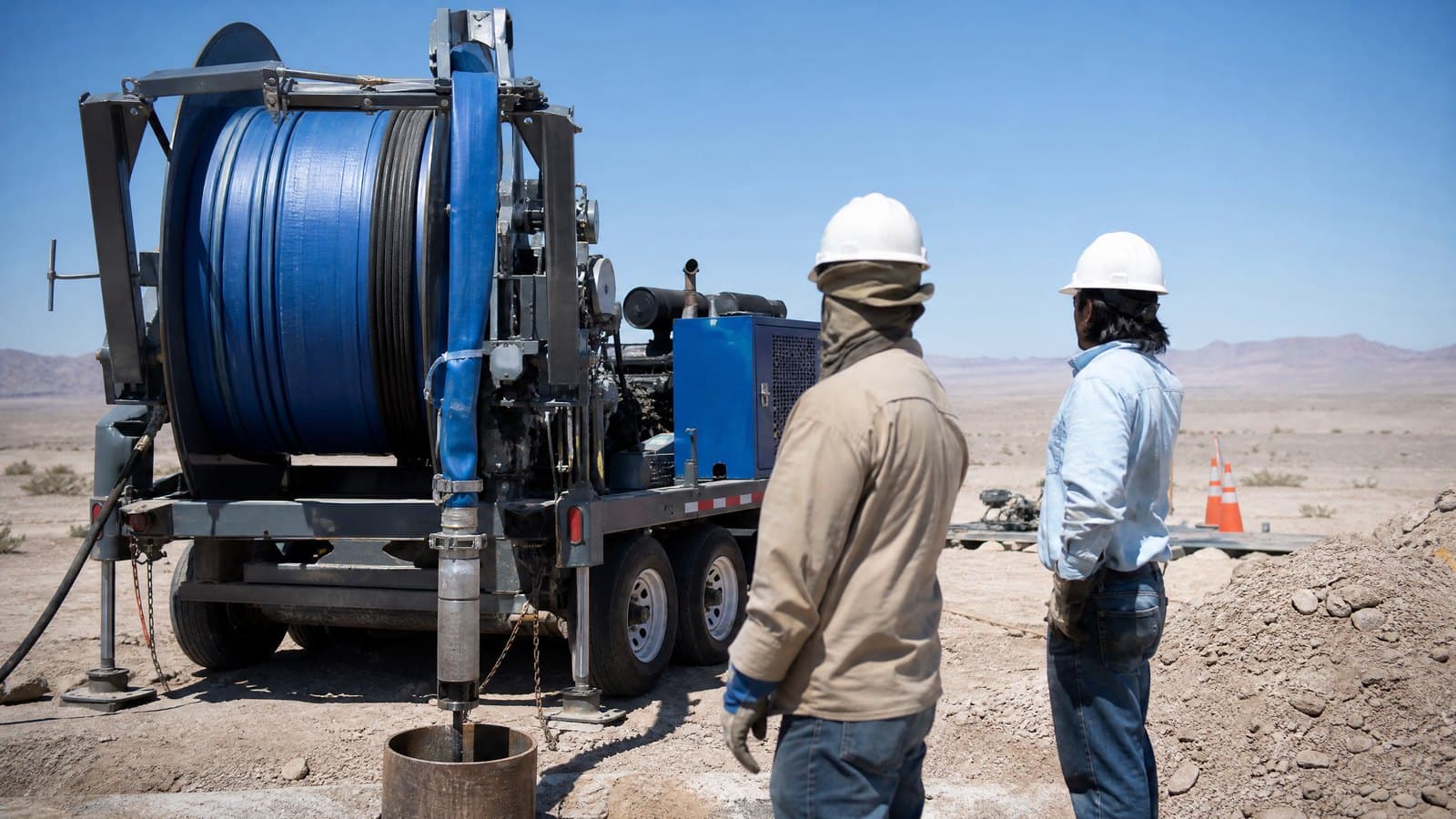
- Fit the pump coupling — a stainless riser coupling matched to the bore — and connect the pump.
- Lower from a reel with controlled braking. A winding trailer carries 300 m of 2" riser with its own generator; an 8" winding system handles high-yield wells.
- Strap the cable to the hose at regular intervals, leaving a little slack between straps: the hose stretches slightly under load and pressure, the cable does not.
- Follow the pump maker’s guidance on safety ropes and torque arrestors for the pump size.
- Fit the well-head coupling and support the riser at the well head; start the pump against a partly open valve to limit surge.
Recovery is the reverse: the reel pulls hose, cable and pump out together in a fraction of the time it takes to break steel joints one by one. That is what makes it practical to re-set a pump deeper as the water table drops, or to service wells across a whole farm or well field with one crew and one trailer.
For the installation itself, step by step, see how to install flexible well riser hose.
Common questions
- How deep can a flexible riser hose go?
- It is limited by pressure and load, not by a fixed depth. Check the pressure at the pump at shut-off head against the working pressure of the size, and the hanging load against its tensile strength. Lengths up to 400 m are made in one piece.
- Does a flexible riser need a safety rope?
- Our riser hose is rated to carry the pump on its own tensile strength, but follow the pump maker’s guidance, and the operator’s, on safety ropes for the pump in question.
- Will riser hose corrode in salty groundwater?
- No. The TPU tube and cover and the polyester jacket do not corrode; use stainless steel riser couplings for long submerged service.
- Can riser hose handle hot water from deep wells?
- Our TPU riser hose is rated from -50 °C to +80 °C. Tell us the water temperature if it is above about 40 °C and we will confirm pressure at that temperature.
- Can I use ordinary lay flat hose as a riser?
- No. Riser hose is built and rated for tensile load and long-term hanging service. Ordinary discharge hose is not.
For borehole pumps
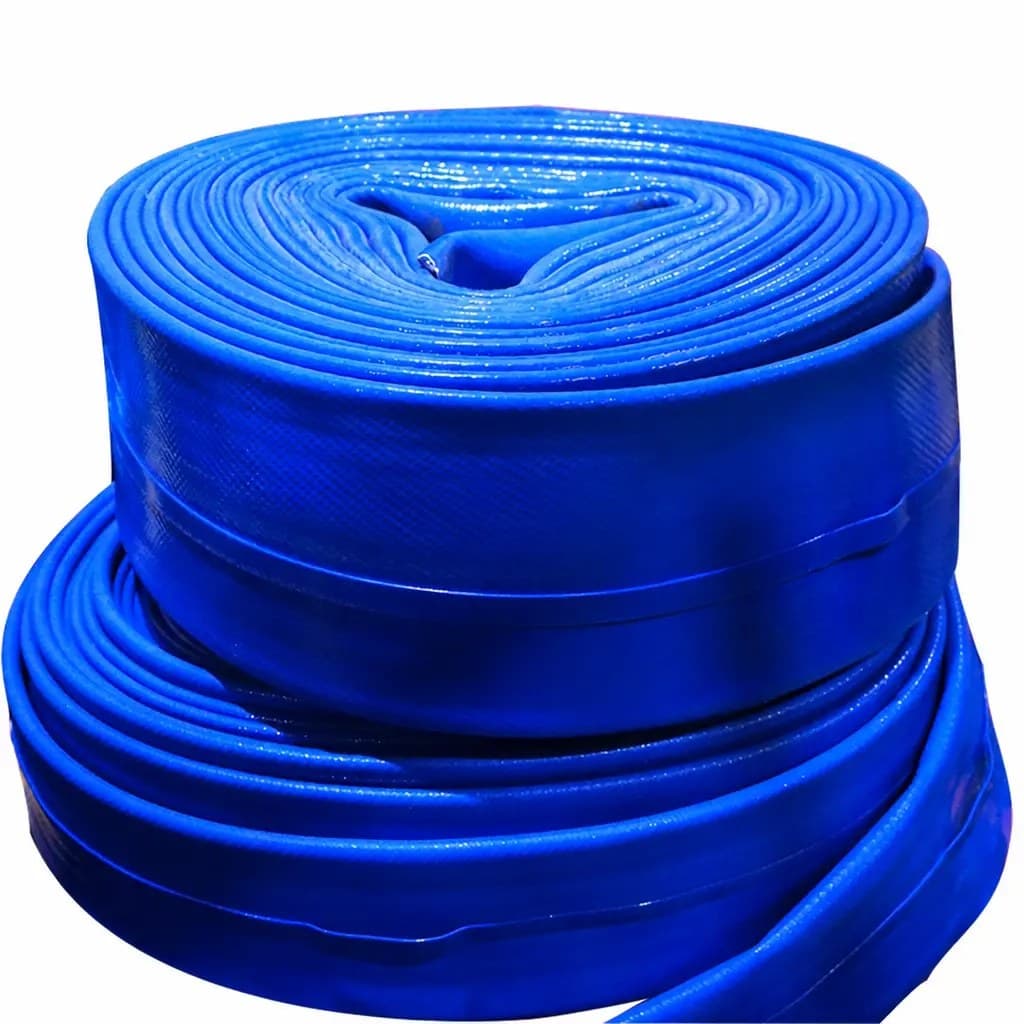 IH-LF-TWRTPU Lay Flat Well Riser HoseIndus Hydraulics
 IH-LF-TWRHHeavy-Duty TPU Lay Flat Well Riser HoseIndus Hydraulics
 IH-LF-CWRStainless Steel Well Riser Hose Coupling, 2" to 12"Indus Hydraulics
 IH-LF-EWR1Well Riser Hose Winding Trailer, 2" × 300 mIndus Hydraulics
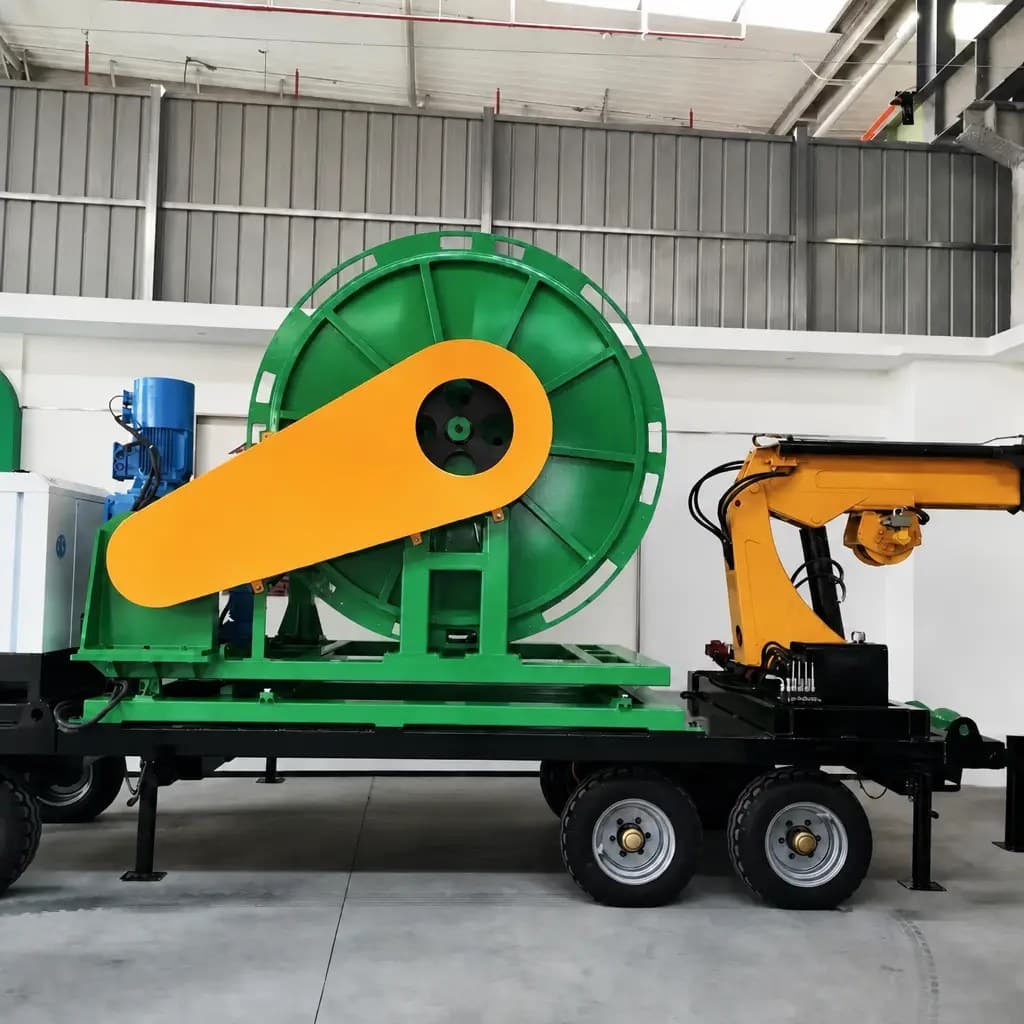 IH-LF-EWR2Large-Bore Riser Hose Winding System, 8" × 150 mIndus Hydraulics


