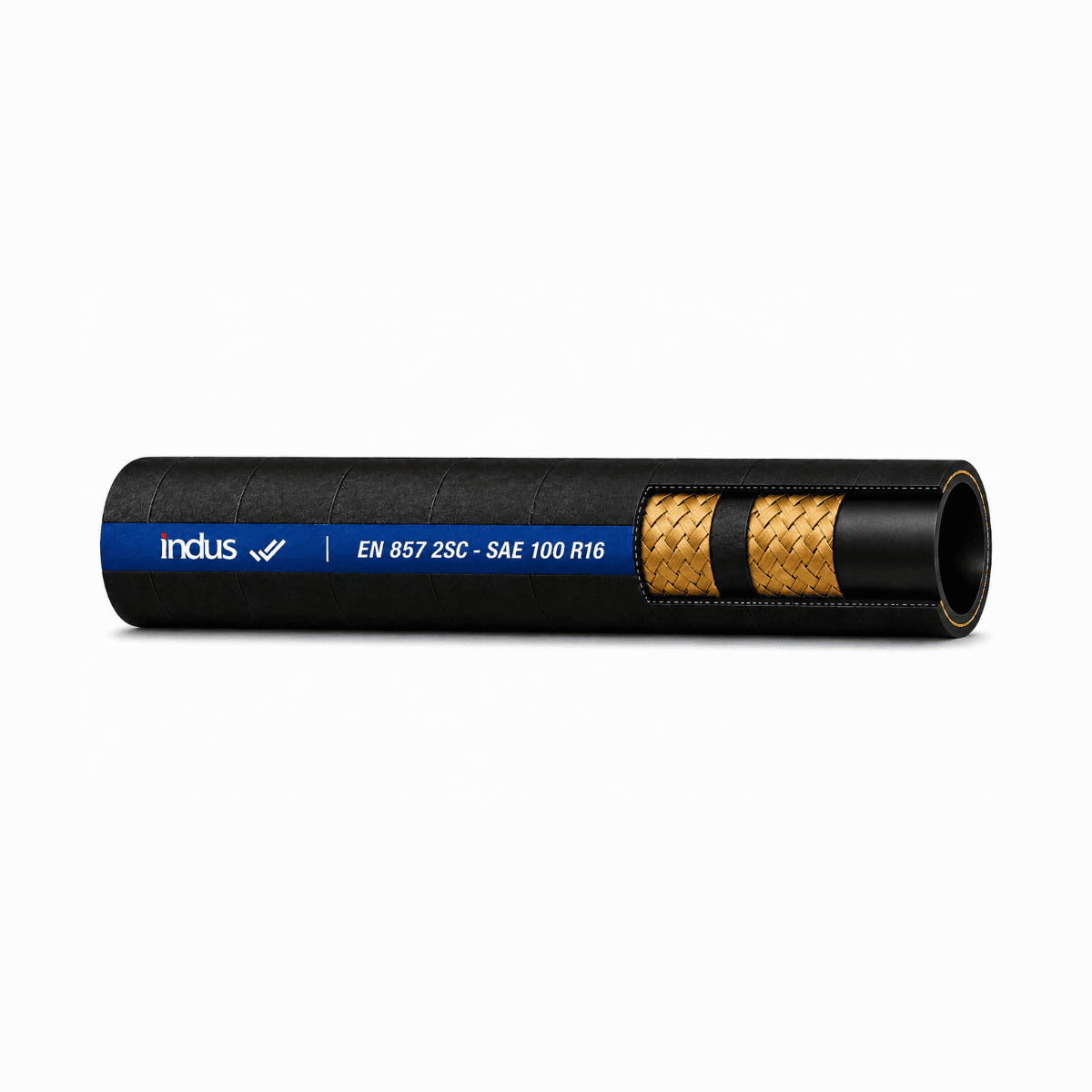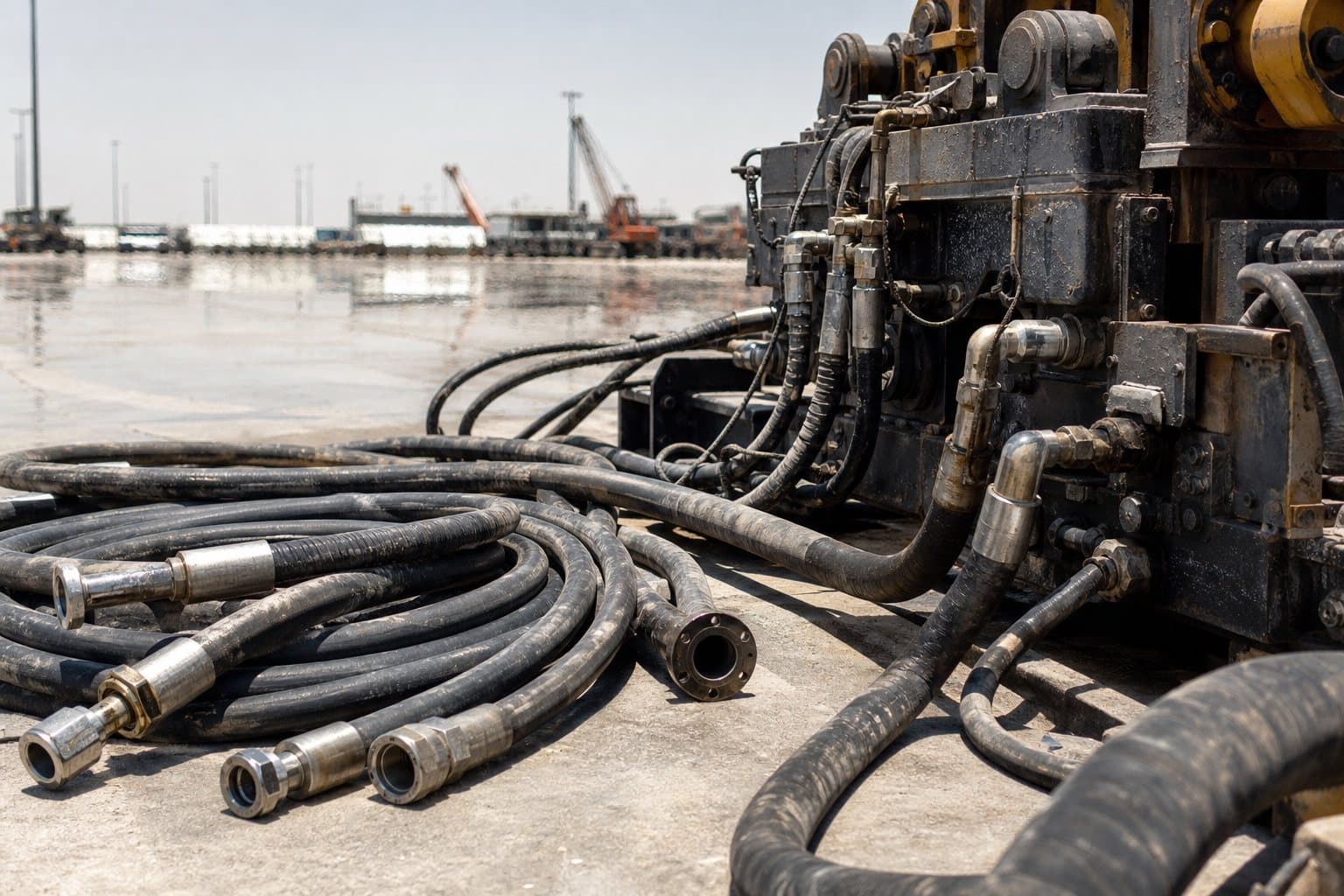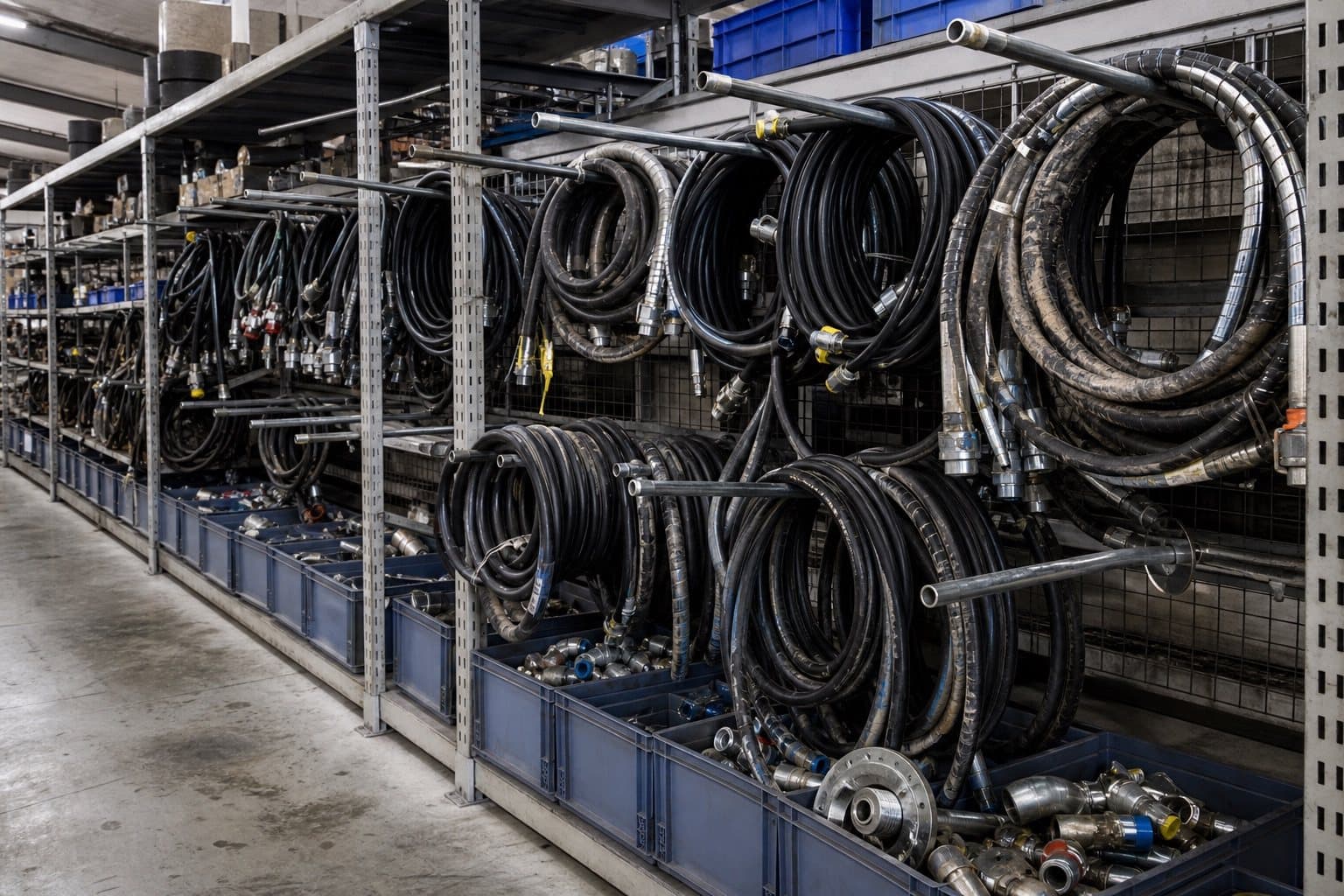
A hose assembly bought sensibly in advance and stored carelessly can be unserviceable before it is ever fitted. It is one of the few hose problems that happens entirely inside your own building, and one of the easiest to fix.
/01What the figures are, and where they come from.
Ask about hose shelf life and you will be given a number of years, usually credited to SAE. That attribution is wrong, and it is wrong nearly everywhere. SAE J1273 is a recommended practice for hose assemblies covering selection, routing, inspection and replacement. It is not where the shelf-life figures come from.
Hose Technical Information Bulletin — shelf life of rubber hose
The industry source for rubber hose shelf-life guidance, distinguishing between bulk hose and completed assemblies and specifying storage conditions the guidance assumes. Figures circulating without attribution, or credited to SAE, generally trace back here.
Rubber products — Guidelines for storage
Covers storage conditions for rubber products: temperature, light, ozone sources, humidity and mechanical strain. It is the document that explains why a hose kept in a hot, sunlit, tightly coiled state ages faster than the same hose kept cool, dark and relaxed.
/02What a UAE store does.
| Factor | Effect | Fix |
|---|---|---|
| Heat — an uncooled warehouse in summerHighlighted | Accelerates ageing continuously | Store hose in the coolest available space |
| Direct or reflected sunlight | UV degrades the cover before it is ever fitted | Boxes, covers, or a windowless area |
| Tight coilingHighlighted | Holds rubber in tension for ozone to attack | Coil generously or lay assemblies flat |
| Electric motors, welding nearby | Local ozone generation | Physical separation |
| No date marking | Makes rotation impossible | Date-mark at build or receipt |
/03Assemblies age faster than bulk hose.
A completed assembly has been cut, crimped and — usually — coiled to fit a shelf. Bulk hose on a reel is under gentler strain and has no fittings to corrode. The practical implication is that holding long-term spares as bulk hose plus fittings ages better than holding them as finished assemblies, at the cost of needing a crimp when the machine goes down.
Where the machine cannot wait, hold the assembly and manage the shelf: date it, keep it cool and dark, and rotate. Where a few hours are acceptable, bulk plus fittings is the more durable way to hold cover.
Common questions
- Can I use a hose that is past its shelf life?
- Inspect it first — cover cracking, hardening and set are what you are looking for. Shelf life is guidance about expected condition, not an expiry that makes a sound hose unsafe. On safety-critical or high-pressure duty, do not take the chance.
- Does the date on the layline mean the shelf life started then?
- It is the manufacture date, so it is where the clock starts for bulk hose. For an assembly, the build date matters too, which is why assemblies should carry their own tag.
- Do you date-mark assemblies?
- Yes, on request and as standard where a customer holds spares. It is what makes rotation possible rather than theoretical.
- Is air conditioning necessary for hose storage?
- Not necessary, but the coolest available space matters more here than the guidance assumes. Out of the sun and off a west-facing wall is most of the benefit for no cost.