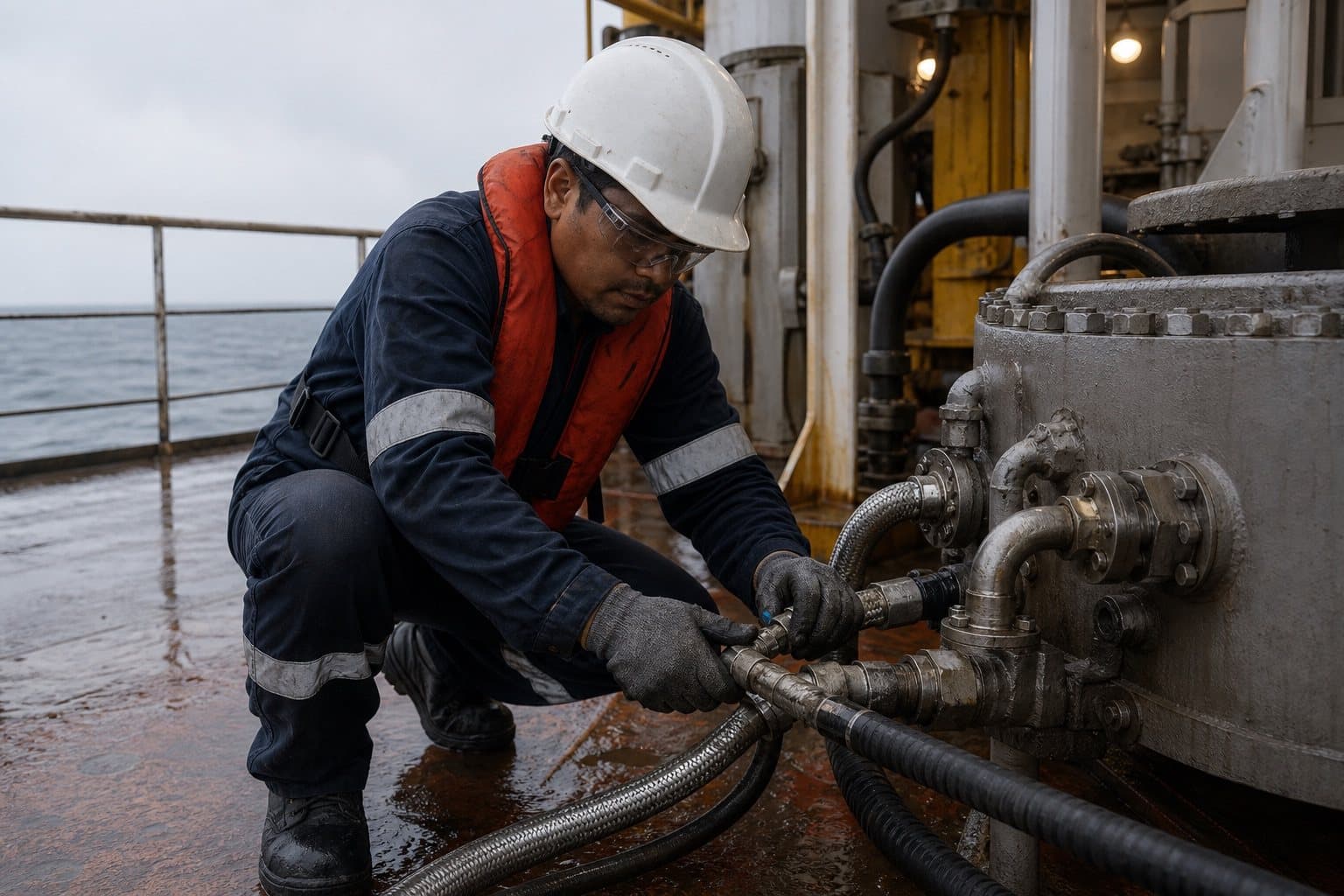
Offshore work concentrates every environmental problem in this region into one place — salt, humidity, sun and mechanical duty, on equipment that is difficult to reach and expensive to stop. It also shifts which component fails first.
/01The fittings go first.
A hose cover is a corrosion barrier over its whole length. A fitting is bare steel with threads, flats and a sealing face, all of them exposed. In salt spray the fitting is the vulnerable component, and the practical consequence is not usually a leak — it is a joint that cannot be undone when the hose needs changing. That is the case for 316L stainless fittings on exposed deck circuits.
| Component | Change | Why |
|---|---|---|
| Fittings and adaptersHighlighted | Stainless — SS316L | Carbon steel corrodes and seizes in salt spray |
| Cover specification | Weather-resistant, not only abrasion-resistant | Exposure is constant; rubbing may not be |
| Inspection interval | Shorter, or replaced on age where access is poor | Reinforcement corrosion is not inspectable |
| Tagging | Mandatory in practice | Age-based replacement requires a fitted date |
| Pressure-control lines | Governed by API 16C, 16D or 7K | Different standards, different design factors |
/02The splash zone is the worst of it.
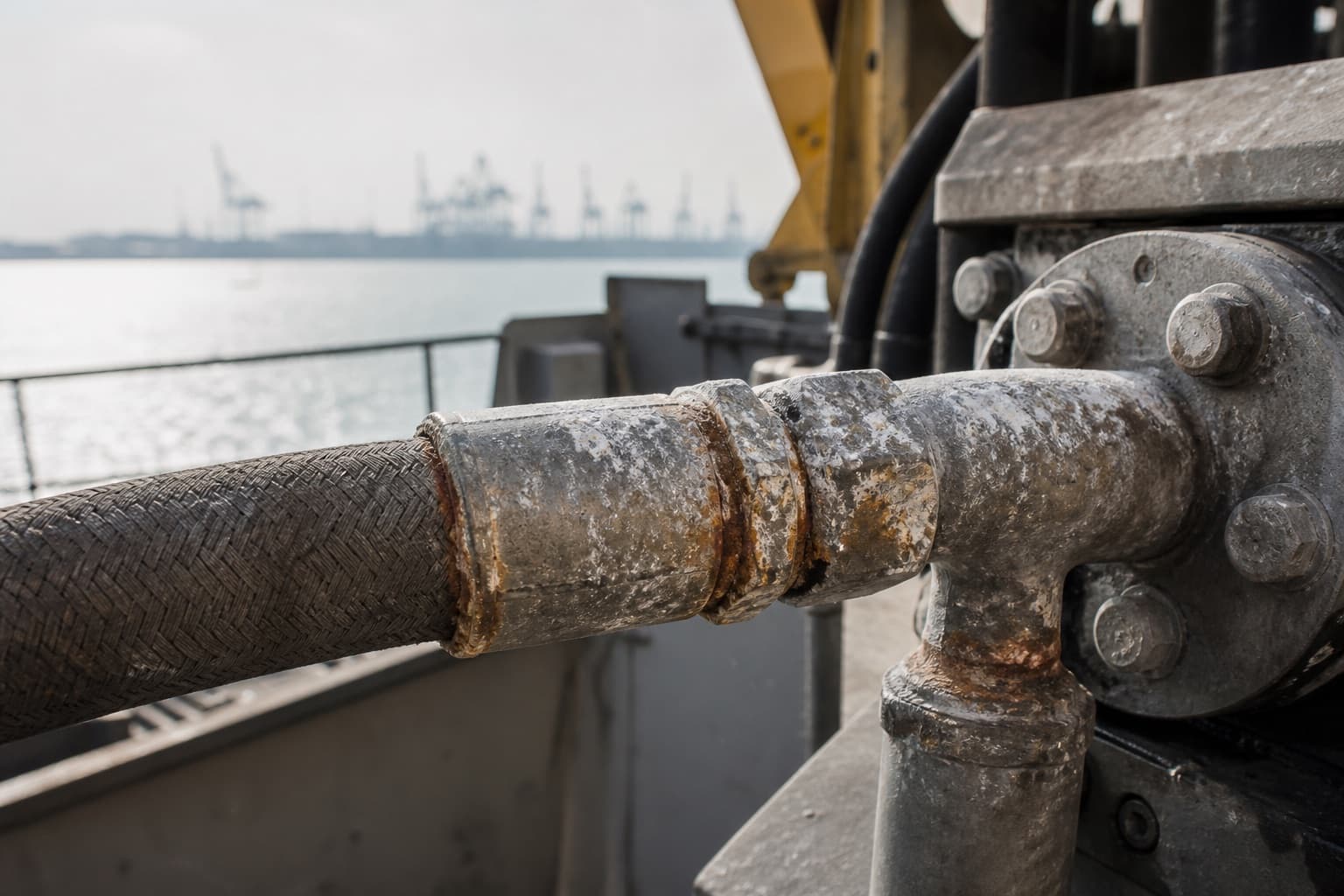
Permanently submerged steel corrodes at a moderate rate; permanently dry steel corrodes slowly. The splash zone does neither — it alternates, so the surface is repeatedly wetted with salt water and then exposed to oxygen. That cycling is what makes it the most aggressive band on any offshore structure, and equipment routed through it needs specifying on that basis rather than on the general offshore environment.
/03Rig pressure control is a separate subject.
Everything above is about general hydraulics — cranes, winches, deck equipment, power units. Choke and kill lines, BOP control hose and rotary hose are governed by API standards with their own requirements and much tighter design factors, and none of the industrial rules of thumb carry across. Those are covered separately in our oilfield material.
Where the environment governs
Common questions
- Do I need stainless fittings on everything offshore?
- On anything exposed, and especially anything in the splash zone or that must be undone in service. Inside a sheltered machinery space the case is weaker. The question worth asking is whether you will need to undo this joint in five years.
- Can I mix stainless fittings with a carbon-steel hose ferrule?
- It is common and it works, but the ferrule is then the corroding part. Where the whole assembly needs to survive, specify the ferrule material as well rather than assuming it follows the fitting.
- Is a metallic hose better offshore than rubber?
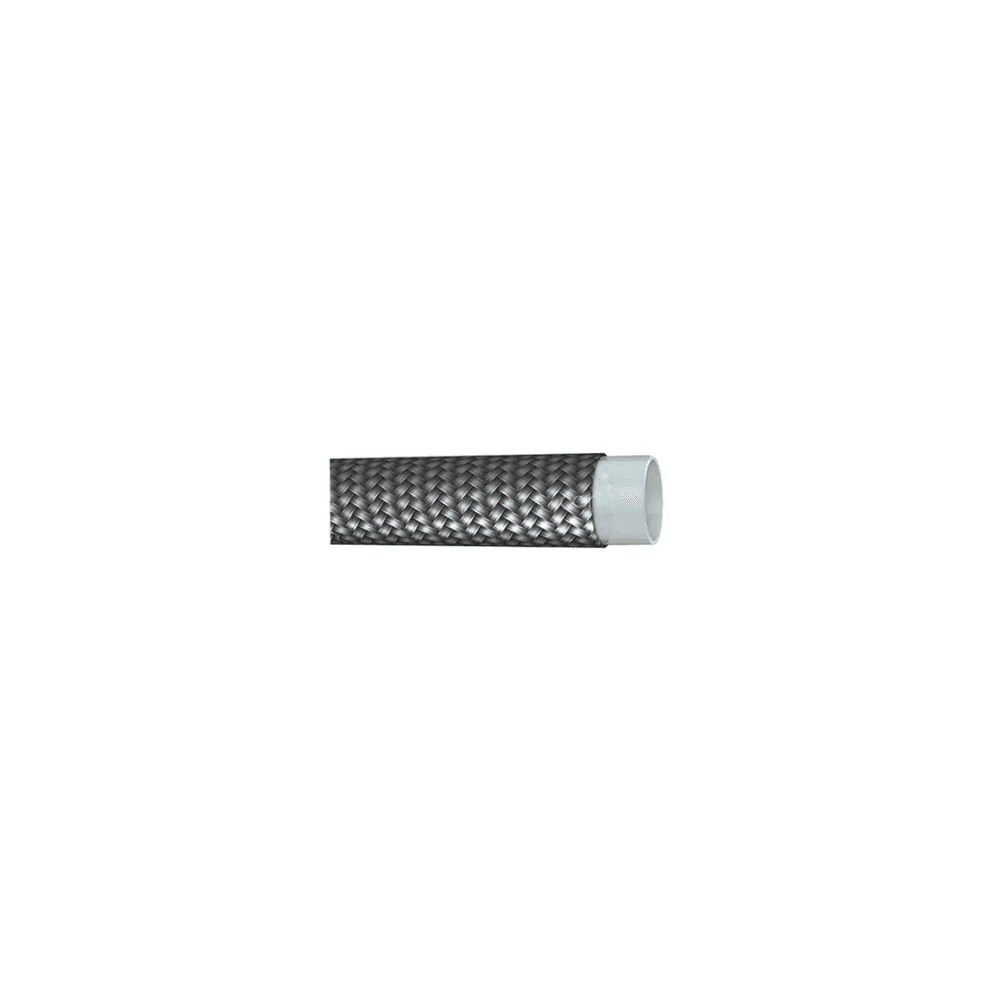
- For corrosion resistance, yes. It is stiffer, needs different routing and costs more, so it is the right answer where the environment governs and over-specified where it does not.
- How often should offshore hoses be replaced?
- On an interval set from your own failure history and access constraints rather than a published number. What makes that possible is tagging assemblies at build so their age is knowable.