

Food and beverage duty is the one place in industrial hose where paperwork sits alongside performance as a hard requirement. A hose can be entirely suitable and still fail an audit, because what is being audited is the evidence rather than the rubber.
What the frameworks cover.
Rubber articles intended for repeated use
The US rule most often cited for food-contact hose. It governs the composition of rubber articles used repeatedly in contact with food, which is why compliance is a statement about the compound and its permitted constituents rather than about a finished hose in the abstract.
Materials and articles intended to come into contact with food
The EU framework regulation. It sets the general requirement that food-contact materials must not transfer constituents to food in quantities that endanger health or change its composition, taste or odour — which is why taint is a compliance question here and not only a commercial one.
Which framework applies is a function of where the product is sold, not where the hose is bought — and plants exporting into more than one market frequently need to satisfy both. The practical consequence is that "food grade" alone is not a specification: the useful question is compliant with what, and evidenced how.
Cleanability is part of it.
Why does bore finish matter on a food hose?
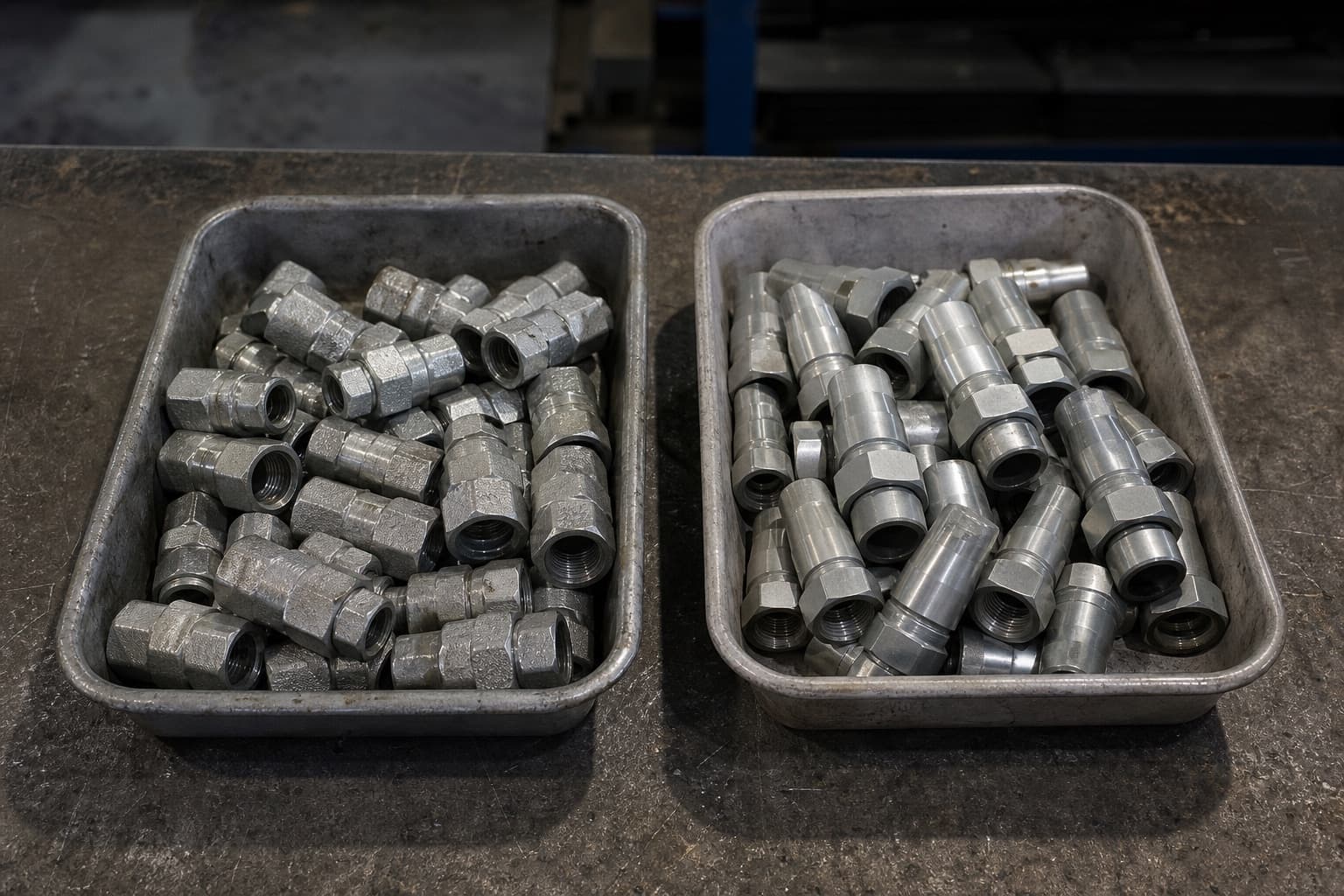
Because cleaning has to reach every surface the product touched. A smooth bore with no crevices, steps or dead legs lets a cleaning-in-place cycle do its job; a rough or damaged bore gives residue somewhere to sit, and a hose that cannot be reliably cleaned is a contamination route regardless of what it is made from.
This is why internal damage condemns a food hose more decisively than the equivalent damage on a general-purpose one. A gouge in the liner is not a strength problem at these pressures — it is a place that cannot be cleaned.
What an auditor asks for.
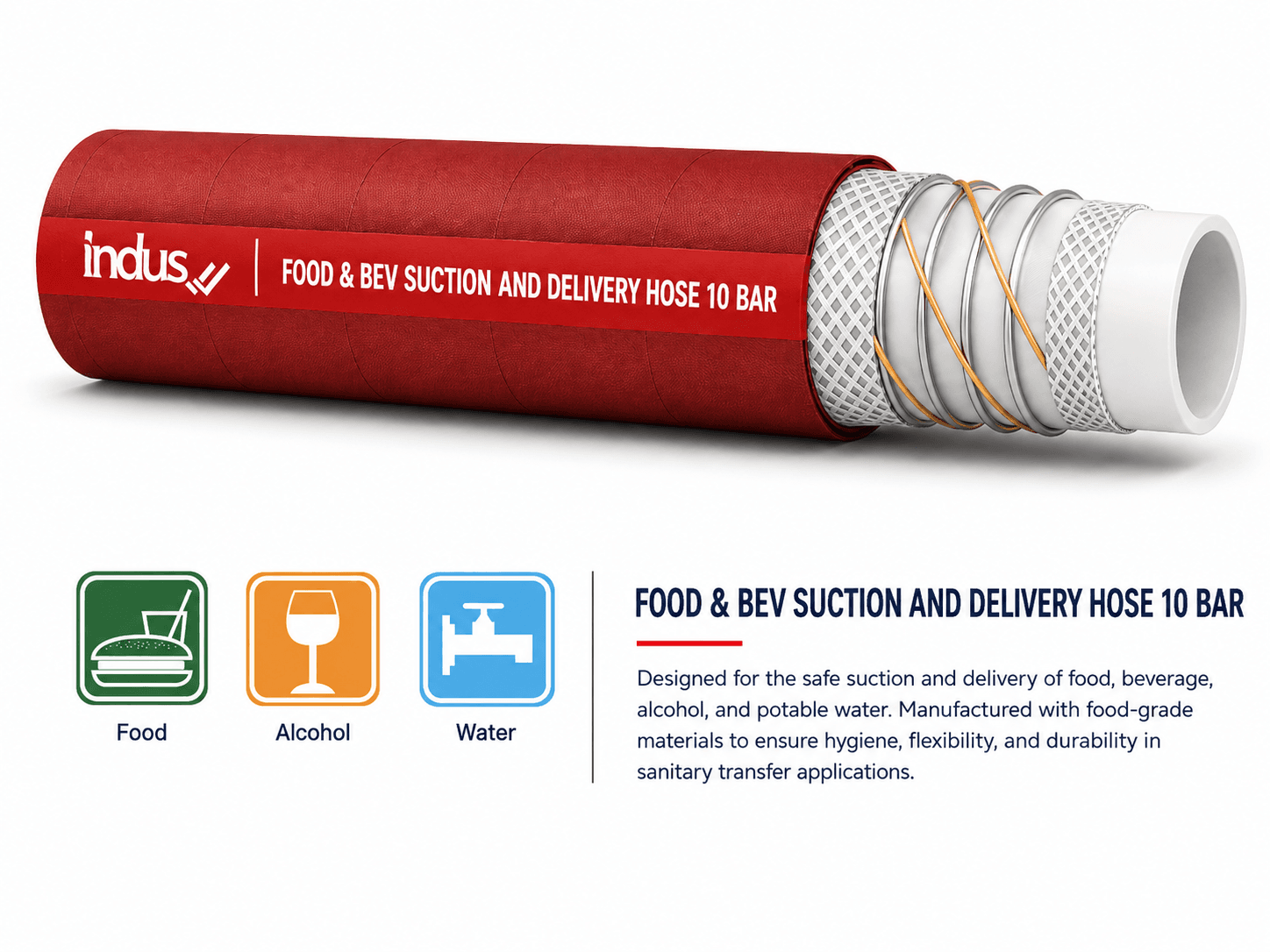
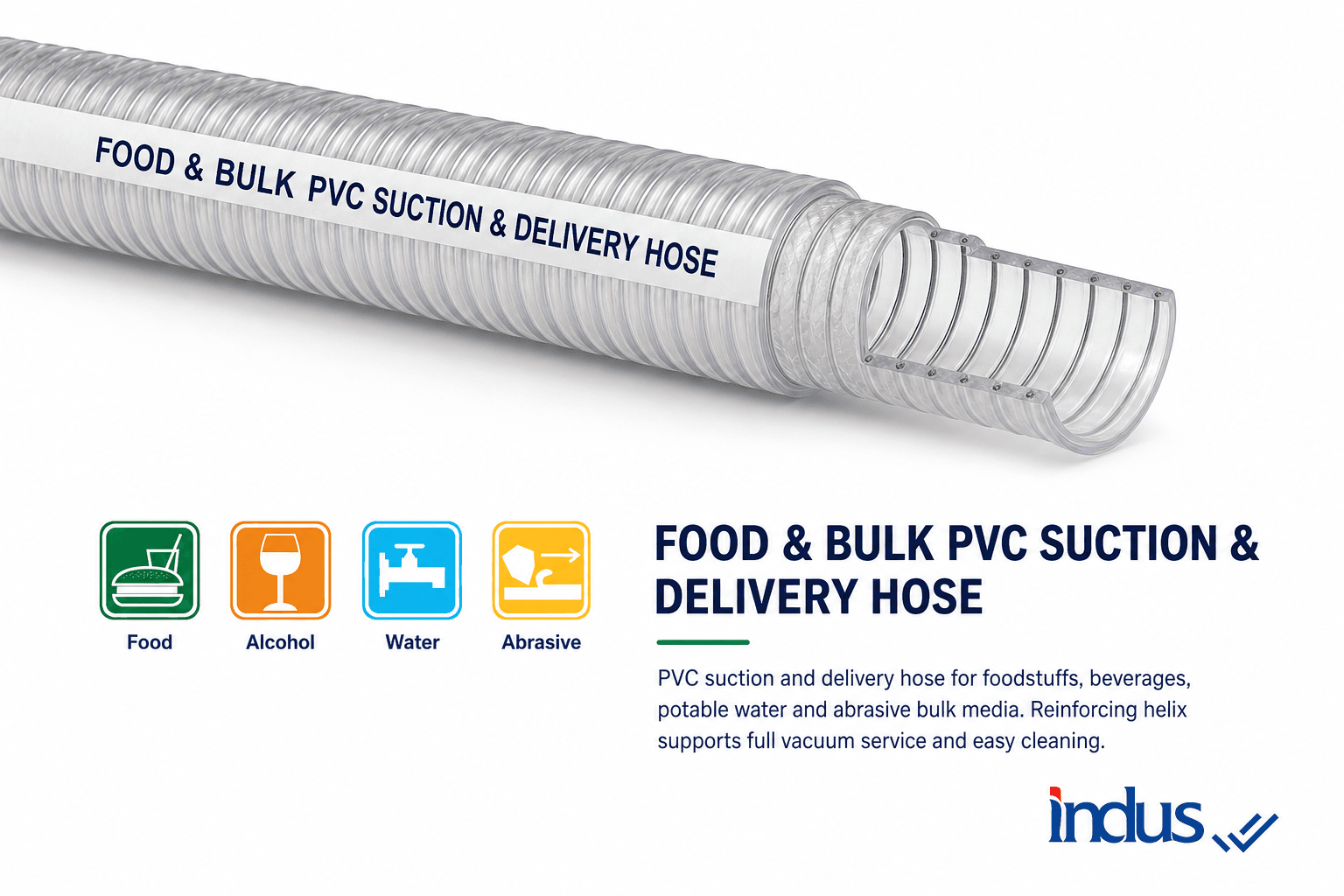
Food and beverage constructions

Common questions
Is a food-grade liner enough on its own?
No. The couplings and gaskets are also in product contact and must be suitable, and the assembly needs to be cleanable as a whole. A compliant hose on an unsuitable coupling is not a compliant assembly.
Can a food hose be used for something else and then returned to food duty?
It should not be. Once a hose has carried a non-food product you cannot evidence that it is clean to food standard, and evidence is what compliance consists of.
Does potable water count as food contact?
It is treated under its own requirements, which overlap with but are not identical to food-contact rules. Specify potable duty explicitly rather than assuming a food hose covers it.
What if the certificate is lost?
The hose is effectively uncertified for audit purposes. Keep certificates with the hose register rather than in a purchasing file — that is the difference between having compliance and being able to show it.
Food and beverage hose
Hygienic suction and delivery constructions, supplied with certification.
Figures verified · Framework-level guidance. Which regulation applies depends on your market and product — confirm with your QA function.
Need certification with the hose?
Tell us the product, the market you sell into and the cleaning regime. We will supply the assembly with the documentation your auditor will ask for.
Plant-down? Call +971 52 2477942 — 24/7