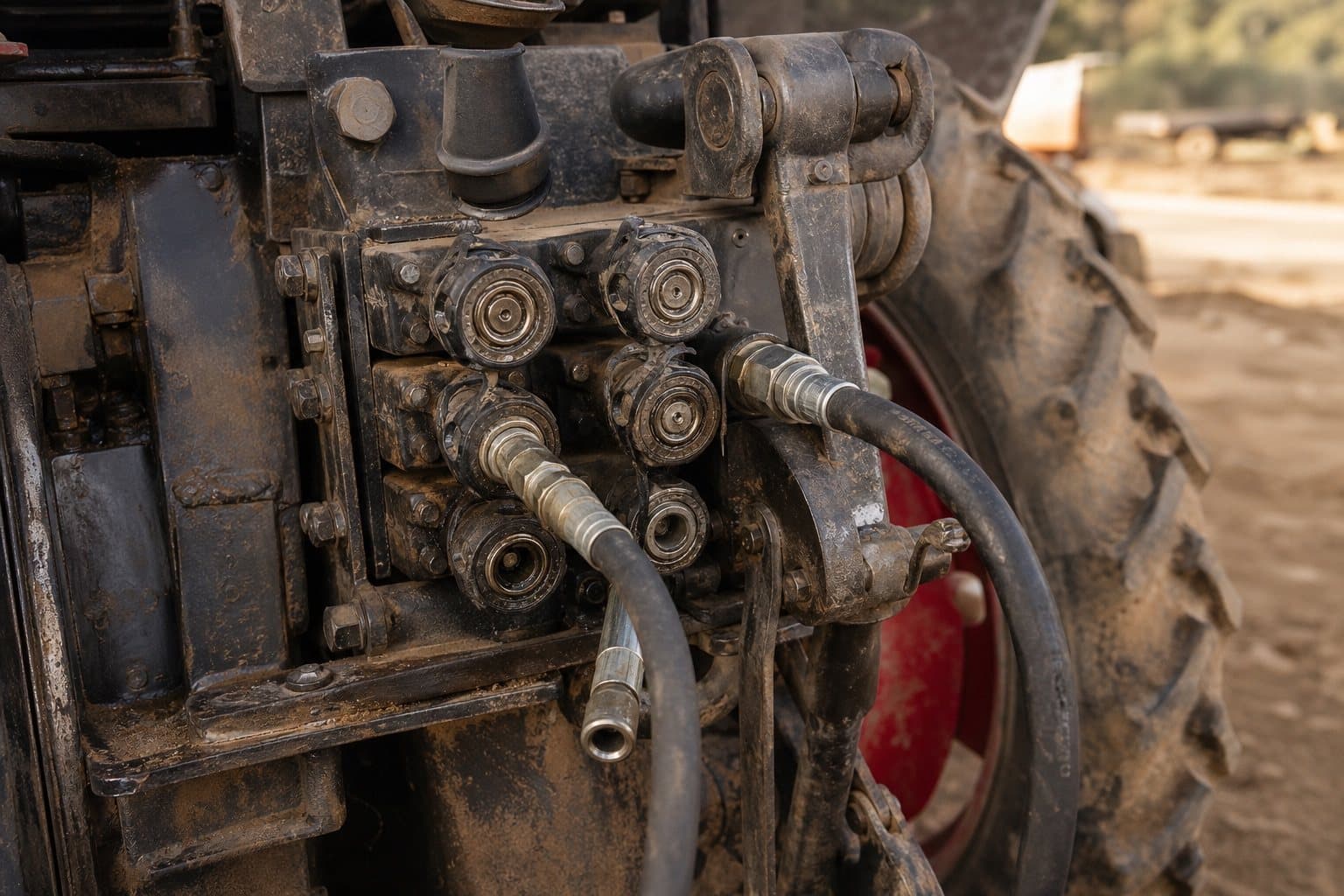
Tractor hydraulics have one property nothing else in this section shares: a coupler standard old enough and stable enough that equipment from entirely different eras still connects. That is genuinely useful, and it is also why the fluid in an agricultural system tends to be the dirtiest on any site.
/01Which circuit.
| What stopped | Circuit | Where to look |
|---|---|---|
| Implement function deadHighlighted | Remote / auxiliary | Couplers first, then the implement hoses |
| Three-point linkage will not lift | Linkage / draft control | Rear of the tractor, lift cylinder lines |
| Front loader will not lift or tilt | Loader | Lines along the loader arms |
| Steering heavy | Steering | Front of the machine — safety issue, stop |
| Everything slow | Pump supply or main pressure | Not implement-specific |
/02The contamination problem.
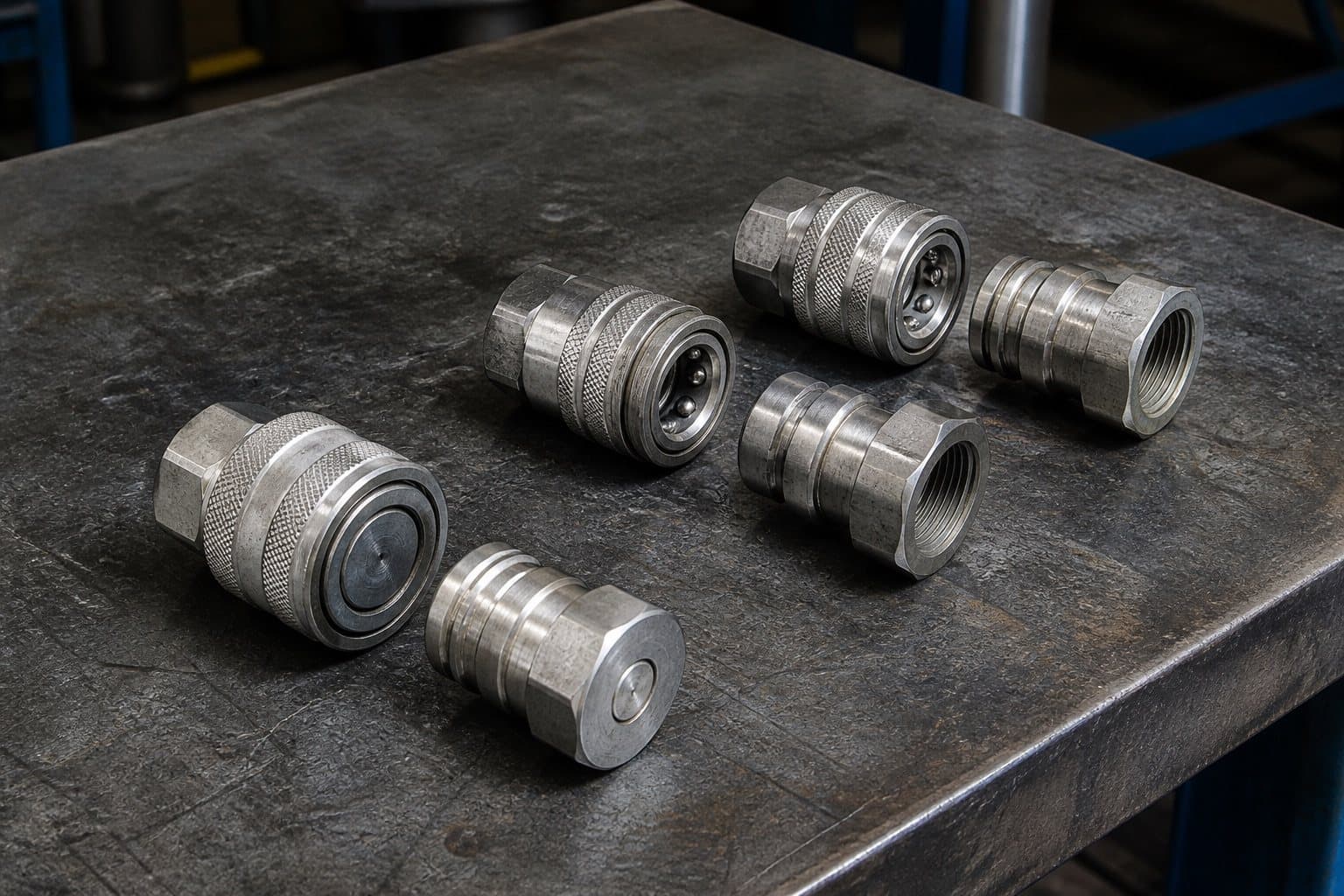
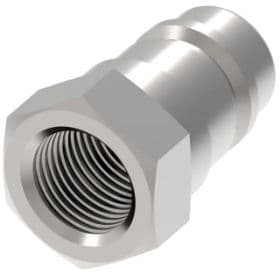
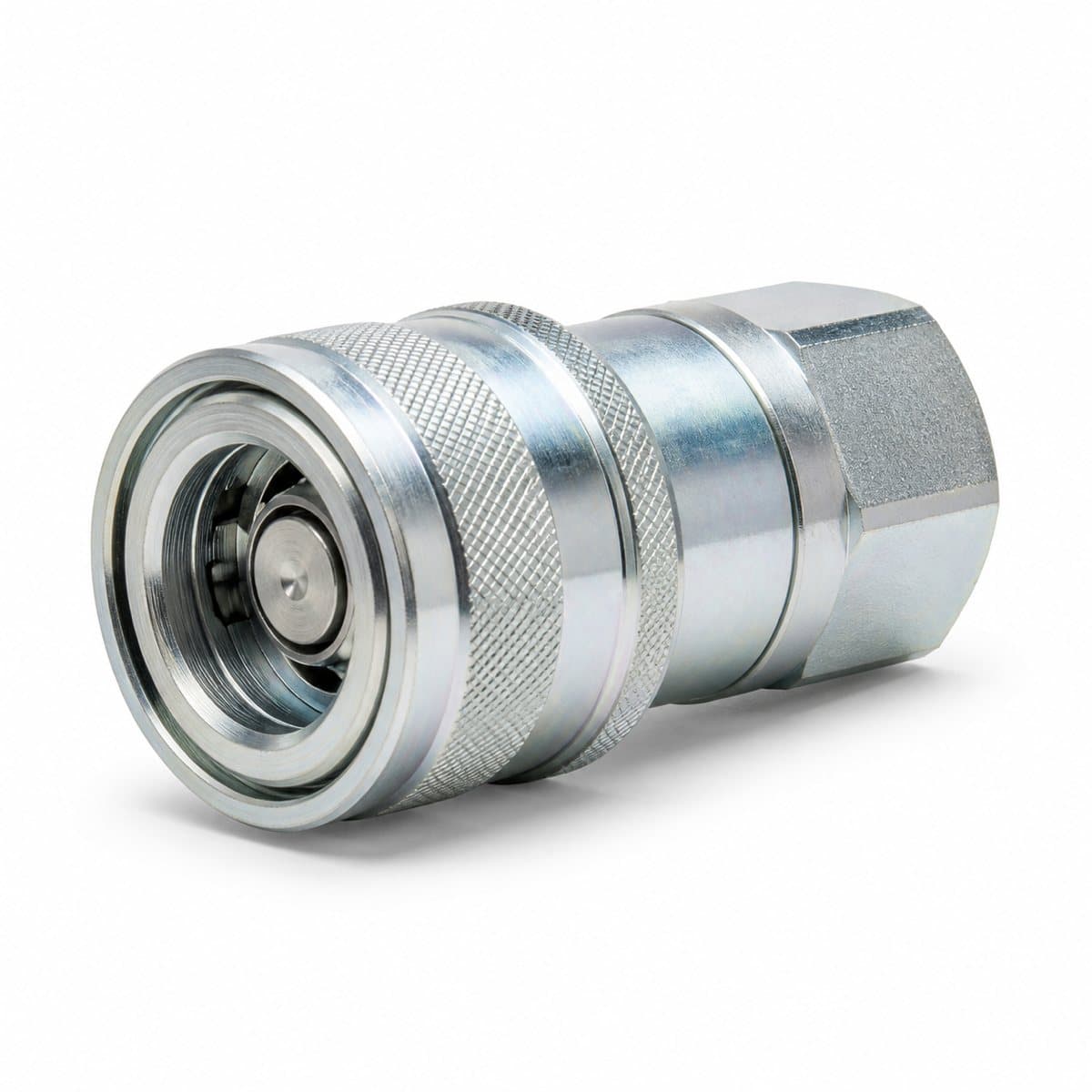
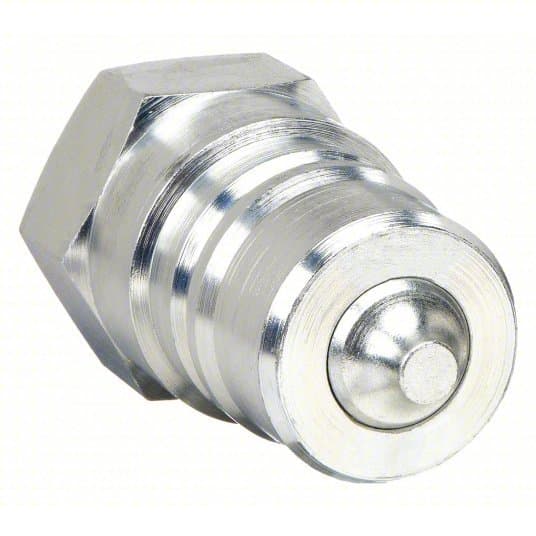
Agricultural couplers have recessed sealing faces that hold dirt, and they are connected in fields, in dust, with gloves on. Every connection carries some of that into the circuit. Over a season it accumulates, and the components it damages are pumps and valves rather than hoses.
Nothing about that is fixable by buying better hose. Wiping both faces before connecting and capping both halves when the implement is parked is most of the available improvement, and it costs nothing. Where implements are swapped under residual pressure, a connect-under-pressure coupler saves the struggle.
/03Length is the thing people get wrong.
An implement hose has to be long enough at the extreme of the linkage travel and short enough not to drag when the implement is raised. Most failures we see on implement lines are one or the other. Measure at full drop and check the slack at full lift — the same rule as every other articulated machine, and just as often skipped.
Tractor hydraulics also drive the reels and hose movers of slurry umbilical systems; see the slurry umbilical system guide.
Common questions
- Can I convert an implement to flat-face couplers?
- Yes, and it reduces contamination noticeably. The trade is that it will no longer connect to tractors running the older standard, so it is a decision about the whole yard rather than one implement.
- The implement works slowly on one tractor and fine on another. Why?
- Usually flow rather than the hose — different tractors supply different remote flow rates. Check that before replacing anything.
- Do you make implement hose sets?
- Yes. Send the old hoses or the lengths and coupler types and we will build the set.
- How do I stop implement hoses dragging?
- Get the length right first, then support the slack with a spring or a bracket so it lifts with the implement rather than trailing behind it.