
Category
Molykote Greases
Molykote greases are specialty lubricating greases, a base oil held in a thickener and often fortified with solids such as MoS₂ or PTFE, used where general-purpose grease fails on temperature, load, chemicals, plastics or food contact. Indus supplies them from Dubai: silicone greases 33, 41, 44 and 55, PFPE greases HP-300 and HP-500, MoS₂ bearing greases BR-2 Plus and Longterm 2 Plus, FM food-machinery greases such as G-4500 and G-0060, plastic-part greases EM-30L and PG-65, 3452 valve grease and DC HVG vacuum grease.
Pick the grease by temperature, load and what it touches
Fix the operating temperature range first, since it rules out whole base-oil families. Then the duty: speed and load, with shock or slow, heavily loaded movement calling for an EP or MoS₂ grease. Then compatibility with every plastic, elastomer and process chemical the grease will touch, and food contact needing NSF H1. Last, consistency: the NLGI grade that suits the application method, softer for central lubrication systems and cold starts. Send the application, temperatures, speed and load, the product used now and the pack size.
NLGI grade, cone penetration and dropping point
The NLGI consistency grade is set by worked cone penetration measured to ASTM D217, in tenths of a millimetre: NLGI 1 is 310–340, NLGI 2 is 265–295 and NLGI 3 is 220–250, so a lower grade is softer. Dropping point, to ASTM D2265, is the temperature at which the grease drips from a test cup; it is not a service temperature, and the maker's published service range on each data sheet is the figure to design to. FM grades for incidental food contact are registered by NSF as H1, grade by grade.
Delivery
Molykote Greases across the Gulf
Ex-stock from Dubai, delivered within 3 working days in the UAE.
Lubricants are the one part of this catalogue where the packaging decides the route: some greases and compounds carry a transport classification that rules out ordinary air freight, and pack size changes the answer as much as chemistry does. We will tell you which applies before you commit to a mode. Batch numbers and technical data sheets travel with the consignment from Dubai, which is what a plant lubrication schedule needs on file.
Beyond the Gulf
- North Africa
- Egypt, Tunisia, Mauritania
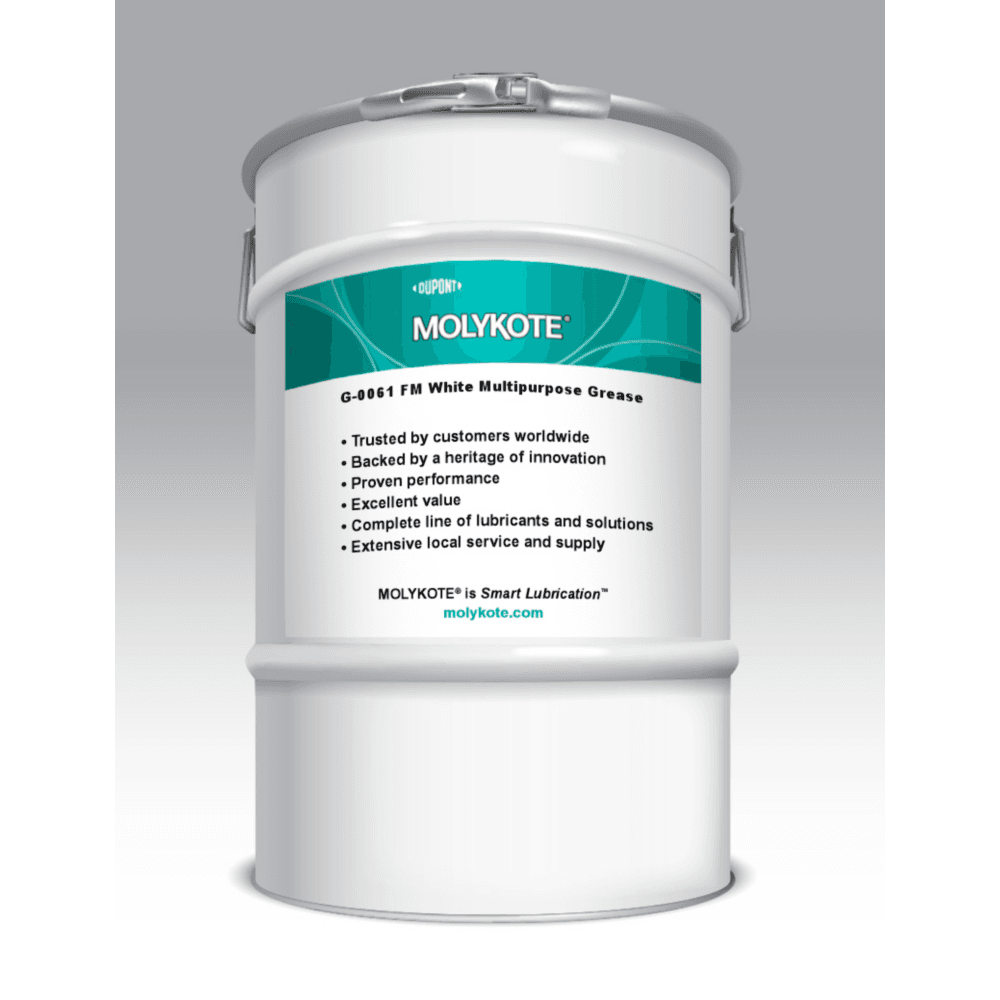
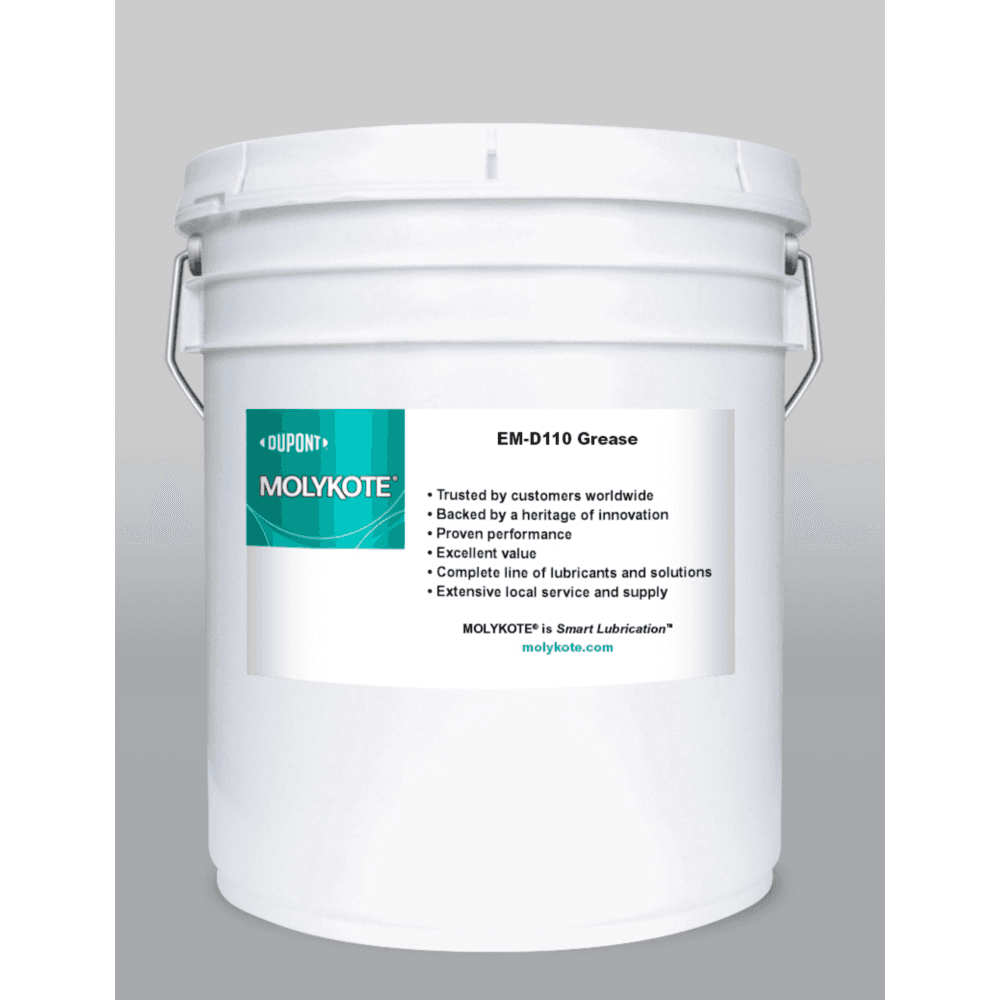
Molykote G-4501 FM Multi-Purpose Synthetic Grease
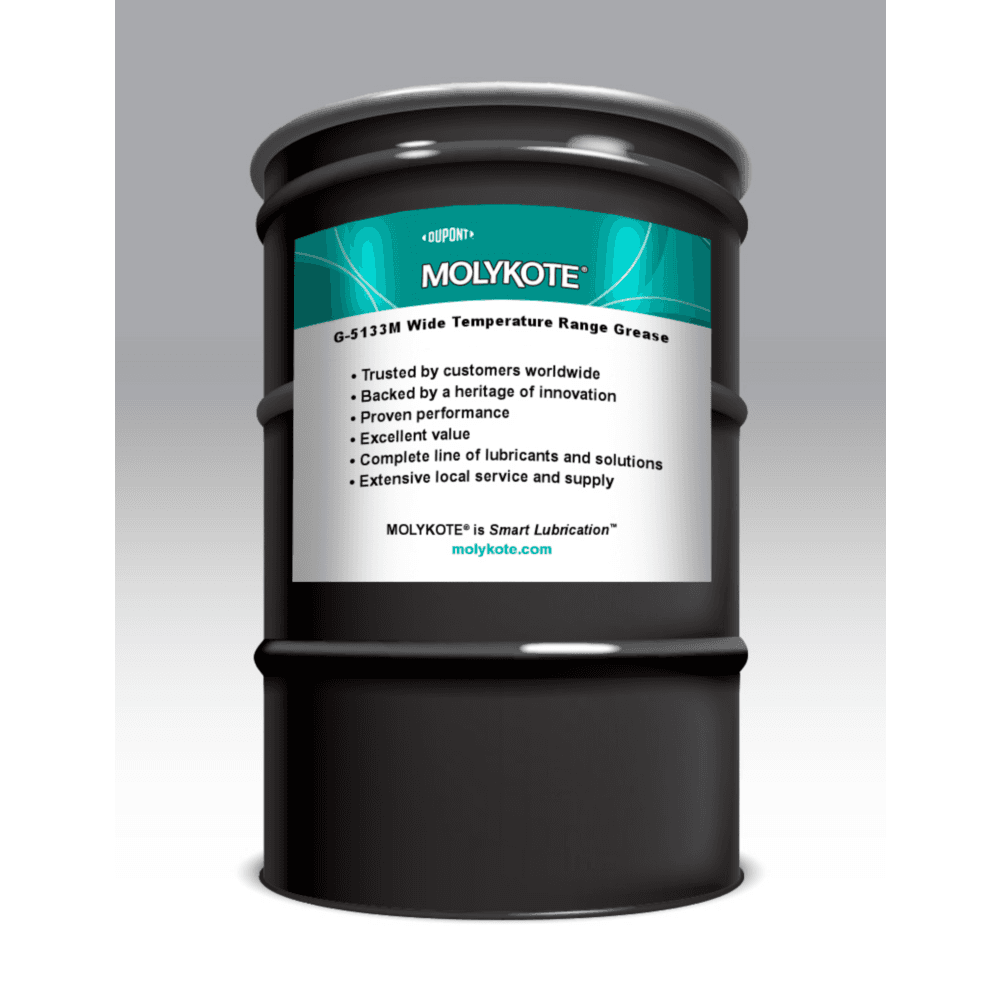
Molykote G-5133 M Wide Temperature Range Grease
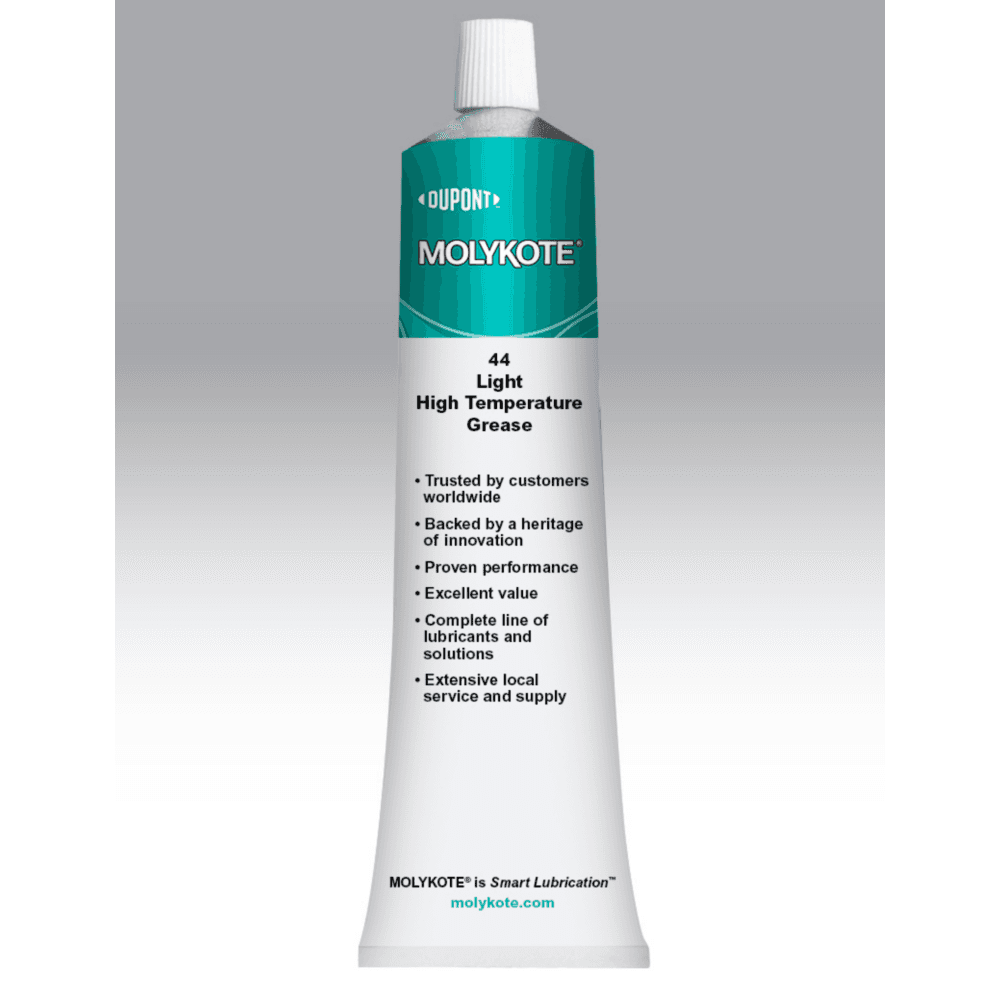
Molykote G-4500 FMS Multi-Purpose Synthetic Grease
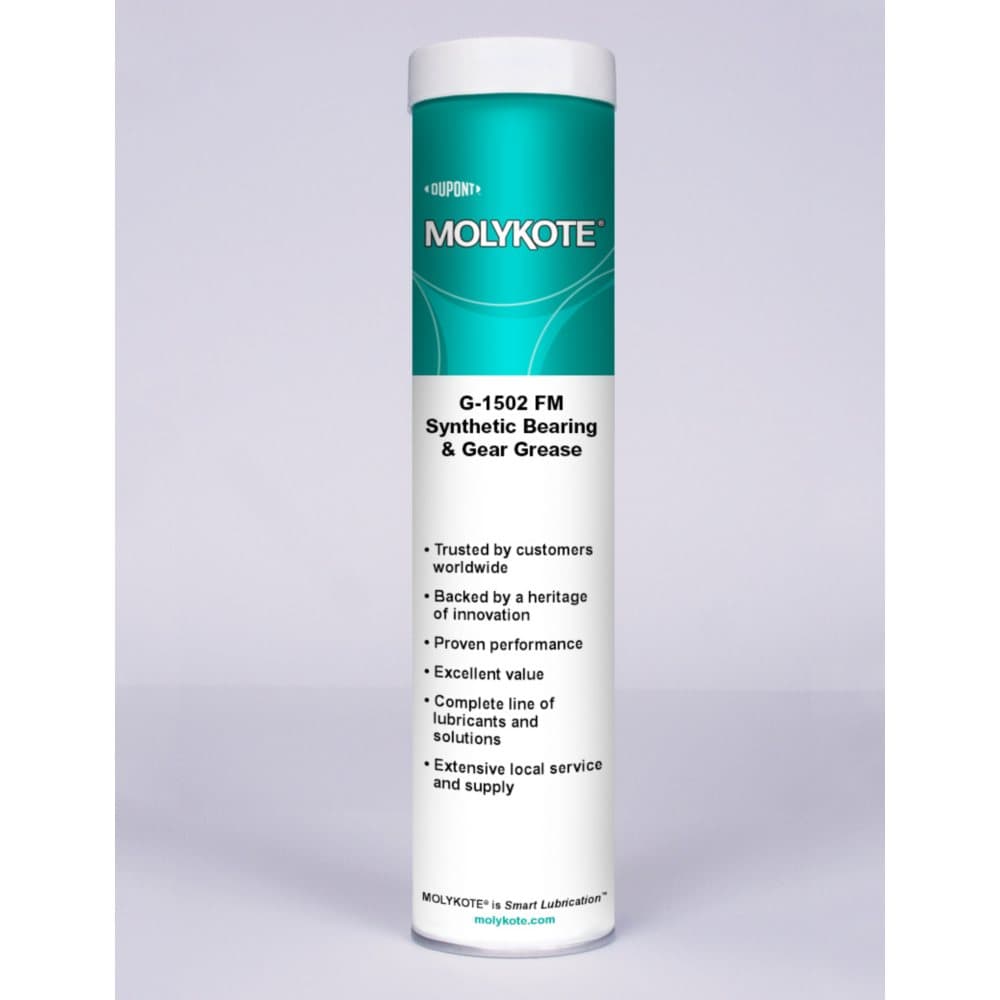
Molykote G-1502 FM Synthetic Bearing & Gear Grease
Molykote G-4501 FMS Multi-Purpose Synthetic Grease
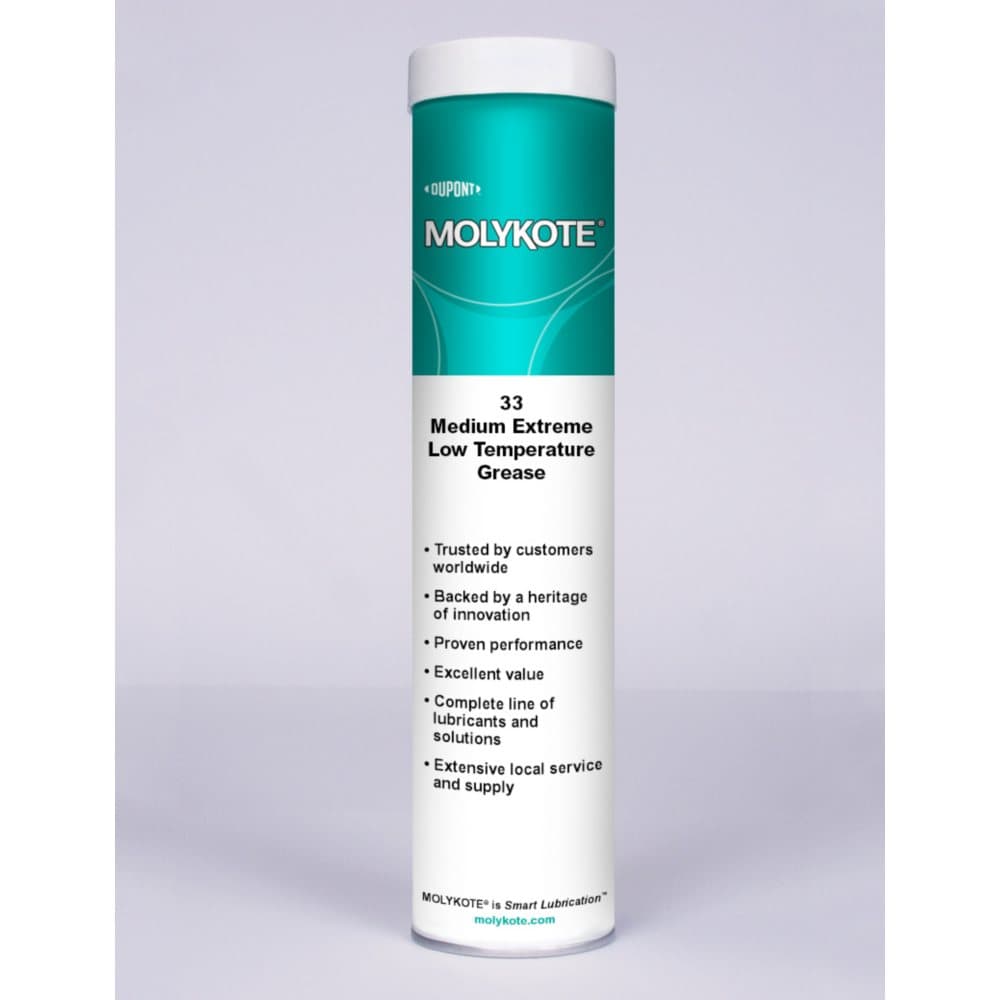
Molykote 33 Light Extreme Low Temperature Grease
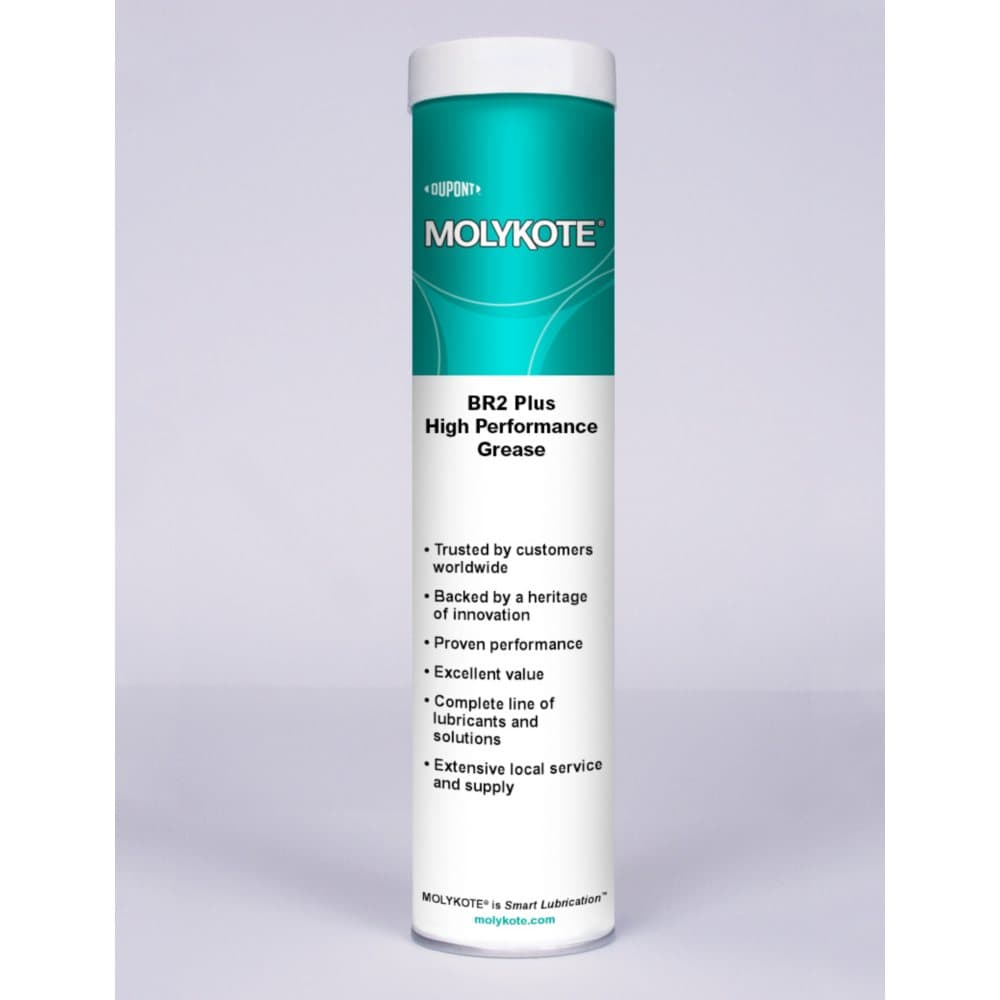



Molykote G-5042 Silicone Automotive Service Grease
Molykote 41 Extreme High Temperature Bearing Grease

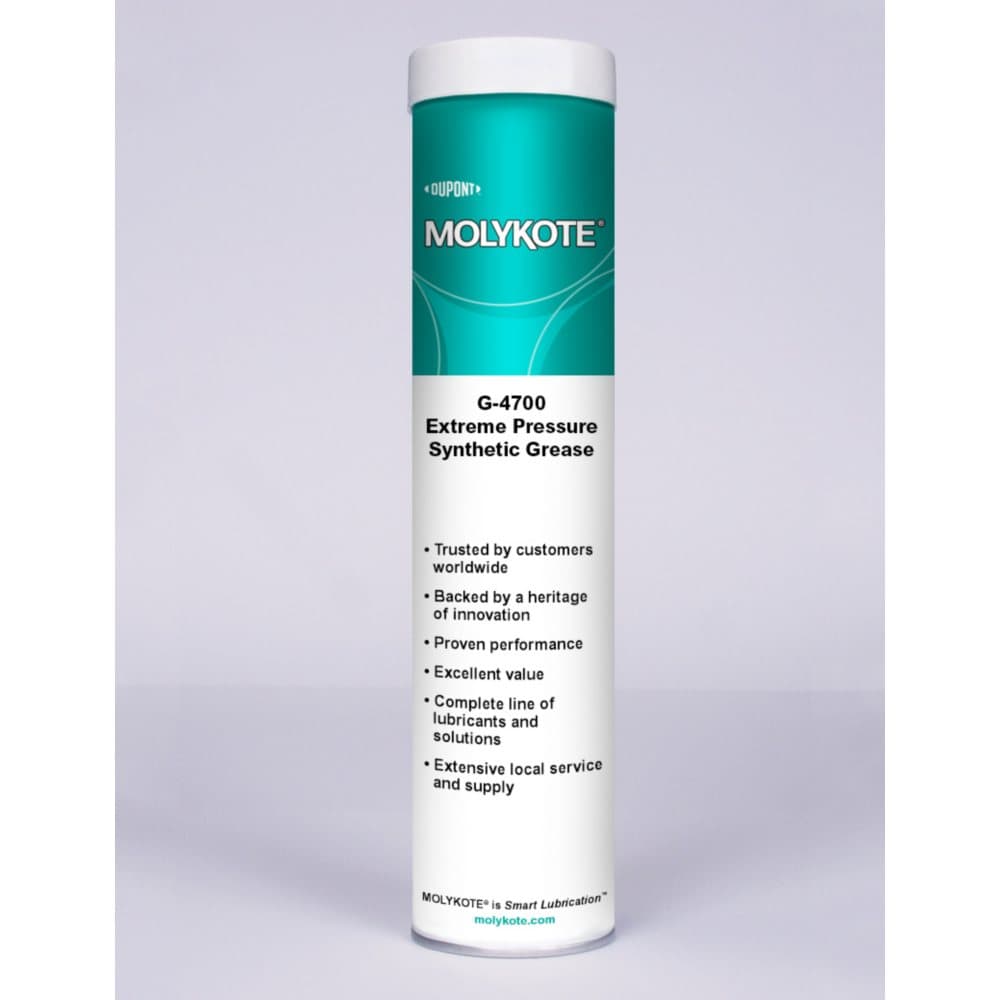
Molykote G4700 Extreme Pressure Synthetic Grease
Questions we get asked
About this range
- 01What is the difference between Molykote 33 Light and 33 Medium, or 44 Light and 44 Medium?
- Light and Medium are the same silicone grease made to two consistencies: Light is softer, Medium stiffer. The softer version feeds more easily, suits lightly loaded and low-temperature mechanisms and small instrument bearings, and is easier to apply through grease lines; the stiffer version stays in place better in larger bearings and on vertical or open surfaces. Base oil and chemistry are the same, so choose by how the grease is applied and retained. Check the NLGI grade and temperature range on the data sheet of each.
- 02Which Molykote grease should I use on plastic gears and plastic-on-metal parts?
- Use a grease made for plastics, such as Molykote EM-30L, EM-50L, EM-D110 or PG-65 Plastislip, rather than a general mineral-oil grease. Some base oils and additives can soften, swell or stress-crack plastics such as polycarbonate and ABS, and the plastic grades are formulated to avoid that while damping noise and reducing wear in small gearboxes, slides and switches. Compatibility still depends on the exact polymer and the stress in the part, so test on the actual component before committing a production line.
- 03Which Molykote grease is for heavily loaded, slow-moving or shock-loaded bearings?
- An extreme-pressure grease with molybdenum disulphide, such as Molykote BR-2 Plus or Longterm 2 Plus. Both are lithium-soap greases with MoS₂, made for metal-on-metal rolling and plain bearings that run slowly to moderately fast under high load, vibration or shock, where an ordinary grease film would be squeezed out. They are not the choice for very high speed or extreme temperatures; for those, look at a synthetic or PFPE grade and check its speed factor on the data sheet.
- 04Which grease for a valve exposed to fuel, solvents or aggressive chemicals?
- Molykote 3452 Chemical Resistant Valve Grease. It is a fluorosilicone oil thickened with PTFE, made to stay in place on valve plugs, seats, stems and seals where fuels, solvents and many chemicals would wash out or dissolve a mineral or plain silicone grease. For the most aggressive media and highest temperatures, a PFPE grease such as HP-300 or HP-500 goes further. Send the medium, its concentration and the temperature so the grade can be confirmed against the data sheet.
- 05Can I mix two greases, or switch a bearing to a different Molykote grease?
- Do not mix them without confirming they are compatible. Greases with different thickeners, lithium, calcium, polyurea, PTFE or clay, or with different base oils such as mineral, silicone and PFPE, can soften, harden or bleed oil when mixed, and the bearing may then run dry. When changing grease, clean out the old grease where you can, or purge it with the new grease until only the new product emerges, and shorten the relubrication interval for the first few cycles. The data sheets give thickener and base oil for each grade.
- 06What is dielectric grease or vacuum grease used for, and is silicone grease safe near paint lines?
- Dielectric grease such as Molykote G-5008 is a non-conductive silicone that seals electrical connectors, boots and terminals against moisture and corrosion; DC HVG high vacuum grease seals and lubricates vacuum joints, stopcocks and O-rings. Both are silicone, and silicone residue on parts that will be painted, coated or bonded causes adhesion failures and surface defects such as fish-eyes, so keep them away from paint shops and bonding areas or use a non-silicone grease there.
From the blog
Written about this range
Maintenance & reliability
Grease selection by base oil, thickener and NLGI grade: reading a grease listing
Every grease listing gives the same handful of numbers. What the base oil, the thickener, the base oil viscosity and the NLGI grade each tell you, with examples from the 63 Molykote greases we list.
5 min read
Maintenance & reliability
Molykote lubricant types explained: greases, pastes, coatings, compounds, oils and dispersions
Molykote sells six different kinds of lubricant, and choosing the wrong kind costs more than choosing the wrong product. What each type is, the job it does, and the products we supply in each.
5 min read