
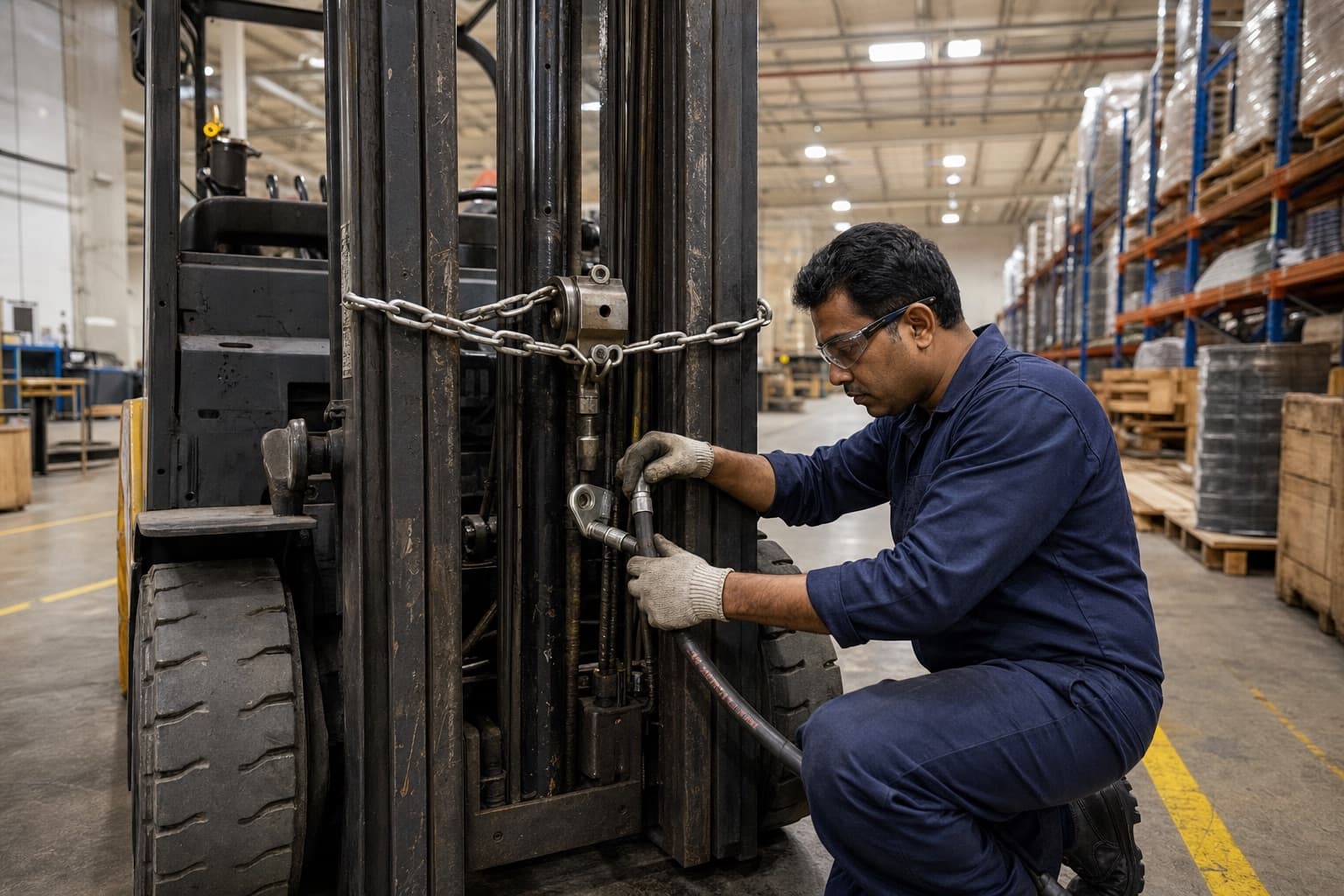
Forklift hose failure: mast, tilt or attachment
Three circuits, three very different failure patterns. Which one went, where the hose actually wears, and the safety step that gets skipped on every second job.
From the workshop · Indus blog
No SEO bait, no marketing fluff. Just practical writing about hydraulic systems from the people who specify, install and rebuild them every day.
Three circuits, three very different failure patterns. Which one went, where the hose actually wears, and the safety step that gets skipped on every second job.

On food, beverage and potable duty the material is only half the requirement. What the regulations actually cover, and what an auditor will ask you for.

Steam hose failures hurt people, and most of them happen at the ends rather than in the middle. What steam service demands, and why push-on couplings have no place on it.

The liner decides everything. How compatibility charts work, why concentration and temperature change the answer, and what else has to be right before the hose is safe to use.
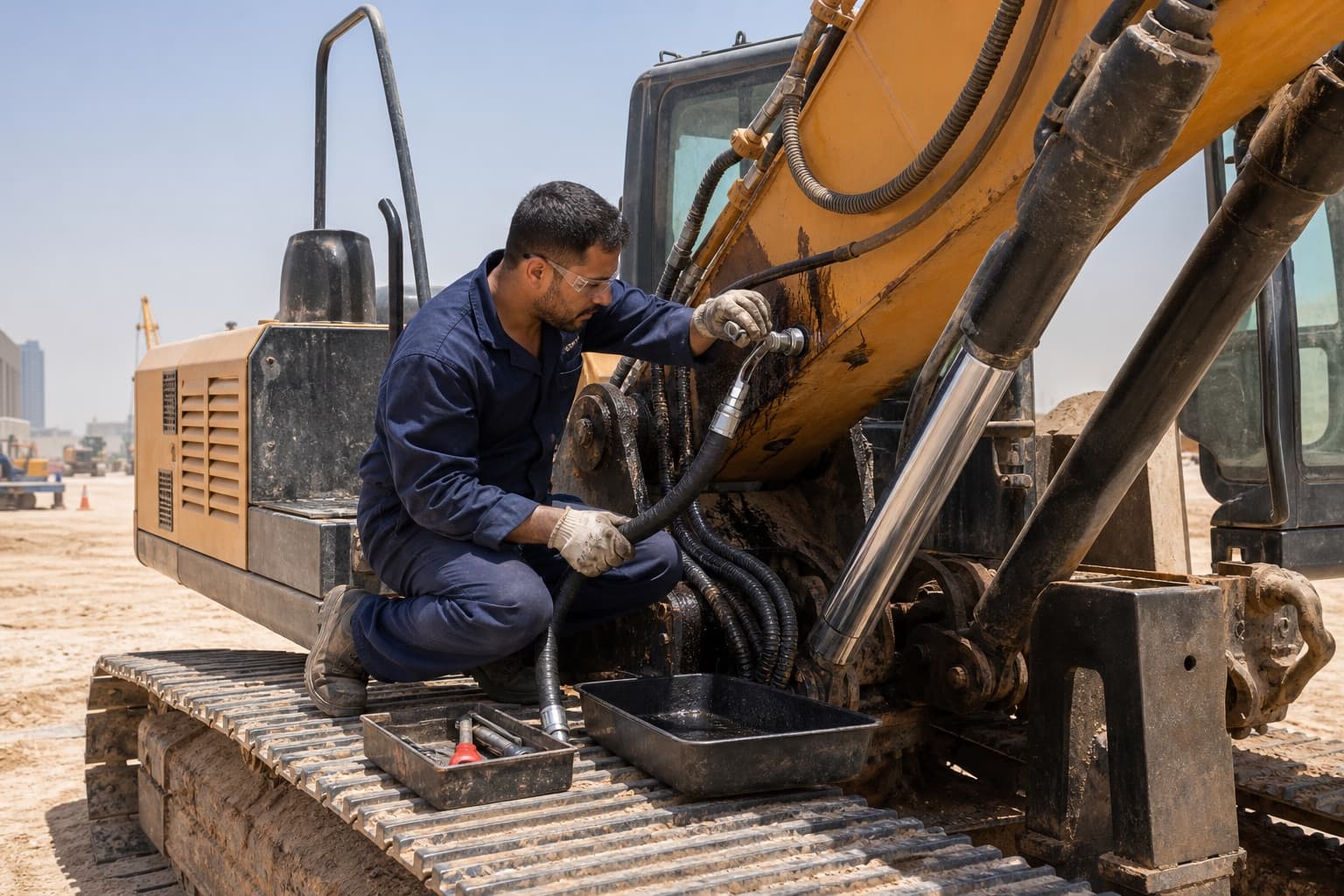
Boom, arm, bucket, swing or travel — the symptom tells you which circuit failed before anything comes apart. How to read it, and how to identify the hose without the dealer part number.
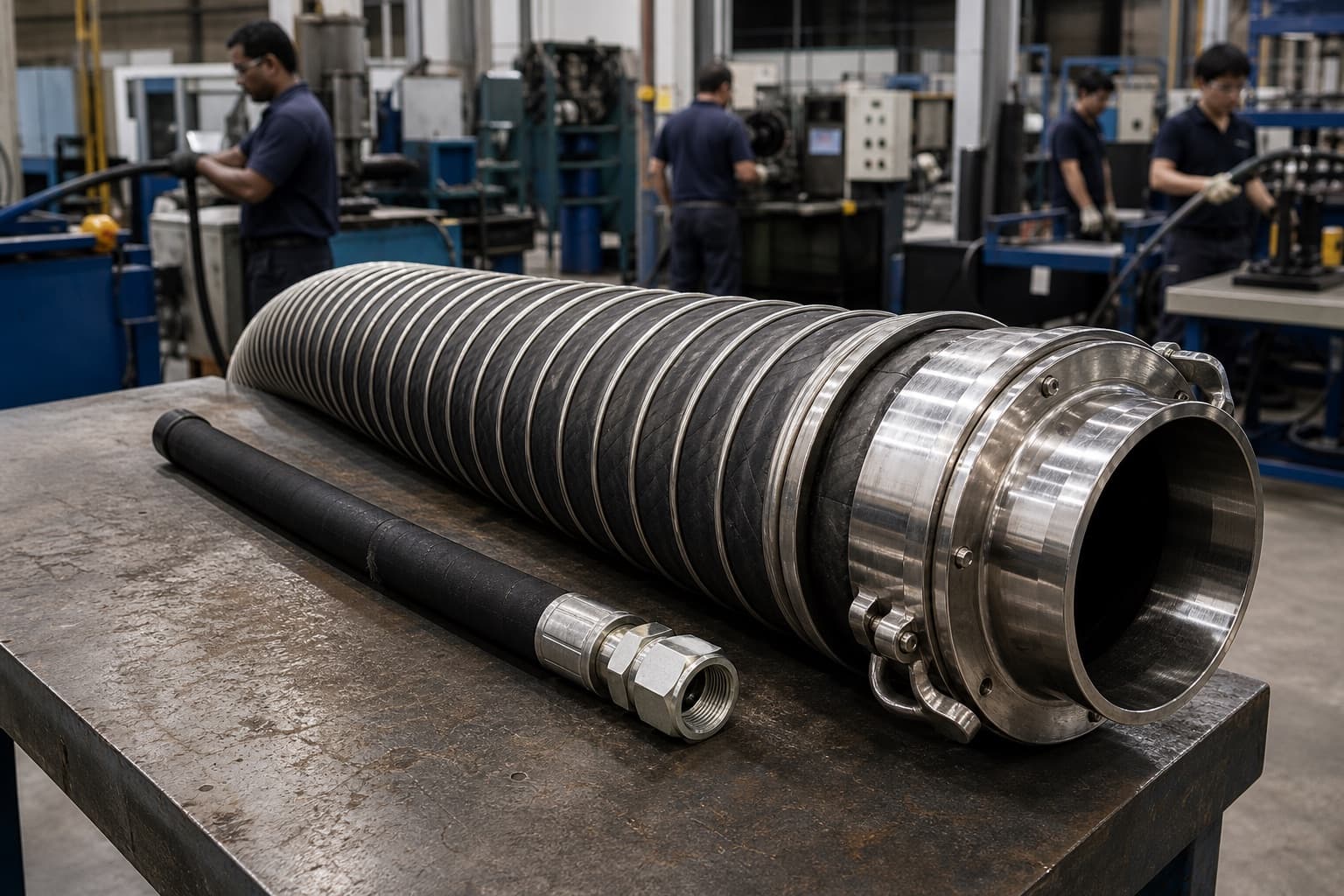
Hydraulic hose is chosen on pressure. Industrial hose is chosen on what is going through it, at what temperature, and whether it has to suck as well as blow.
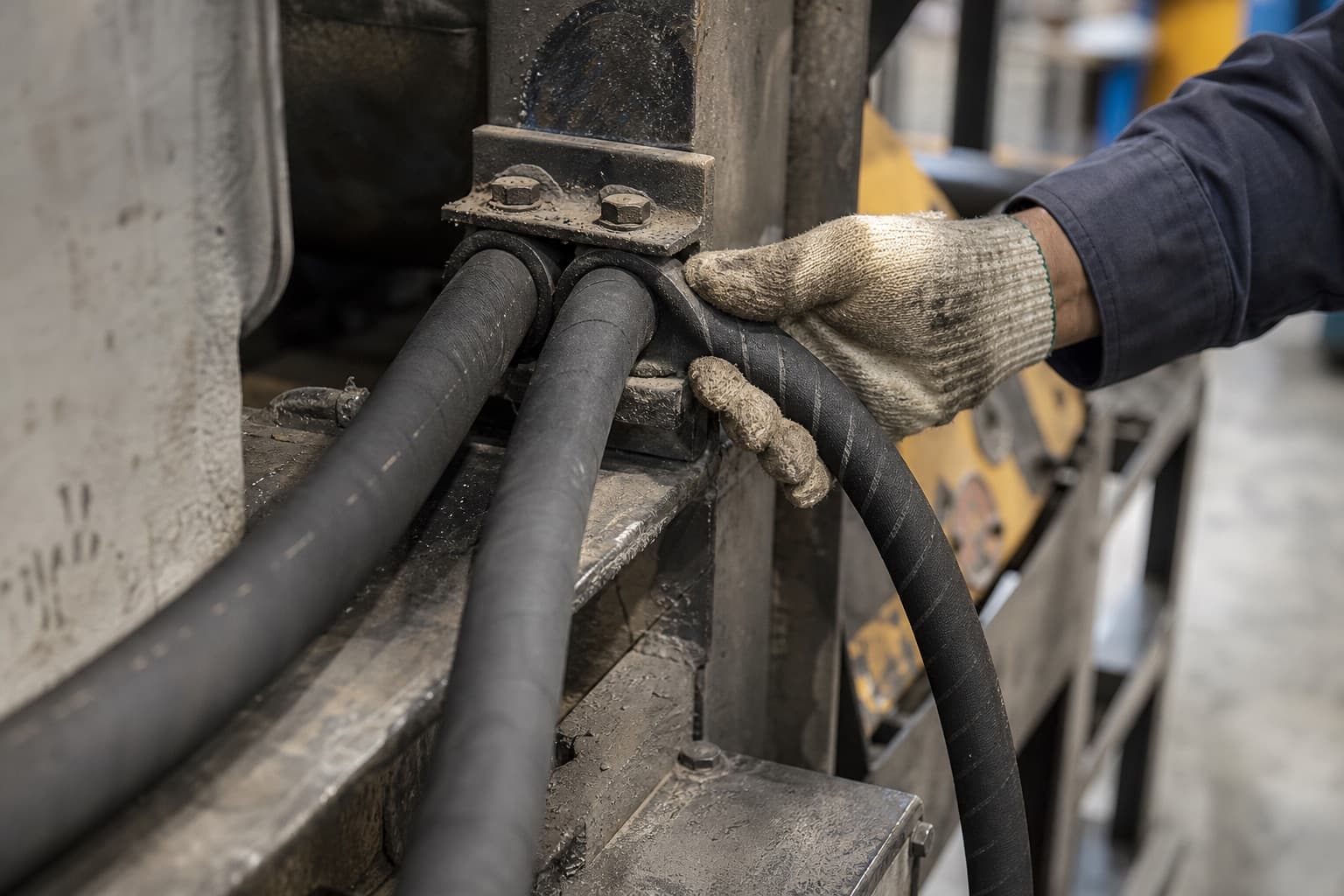
Three installation faults account for a large share of premature hose failure, and all three are free to avoid at fitting time. What they look like and how to design them out.
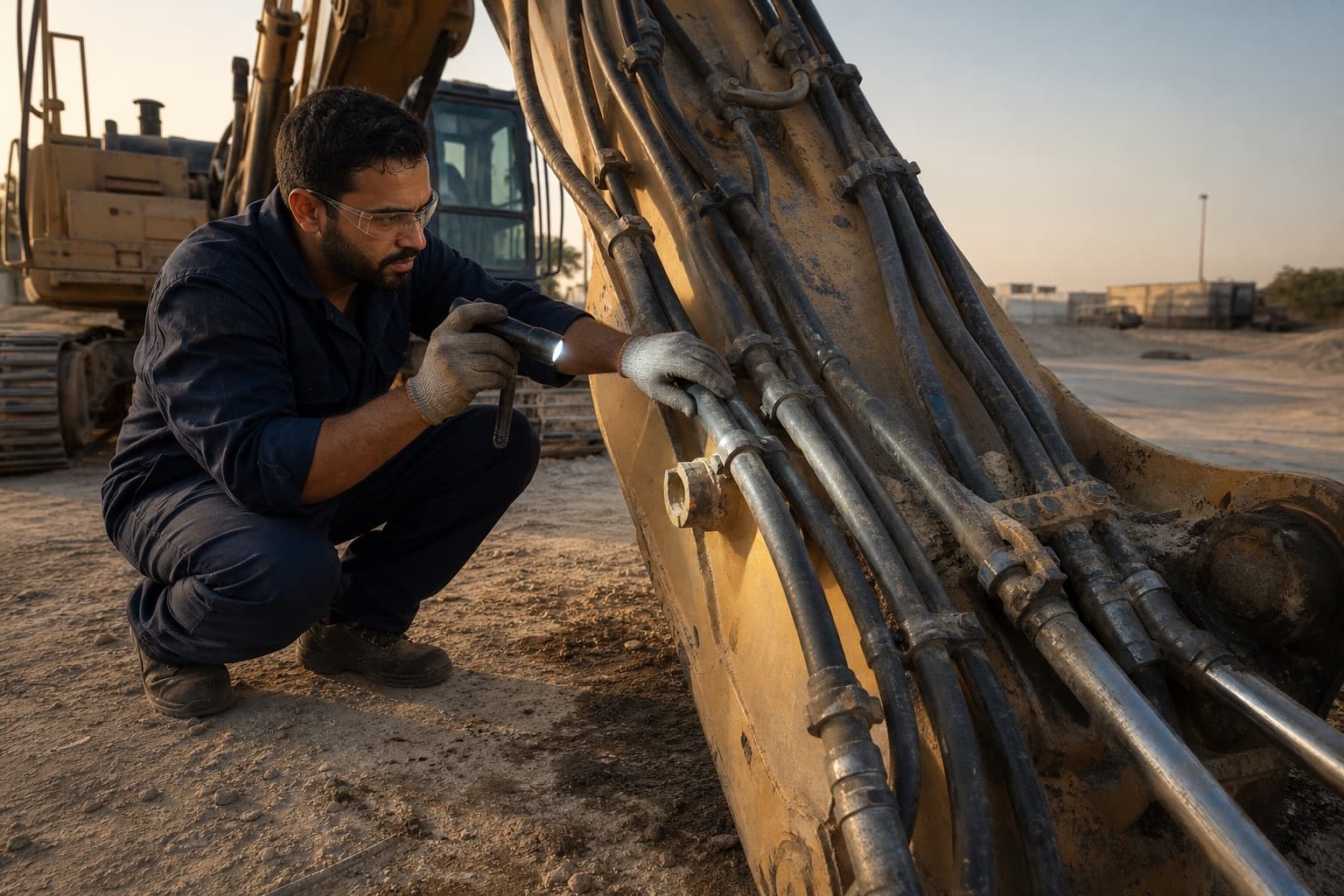
A walk-round that takes ten minutes finds most of what is about to fail. What to look at, what each finding actually indicates, and where the judgement calls are.
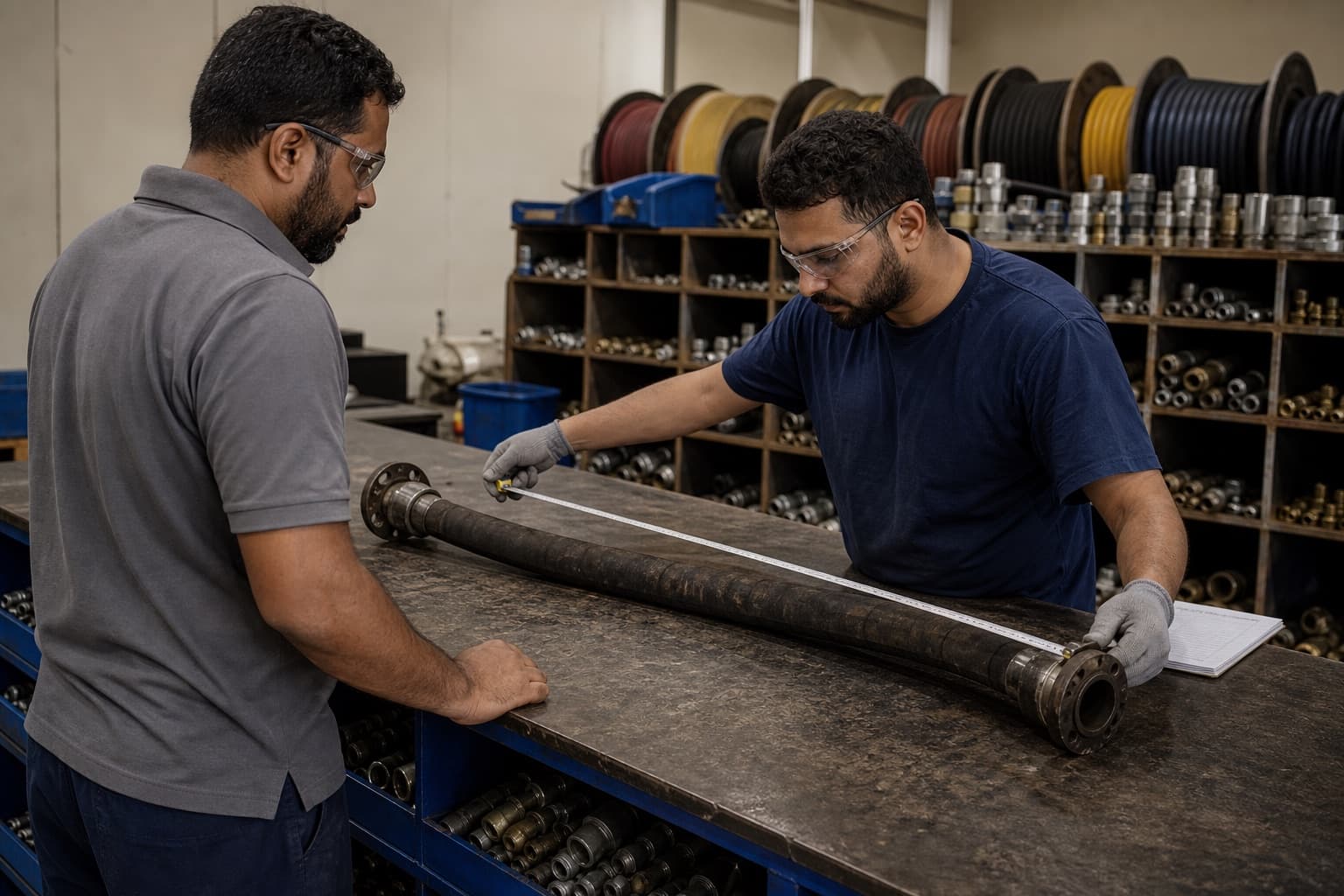
Bring the old hose if you have it. If you do not, four measurements and two photographs will get the assembly built correctly first time.
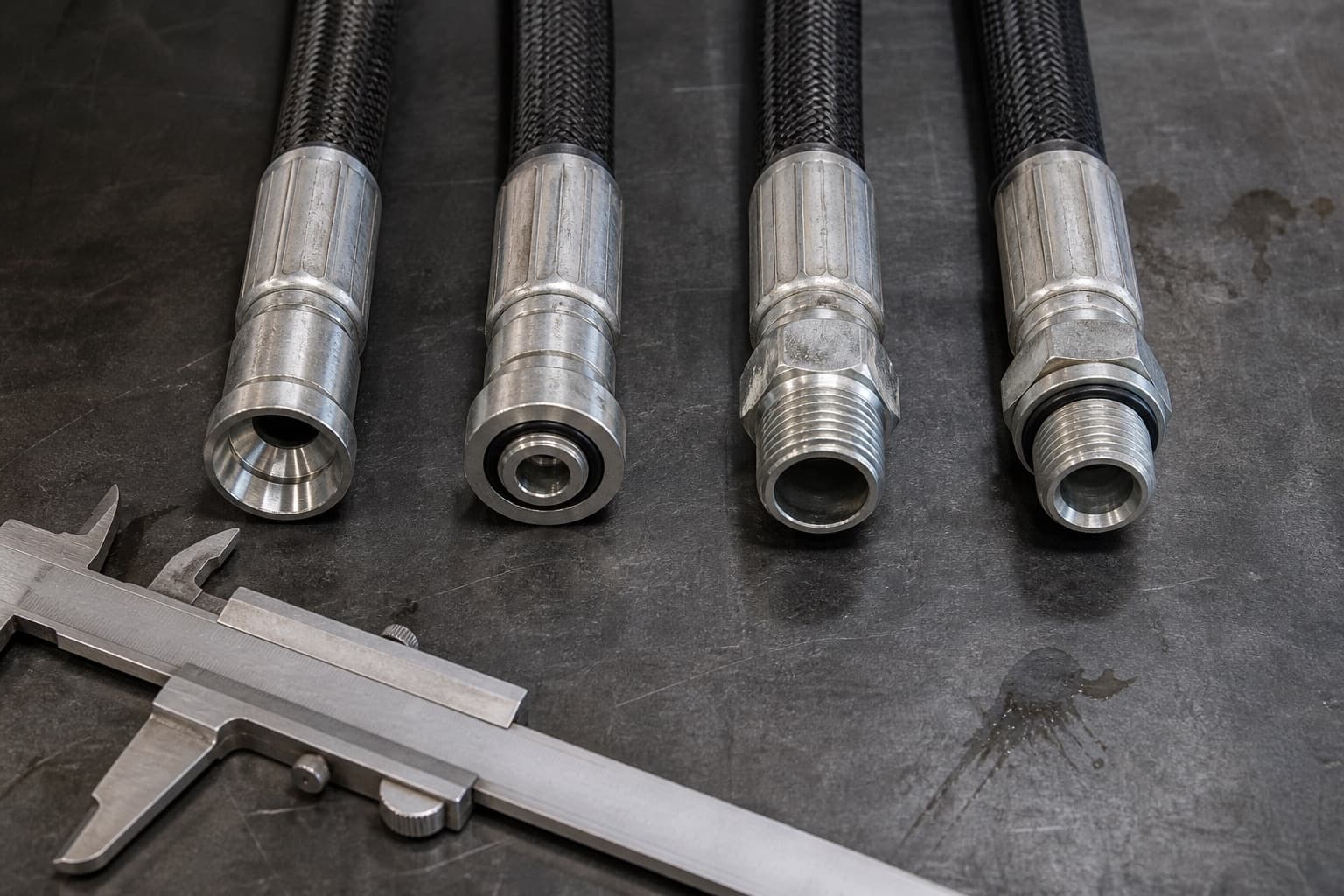
Four families cover almost every hydraulic connection you will meet. What each one seals on, which are re-makeable, and which pairs will thread together and still fail.
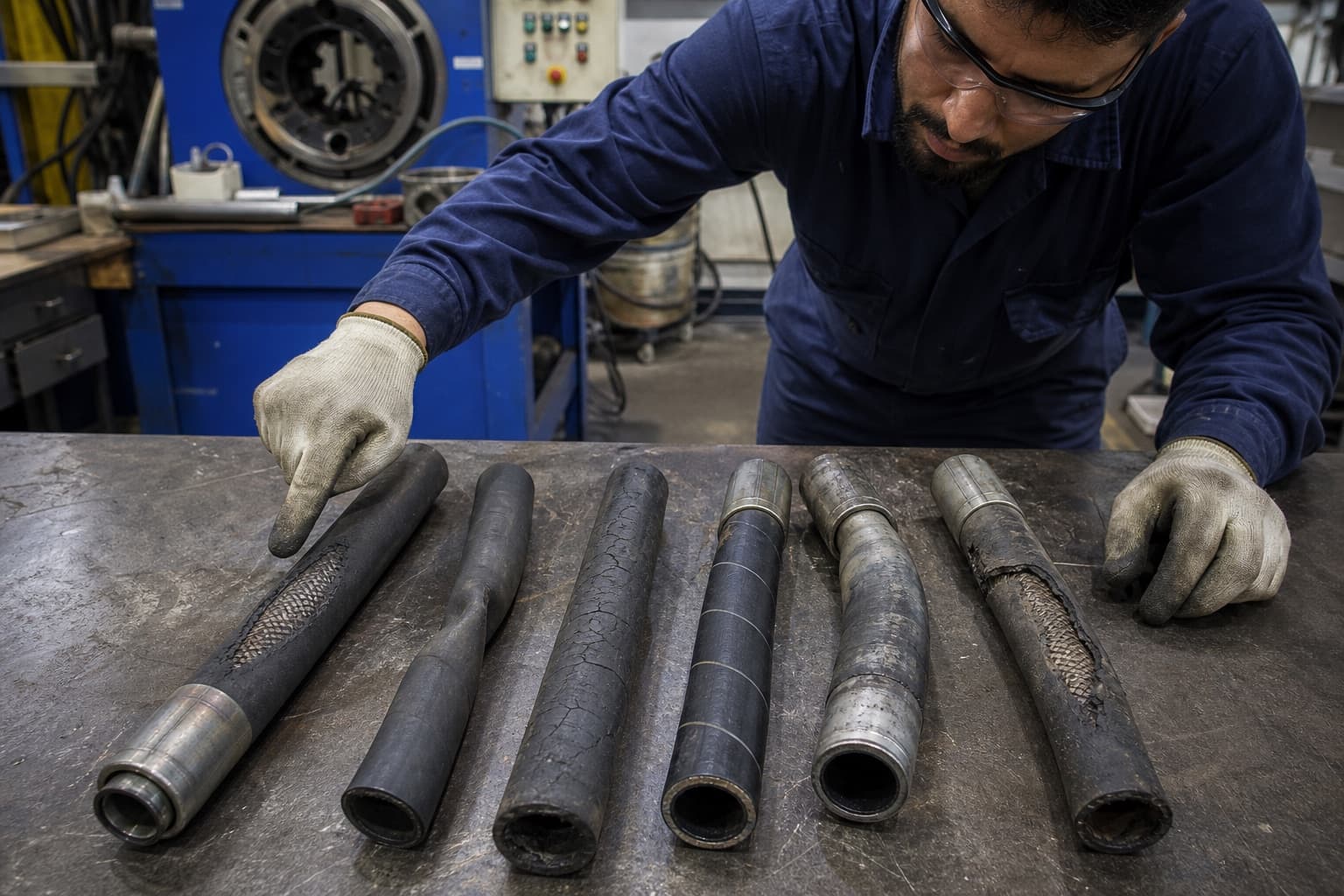
A failed hose usually tells you why it failed. Abrasion, kinking, heat, cold-set, wrong routing and fitting problems each leave a different signature — and each has a different fix.
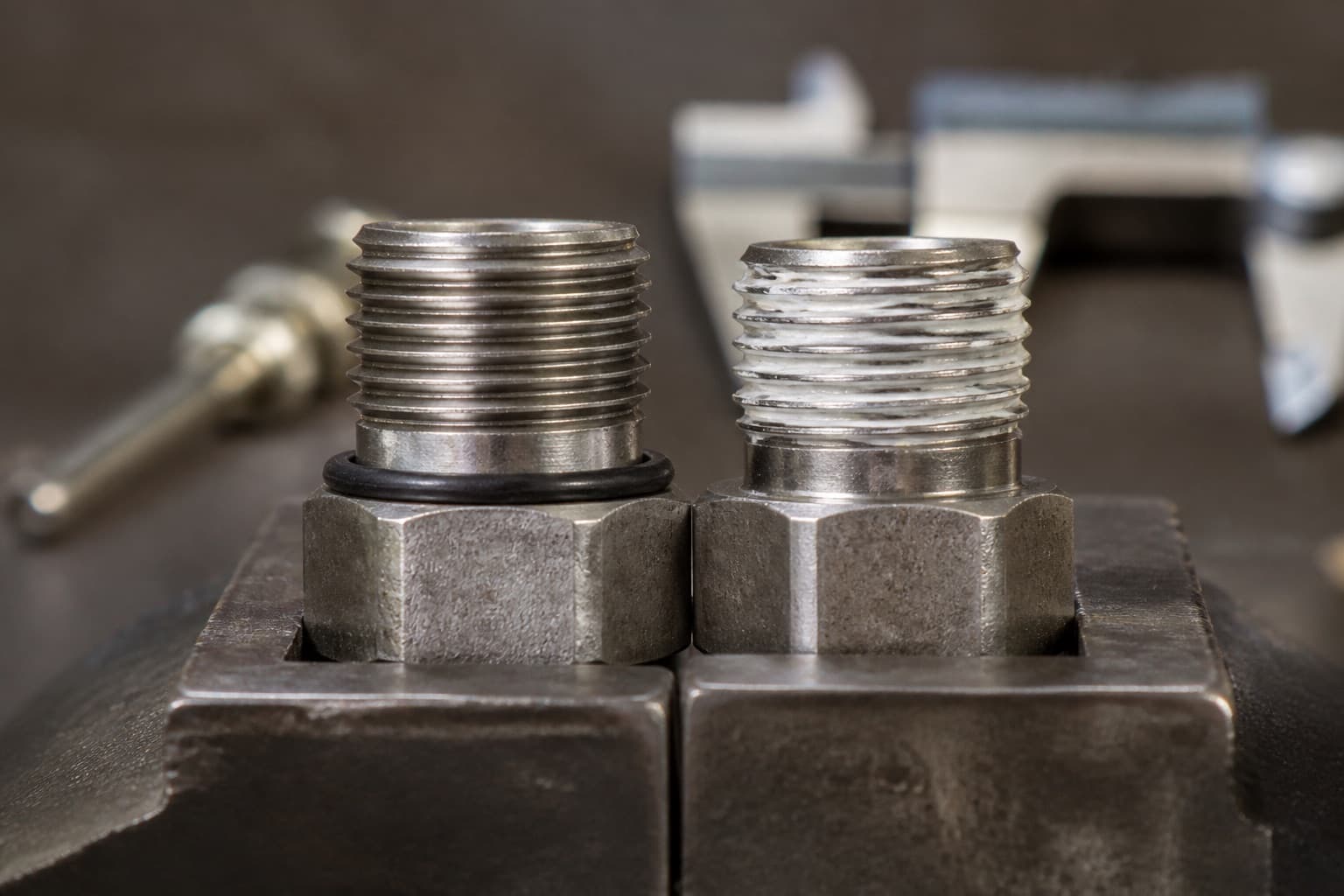
They share a thread form and a size designation, and they do not seal the same way. How to tell them apart on the bench, and what happens when they are mixed.