
MannTek PERC Powered Emergency Release Coupling for LNG Bunkering — 2-1/2" to 8"
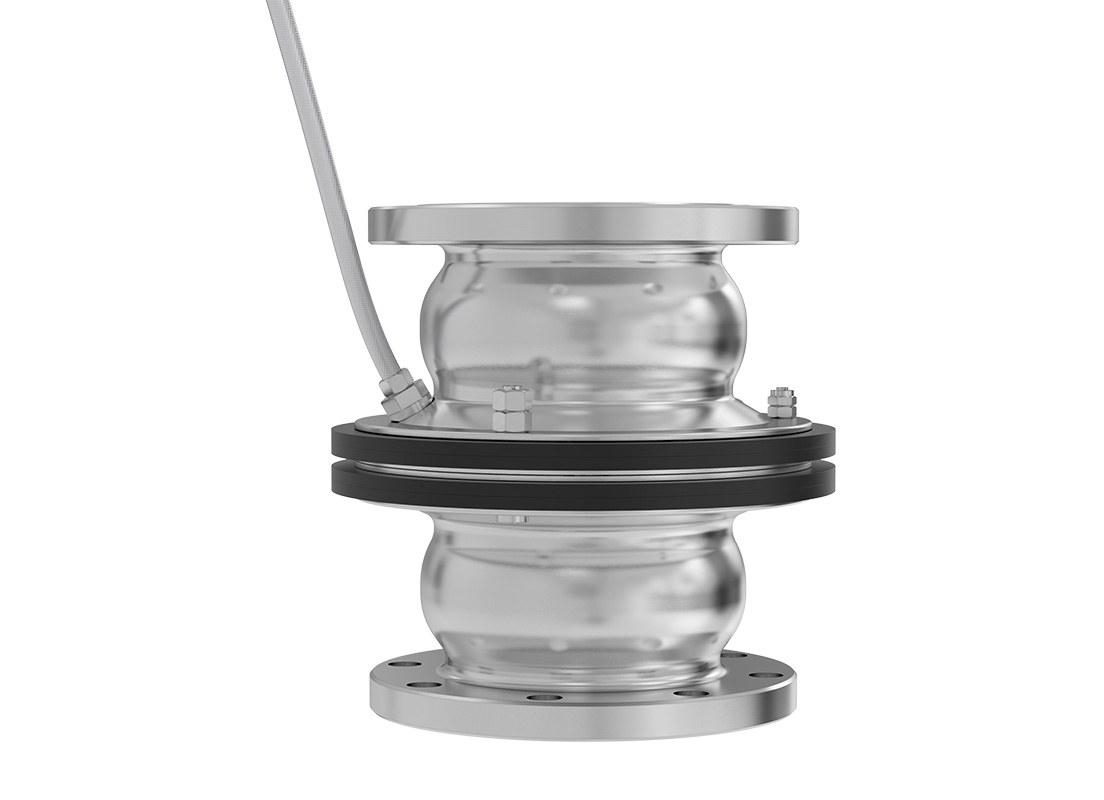
MannTek PERC powered emergency release coupling for LNG bunkering and transfer: released by ESD signal, by manual override or, as a passive backup, by breaking bolts, with both valves closing. 2-1/2" to 8", nitrogen release. From Indus Hydraulics, authorised MannTek distributor, UAE.
Key features
- Coupling Family: Powered Emergency Release Coupling (PERC)
- Coupling Type / Variant: Active release by nitrogen (ESD signal or manual override), passive breaking-bolt backup
- End A Configuration: Female or male NPT thread, or EN / ANSI / TW / TTMA flange (chosen per side)
- End B Configuration: Female or male NPT thread, or EN / ANSI / TW / TTMA flange (chosen per side)
- Size Range: 2-1/2" (DN 65) to 8" (DN 200)
- Coupling Family
- Powered Emergency Release Coupling (PERC)
- Coupling Type / Variant
- Active release by nitrogen (ESD signal or manual override), passive breaking-bolt backup
- End A Configuration
- Female or male NPT thread, or EN / ANSI / TW / TTMA flange (chosen per side)
- End B Configuration
- Female or male NPT thread, or EN / ANSI / TW / TTMA flange (chosen per side)
- Size Range
- 2-1/2" (DN 65) to 8" (DN 200)
Product description
The MannTek Powered Emergency Release Coupling (PERC) is a breakaway coupling for LNG transfer that can also be released on command. It uses the well-proven breaking-bolt design of MannTek's cryogenic breakaways and adds a dedicated chamber, isolated from the transferred medium, into which high-pressure nitrogen is injected to release the coupling instantly. Both halves shut off as it separates, and the active release puts no strain on the transfer system or the manifolds.
Three ways of release
- By ESD signal from the ship or shore emergency shutdown system.
- By manual override, independent of the electrical signal.
- Passively, by breaking bolts designed to be the weakest point of the hose or manifold. If power is lost, the PERC still works as a passive breakaway coupling.
Control and release system
The PERC is released and monitored by MannTek's HPN2 high-pressure nitrogen unit, which holds the complete control, monitoring and release system and uses a pilot pressure regulator to keep the system free from moisture and ice. Its PLC is programmed for each application under third-party supervision, monitors the whole bunkering or transfer operation and makes sure every step of the periodic test is carried out. MannTek states its SIL2 PLC LNG transfer systems have been assessed by DNV-GL and declared compliant to SIL2, developed in accordance with IEC 61508 and IEC 61511.
A Vessel Separation Device (VSD) can feed it: two wires shorter than the hose trip VSD 1, which signals ESD 1 to stop pumps and close ESD valves, and then VSD 2, which signals ESD 2 and releases the PERC through the HPN2 unit.
Sizes and construction
- 2-1/2" (DN 65) to 8" (DN 200), with female or male NPT thread or EN, ANSI, TW or TTMA flanges, inlet and outlet chosen individually; no nipples or reducers needed
- Flow capacity from 2,800 L/min at 2-1/2" to 24,200 L/min at 8" (MannTek)
- Seals: PTFE; reliable poppet valve design; lightweight and compact, with the release built into the coupling
- The nitrogen chamber protects the valve mechanism from dirt and moisture
- Breaking load calculated for each installation; reset in minutes without special tools after activation
Where it is used
LNG bunkering ship-to-ship, shore-to-ship and truck-to-ship, and LNG cargo transfer. MannTek also lists the PERC for ammonia, methanol and carbon capture transfer systems.
Indus Hydraulics is an authorised MannTek distributor in the UAE and supplies MannTek couplings direct from MannTek in Sweden.
How to order
Send the size, the inlet and outlet connections, the medium and line pressure, the transfer layout (ship-to-ship, shore-to-ship or truck-to-ship), and whether you need the HPN2 unit and a VSD with it. We confirm the MannTek order code, price and lead time with the quotation.
Identification
| Parameter | Value |
|---|---|
| Coupling Family | Powered Emergency Release Coupling (PERC) |
| Coupling Type / Variant | Active release by nitrogen (ESD signal or manual override), passive breaking-bolt backup |
| Notes | Released and monitored by the MannTek HPN2 nitrogen unit. Body, pressure and order code confirmed with the quotation. |
| Manufacturer | MannTek (Mann Teknik AB), Mariestad, Sweden |
Configuration
| Parameter | Value |
|---|---|
| End A Configuration | Female or male NPT thread, or EN / ANSI / TW / TTMA flange (chosen per side) |
| End B Configuration | Female or male NPT thread, or EN / ANSI / TW / TTMA flange (chosen per side) |
Dimensions
| Parameter | Value |
|---|---|
| Size Range | 2-1/2" (DN 65) to 8" (DN 200) |
Construction
| Parameter | Value |
|---|---|
| Seal / Gasket | PTFE |
Compliance
| Parameter | Value |
|---|---|
| Applicable Standards | SIL2 system compliance stated by MannTek (IEC 61508, IEC 61511) |
Performance
| Parameter | Value |
|---|---|
| Flow capacity | 2,800 L/min (2-1/2") to 24,200 L/min (8"), as published by MannTek |
| Release | ESD signal, manual override, or breaking bolts; both valves close on separation |
Shipping & lead time
Sizes & part numbers
5 sizes- Indus part no.IH-MNT-PERC-065
- Description
- Nitrogen-powered release with breaking-bolt backup. Seals: PTFE
- Nominal size
- 2-1/2" (DN 65)
- Max flow (L/min)
- 2,800
- Mount
- EN, ANSI, TW, TTMA
- Ports
- Female or male NPT
- Indus part no.IH-MNT-PERC-080
- Description
- Nitrogen-powered release with breaking-bolt backup. Seals: PTFE
- Nominal size
- 3" (DN 80)
- Max flow (L/min)
- 3,850
- Mount
- EN, ANSI, TW, TTMA
- Ports
- Female or male NPT
- Indus part no.IH-MNT-PERC-100
- Description
- Nitrogen-powered release with breaking-bolt backup. Seals: PTFE
- Nominal size
- 4" (DN 100)
- Max flow (L/min)
- 6,500
- Mount
- EN, ANSI, TW, TTMA
- Ports
- Female or male NPT
- Indus part no.IH-MNT-PERC-150
- Description
- Nitrogen-powered release with breaking-bolt backup. Seals: PTFE
- Nominal size
- 6" (DN 150)
- Max flow (L/min)
- 14,400
- Mount
- EN, ANSI, TW, TTMA
- Ports
- Female or male NPT
- Indus part no.IH-MNT-PERC-200
- Description
- Nitrogen-powered release with breaking-bolt backup. Seals: PTFE
- Nominal size
- 8" (DN 200)
- Max flow (L/min)
- 24,200
- Mount
- EN, ANSI, TW, TTMA
- Ports
- Female or male NPT
Description — What this part number is, as the manufacturer lists it. Max flow — Maximum flow capacity in litres per minute, as the manufacturer publishes it. A circuit is limited by its lowest-rated component. Mount — Mounting flange or pattern, as published. Ports — Port type and size, as published. Ask us for the dimension drawing if you need it stamped.
What is the MannTek PERC powered emergency release coupling used for?▾
How do I read the MannTek PERC part numbers?▾
Which sizes does the MannTek PERC come in?▾
What are the three ways to release the MannTek PERC?▾
What controls the MannTek PERC?▾
Is the MannTek PERC SIL rated?▾
Where is the MannTek PERC used?▾
What is a vessel separation device on a PERC system?▾
What do I need to tell Indus to quote the MannTek PERC couplings?▾
How does the PERC differ from the CBC breakaway coupling?▾
Does Indus buy the MannTek PERC direct from the maker?▾
Are MannTek PERC couplings in stock in Dubai?▾
Shipped worldwide from our Dubai warehouse. Transit, routes and documentation for 136 destinations
From the blog
Written about this part
Safety & HSE
How to choose a safety breakaway coupling: breaking bolt, cable release, industrial or marine
A safety breakaway coupling is the planned weak link in a hose line: when a truck drives off or a vessel moves, it separates and both halves close before the hose or arm is torn off. The three types, how to tell industrial from marine, how the breaking load is set, and where powered release takes over.
3 min read
Industrial hose
LNG bunkering couplings: ISO 21593 vs ISO/TS 18683, breakaways and emergency release
An LNG bunkering line is a chain: the dry cryogenic coupling, a breakaway or powered emergency release coupling, the transfer hose and the gear that holds and protects it. How the two coupling standards differ, how emergency release is staged as vessels move apart, and what goes around the hose string.
3 min read
Engineers viewing this also looked at
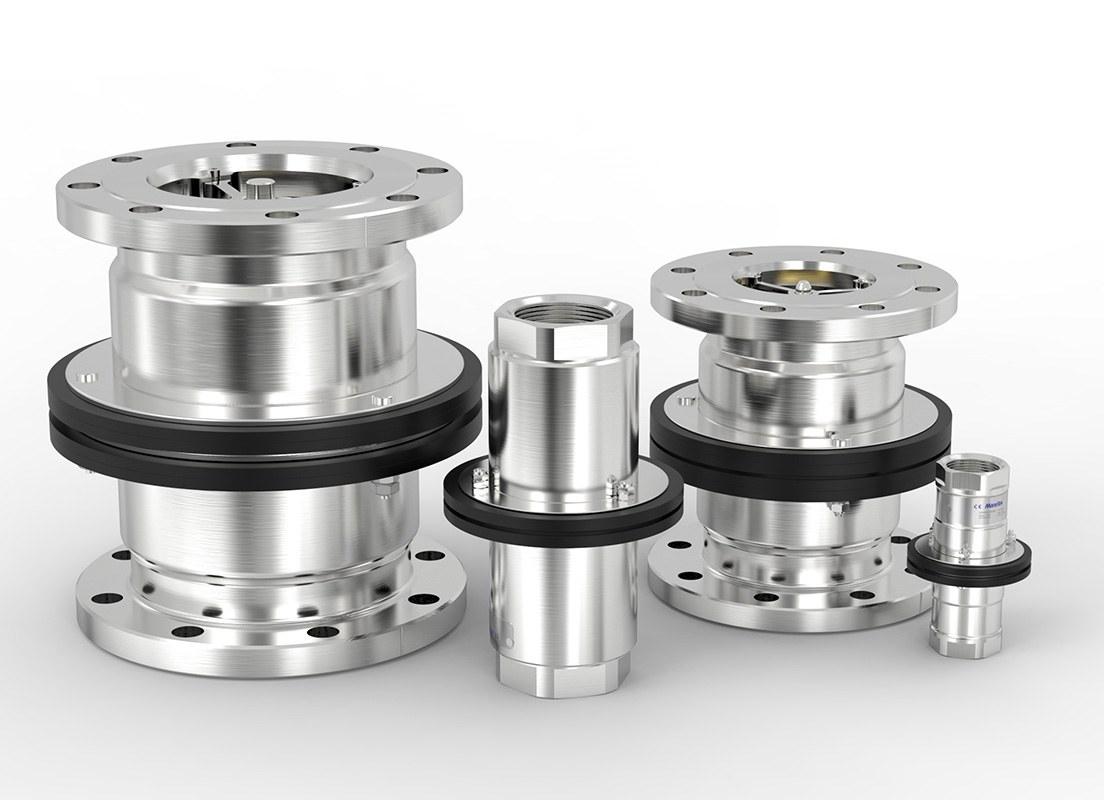
MannTek CBC Cryogenic Breakaway Coupling for LNG, Breaking-Bolt Type — DN 25 to DN 200
MannTek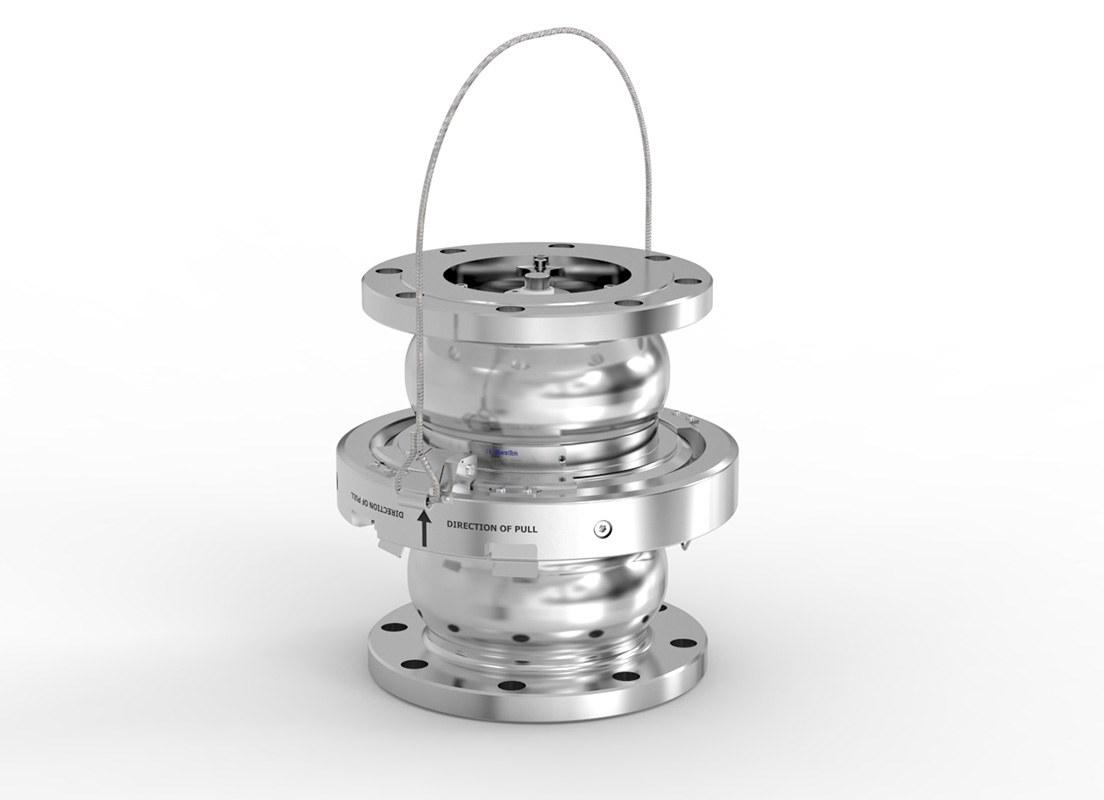
MannTek CBC-C Cable-Release Cryogenic Breakaway Coupling for LNG — DN 50 to DN 150
MannTek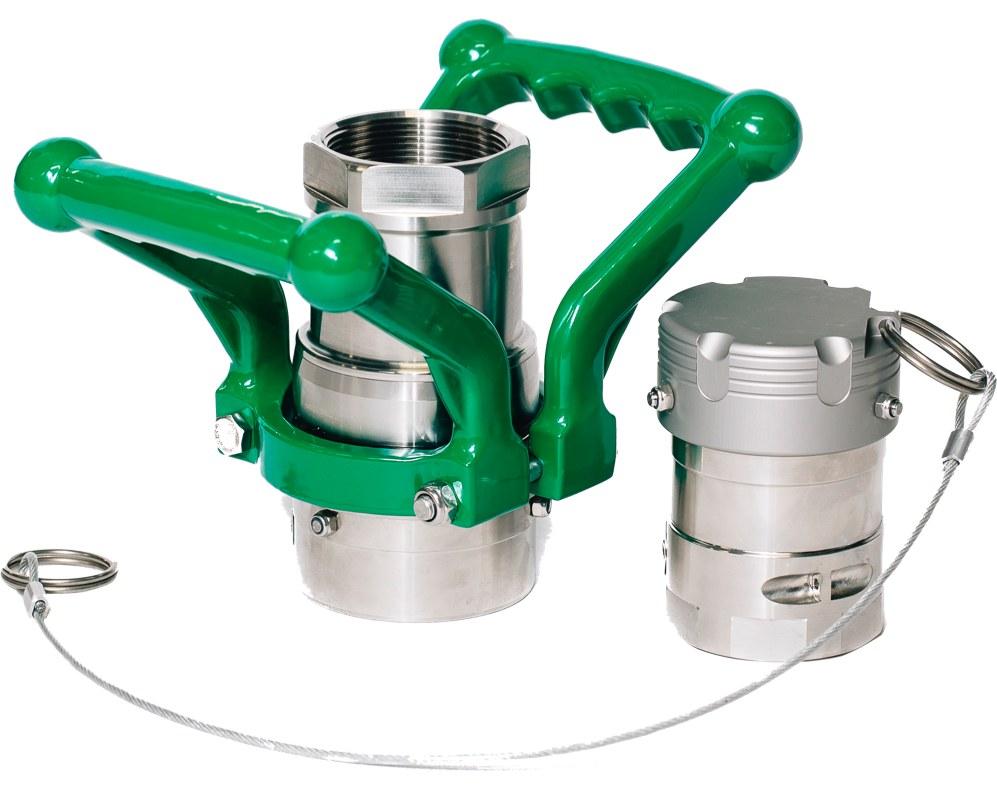
MannTek DCC Dry Cryogenic Coupling for LNG, Hose Unit — 1" to 8"
MannTek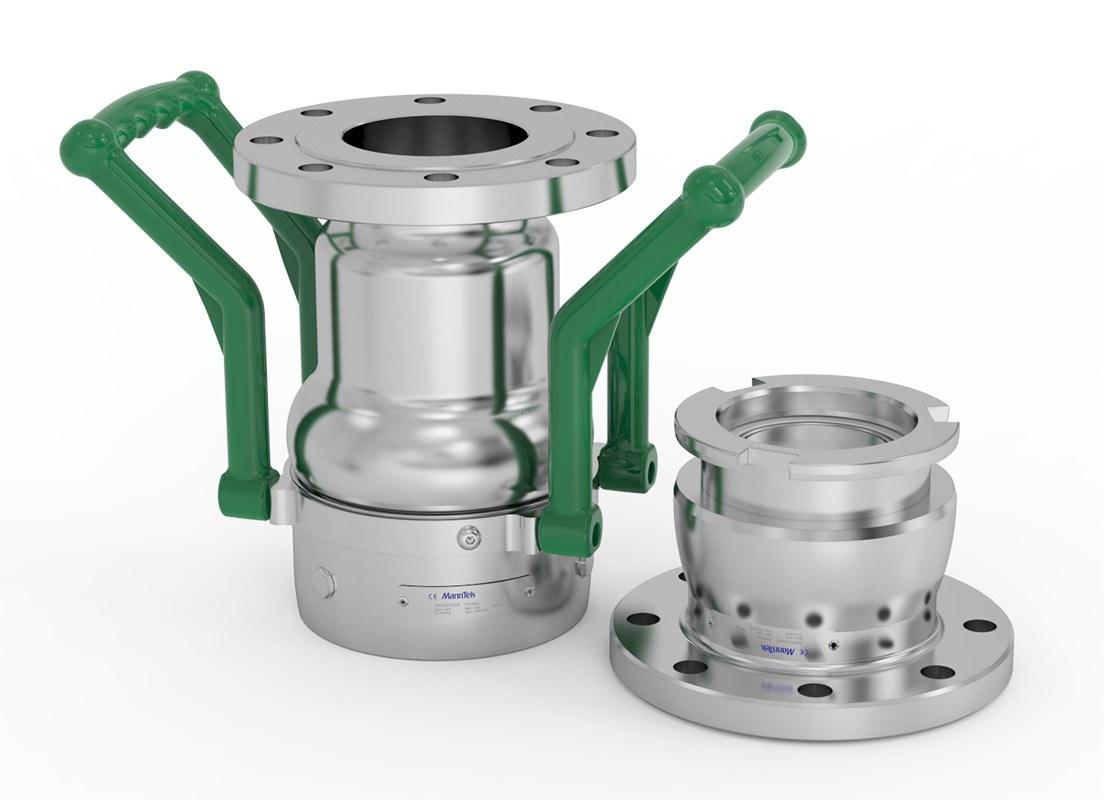
MannTek DCC Dry Cryogenic Coupling for LNG, Tank Unit — 1" to 8"
MannTek