
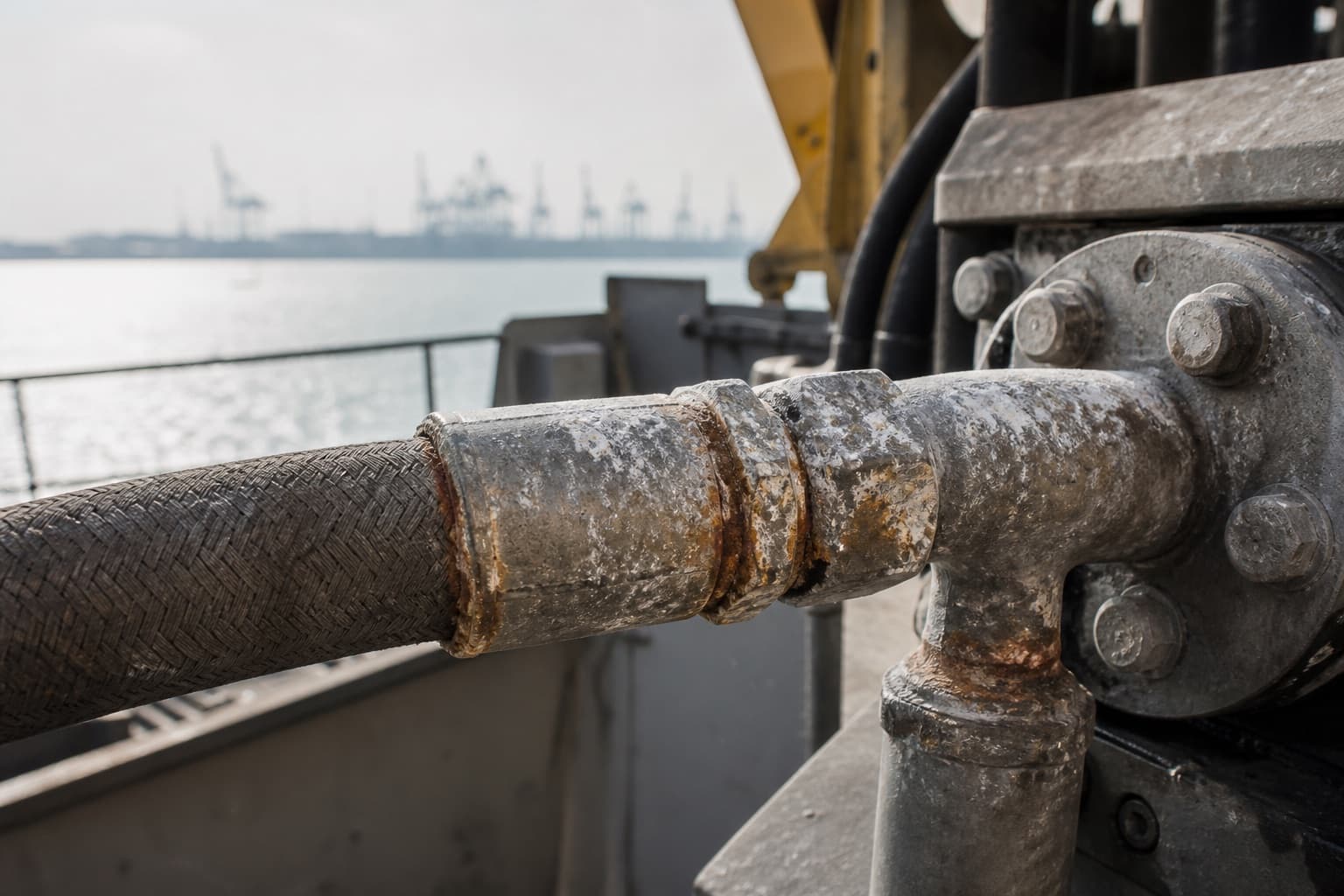
Salt air at Jebel Ali and Mussafah: the clock runs faster on the coast
The corrosion mechanism is the same everywhere. What changes near the sea is the speed — and because the reinforcement corrodes invisibly, speed is the whole problem.
From the workshop · Indus blog
No SEO bait, no marketing fluff. Just practical writing about hydraulic systems from the people who specify, install and rebuild them every day.
The corrosion mechanism is the same everywhere. What changes near the sea is the speed — and because the reinforcement corrodes invisibly, speed is the whole problem.
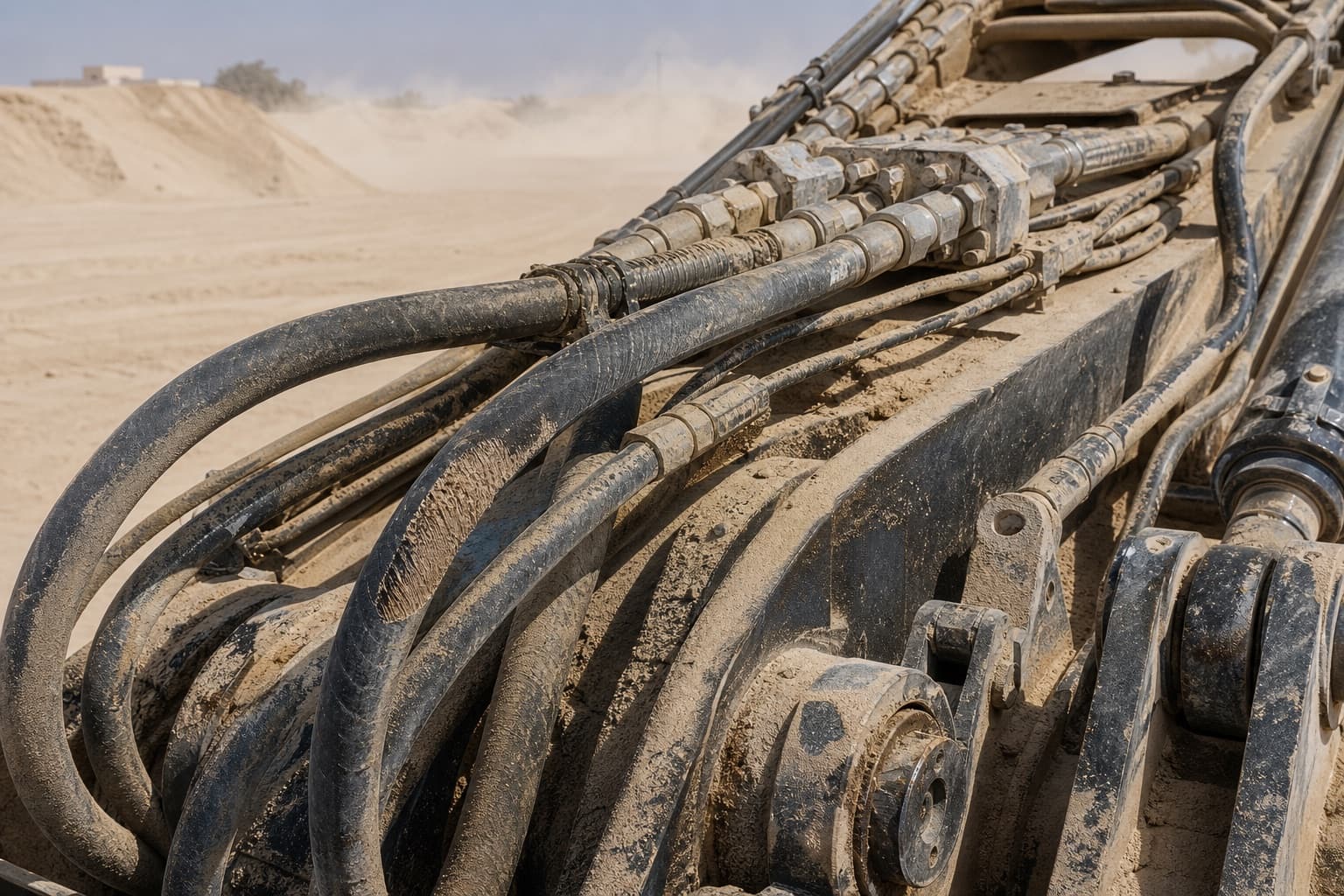
On a desert site the hose is not rubbing against a bracket. It is rubbing against a bracket through a layer of sand — and that changes both how fast the cover goes and what actually stops it.
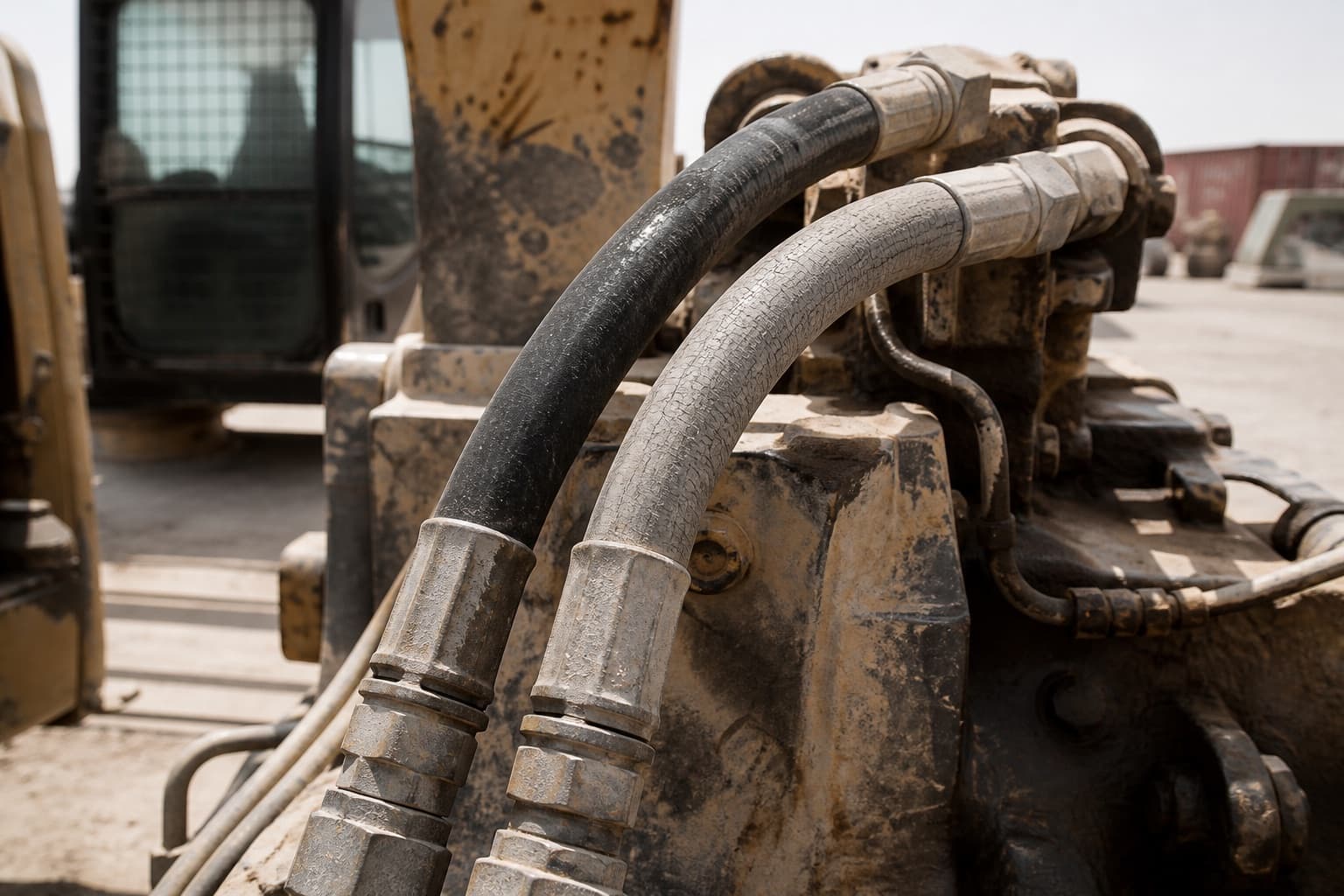
UV and ozone both attack rubber, they attack it in different places, and neither needs the hose to be doing anything. A spare on a rack in a Gulf yard is being damaged as surely as one in service.
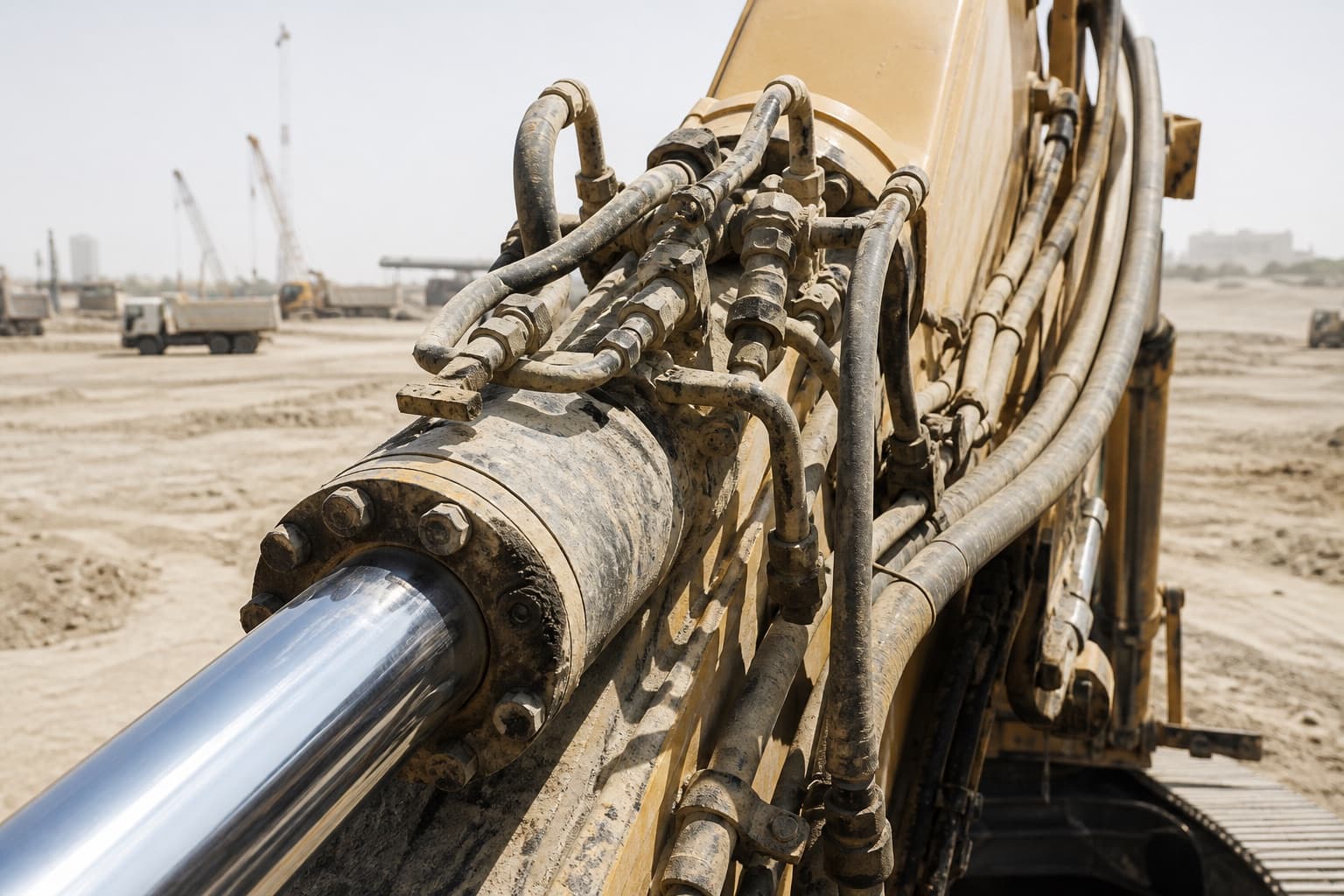
Hose temperature ratings are written for the fluid inside. In a UAE summer the hose is also being heated from outside, by air near 50 °C, by sun on the cover and by radiation off the machine — and none of that is in the rating.
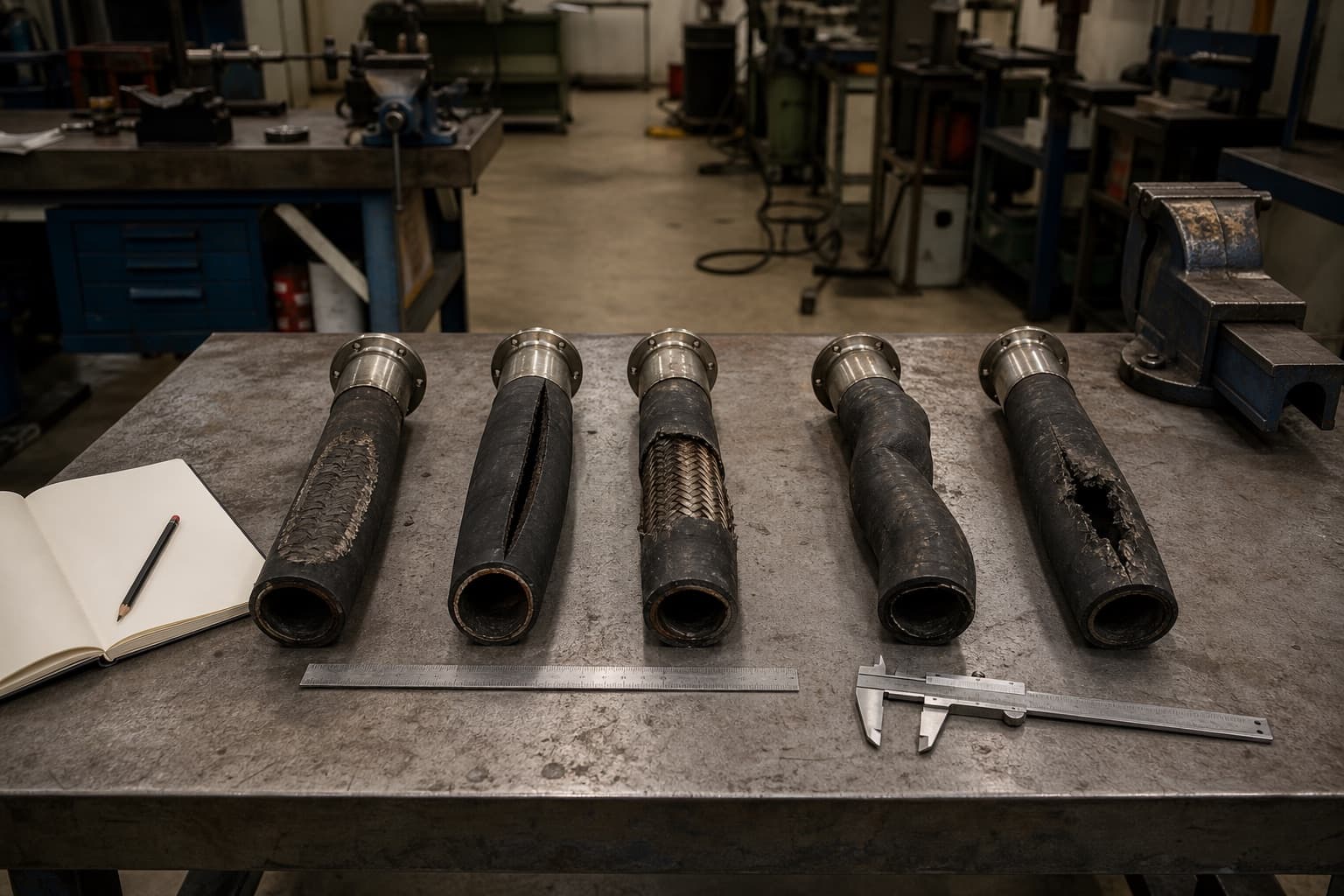
Most hose failures get replaced, not investigated, so the same position fails again next quarter. This is the record that turns a replacement into a fix — eleven fields, five minutes, and no special equipment.
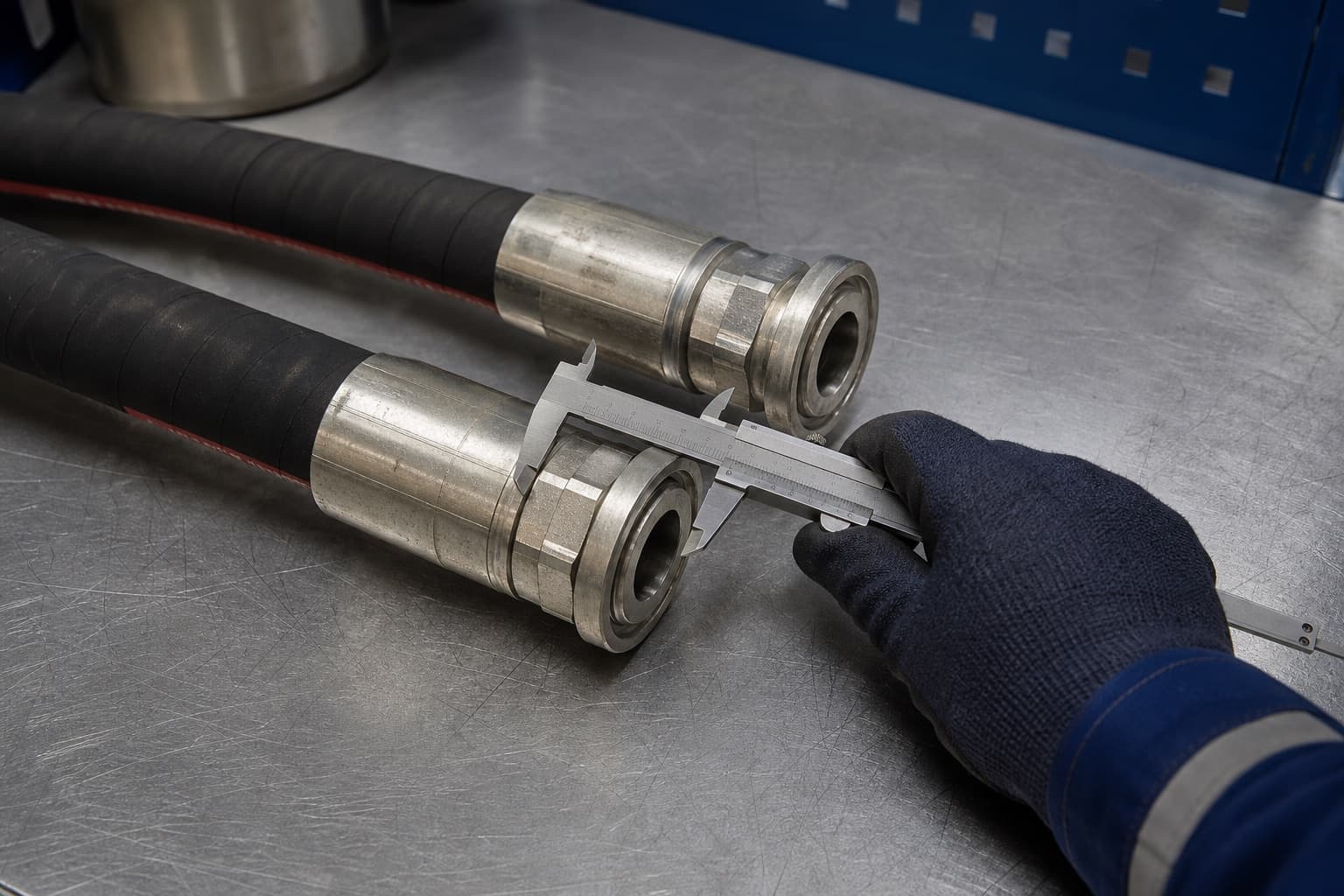
A crimp is a measured diameter with a tolerance in tenths of a millimetre. Miss it in either direction and the assembly fails — but it fails differently, and the difference is visible on the failed part.
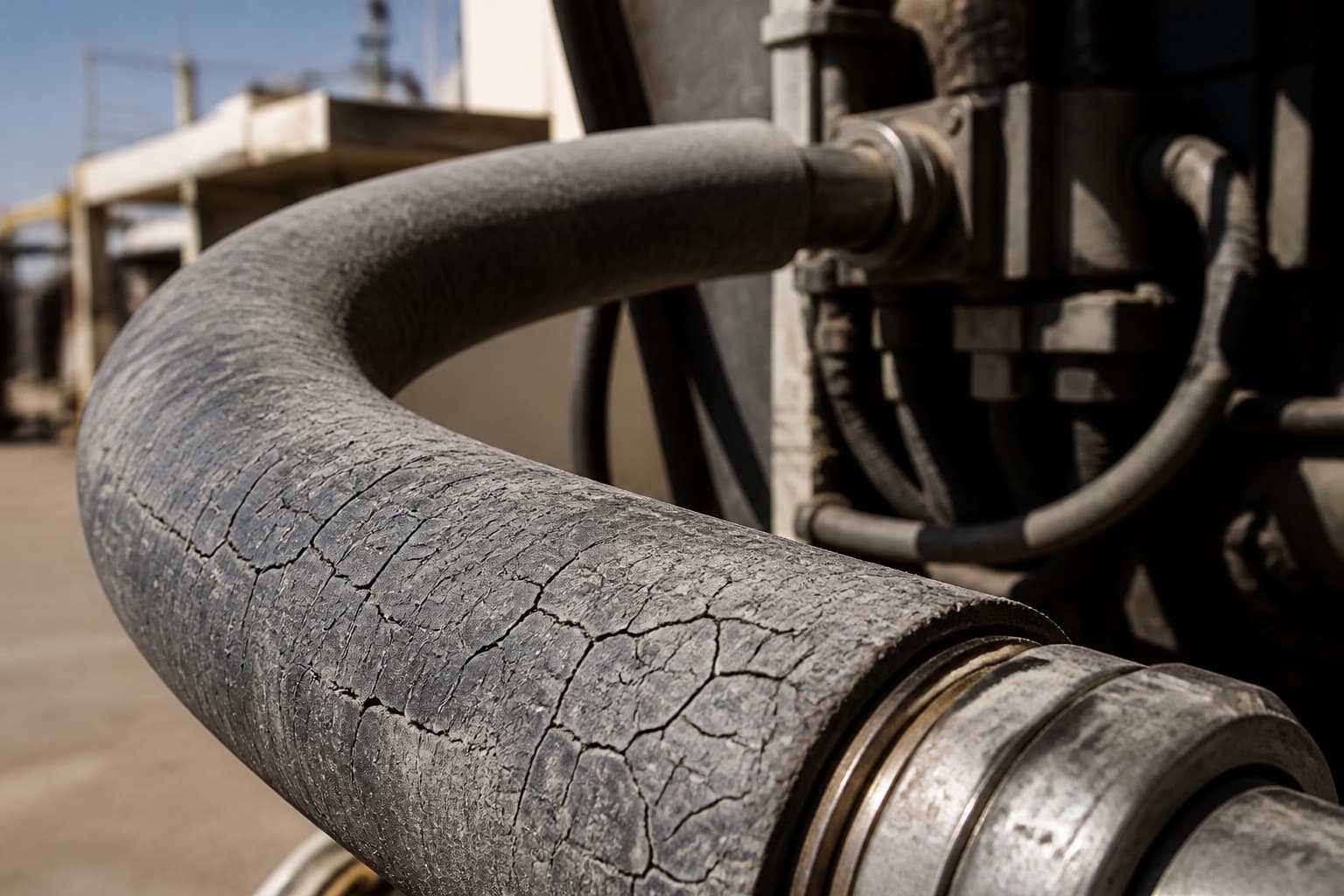
A cover covered in fine cracks has been cooked, or has been sitting in sunlight and still air. The crack pattern separates them, and only one of the two is fixed by moving the hose.
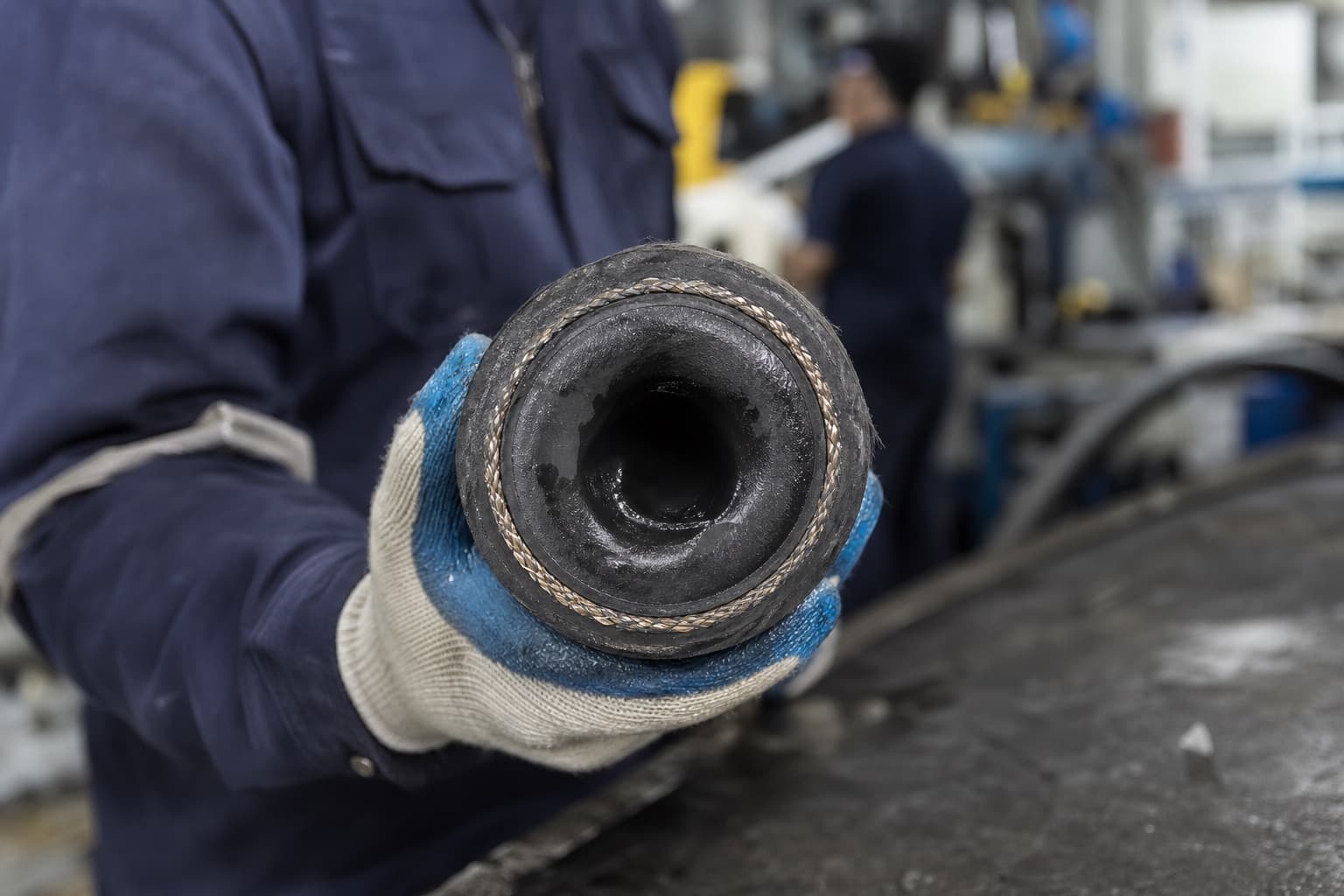
Cut a failed hose open and the tube tells you whether the fluid was wrong. Swollen and soft is one problem, shrunken and brittle is the opposite one, and both mean the hose and the fluid were never suited.
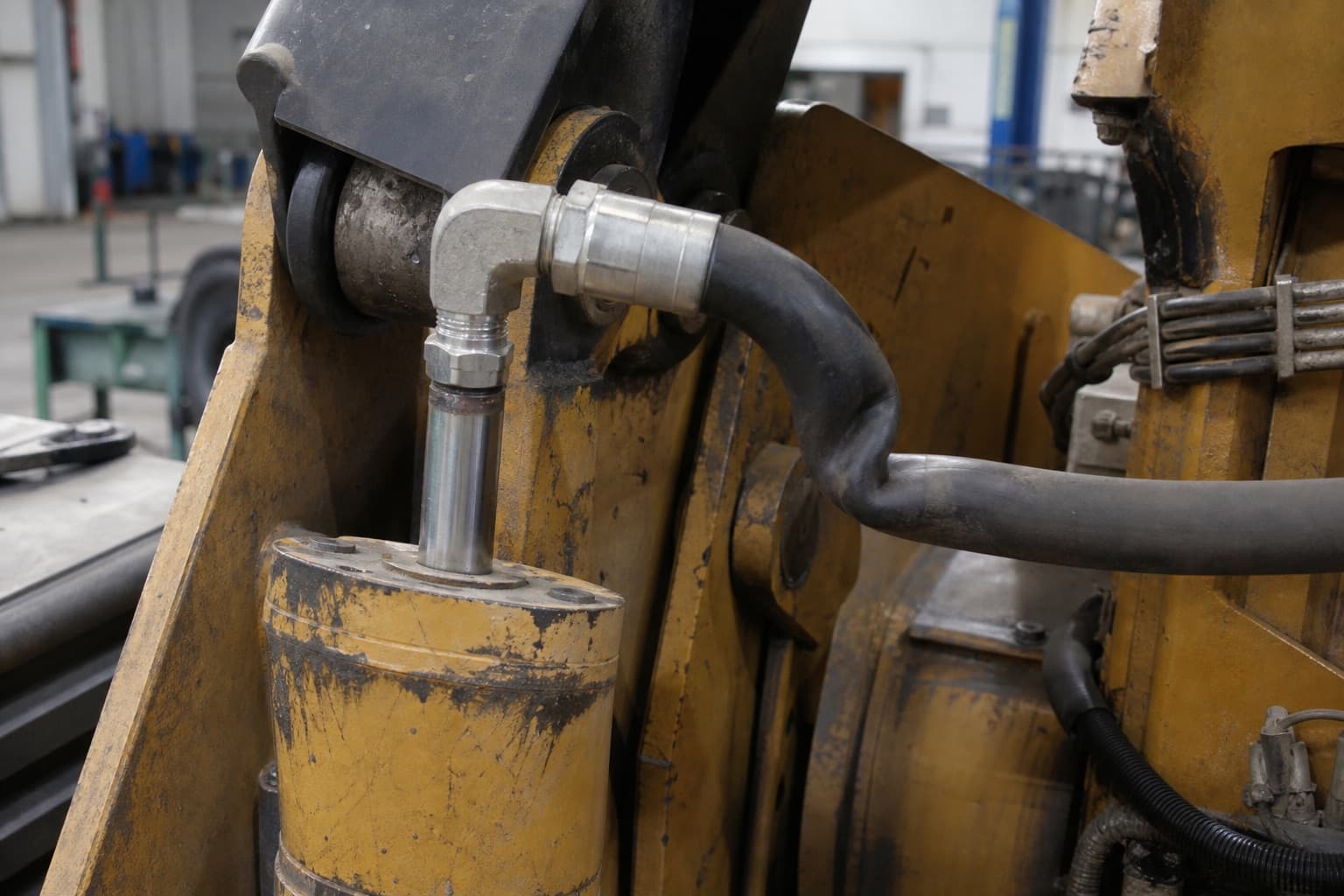
A hose bent tighter than its rated radius is damaged whether or not it looks it. The fix is almost never a more flexible hose — it is turning the line at the fitting instead of at the hose.
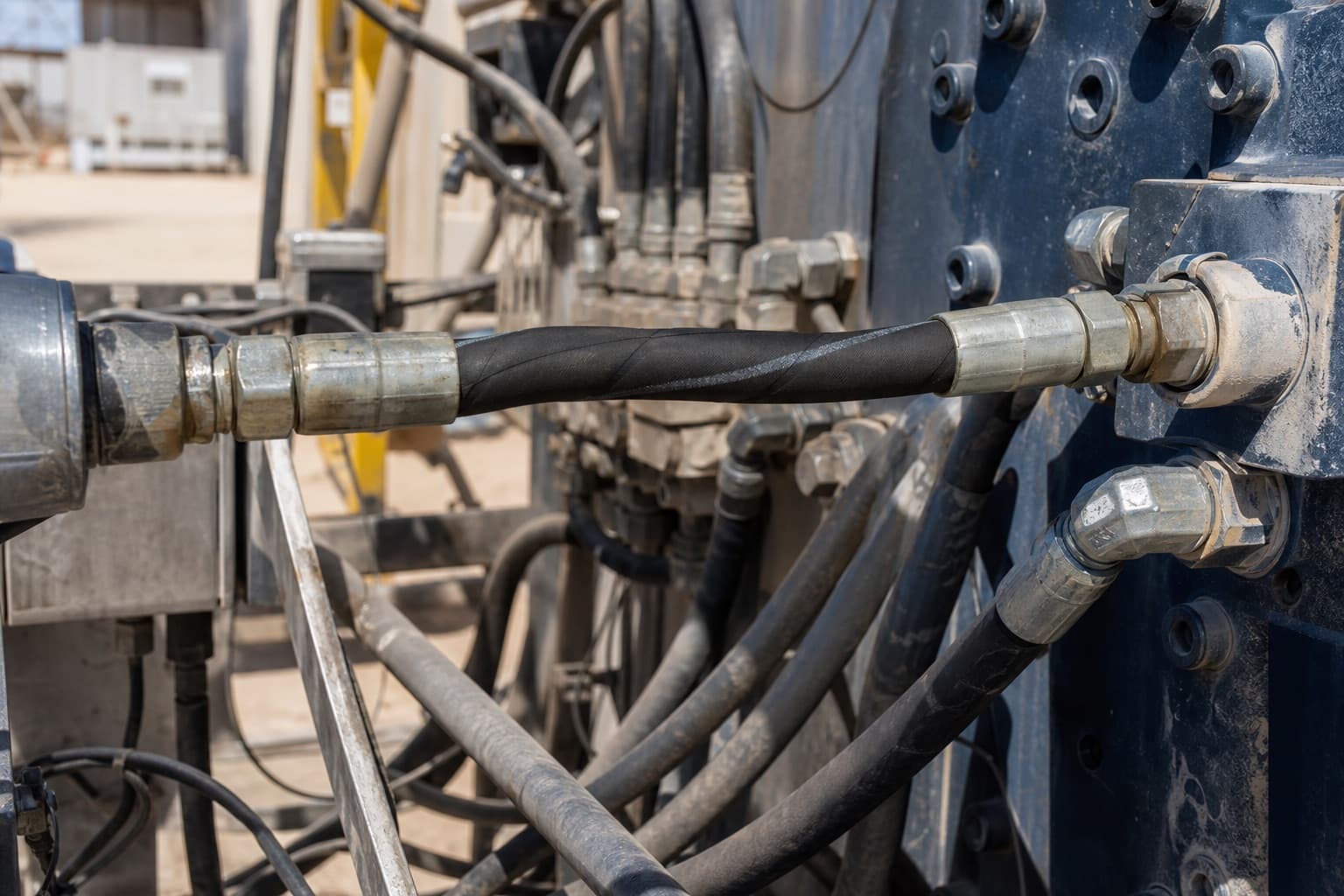
A hose fitted with a twist in it has been failing since the moment it was tightened. The layline shows you immediately, it takes seconds to check, and almost nobody does.
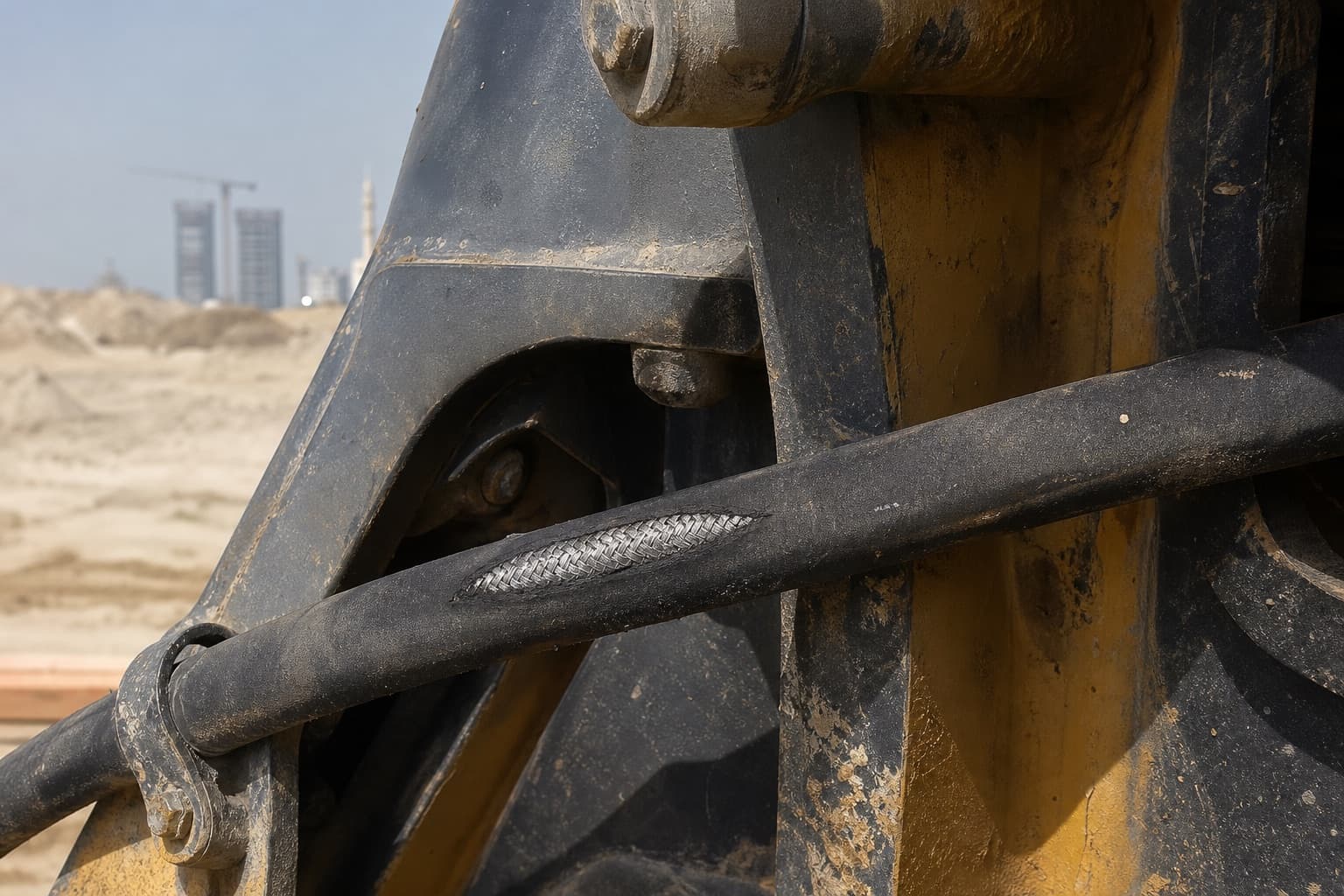
The most preventable hose failure there is. A hose worn flat on one side has been telling you where it touches something for months — and the wear pattern points straight at the cause.
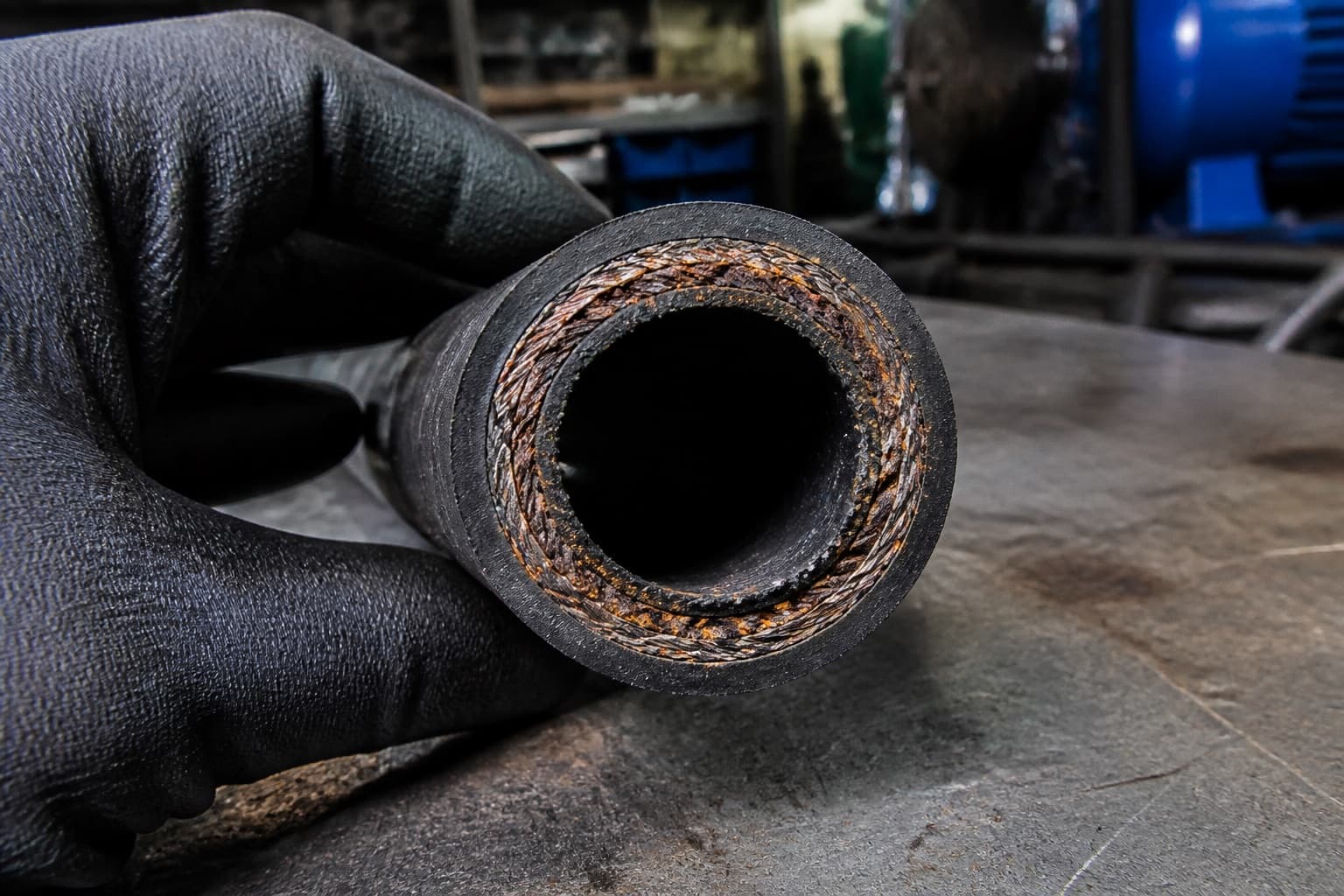
A hose can look perfect and have rusted reinforcement. The cover is not waterproof once anything has broken its surface, and in a coastal climate the wire goes long before the rubber shows anything.