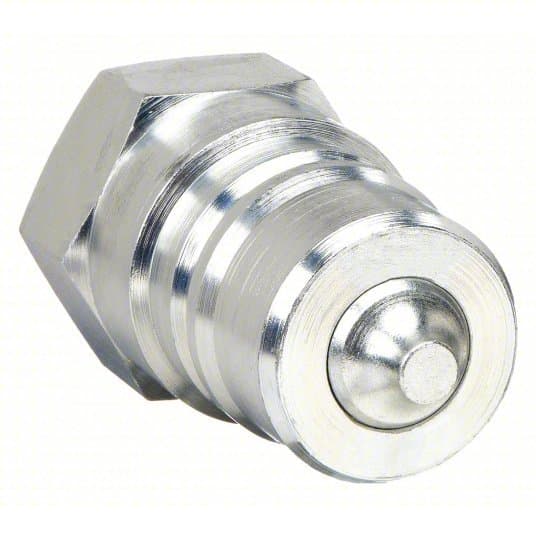
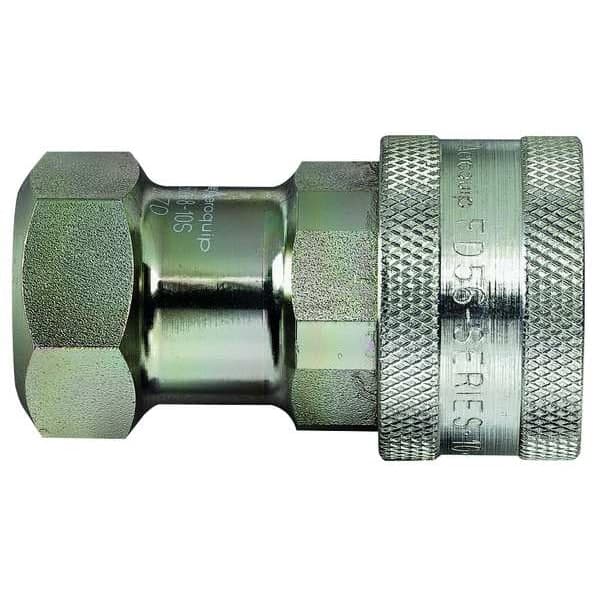
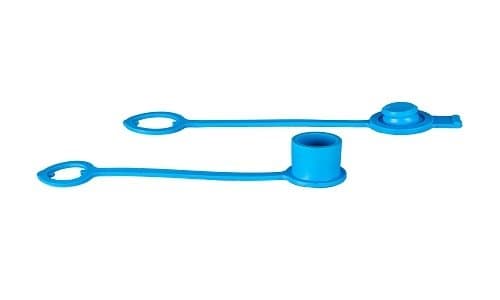
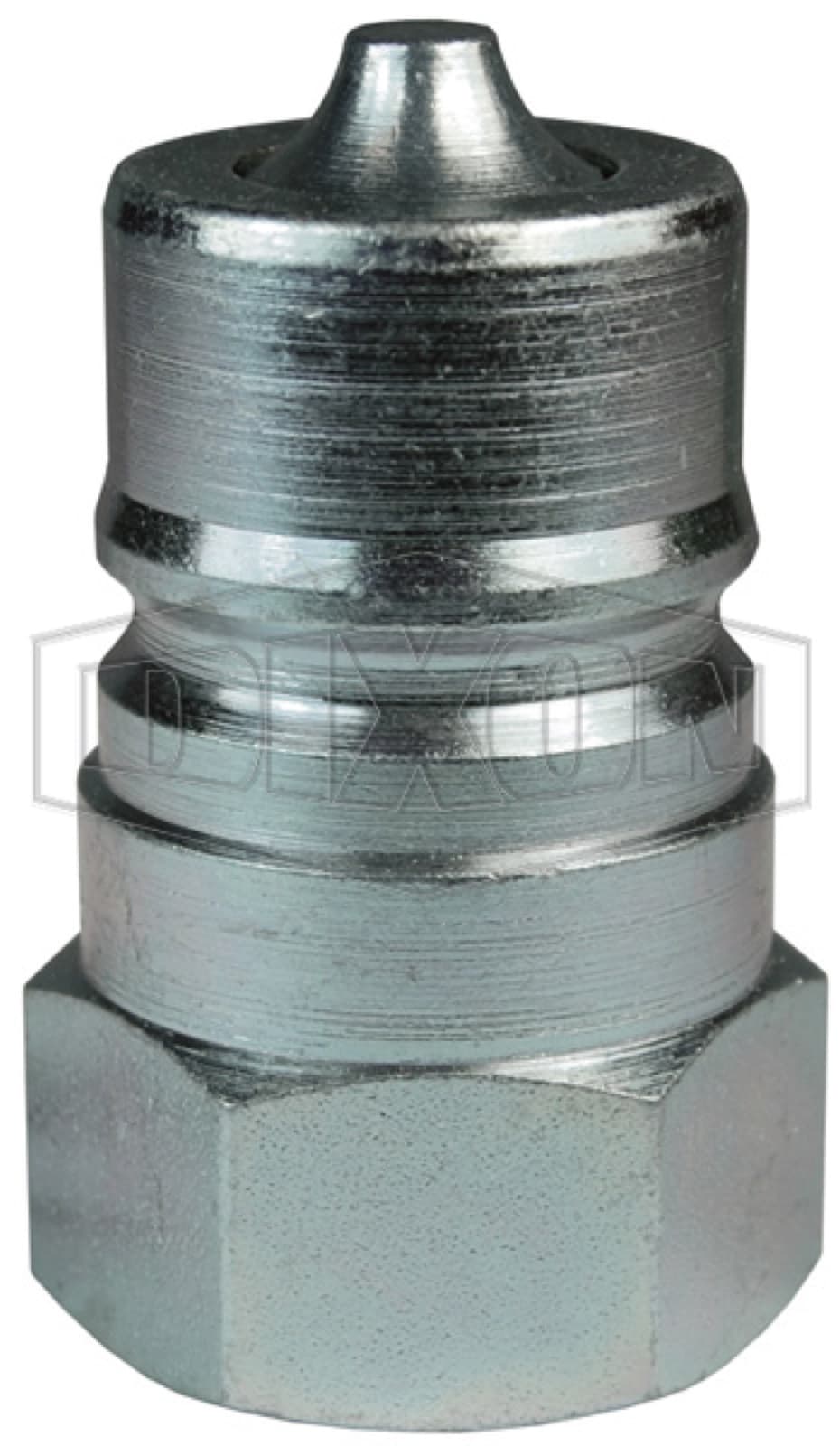
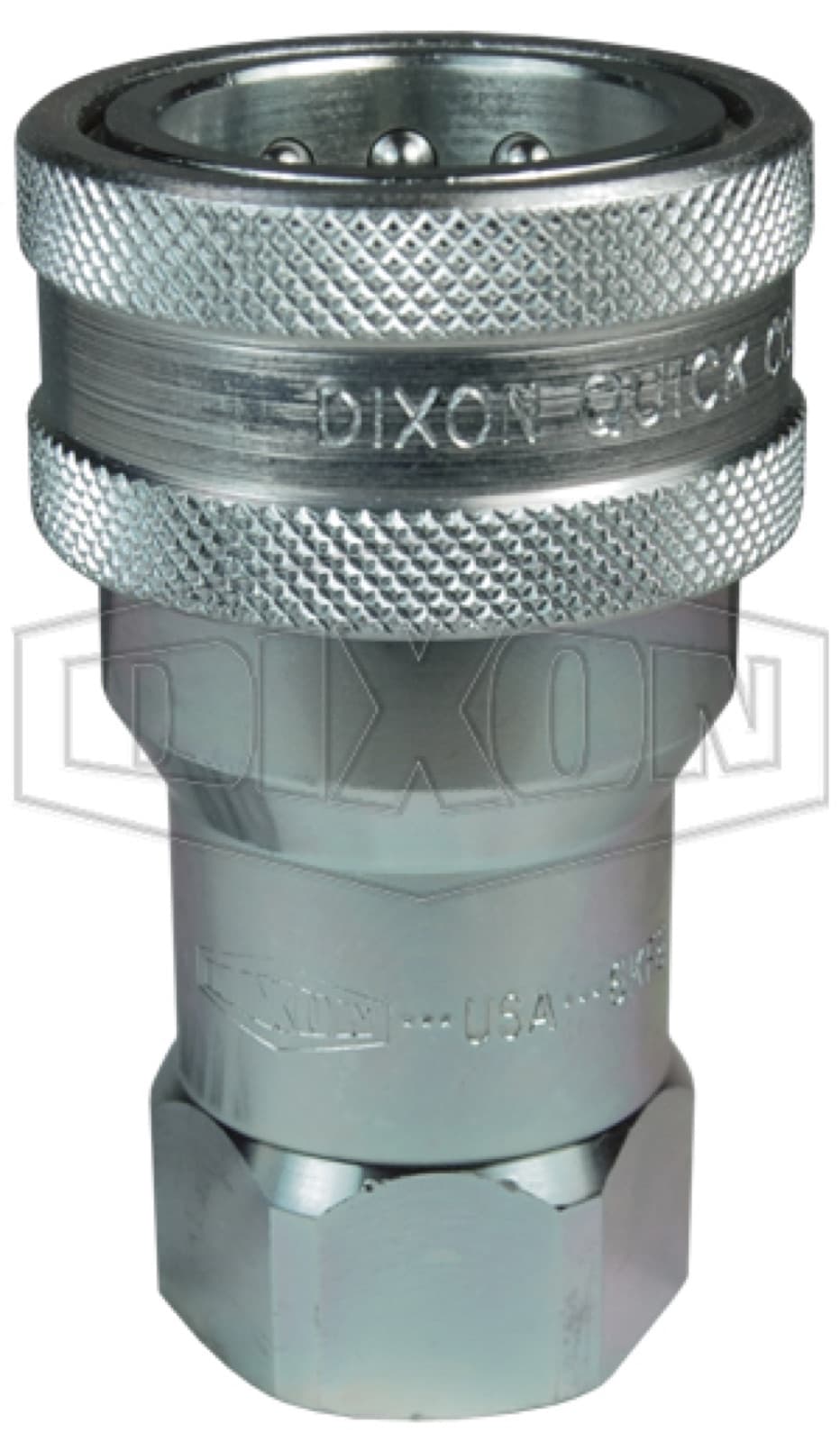
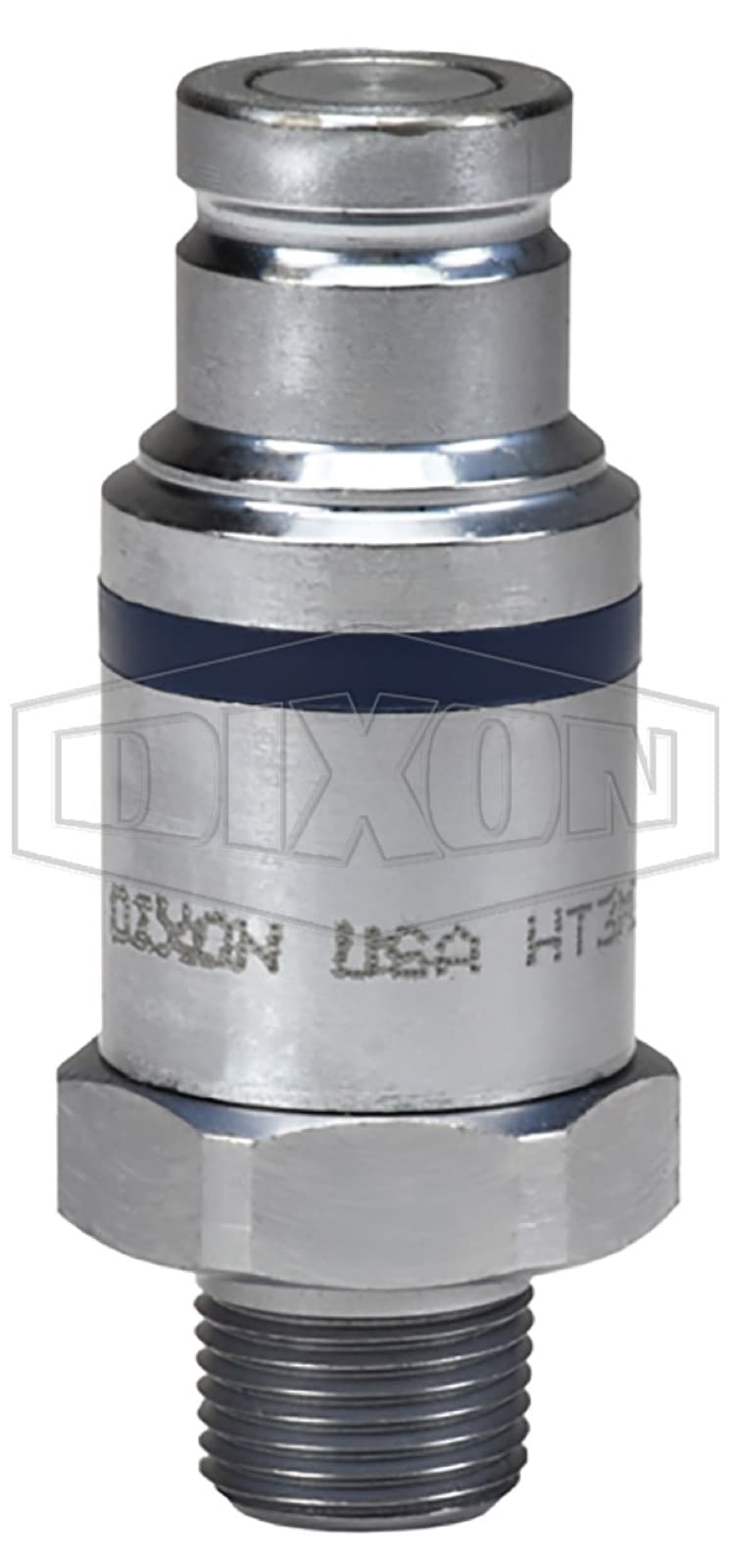
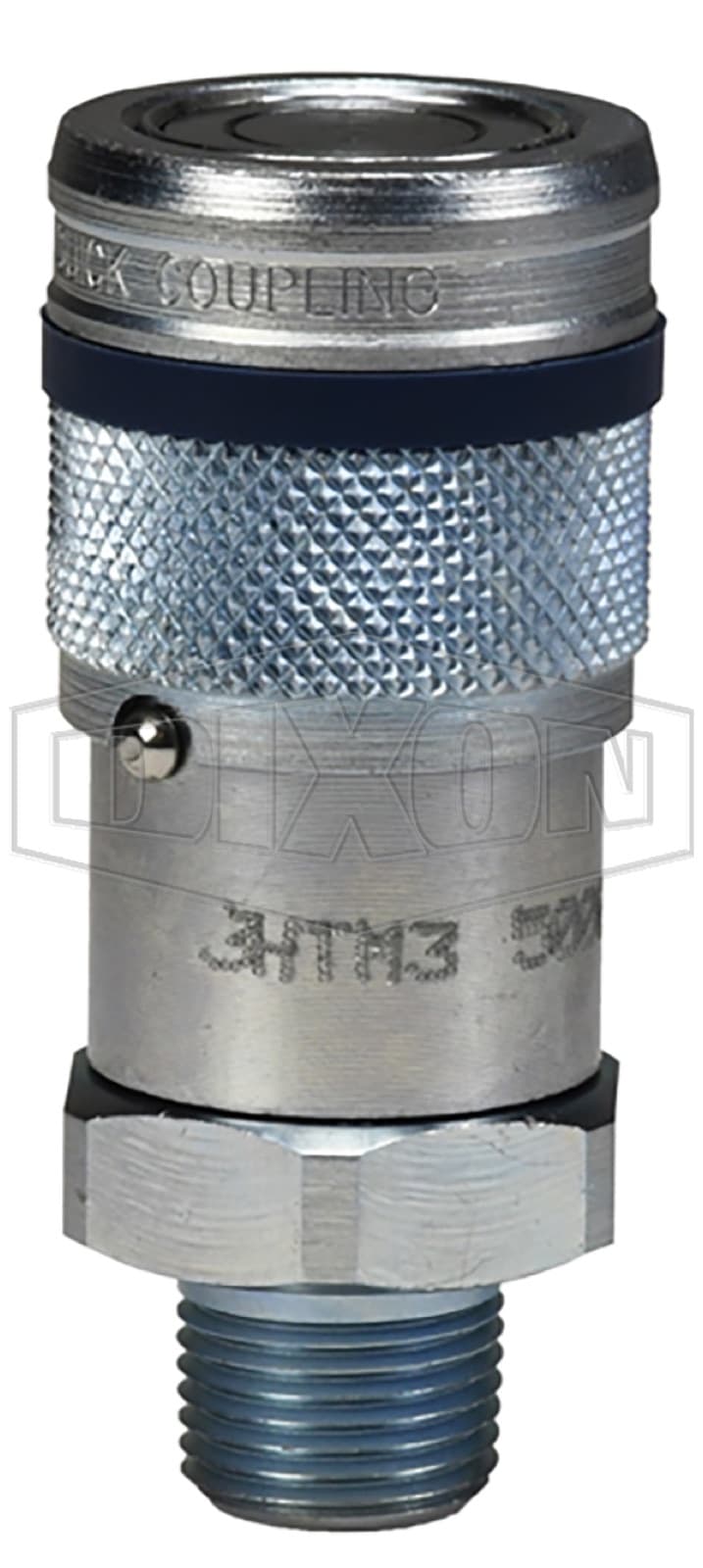
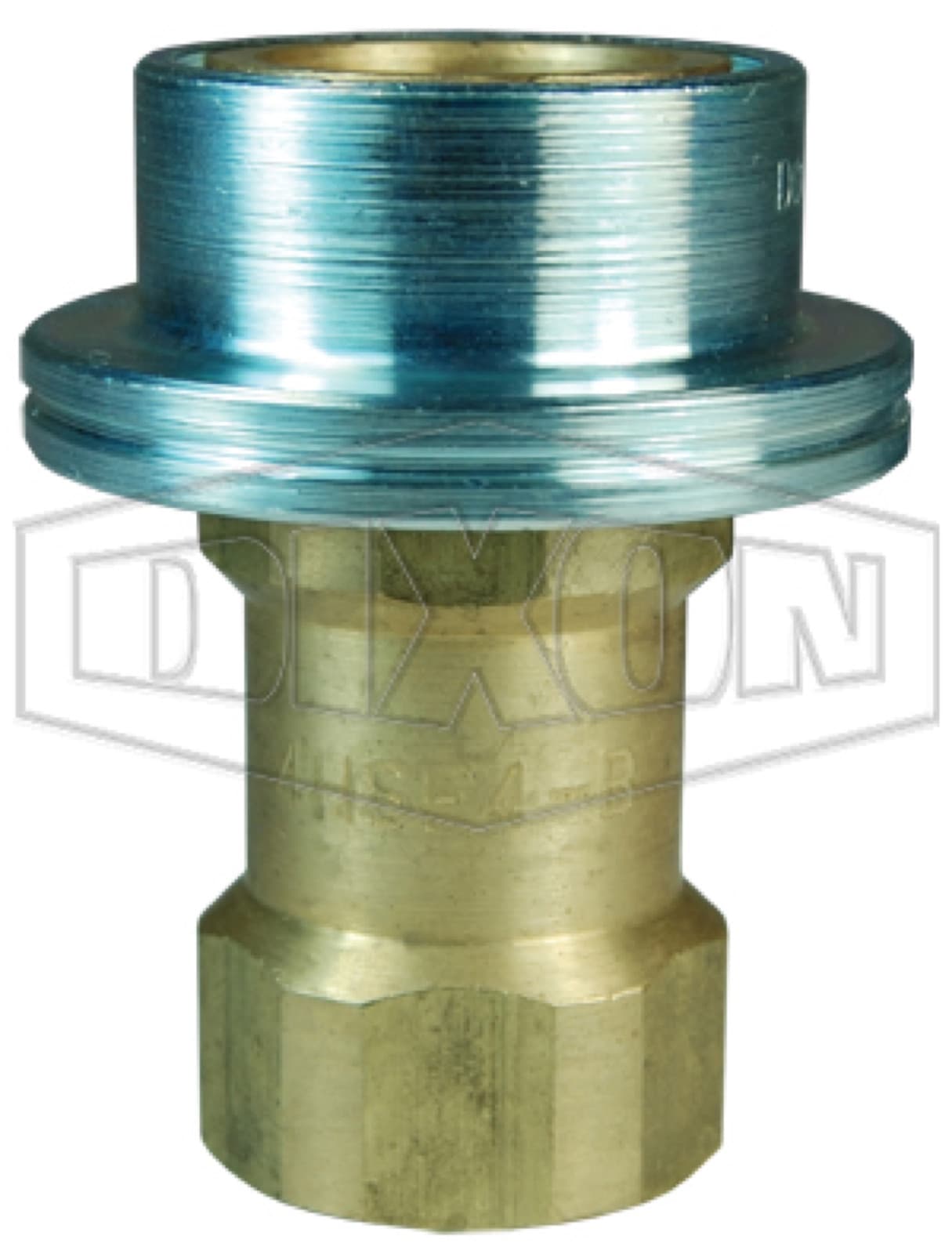
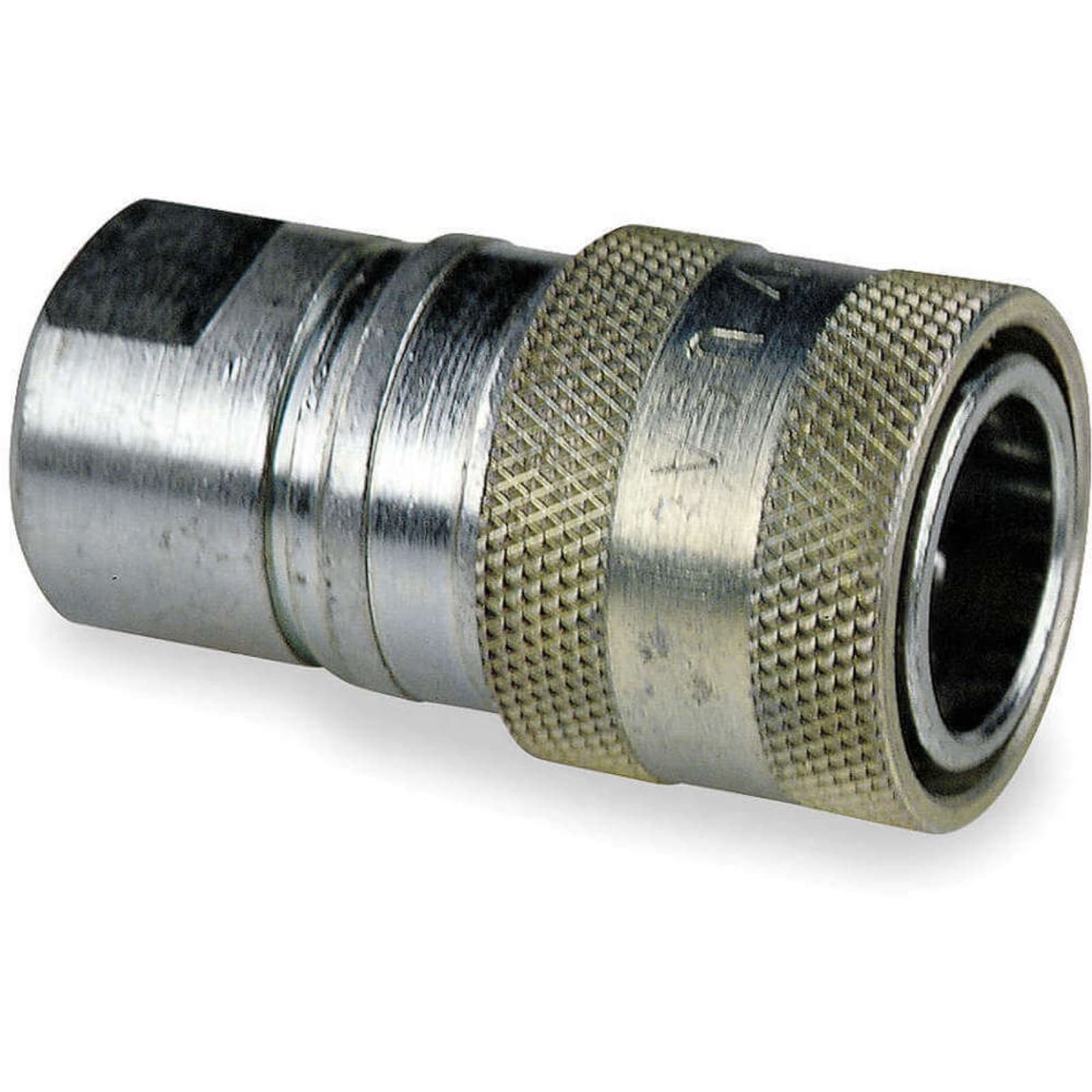
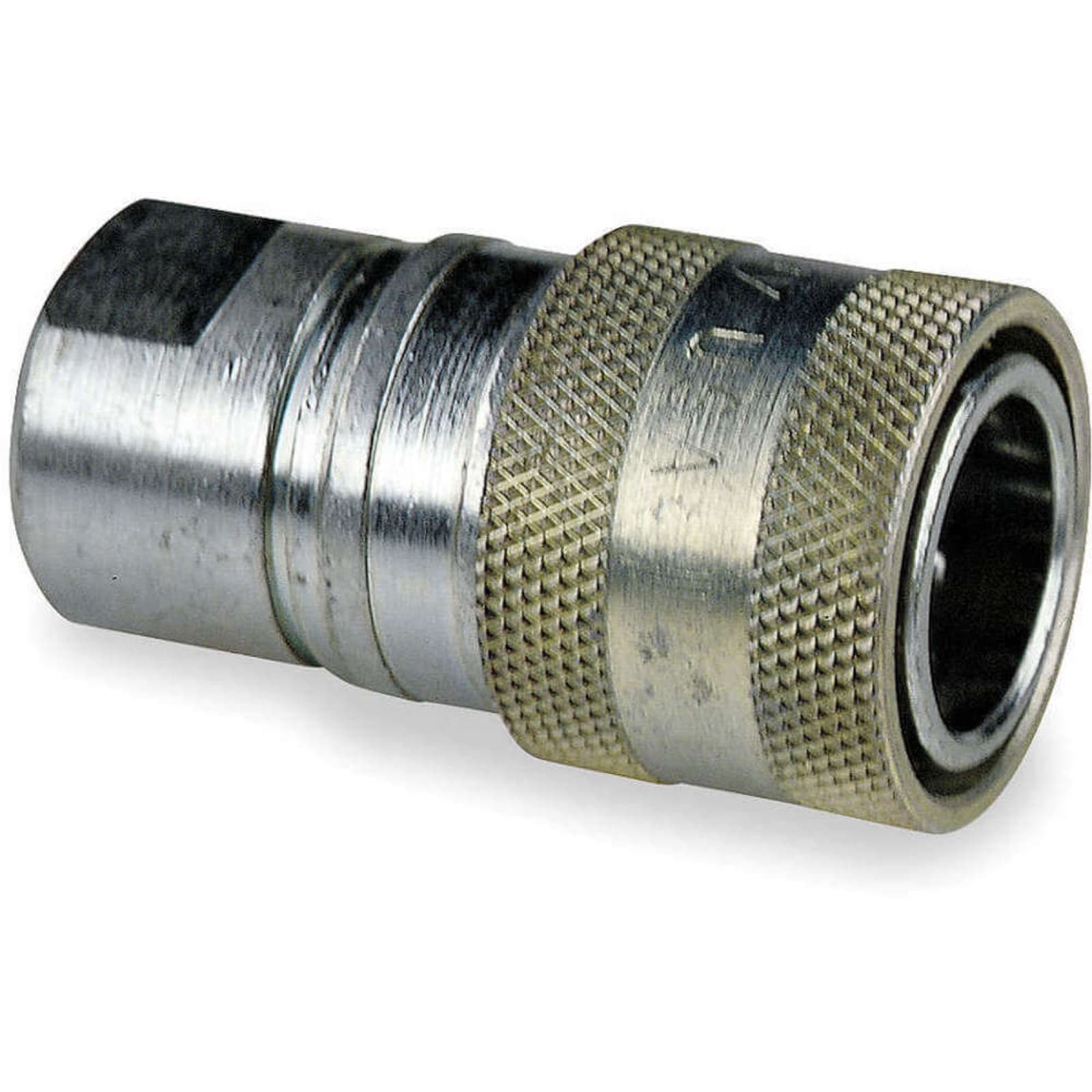
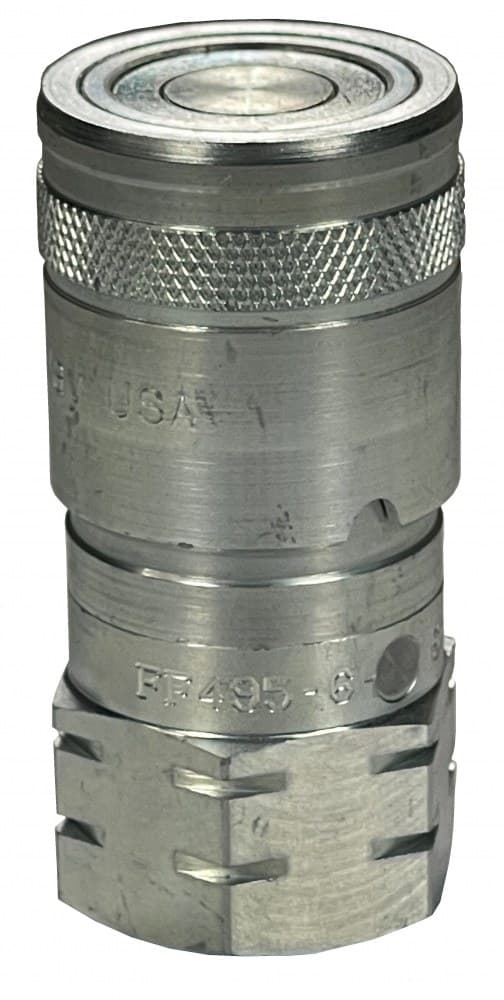
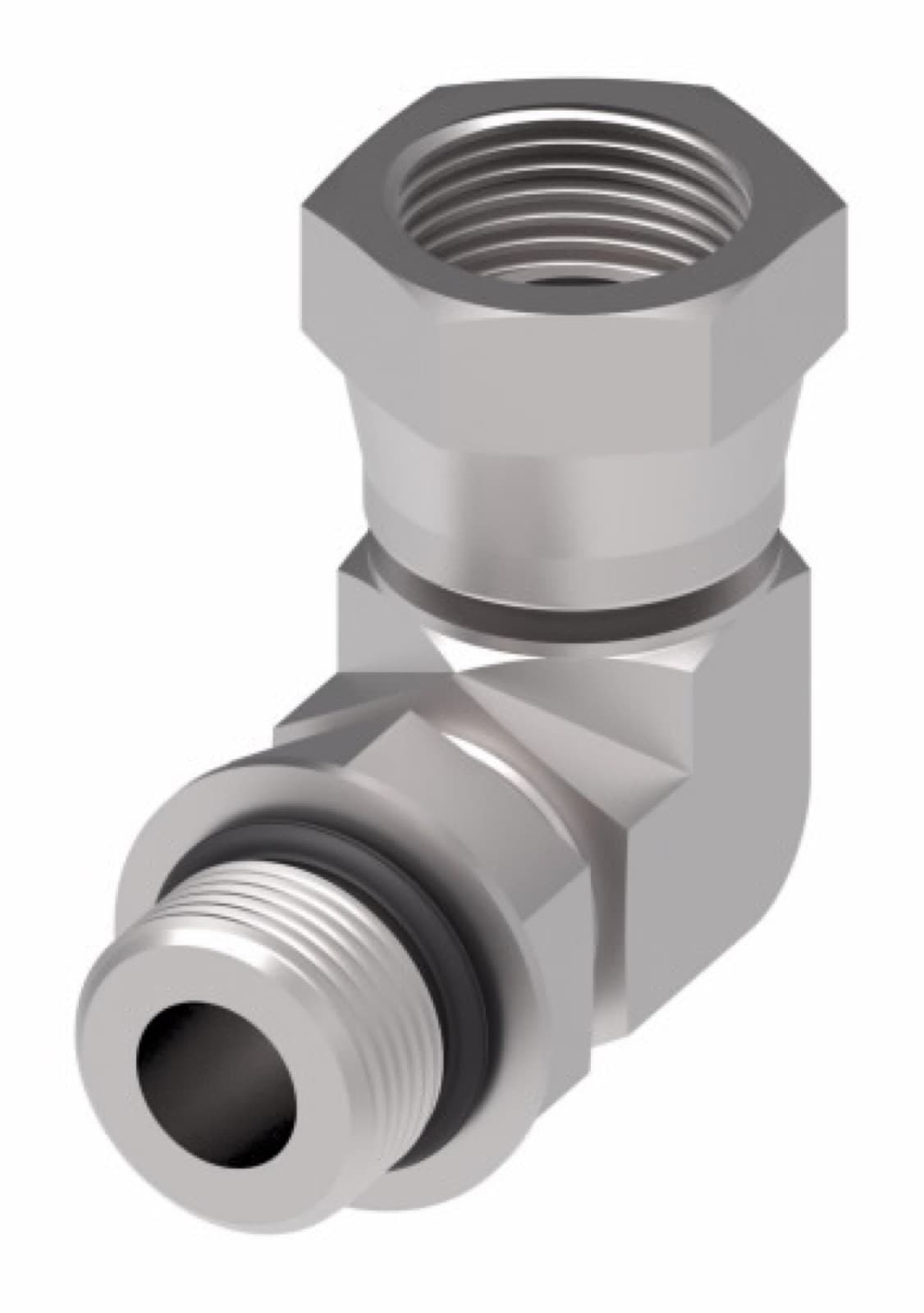
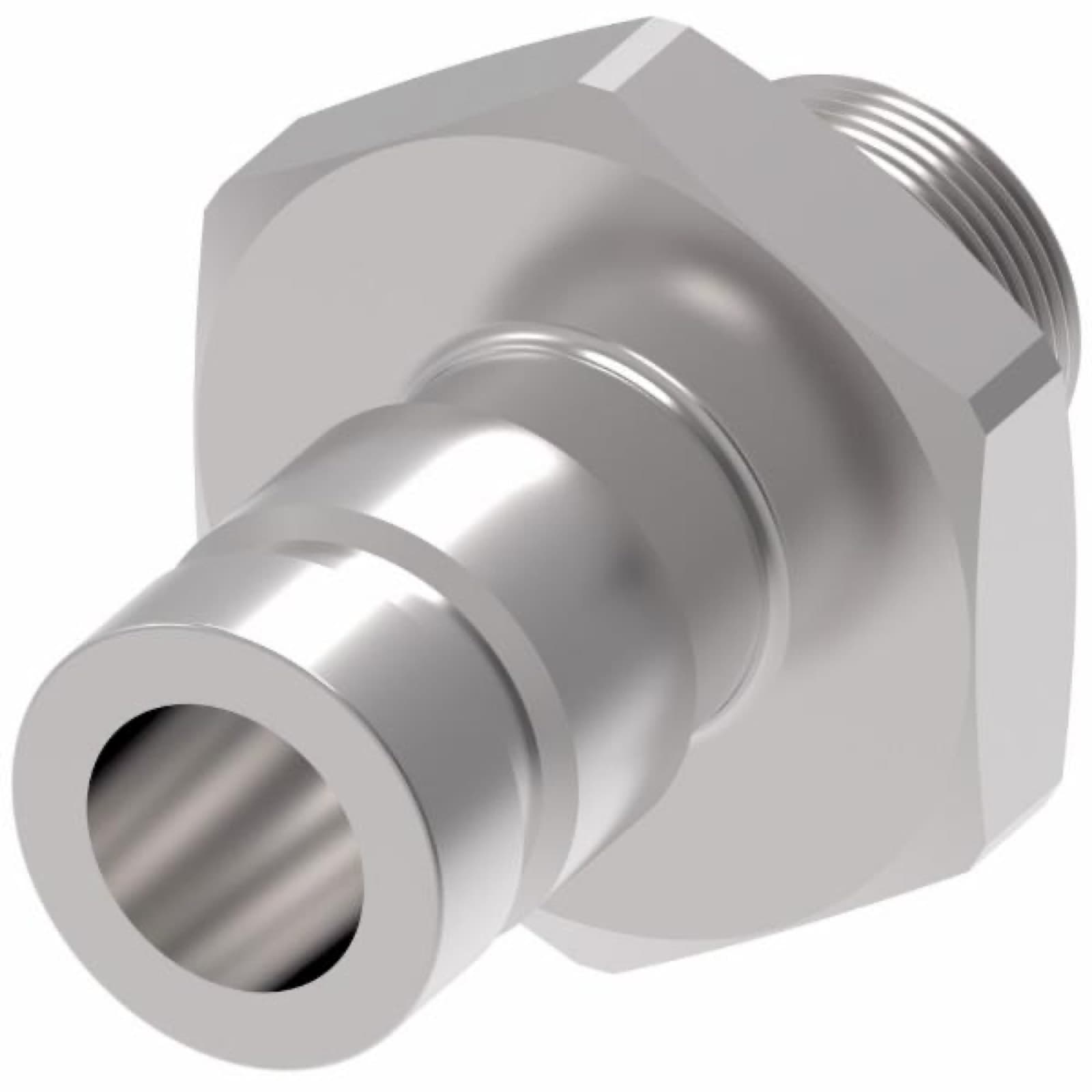
- 01Will an ISO 7241 Series A coupler connect to Series B?
- No. Series A and Series B are different interchanges with different dimensions; a coupler connects only to a mating half of the same series and size.
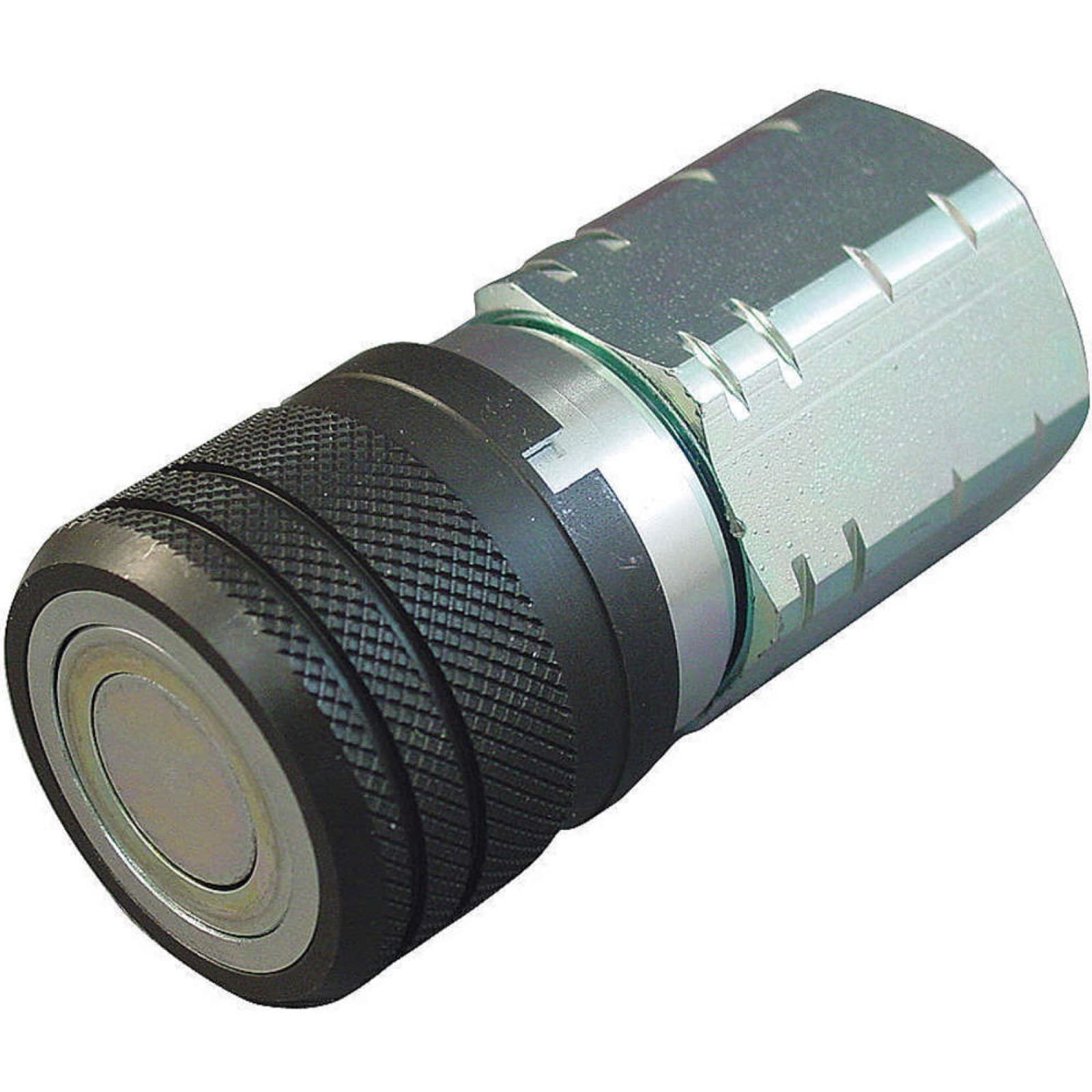
- 02When should I use a flush-face coupler?
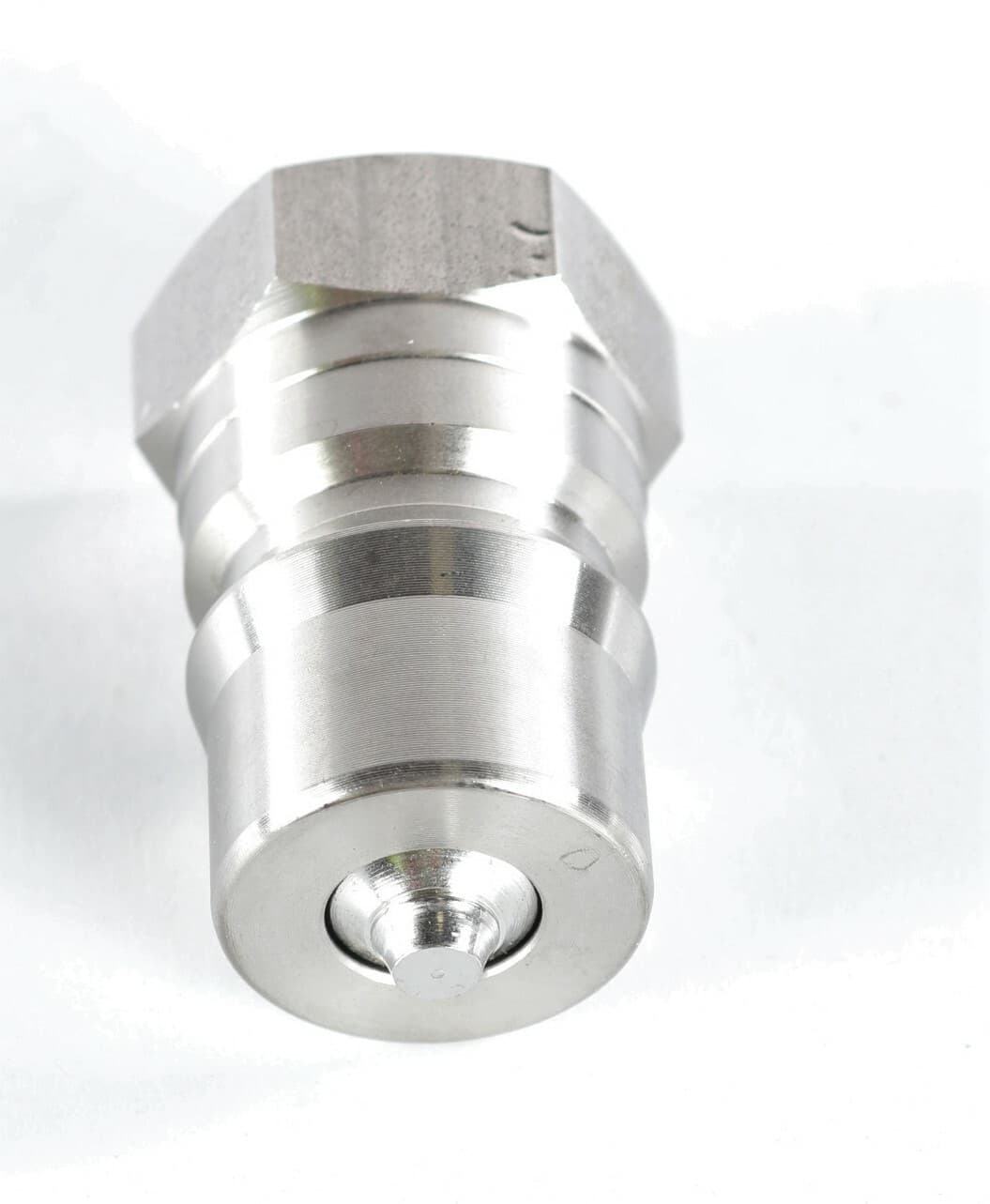
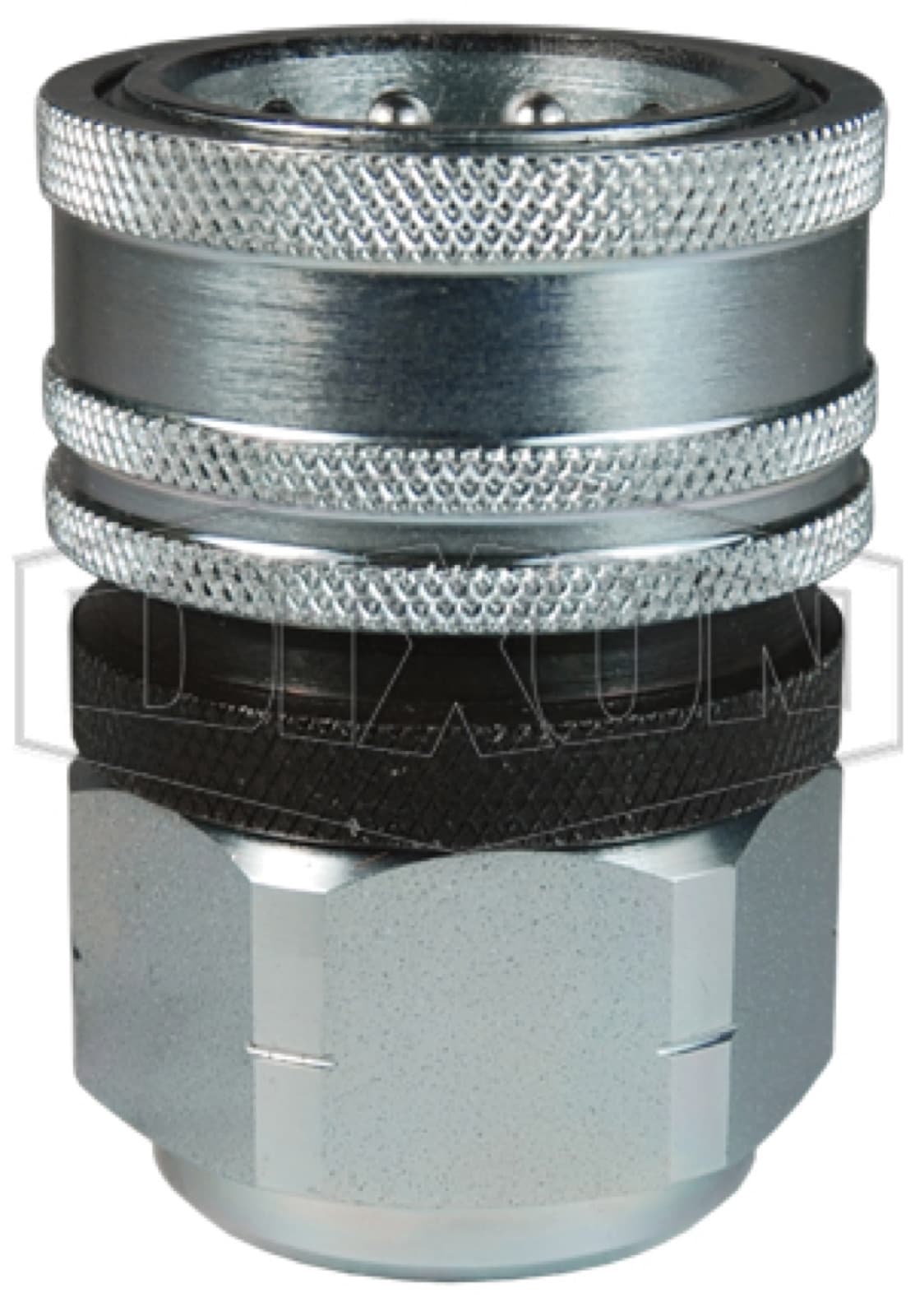
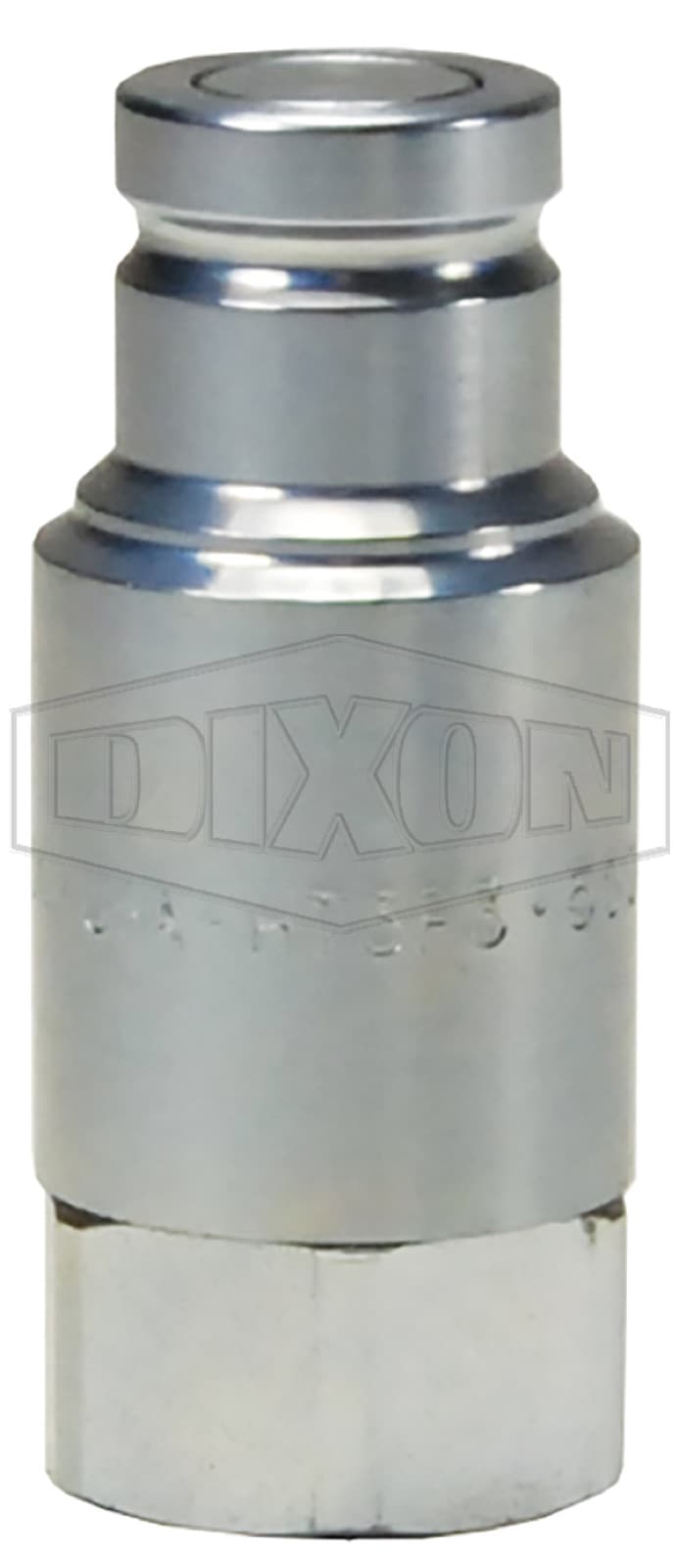
- Where dirt and spills matter: construction attachments, mobile machinery and anywhere the coupler is connected in the field. The flat faces wipe clean before connection and trap very little oil when disconnected.
- 03Can a coupler be connected under pressure?
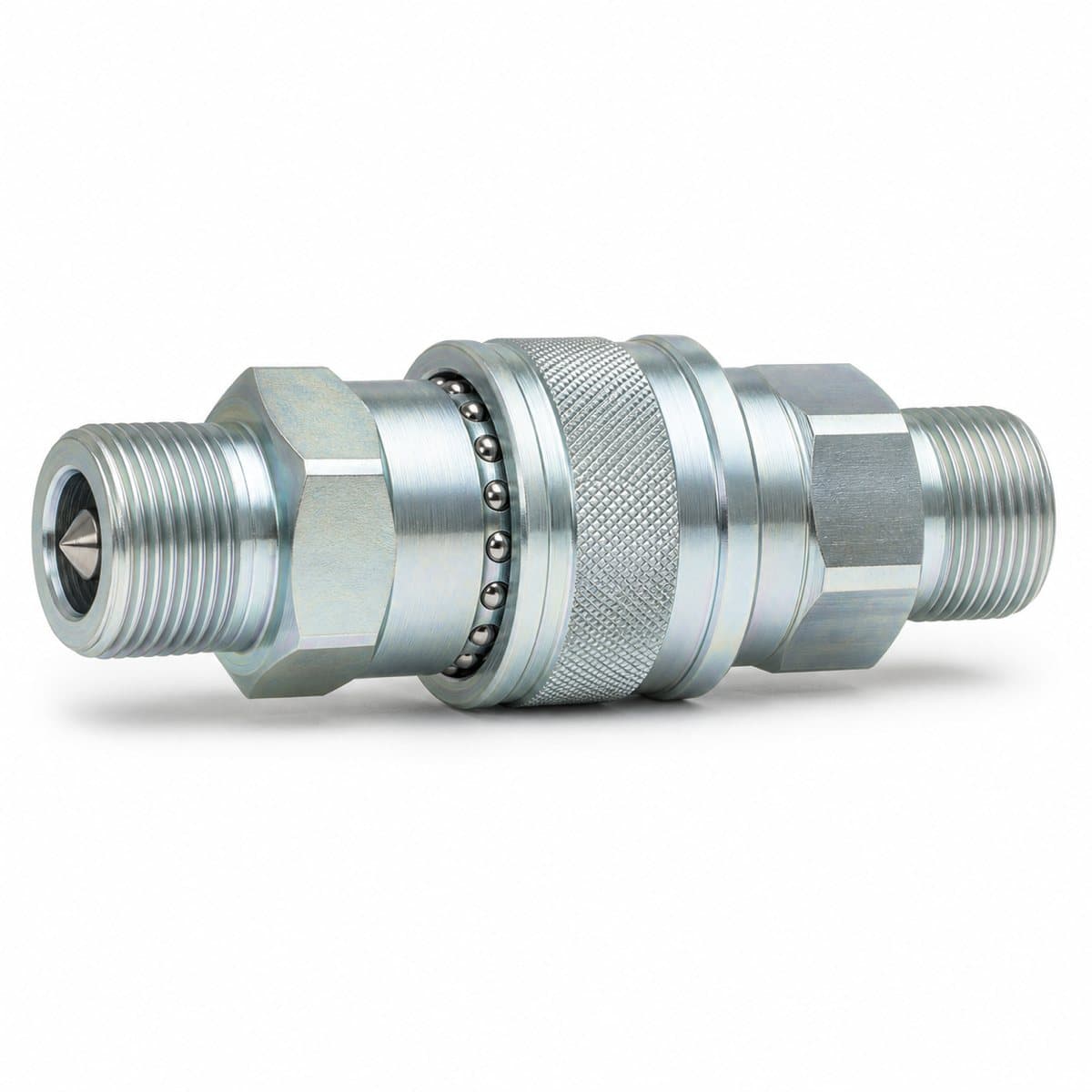
- Only one designed for it. Standard couplers should be connected with both sides depressurised; connect-under-pressure designs, such as the farm coupler on this shelf, are made to connect against residual pressure.
- 04Can I mate couplers from two different makers?
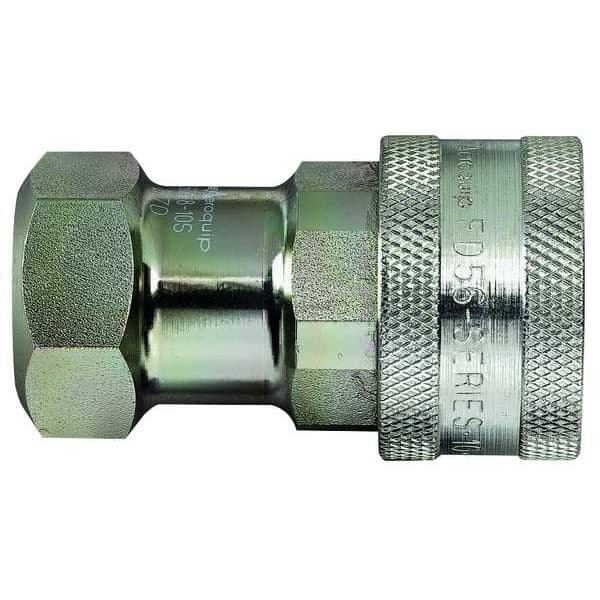
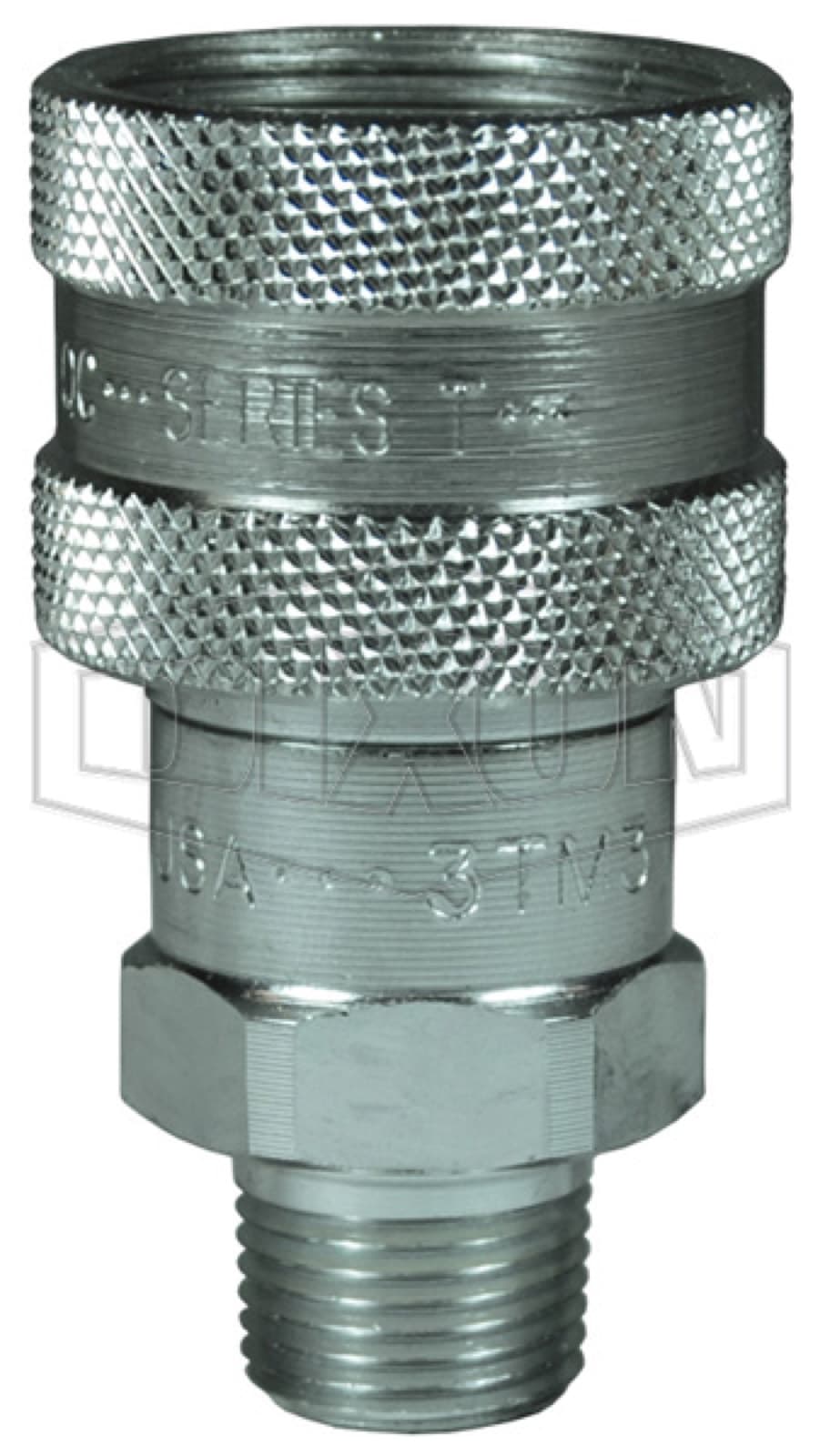
- Yes, if both halves are made to the same interchange standard and size, such as ISO 16028 or ISO 7241 Series A. The standard fixes the mating dimensions, not flow, pressure drop or valve design, so a mixed pair may perform below either maker’s rating. Couplers sold as a maker’s own pattern, with no published interchange, only mate with that maker’s halves.
- 05Is a 1/2″ coupler a 1/2″ thread?
- Not necessarily. The nominal size refers to the coupler body under its interchange standard, and the port thread on the back can be a different size and form — BSP, NPT, SAE O-ring boss or metric. Specify the interchange, the body size and the end thread separately, and check the flow at the body size.
- 06When should I choose a thread-to-connect coupler?
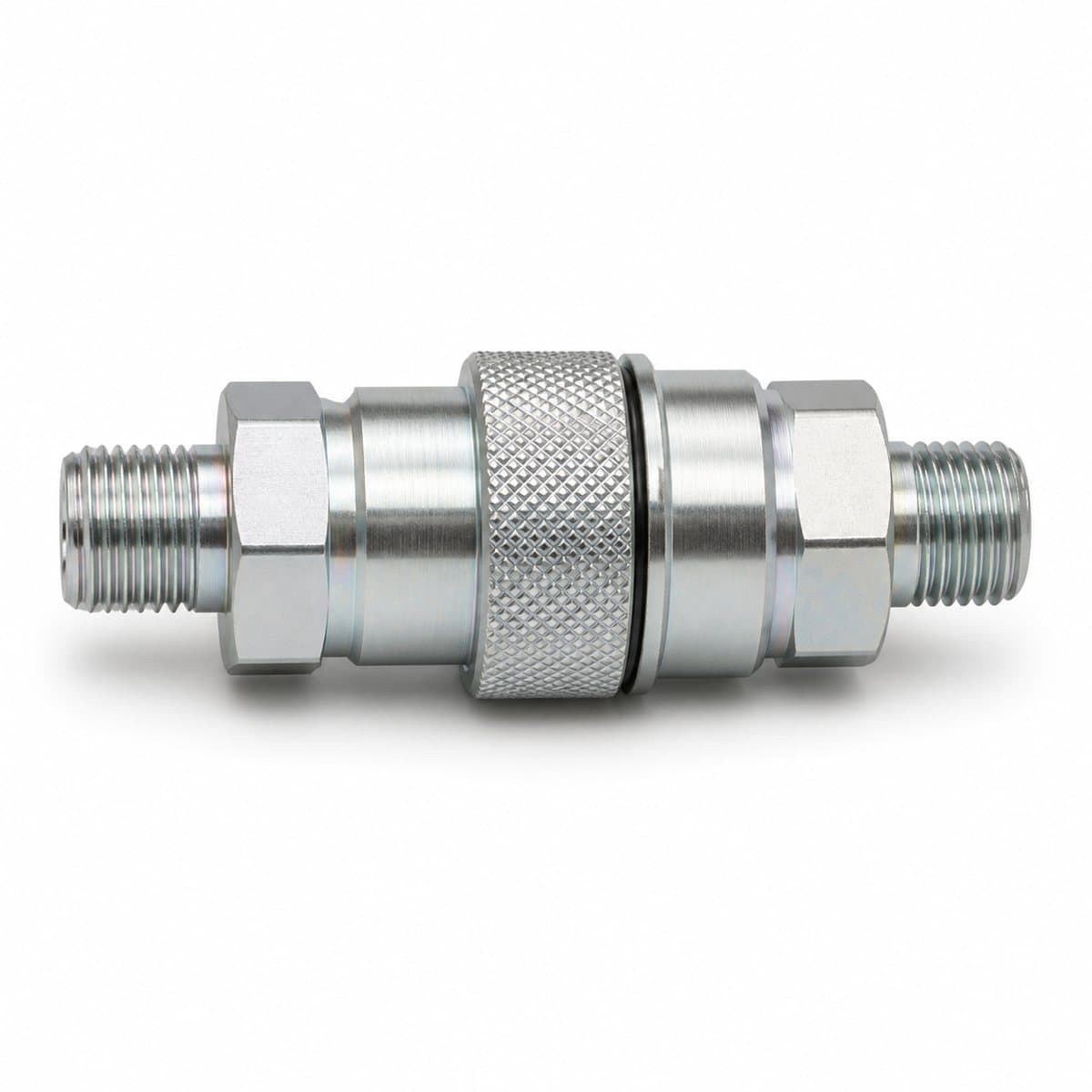
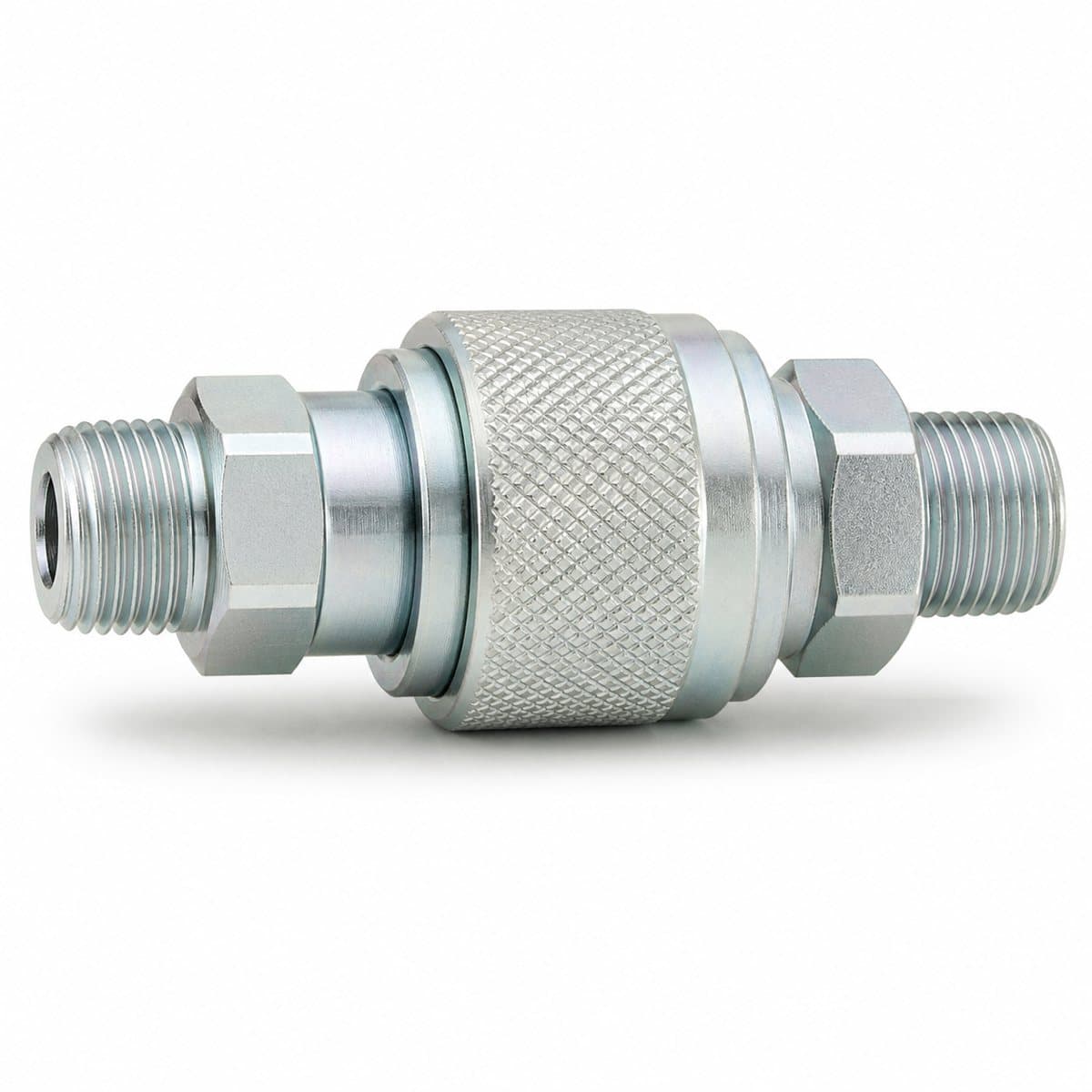
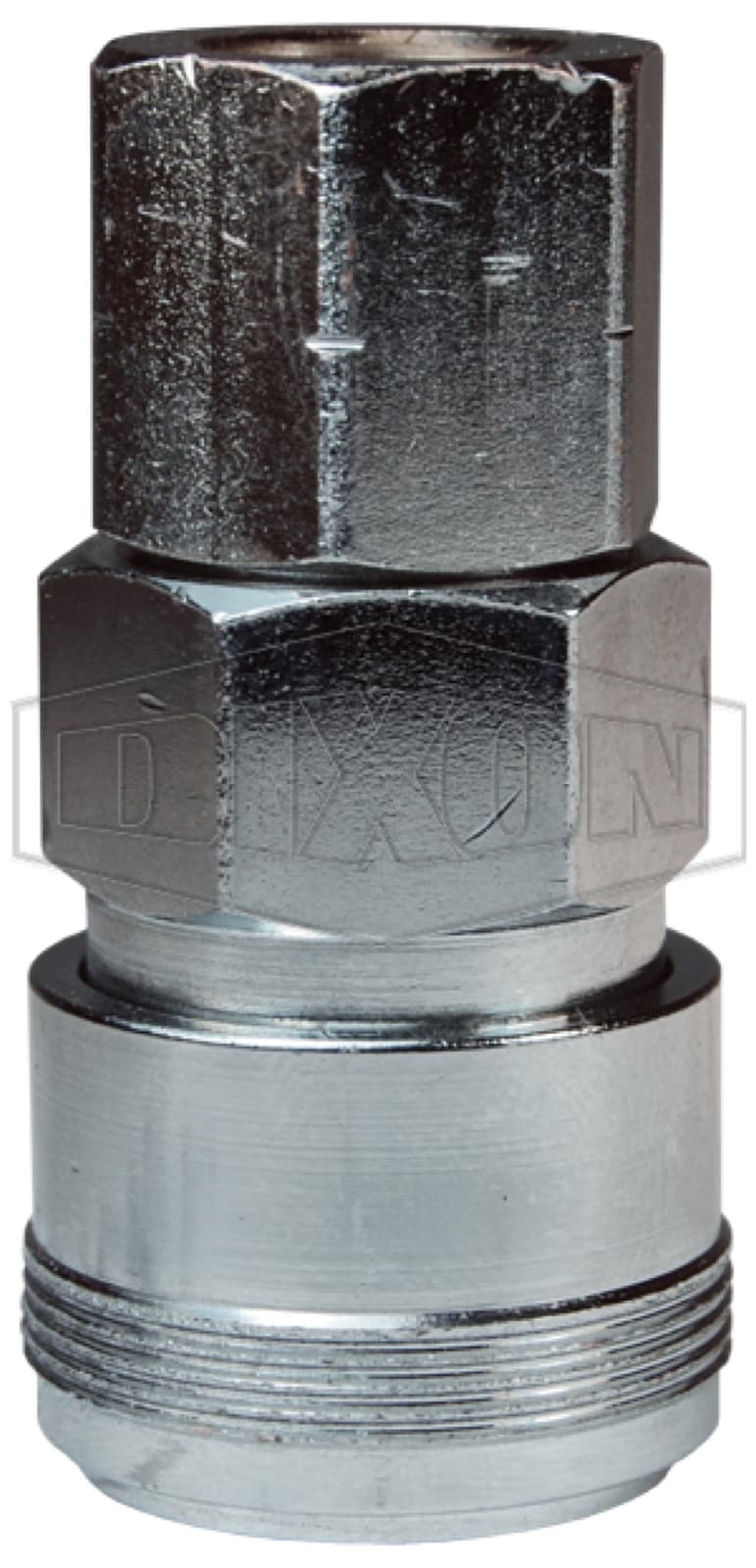
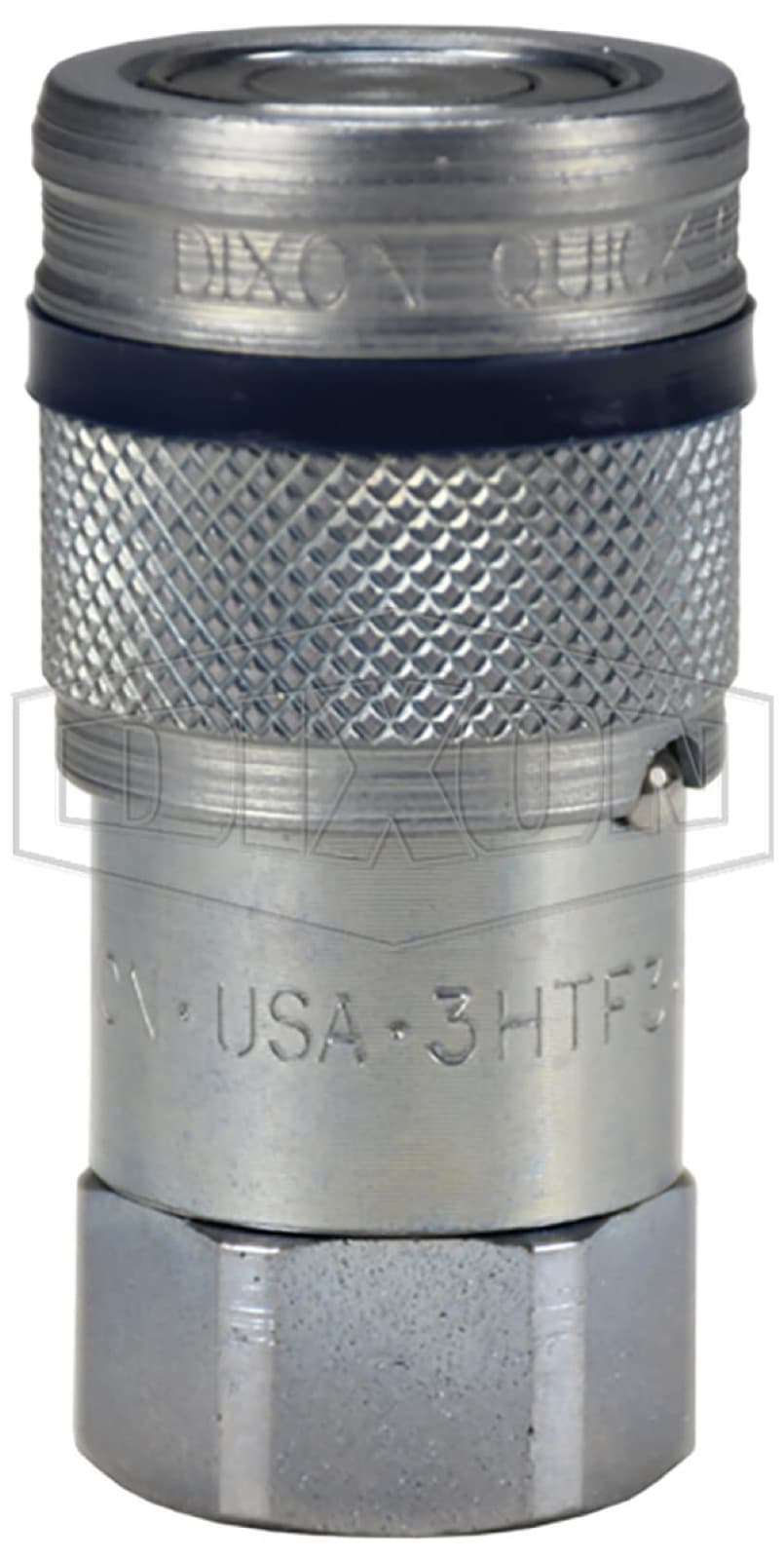
- Where the line sees high pressure, heavy impulse or vibration that can work a push-to-connect sleeve loose, as on hydraulic hammers, breakers and some attachments. The halves are drawn together by a threaded sleeve rather than held by balls, so they stay connected under pressure spikes. They take longer to connect, so use push-to-connect where frequent changes matter more.