- 01How many wire rope clips does an eye need?
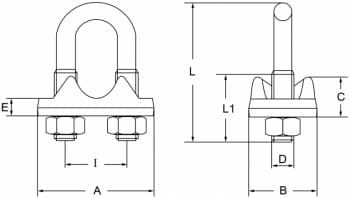
- It depends on the rope diameter and the clip type, and the clip maker's table is the authority. The U-bolt goes on the dead (short) end and the saddle on the live end — "never saddle a dead horse" — and the nuts are re-torqued after the first load.
- 02What is the difference between a fibre core and a steel core?
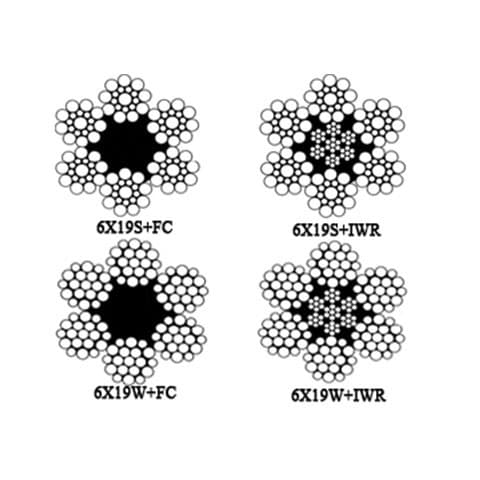
- A fibre core (FC) makes the rope more flexible; an independent wire rope core (IWRC) resists crushing on a drum and carries a higher breaking load for the same diameter. The size tables give both where the manufacturer publishes them.
- 03Do the parts come with test certificates?
- Yes. Each consignment ships with the manufacturer's test certificate. If your site needs more — third-party certification or witnessed proof testing — say so on the RFQ and we will confirm what we can arrange.
- 04Should I order ordinary lay or Lang's lay wire rope?
- Choose ordinary (regular) lay for general lifting and slings, and Lang's lay only where abrasion and bending fatigue dominate and both rope ends are fixed against rotation. In ordinary lay the wires run opposite to the strands, so the rope resists kinking and crushing and is easier to handle. In Lang's lay the wires and strands run the same way, giving more wearing surface but a rope that tends to untwist if one end is free, such as on a single-part hook block.
- 05How do I measure wire rope diameter?
- Measure across the outermost crowns of the strands, not across the flats, using a caliper with jaws wide enough to span at least two strands. Take two readings at right angles at each point and measure at two or more points along the rope, then use the average. New rope is usually slightly over its nominal size, and a reading below nominal on a used rope is a sign of wear or core damage.
- 06Which ferrule material should I use — aluminium, copper or stainless?
- Use the ferrule material the termination standard and the rope maker specify for that rope: aluminium ferrules to EN 13411-3 are the usual choice for galvanized and bright steel wire rope. Copper and stainless ferrules are used with stainless rope and in marine and corrosive service, where aluminium against stainless can corrode. Whatever the material, the ferrule must match the rope diameter and be pressed with the die made for it.
- 07What types of wire rope fitting are there?
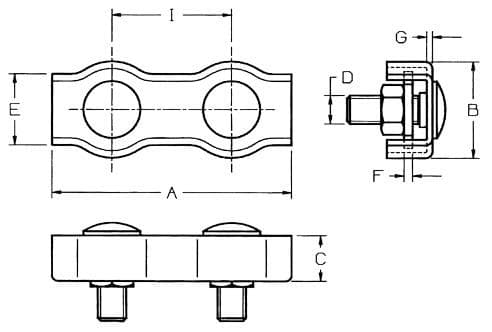
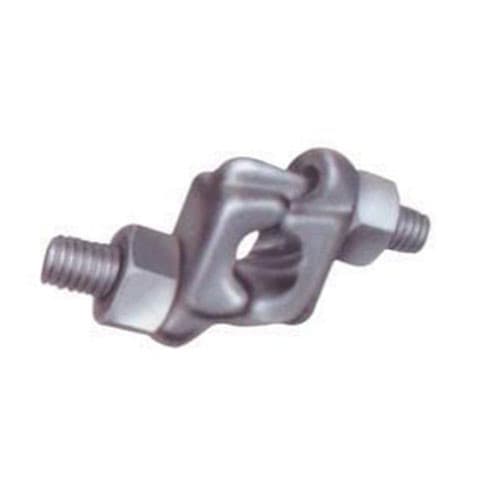
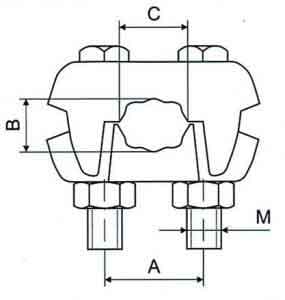
- Wire rope fittings are the clips, thimbles, ferrules, sleeves, sockets and terminals that form and protect an eye or end on steel wire rope. The range includes DIN 741, DIN 1142, US and JIS clips, EN 13411-3 aluminium and stainless ferrules, BS 464, DIN 6899 and US-pattern thimbles and G-416 pattern spelter sockets.
- 08What sizes of wire rope thimble are available?
- DIN 3091 solid thimbles run from 8 to 80 mm, BS 464 from 1/4" to 2", DIN 6899 A from 2.5 to 16 mm and DIN 6899 B from 2.5 to 32 mm. Stainless extra heavy thimbles run from 3/16" to 1". The size table on this page lists each one.