
Questions we get asked
About this range
- 01Can Grade 30, 43 or 70 chain be used for lifting?
- No. Proof coil (Grade 30), high test (Grade 43) and transport (Grade 70) chain are made for tie-down, towing and general duty. Overhead lifting with chain calls for alloy chain — Grade 80 or Grade 100 — with fittings of the same grade.
- 02Do the parts come with test certificates?
- Yes. Each consignment ships with the manufacturer's test certificate. If your site needs more — third-party certification or witnessed proof testing — say so on the RFQ and we will confirm what we can arrange.
Category
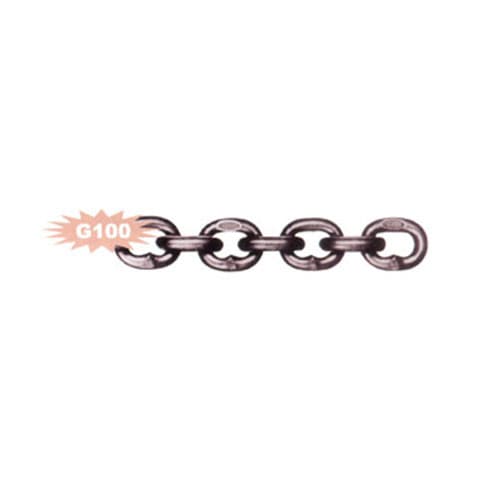
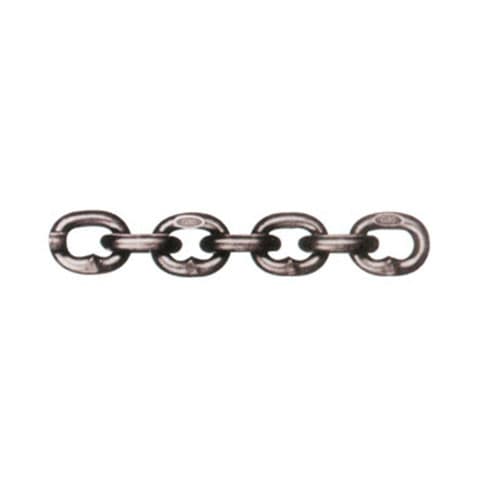
Alloy Lifting Chain (G80 / G100)
Grade 80 and Grade 100 alloy lifting chain for chain slings and hoists, 6 mm to 26 mm.
Size range
Every size above is a part number you can quote from. Open any listing for its full table.
Delivery
Alloy Lifting Chain (G80 / G100) across the Gulf
Ex-stock from Dubai, delivered within 3 working days in the UAE.
Rigging hardware is bought on its working load limit and its certificate, and both travel with the part: every shackle, hook, chain and sling ships from Dubai with the manufacturer's test certificate, so the receiving inspection checks a document against a stamp rather than a claim. Hardware and fittings go by air or courier in cartons; wire rope, chain, hoists and anchors are heavy enough that sea freight is usually the sensible answer.
Beyond the Gulf
- CIS & Caucasus
- Kazakhstan, Moldova, Uzbekistan
From the blog
Written about this range
Lifting & rigging
Chain grades explained: Grade 30, 43, 70, 80 and 100, and which can lift overhead
Chain grade is a statement about the steel, and it decides two things: how much a given size carries, and whether it may be used overhead at all. Grades 30, 43 and 70 are for tie-down and towing. Only alloy Grade 80 and Grade 100 are lifting chain. Here is the whole ladder, with figures from our own tables.
7 min read
Lifting & rigging
Working load limit vs breaking strength: WLL, MBL, proof load and the factor between them
The breaking strength of a lifting component is not a number you lift to. It is the WLL multiplied by a design factor, and that factor runs from 4:1 on alloy chain to 7:1 on polyester slings. Here is how the four ratings relate, worked through with figures from our own tables.
9 min read
Lifting & rigging
Types of lifting slings: chain, wire rope, webbing and round slings compared
Chain slings survive heat, edges and rough handling. Wire rope slings are strong and stiff. Webbing and round slings are light and gentle on finished surfaces, but cut easily and stop at 100 °C. Here is how the four compare, and how to choose for the load in front of you.
5 min read