
Mini Load Binder — 375 lbs WLL
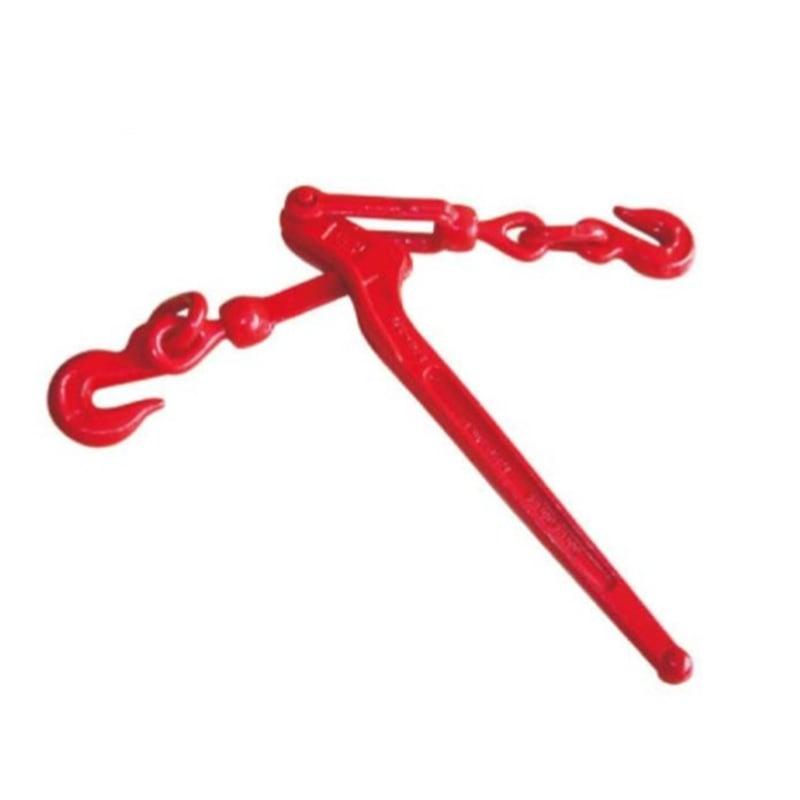
Mini Load Binder (US federal specification), in 1 size, 1/4″, WLL 375 lbs. Not for overhead lifting. Indus part numbers.
Key features
- Product type: Mini Load Binder
- Pattern / standard: US federal specification
- Size range: 1/4″
- Working load limit: 375 lbs
- Size range
- 1/4″
- Working load limit
- 375 lbs
- Material
- Alloy steel
- Finish
- Powder coated
Product description
Mini Load Binder for tension, lashing and fixing duty. Built to the US federal specification. Alloy steel, powder coated.
Not for overhead lifting. The manufacturer rates this range for tension, lashing or fixing, not for lifting. For a lift, use a rated lifting component — ask us which.
Sizes and ratings
1 size, 1/4″. Working load limit 375 lbs. Minimum breaking load 1,500 lbs. Every size has its own Indus part number in the table below, with the loads in the unit the manufacturer rates them in.
Manufacturer's data
- Drop forged / machining.
- Rated with a 4:1 design factor between working load limit and minimum breaking load.
Choosing a size
Match the binder to the chain size and select on WLL. It is a tensioning device, not lifting equipment.
Ordering
Quote the Indus part number from the size table, or send the size and rating you need.
Identification
| Parameter | Value |
|---|---|
| Product type | Mini Load Binder |
| Pattern / standard | US federal specification |
| Sizes | 1 |
Dimensions
| Parameter | Value |
|---|---|
| Size range | 1/4″ |
Performance
| Parameter | Value |
|---|---|
| Working load limit | 375 lbs |
| Minimum breaking load | 1,500 lbs |
Construction
| Parameter | Value |
|---|---|
| Material | Alloy steel |
| Finish | Powder coated |
Shipping & lead time
Sizes & part numbers
1 size- Indus part no.IH-LR-LB-MLB-025
- Size
- 1/4″
- WLL (lbs)
- 375
- Proof load (lbs)
- 750
- Min breaking load (lbs)
- 1,500
- Handle length (mm)
- 196.8
- Take-up (mm)
- 88.9
- Weight (kg)
- 1.25
Size — Nominal size as the manufacturer states it. WLL — Working load limit — the most the part may carry in service, as the manufacturer rates it. Proof load — Proof or test load the manufacturer applies to the part. A test figure — never a working limit. Min breaking load — Minimum breaking load. A test figure — never lift to it. Handle length — Length of the operating handle. Take-up — Adjustment the binder takes up. Weight — Weight as the manufacturer publishes it. Ask us for the dimension drawing if you need it stamped.
WLL is the most the part may carry in service. Proof and breaking loads are test figures — never lift to them. Each load is shown in the unit the manufacturer rates the part in, and a size ships with the manufacturer’s test certificate.
What is a mini load binder and what is it used for?▾
How do I read the Indus part number on the mini load binder, for example IH-LR-LB-MLB-025?▾
What are the working load limit and breaking load of the mini load binder?▾
What are the dimensions of the mini load binder?▾
Which standard does the mini load binder follow?▾
What is the mini load binder made from?▾
Mini load binder compared with the standard lever load binder?▾
What chain does the mini load binder fit?▾
Can I lift with the mini load binder?▾
How do I use a lever binder like the mini load binder safely?▾
Where are mini load binders used?▾
Do you keep the mini load binder in stock, and how do I order?▾
Shipped worldwide from our Dubai warehouse. Transit, routes and documentation for 136 destinations
From the blog
Written about this range
Lifting & rigging
Lever vs ratchet load binders: the kickback hazard, and which to use
A lever binder tensions a chain in one swing of the handle — and can whip back just as fast. A ratchet binder takes longer to tighten but gives twice the mechanical advantage and a controlled release. Both carry the same rating for the same chain size. Here is how they compare and how to use either safely.
4 min read
Lifting & rigging
Ratchet strap vs chain and binder: securing loads on a truck or trailer
A 50 mm ratchet strap might be rated 2,000 daN, yet tightened by hand it typically pulls only 250 to 500 daN on the load. That gap decides how loads are secured: straps are good for clamping light and finished loads down; chain and binders for heavy, hard-edged ones. Here is how the ratings work and how many tie-downs a load needs.
4 min read
Engineers viewing this also looked at
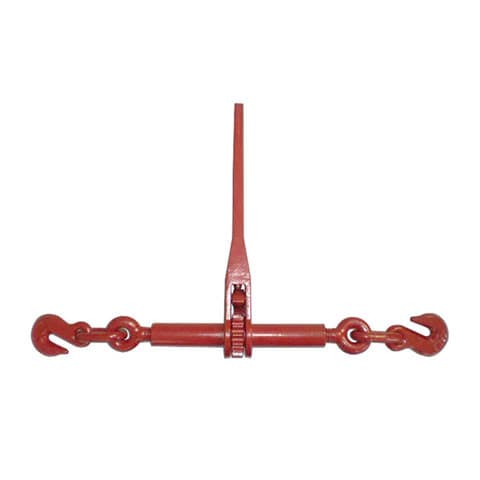
Ratchet Load Binder — 2,600–13,000 lbs WLL
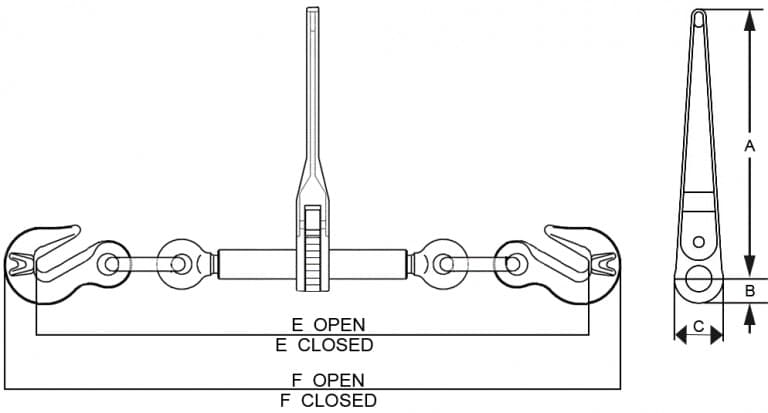
Ratchet Load Binder — AS/NZS 4344, 6–13 mm
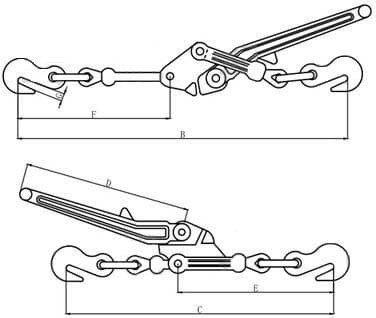
Recoil-Less Lever Load Binder, Grade 70 — 5,400 lbs WLL
Ro-Ro Chain Lashing with Hook Ends — 9–13 mm
Ro-Ro Lashing Chain — Long Link, 9–13 mm

Steamboat Ratchet Binder with Pelican Hooks — 30,000 lbs WLL

Winch Hook with Latch Carbon Steel 3.5T — 19 mm
Grade 100 Ratchet Load Binder — EN 12195-3