- 01What is the difference between a tie-rod and a round-body air cylinder?
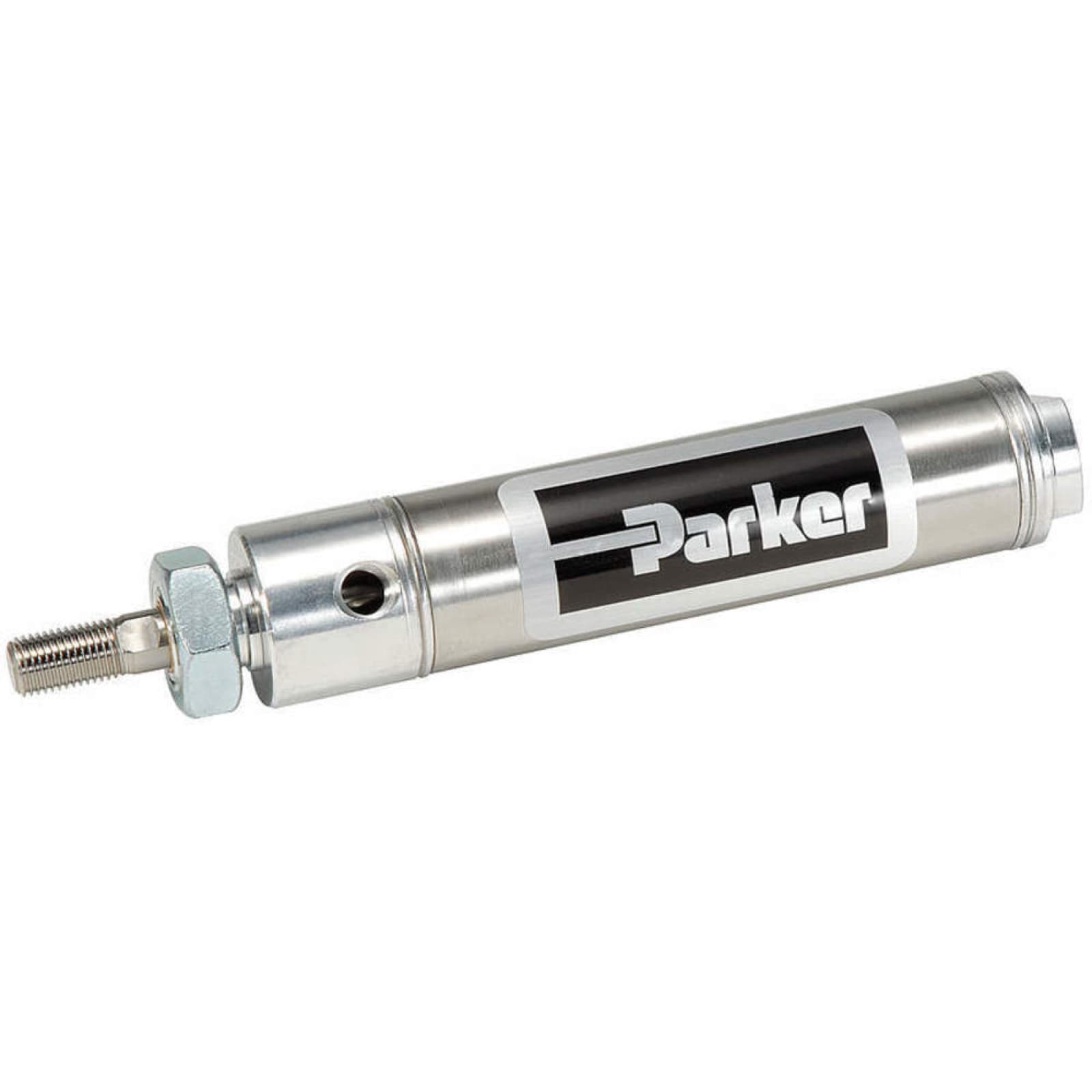
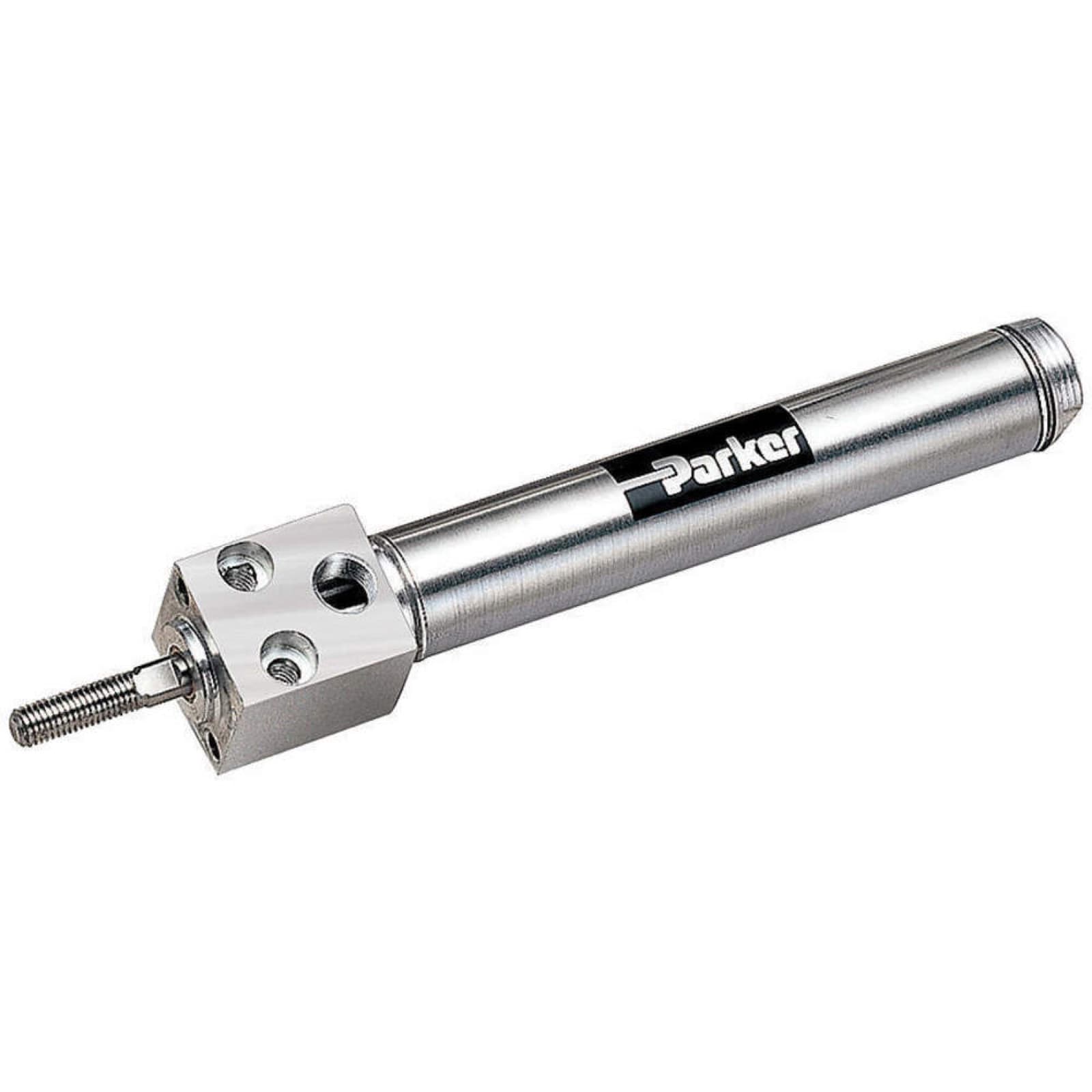
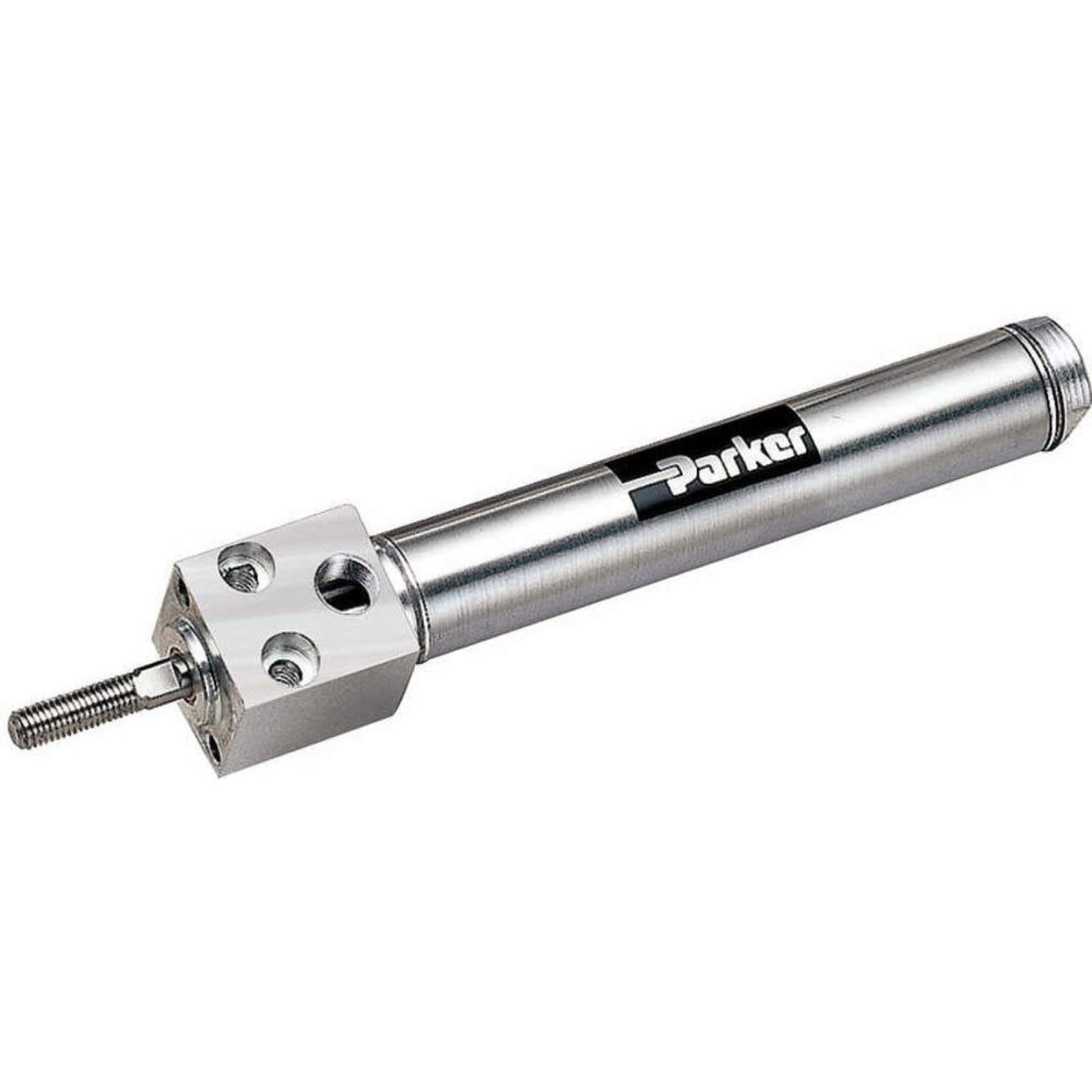
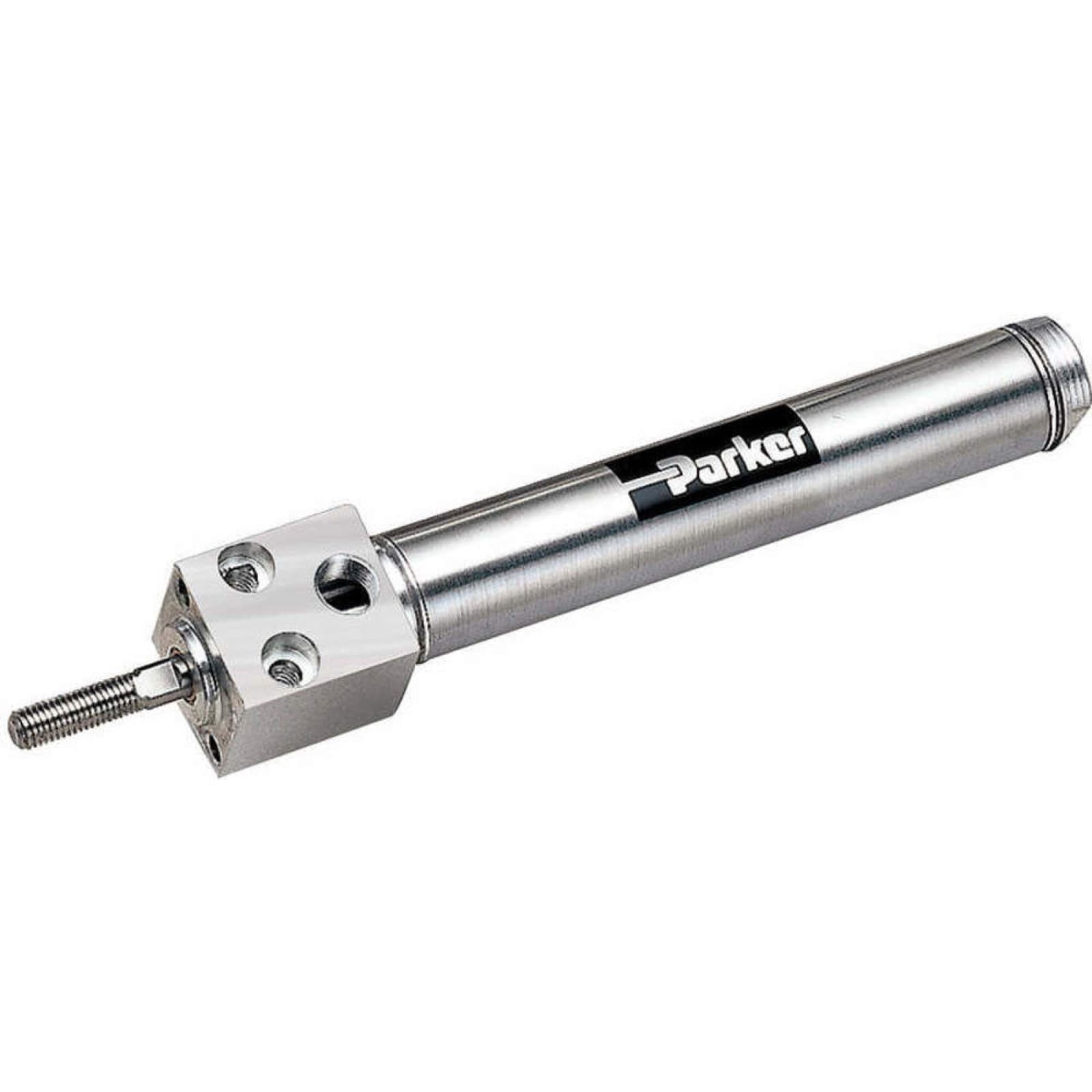
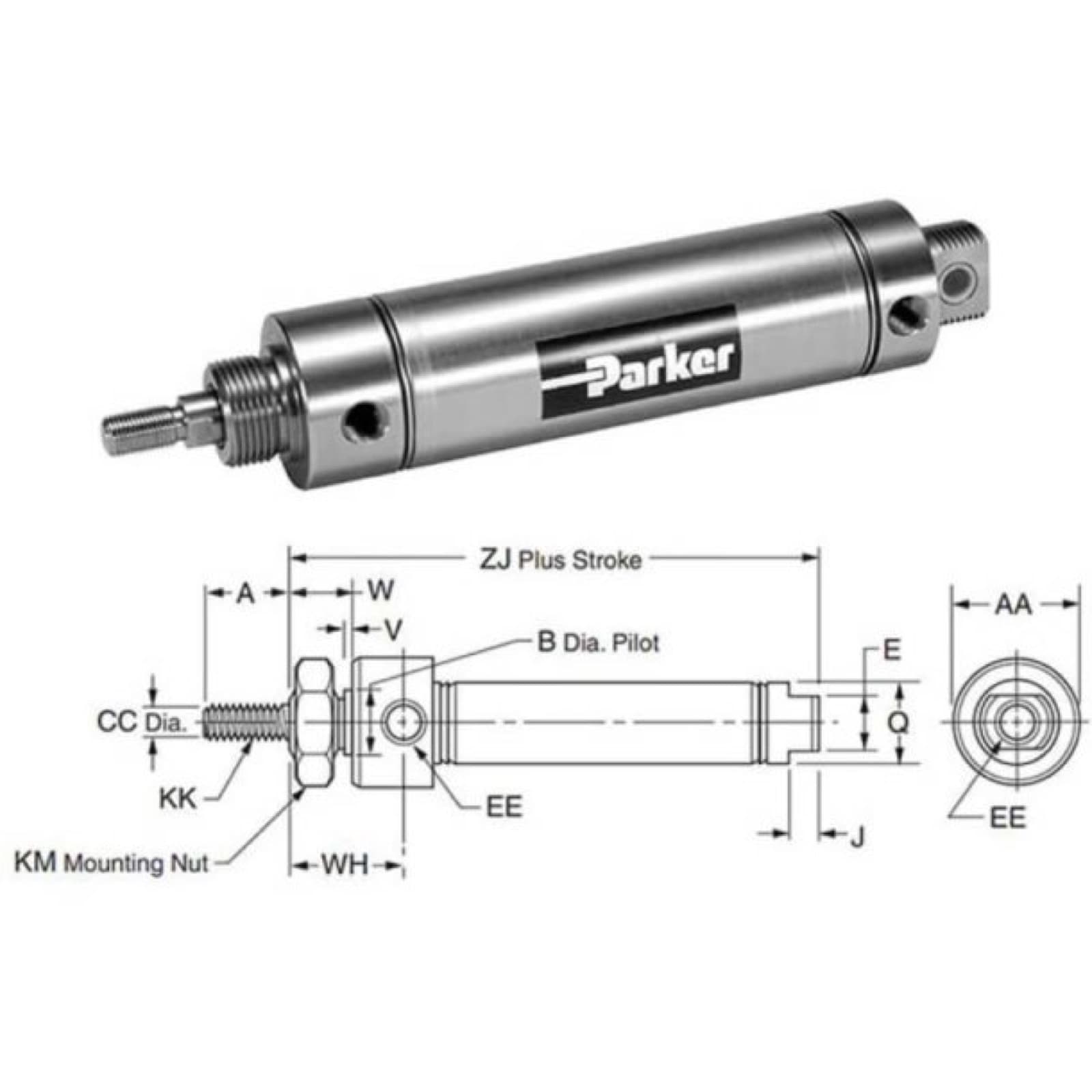
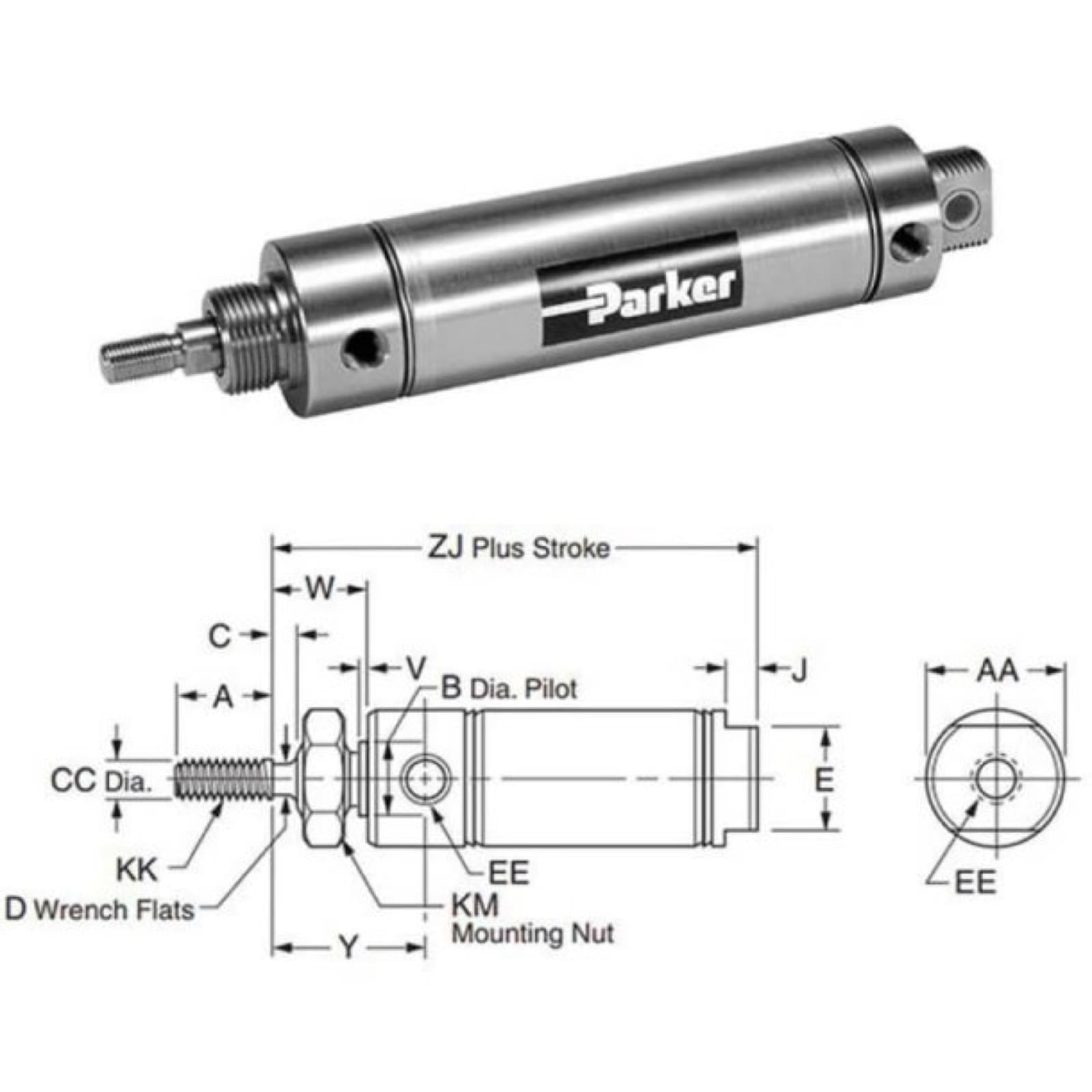
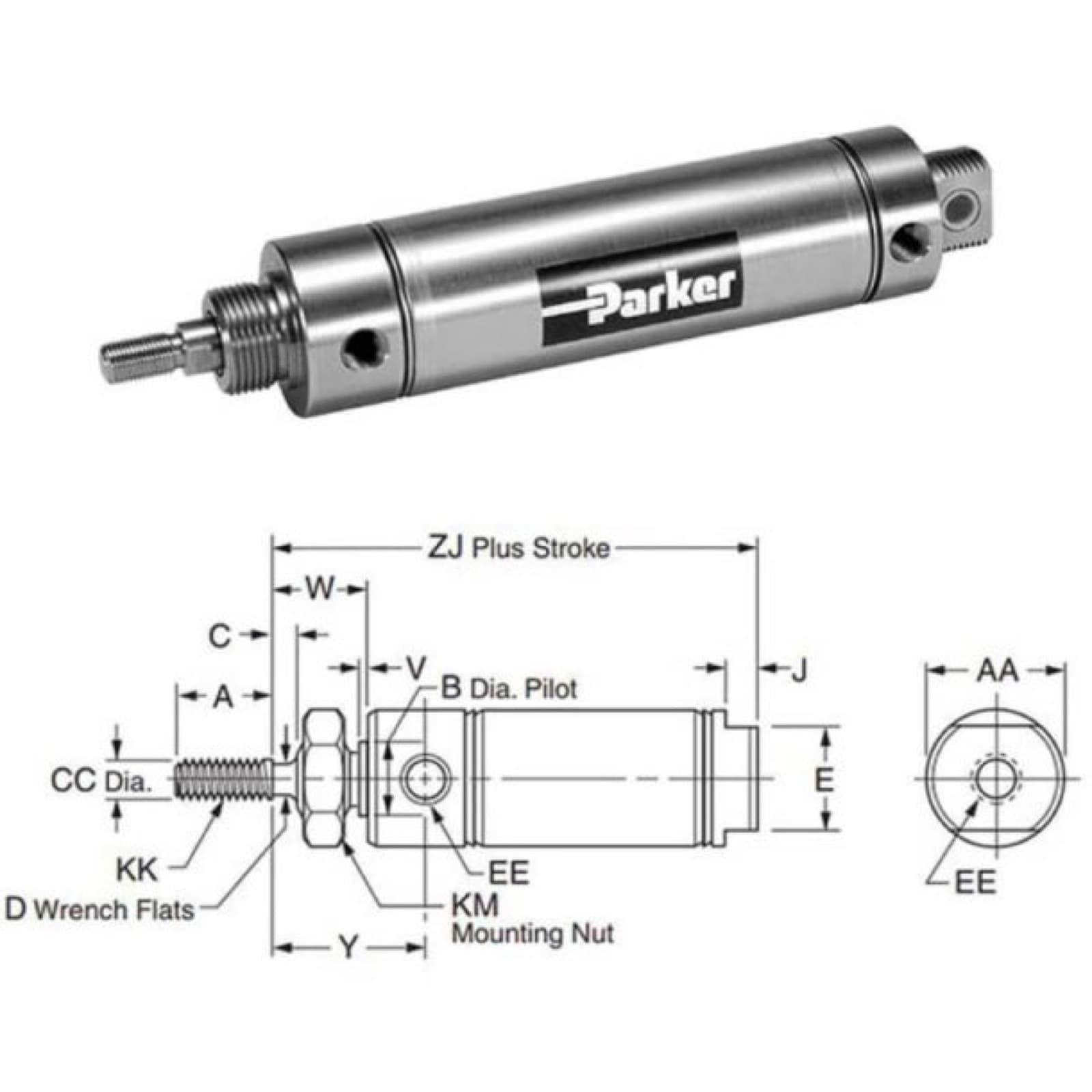
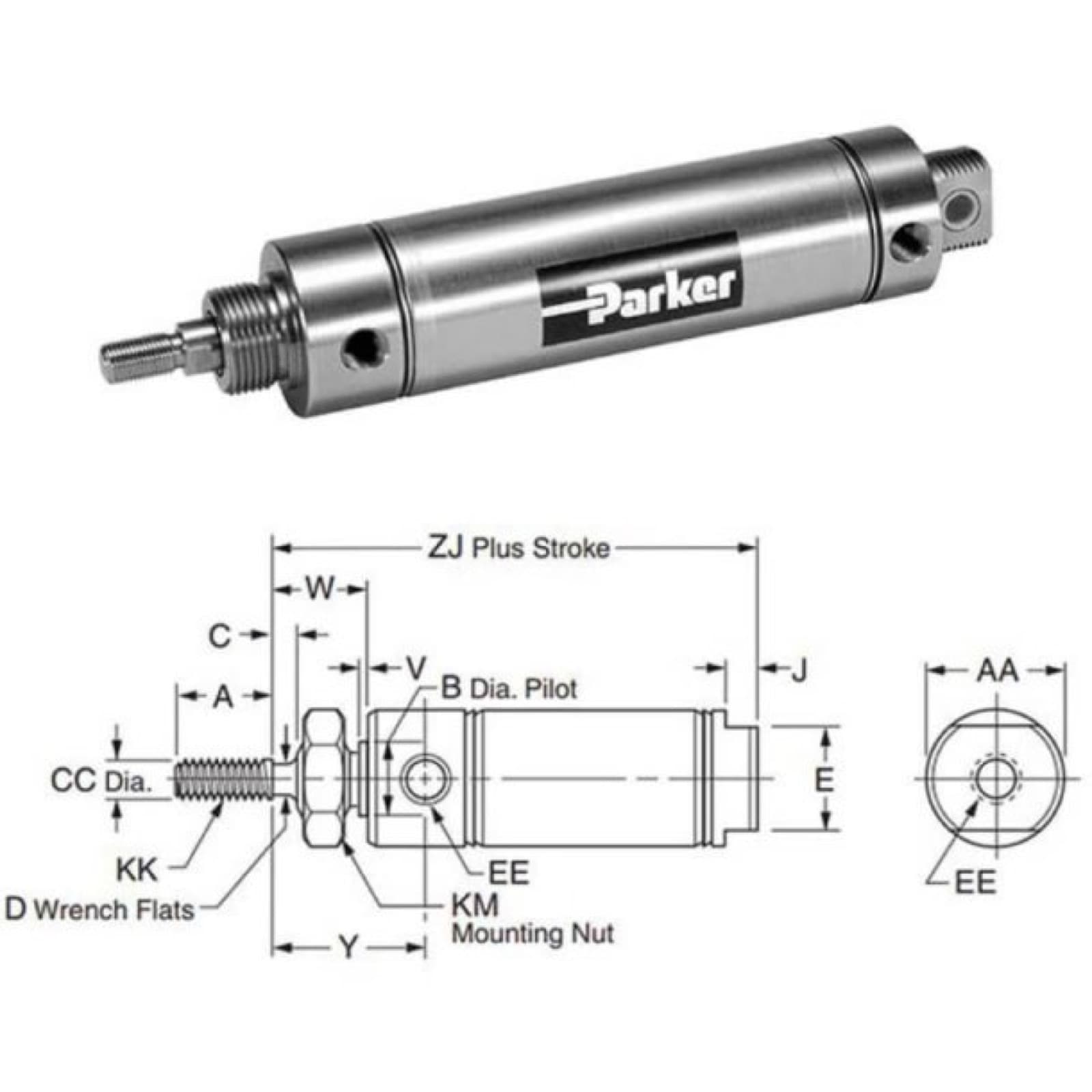
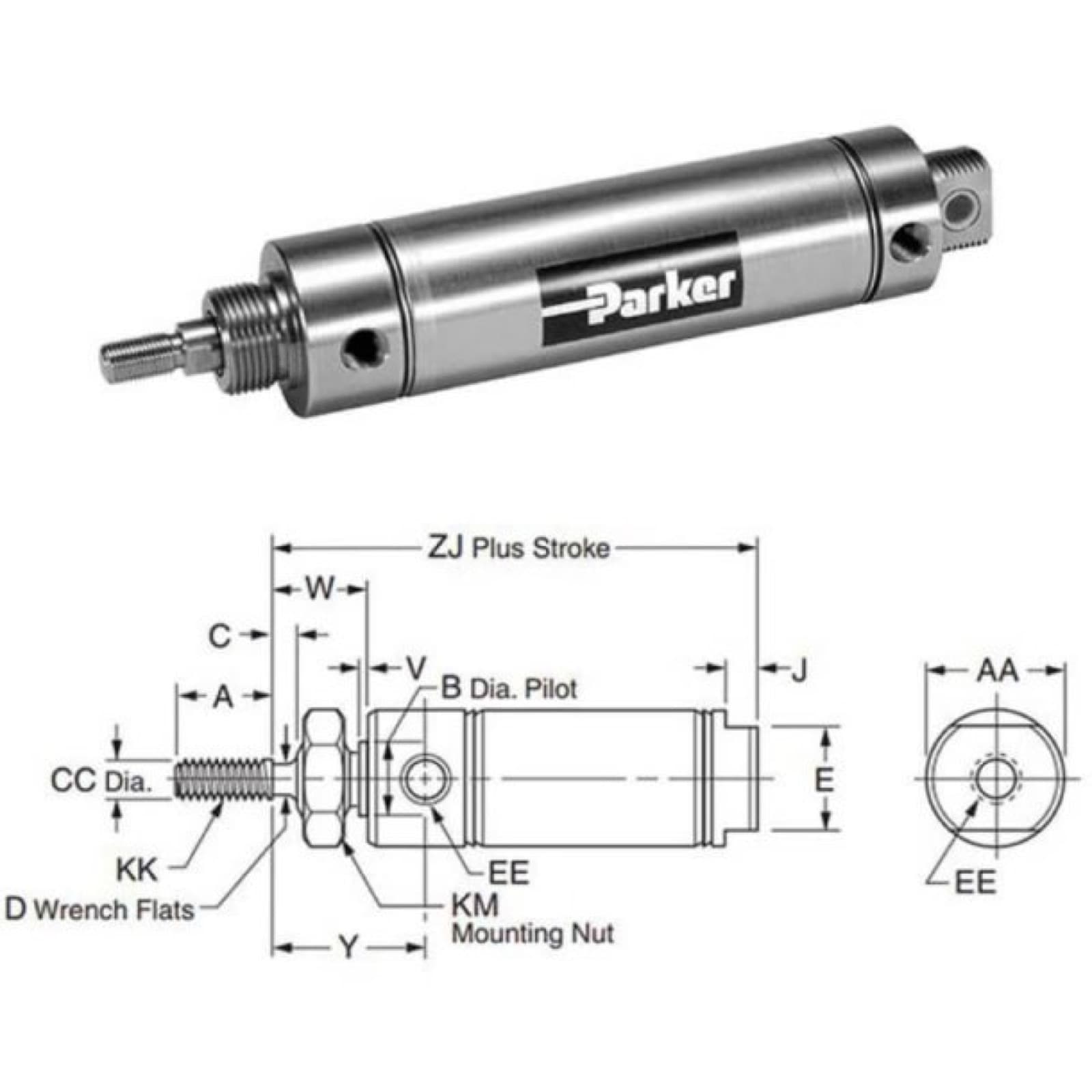
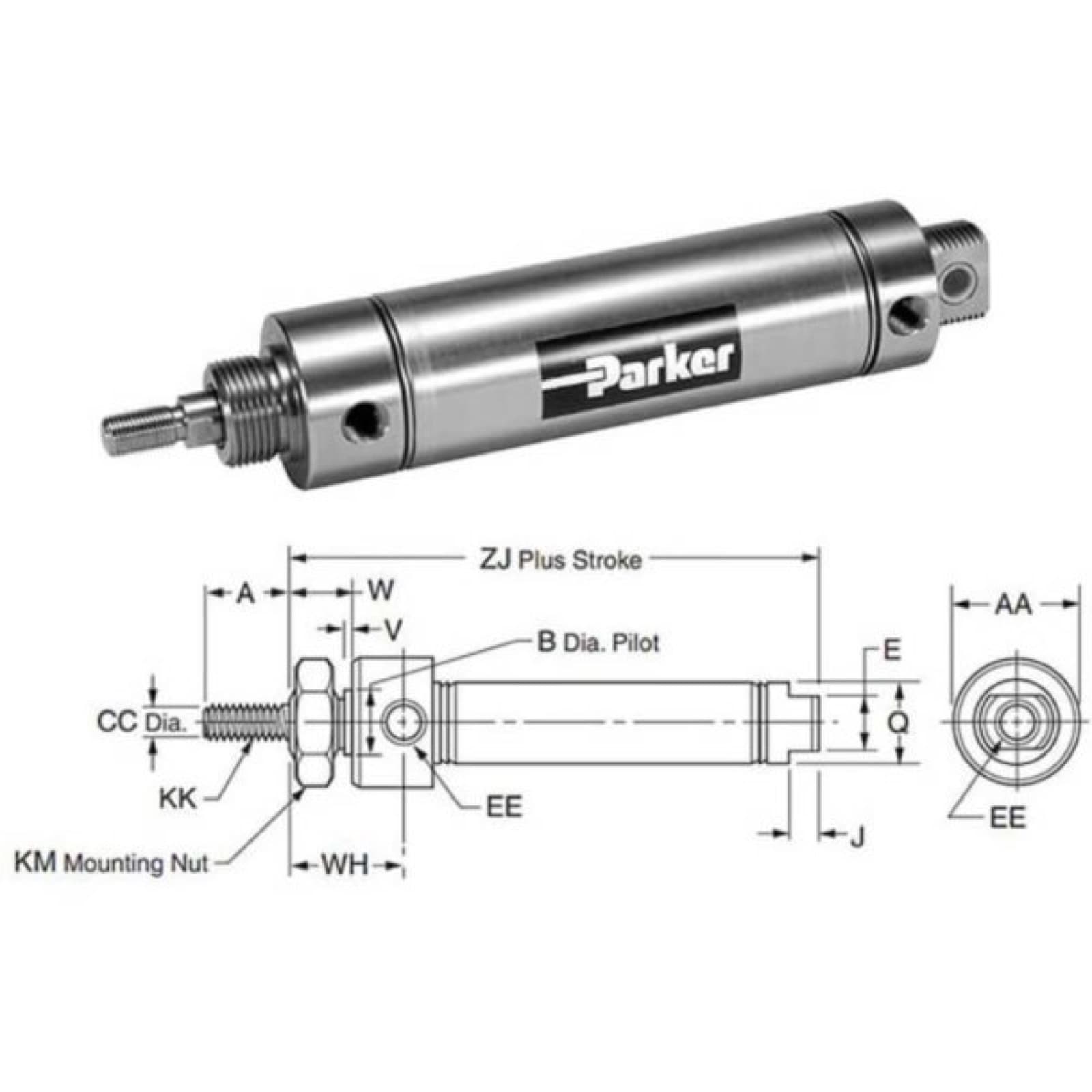
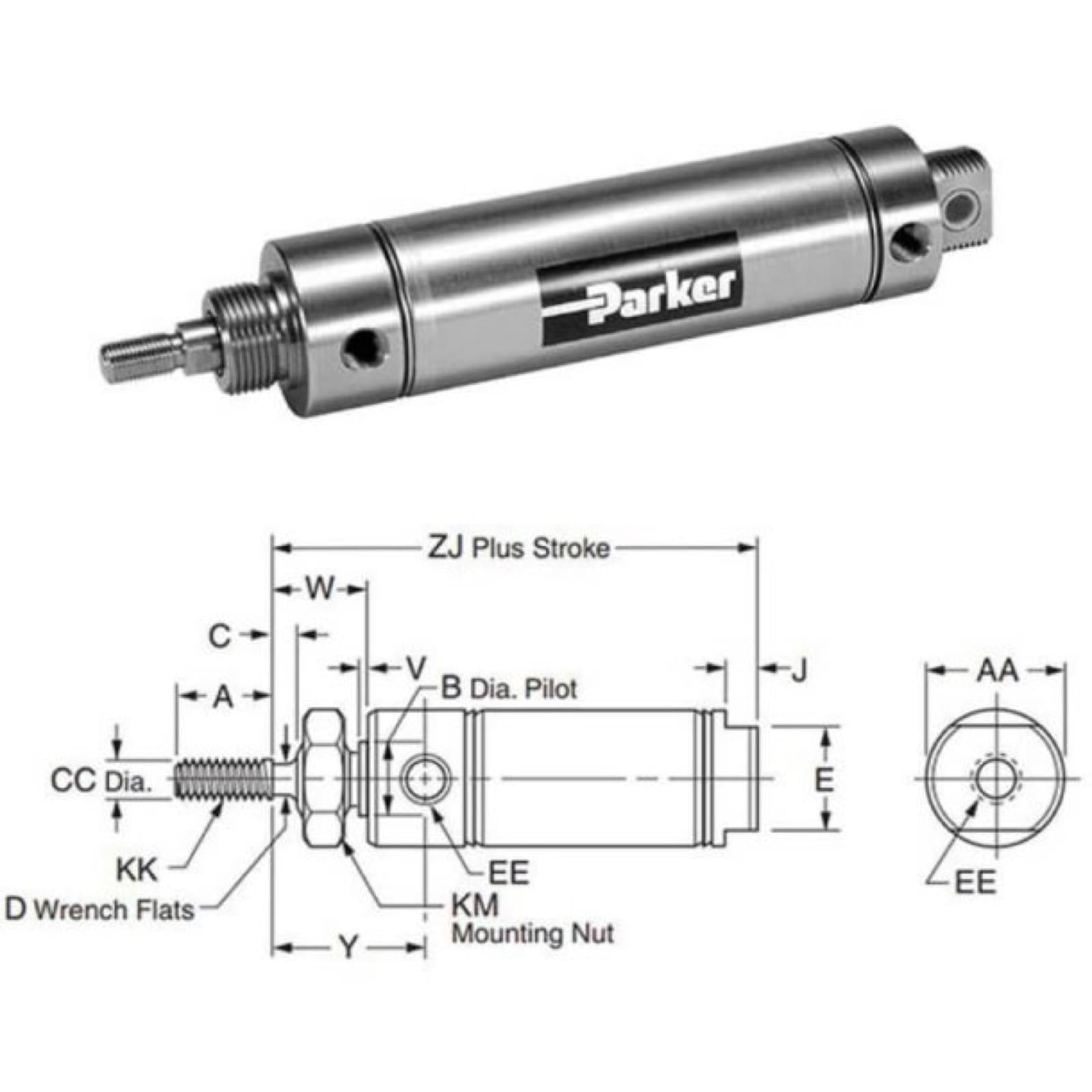
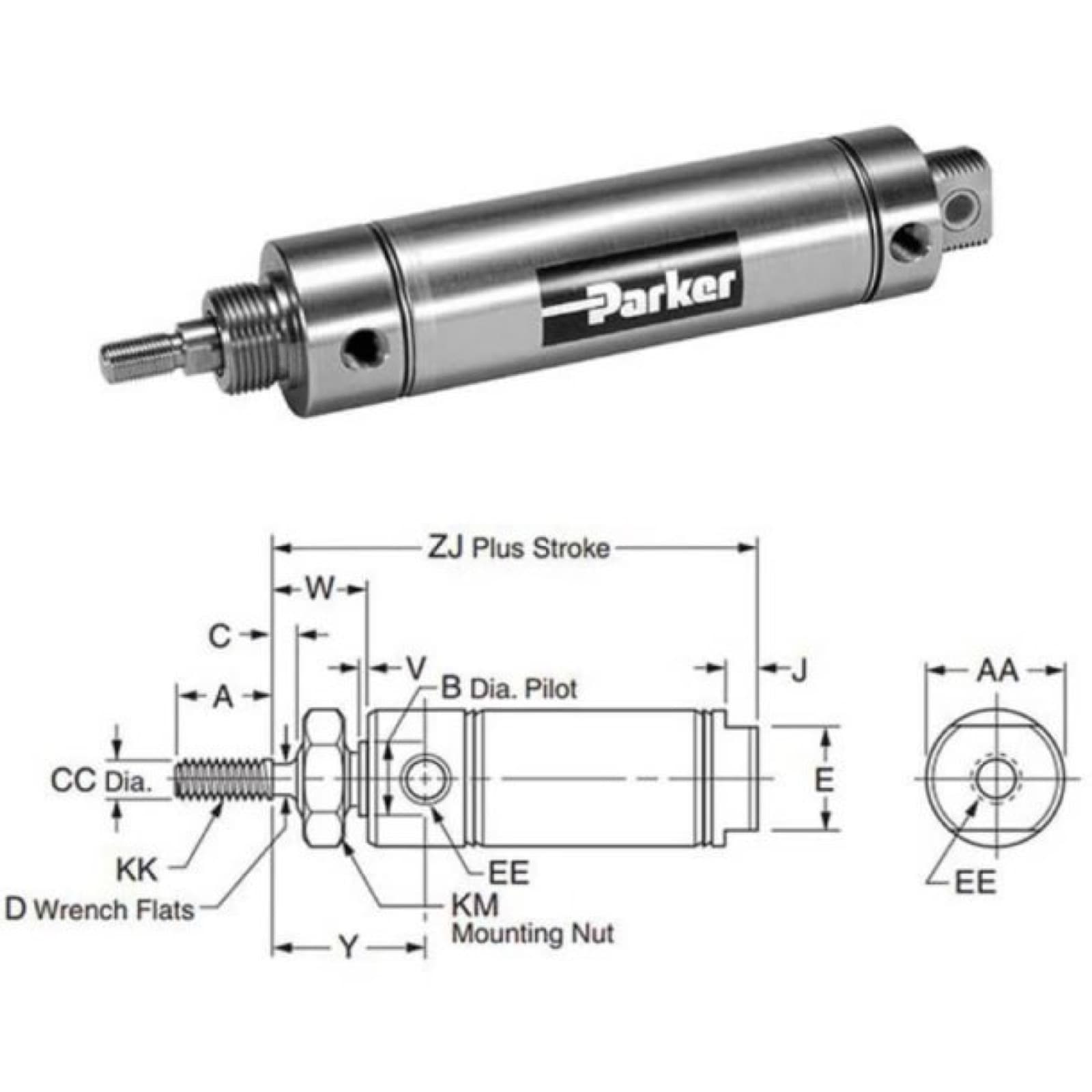
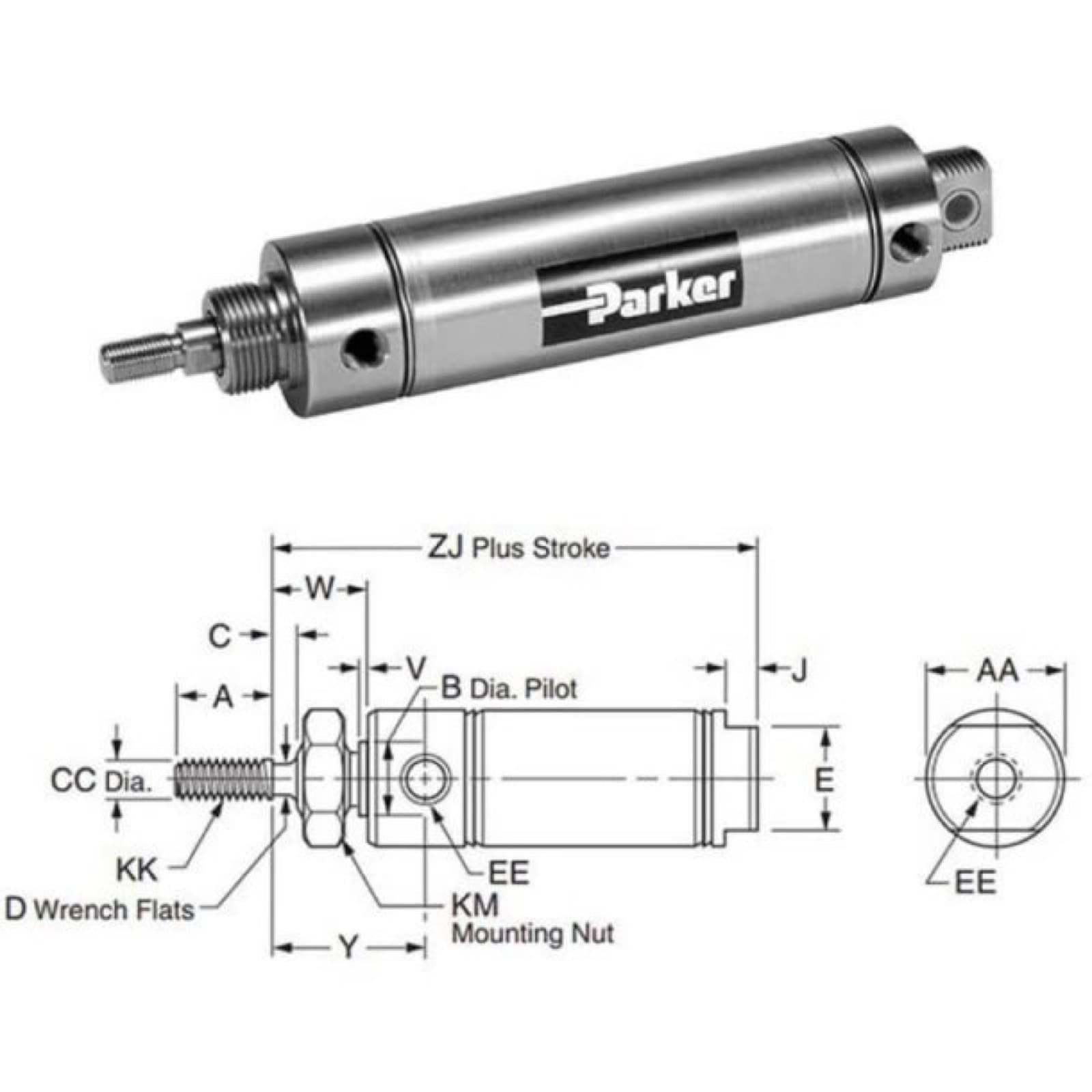
- A tie-rod cylinder holds its end caps on with external rods, so it can be dismantled and resealed, and it comes in a wide choice of standard mountings; the Parker 4MA, 2MNR and P1F are tie-rod designs. A round-body cylinder has its ends rolled, crimped or threaded on, which makes it smaller and lighter; many are not repairable and are replaced whole, as Parker states for its P1A mini cylinders. Profile cylinders such as the Parker P1D use an extruded body instead of tie rods.
- 02How do I calculate the force of a pneumatic cylinder?
- Force equals pressure times area. A 63 mm bore has a piston area of about 3,117 mm²; at 6 bar (0.6 N/mm²) the theoretical extend force is about 1,870 N. On the return stroke subtract the rod area: with a 20 mm rod the annulus is about 2,803 mm², giving about 1,680 N. Real output is lower, because seal friction and the force needed to accelerate the load take part of it, so choose a bore with spare capacity rather than one that only just balances the load.
- 03Can I replace an ISO cylinder with an NFPA cylinder?
- Not directly. ISO 15552 cylinders are metric, NFPA cylinders are inch, and their mounting dimensions, rod threads and usually their port threads differ. Replace like with like: an ISO cylinder with an ISO cylinder of the same bore, stroke and mounting, or an NFPA cylinder with one of the same bore, mounting style and rod end. Changing standard means changing the mounts and the rod-end fittings as well.
- 04When do I need a guided cylinder?
- When the load is offset, sideways or must not rotate. A standard cylinder's rod bearing is not designed to carry much side load, and a rod pushed sideways wears its seals and bearing quickly. Guided cylinders, such as the Parker HB and P5E ranges on this shelf, carry the load on separate guide shafts and bearings, which take the side load and stop the tooling turning.
- 05What are Destaco power cylinders used for?
- Destaco describes its WK pneumatic power cylinders as working on a wedge-lever principle: the rod makes a normal forward stroke, then a short power stroke in which the force is multiplied. Destaco lists clamping, punching, stamping, notching, riveting, pressing and clinching as typical uses. The K series and Destaco replacement cylinders are listed alongside. Order by the Destaco part number, which fixes the force and stroke.
- 06What do I need to send to replace an air cylinder?
- The model code from the nameplate or end cap is the quickest route. Without it, send the bore, the stroke, the mounting style, the rod-end type and thread, the port thread, whether it is cushioned, whether it has a magnetic piston for sensors, and a photograph. We match it to the maker's part number and quote on request.