
Category
Chain Slings
Chain slings are lifting assemblies of alloy chain, a master link and end fittings, rated for the number of legs and the angle they work at. Indus supplies Grade 80 and Grade 100 chain slings in single-, two-, three- and four-leg make-ups with sling, grab, foundry or self-locking hooks or oblong links, made up to the reach you need, from Dubai.
Rated by the sling, not the chain
A chain sling is rated for its make-up: the number of legs and the angle they work at decide what it may lift, and the weakest component sets the rating. Each page here is one make-up, named by its letter code, with the working load limit for every chain size. Pick the make-up by the fitting your load needs, then the chain size by the load and the leg angle, and tell us the reach.
Grade 80, Grade 100 and EN 818-4
EN 818-4 sets the ratings for Grade 8 chain slings at a 4:1 design factor: a two-leg sling carries 1.4 times a single leg with the legs up to 45° from vertical, and a three- or four-leg sling 2.1 times. Grade 100 chain carries about 25% more for the same diameter and is rated on the same method. Chain, links and hooks in one sling are always the same grade.
Size range
Every size above is a part number you can quote from. Open any listing for its full table.
Delivery
Chain Slings across the Gulf
Ex-stock from Dubai, delivered within 3 working days in the UAE.
Rigging hardware is bought on its working load limit and its certificate, and both travel with the part: every shackle, hook, chain and sling ships from Dubai with the manufacturer's test certificate, so the receiving inspection checks a document against a stamp rather than a claim. Hardware and fittings go by air or courier in cartons; wire rope, chain, hoists and anchors are heavy enough that sea freight is usually the sensible answer.
Beyond the Gulf
- South-East Asia
- Singapore, Vietnam, Philippines
- CIS & Caucasus
- Kazakhstan, Armenia, Georgia
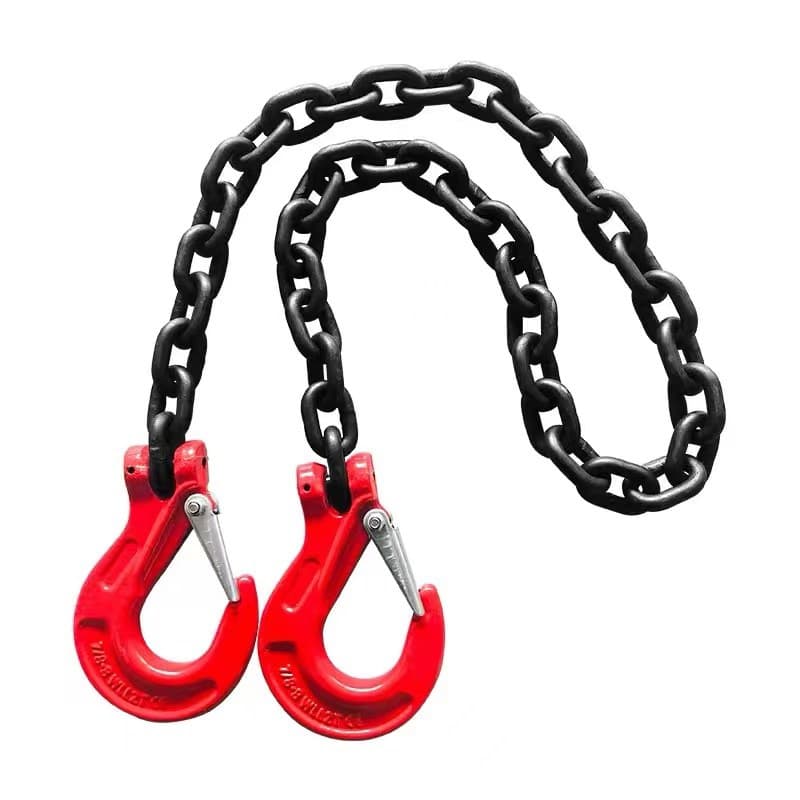
Grade 80 Single-Leg Chain Sling, Sling Hook Both Ends — Type SSS
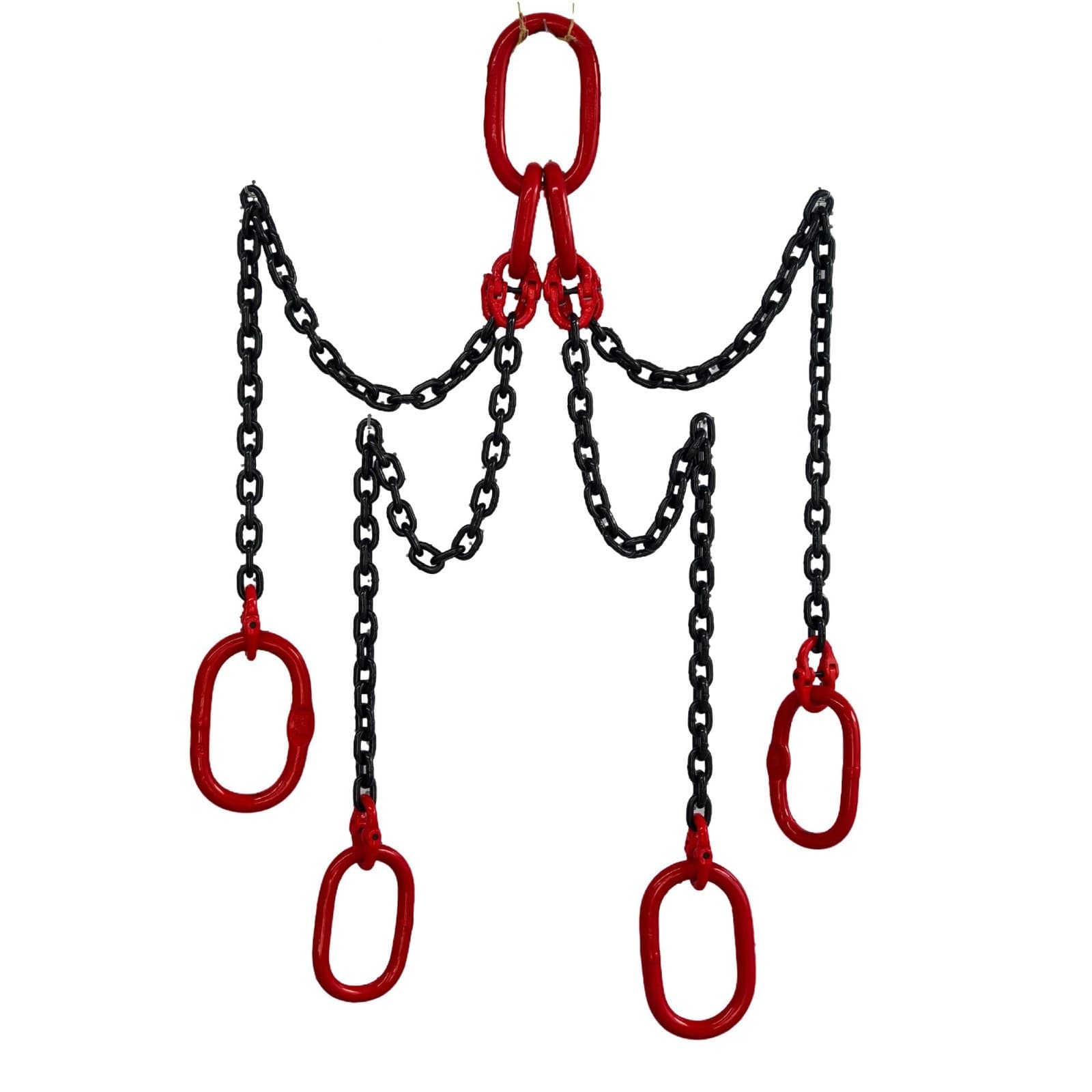
Grade 80 Single-Leg Chain Sling, Master Link Both Ends — Type SOO
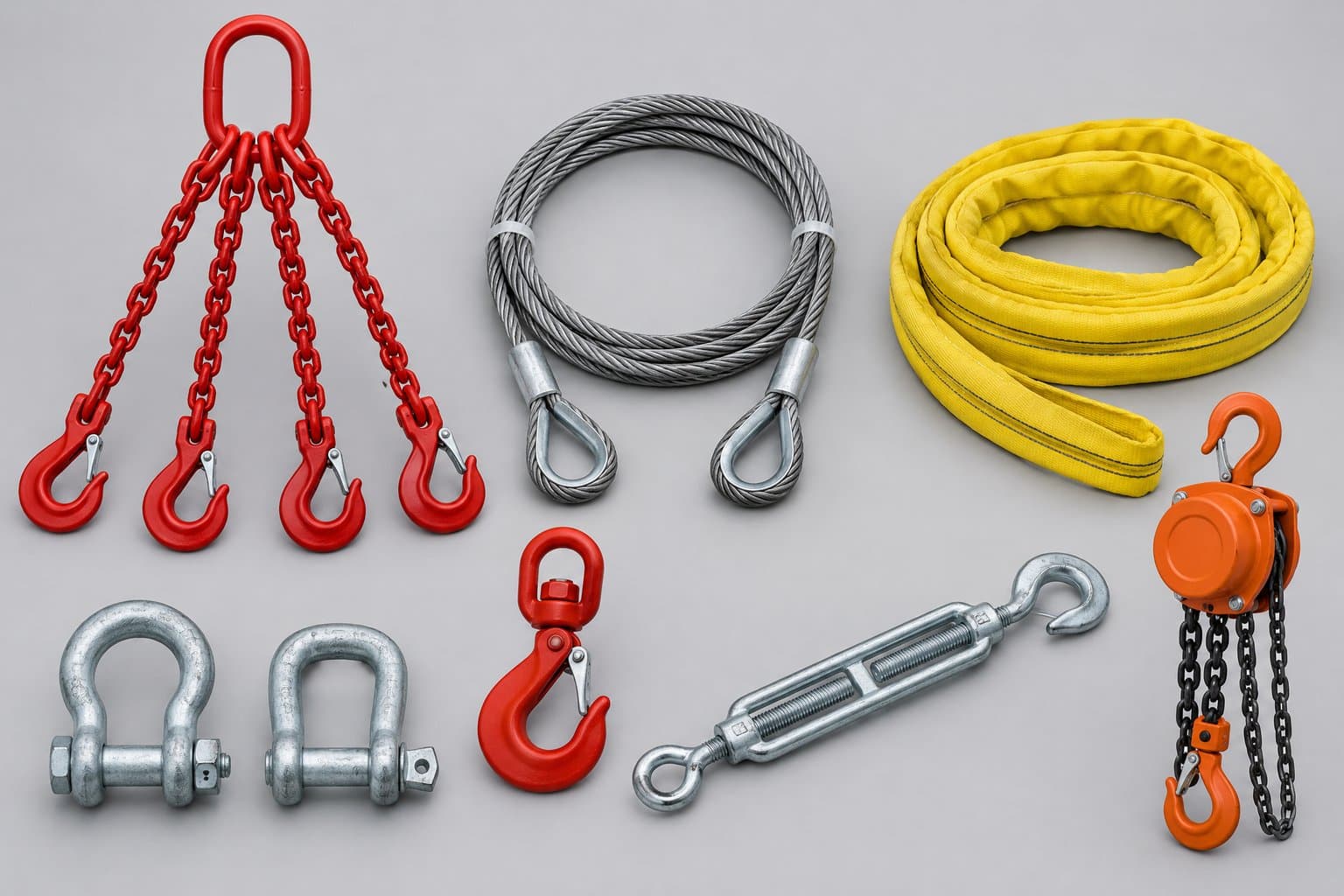 Category image · Lifting & Rigging
Grade 80 Single-Leg Chain Sling, Master Link and Self-Locking Hook — Type SOSL
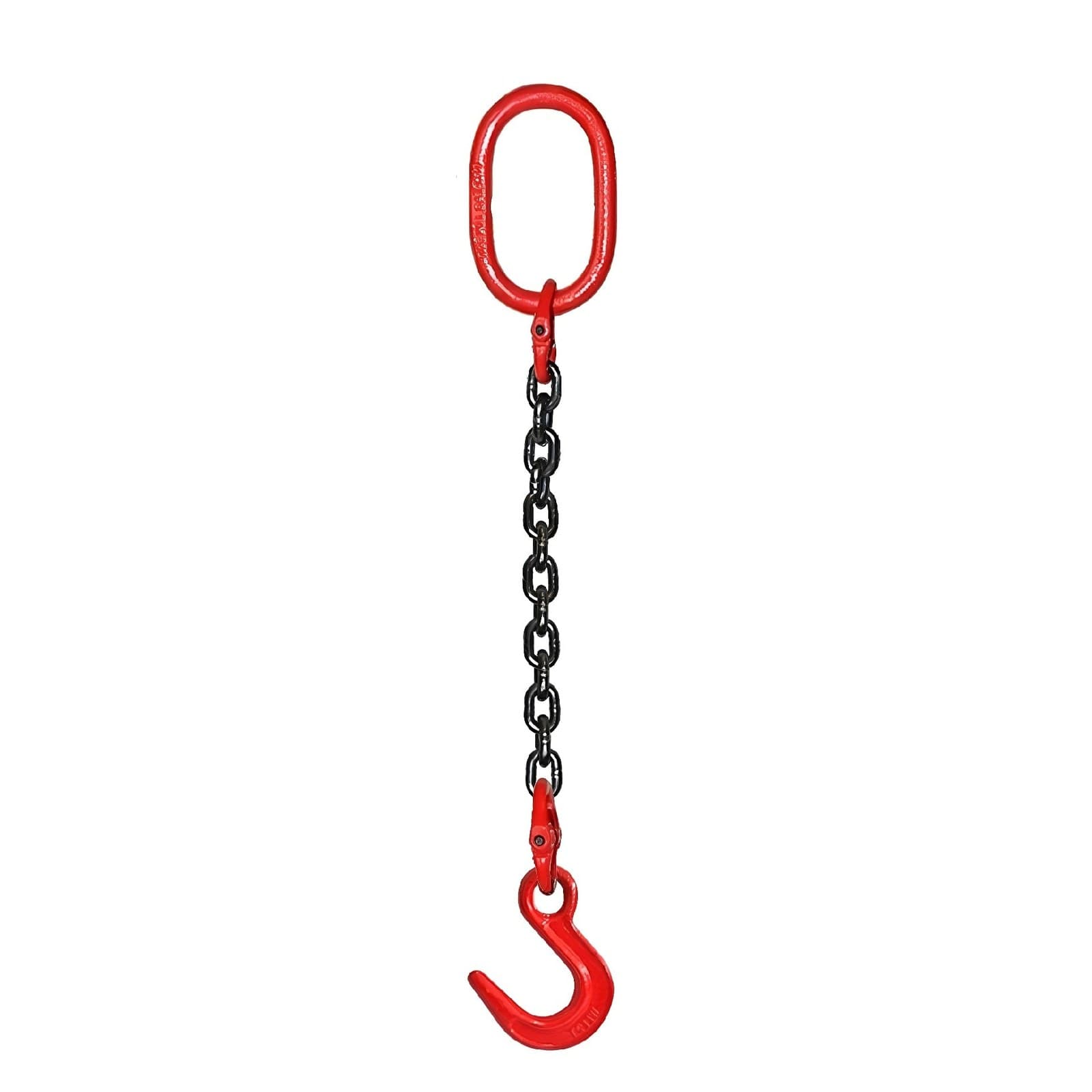
Grade 80 Single-Leg Chain Sling, Master Link and Foundry Hook — Type SOF
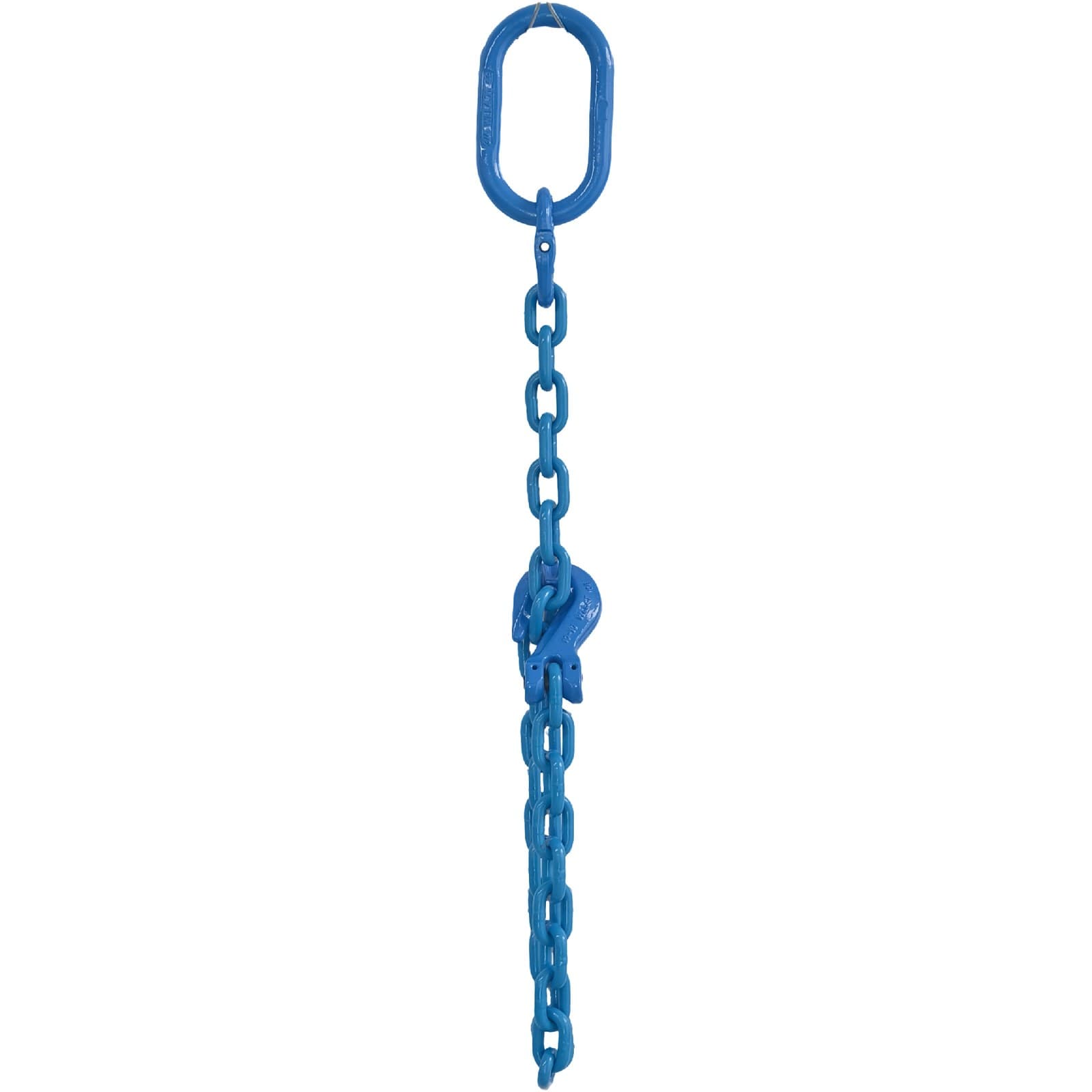
Grade 80 Single-Leg Chain Sling, Master Link and Grab Hook — Type SOG
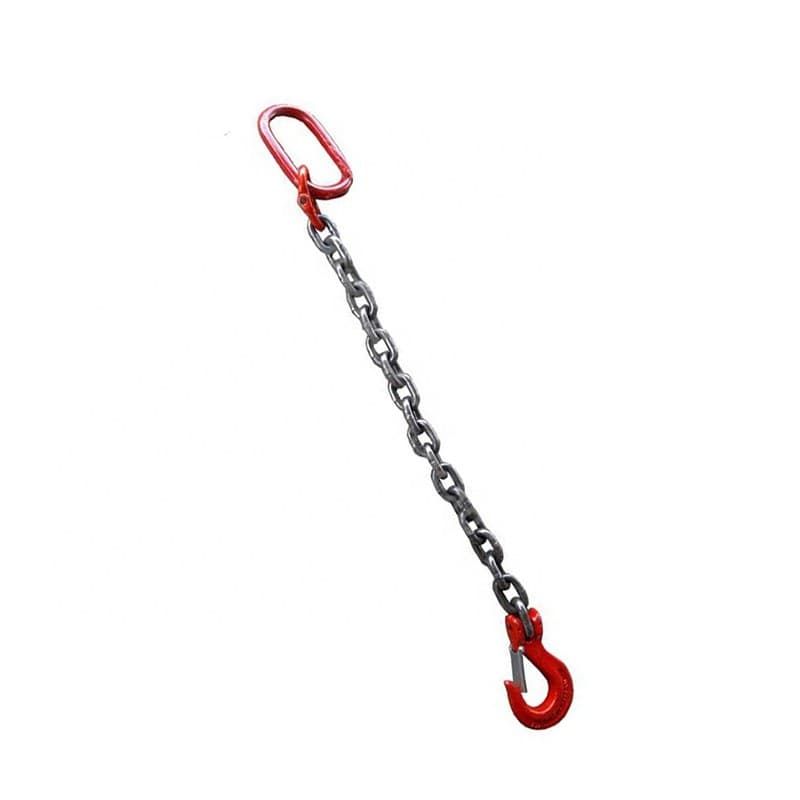
Grade 80 Single-Leg Chain Sling, Master Link and Sling Hook — Type SOS
Questions we get asked
About this range
- 01How do I read the make-up code?
- From the top down. The first letter is the number of legs: S single, D double, T triple, Q quad. The next is the top fitting, usually O for an oblong master link. The last is the bottom fitting: S sling hook, G grab hook, F foundry hook, SL self-locking hook, O oblong link. A DOS sling is a double-leg sling with a master link and sling hooks.
- 02What is the difference between WLL, SWL and breaking load?
- WLL — working load limit — is the most the manufacturer rates a part to carry in service. SWL, safe working load, is the older term and is sometimes set lower for a particular installation. The minimum breaking load is what the part withstood in test, several times its WLL, and it is never a working figure.
- 03How often must a chain sling be examined in the UAE?
- It depends on the rule your site works to. Abu Dhabi's Code of Practice 34 calls for a thorough examination of lifting accessories every 6 months by an approved third party. Dubai Municipality's guideline calls for certification at least every 12 months by an EIAC-accredited body, and EIAC's own requirements set a 6-month interval for lifting accessories such as slings. Either way the sling is checked by the user before each use.
- 04Do the slings come with test certificates?
- Yes. Each sling is tagged with its serial number, chain size, grade, reach and WLL and ships with the manufacturer's test certificate. If your site needs more — third-party certification or witnessed proof testing — say so on the RFQ and we will confirm what we can arrange.
- 05Why is a four-leg chain sling rated the same as a three-leg sling?
- Because on an uneven or rigid load only three of the four legs can be relied on to share the weight. EN 818-4 therefore gives three- and four-leg Grade 8 slings the same factor of 2.1 times a single leg for leg angles up to 45° from vertical. If the load's centre of gravity is off-centre or the legs are different lengths, two legs may carry almost all of it; then rate the sling as two-leg or worse.
- 06How is the reach of a chain sling measured?
- Reach is measured from the bearing point inside the master link to the bearing point of the bottom fitting, with the sling hanging straight. It is the effective working length, not the length of chain alone, and on a multi-leg sling every leg is made to the same reach unless you ask otherwise. When ordering, give the reach and check that the leg angle it produces on your load stays within the range the table rates.
From the blog
Written about this range
Lifting & rigging
Grade 80 vs Grade 100 chain slings: capacity, weight, heat and mixing components
Grade 100 chain carries about a quarter more than Grade 80 at the same size and weighs the same per metre — so for the same load it is a size smaller and much lighter. But Grade 80 tolerates more heat, and a sling with one Grade 80 part is a Grade 80 sling. How to choose between them, with our tables side by side.
3 min read
Lifting & rigging
Precast panel and beam rigging: slings, clutches and multi-leg rules above the anchor
A precast element is lifted on anchors cast into it, but the anchors are only half the system. The clutches, chain slings, master link and spreader above them decide whether the load is shared as designed. How to rig precast panels and beams, why a four-leg sling rarely shares a rigid load evenly, and what regulators’ codes say about anchors, clutches and rigging diagrams.
4 min read
Rigging capacity charts
Chain sling capacity chart: Grade 80 and Grade 100 WLL by legs and angle
Working load limits for Grade 80 chain slings from 4 mm to 50 mm and Grade 100 from 6 mm to 26 mm, for one, two, three and four legs at both angle bands — with the factors behind them, the choke and temperature reductions, and a worked sizing example.
8 min read