
Fixed & Custom Spreader Beams — EN 13155
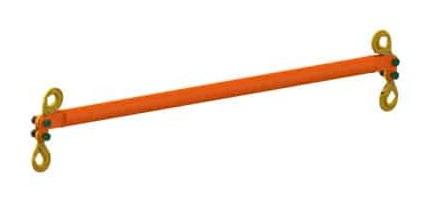
Welded fixed-length spreader beams for repeat lifts, direct-to-hook spreaders and heavy spreaders for monopiles, vessels and long structures, designed around one load and certified to EN 13155.
Key features
- Product type: Fixed spreader beam (made to order)
- Pattern / standard: EN 13155; ASME B30.20 / BTH-1 or DNV offshore design on request
- Size range: Built to the load
- Working load limit: To order
- Material
- Structural steel, grade to the design
Product description
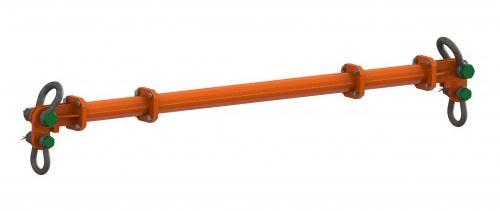
A fixed spreader beam is welded to one span. It is the right choice when the same load is lifted again and again, when the span or capacity falls outside the modular range, or when the beam must carry special end fittings, tag-line points or its own lifting lugs. Without bolted joints it is quick to inspect and cannot be assembled wrongly.
A direct-to-hook spreader puts the hook straight onto the beam, saving the top slings and the headroom they take. Heavy spreaders for monopiles, pressure vessels and long fabrications are designed with the load's own trunnions or padeyes in mind.
Typical builds
- Fixed-length spreader beams for repeat production lifts
- Direct-to-hook fixed spreaders
- Monopile and long-structure spreader beams
- Spreader beams with custom end links, spacers or extensions
What we need to quote
Send us the load weight and where its centre of gravity sits, the load's length and width, the positions of its lifting points, the crane hook height and any headroom limit, and the environment the equipment will work in (indoor, outdoor, offshore, hazardous area). A drawing, a 3D model or a photo of the load is the quickest way to start.
How it is made and certified
Engineered below-the-hook equipment is built to order. Your enquiry is reviewed by the maker's design engineers, who issue a general arrangement drawing for your approval before anything is made. Each item is designed to EN 13155, load tested before dispatch and supplied with a declaration of conformity, a test certificate and user instructions. Design calculations, material certificates, NDT records and third-party witnessed testing can be added to the order, and offshore designs to DNV standards are available on request. We confirm the lead time with the quotation.
In service
In service, the equipment gets a pre-use check before every lift and a thorough examination by an approved third party at the interval the site's authority sets: in Abu Dhabi, Code of Practice 34 sets six months for lifting accessories and twelve for lifting equipment, and in Dubai the examination is made by an EIAC-accredited inspection body. Its rated load, identification and test date are marked on it, and the user instructions state how it may and may not be rigged. Our guide to lifting equipment inspection in the UAE sets out the rules emirate by emirate.
Identification
| Parameter | Value |
|---|---|
| Product type | Fixed spreader beam (made to order) |
| Pattern / standard | EN 13155; ASME B30.20 / BTH-1 or DNV offshore design on request |
Performance
| Parameter | Value |
|---|---|
| Working load limit | To order |
Dimensions
| Parameter | Value |
|---|---|
| Size range | Built to the load |
Construction
| Parameter | Value |
|---|---|
| Material | Structural steel, grade to the design |
| Finish | Paint system to your specification; galvanized for outdoor use on request |
Compliance
| Parameter | Value |
|---|---|
| Certification | Load tested before dispatch; declaration of conformity |
Supply
| Parameter | Value |
|---|---|
| Supply | Made to order from an approved general arrangement drawing |
| Documentation | GA drawing for approval, declaration of conformity, test certificate, user instructions |
Shipping & lead time
What are fixed and custom spreader beams used for?▾
What do I need to send to quote the Fixed & Custom Spreader Beams?▾
Fixed or modular: which spreader beam do I need?▾
What sizes do the Fixed & Custom Spreader Beams come in?▾
What working load limit do the Fixed & Custom Spreader Beams have?▾
What are the Fixed & Custom Spreader Beams made of and how are they finished?▾
Which standard and documents come with the Fixed & Custom Spreader Beams?▾
How is the Fixed & Custom Spreader Beams rigged to the crane and load?▾
How is the Fixed & Custom Spreader Beams made and approved before supply?▾
How does the Fixed & Custom Spreader Beams compare with a modular spreader beam?▾
Can you ship the Fixed & Custom Spreader Beams outside the UAE?▾
What is the lead time on the Fixed & Custom Spreader Beams?▾
Shipped worldwide from our Dubai warehouse. Transit, routes and documentation for 136 destinations
From the blog
Written about this part
Lifting & rigging
Lifting bars for air handling units: why a pipe through the base is not lifting equipment
Many air handling units arrive with holes or fork pockets in the base frame and no lifting lugs. The bar pushed through those holes is a lifting accessory, with everything that implies: a design, a marked SWL, a certificate and periodic examination. What a proper bar set looks like, why one bar is not enough, and who has to provide it.
7 min read
Lifting & rigging
Bolted flange vs end cap spreader beams: two modular systems, and why rules decide between them
Modular spreader beams come in two families. Bolted-flange systems join end units and fixed-length struts with flange bolts; end-cap systems pin two end fittings into a length of pipe. How each is built, what each does well, and why the question of who supplies the pipe matters more than the engineering.
6 min read
Lifting & rigging
Spreader beam misuse: seven rigging errors that turn a spreader into a hazard
A spreader beam is designed for one load case: vertical drops at its ends, angled top slings, compression in between. Change the rigging and the forces change with it — the beam can end up doing nothing, being pulled apart, bent, or overloaded at one end. Seven common errors, why each matters, and how to spot them before the lift.
6 min read
Engineers viewing this also looked at
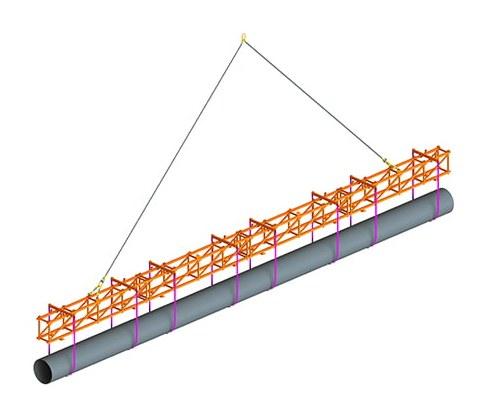
Lattice Spreader Beams — 3 t and 6 t, Loads to 44 m, 3 t WLL, EN 13155
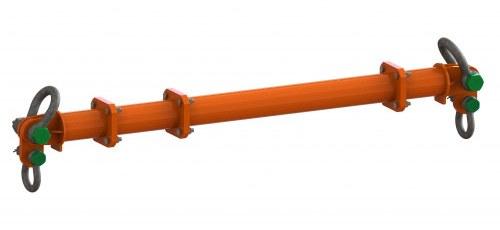
Modular Spreader Beam — 13 t, 0.5–6.5 m Span, up to 13 t WLL, EN 13155
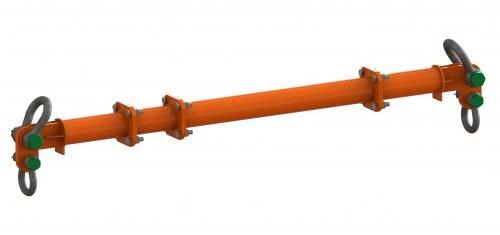
Modular Spreader Beam — 24 t, 1–8 m Span, up to 24 t WLL, EN 13155
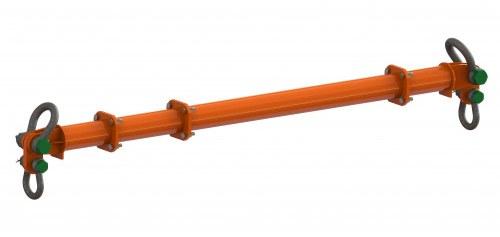
Modular Spreader Beam — 34 t, 1–10 m Span, up to 34 t WLL, EN 13155
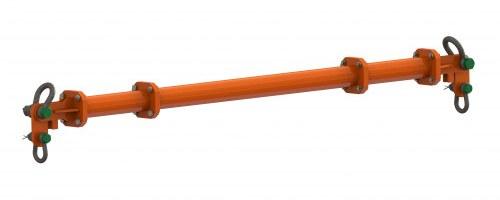
Modular Spreader Beam — 4 t, 0.5–4.5 m Span, up to 4 t WLL, EN 13155
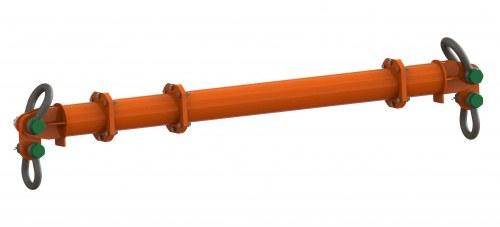
Modular Spreader Beam — 50 t, 1–13 m Span, up to 50 t WLL, EN 13155
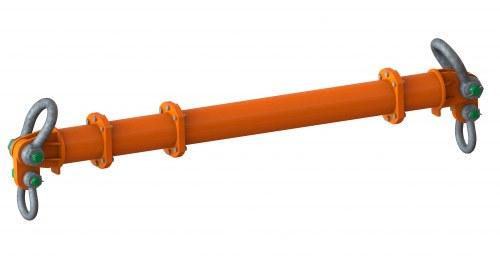
Modular Spreader Beam — 70 t, 1–14 m Span, up to 70 t WLL, EN 13155
Modular Spreader Beam — 8 t, 0.5–4.5 m Span, up to 8 t WLL, EN 13155