
Japanese Type Wire Rope Cable Grip — 1–3 t WLL
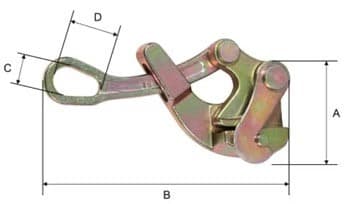
Japanese Type Wire Rope Cable Grip, in 3 sizes, WLL 1 to 3 t. Indus part numbers, manufacturer's test certificate.
Key features
- Product type: Japanese Type Wire Rope Cable Grip
- Working load limit: 1 to 3 t
- Working load limit
- 1 to 3 t
- Material
- Forged steel
- Finish
- Yellow zinc
Product description
Wire rope clips form an eye or join two ropes without a swaging press. Forged steel, yellow zinc.
Sizes and ratings
3 sizes. Working load limit 1 to 3 t. Every size has its own Indus part number in the table below, with the loads in the unit the manufacturer rates them in.
Manufacturer's data
- Forged / stamped.
Choosing a size
Drop-forged clips are the ones used on lifting terminations; malleable clips are for guy lines and non-lifting duty. Fit the saddle on the live end, use the number of clips the maker specifies for the rope size, and re-torque after the first load.
Ordering
Quote the Indus part number from the size table, or send the size and rating you need. Each consignment ships with the manufacturer's test certificate; say on the RFQ if your site needs anything more.
Identification
| Parameter | Value |
|---|---|
| Product type | Japanese Type Wire Rope Cable Grip |
| Sizes | 3 |
Performance
| Parameter | Value |
|---|---|
| Working load limit | 1 to 3 t |
Construction
| Parameter | Value |
|---|---|
| Material | Forged steel |
| Finish | Yellow zinc |
Compliance
| Parameter | Value |
|---|---|
| Certification | Manufacturer's test certificate |
Shipping & lead time
Sizes & part numbers
3 sizes- Indus part no.IH-LR-WC-JWRCG-71MM
- Size
- 71 mm (189 mm)
- Rope size
- 2.5-16 mm
- WLL (t)
- 1
- Weight (kg)
- 0.75
- Indus part no.IH-LR-WC-JWRCG-91MM
- Size
- 91 mm (248 mm)
- Rope size
- 4-22 mm
- WLL (t)
- 2
- Weight (kg)
- 1.4
- Indus part no.IH-LR-WC-JWRCG-129MM
- Size
- 129 mm (296 mm)
- Rope size
- 16-32 mm
- WLL (t)
- 3
- Weight (kg)
- 2.5
Size — Nominal size as the manufacturer states it. Rope size — Rope diameter the sheave is made for. WLL — Working load limit — the most the part may carry in service, as the manufacturer rates it. Weight — Weight as the manufacturer publishes it. Ask us for the dimension drawing if you need it stamped.
WLL is the most the part may carry in service. Proof and breaking loads are test figures — never lift to them. Each load is shown in the unit the manufacturer rates the part in, and a size ships with the manufacturer’s test certificate.
What is the Japanese Type Wire Rope Cable Grip used for?▾
How do I read Japanese Type Wire Rope Cable Grip part numbers such as IH-LR-WC-JWRCG-71MM?▾
What size range does the Japanese Type Wire Rope Cable Grip cover?▾
How do I choose the right size of Japanese Type Wire Rope Cable Grip?▾
What is the rated capacity of the Japanese Type Wire Rope Cable Grip?▾
What is the Japanese Type Wire Rope Cable Grip made from and how is it finished?▾
What standard and certificate apply to the Japanese Type Wire Rope Cable Grip?▾
What do I use with the Japanese Type Wire Rope Cable Grip?▾
How should the Japanese Type Wire Rope Cable Grip be fitted and inspected?▾
How does the Japanese Type Wire Rope Cable Grip compare with the American Wire Rope Cable Grip?▾
Can you export the Japanese Type Wire Rope Cable Grip from Dubai?▾
Do you hold the Japanese Type Wire Rope Cable Grip for delivery from Dubai?▾
Shipped worldwide from our Dubai warehouse. Transit, routes and documentation for 136 destinations
From the blog
Written about this range
Lifting & rigging
How to install wire rope clips: which way round, how many, and how tight
A wire rope clip termination is only as good as its installation: the saddle on the live end, the right number of clips, the right length of turnback and the right torque, re-checked after the first load. Here are the published tables for US-type and DIN 1142 clips, and the one job clips must never do.
9 min read
Lifting & rigging
Wire rope construction explained: 6x19 vs 6x36 vs 6x37, and IWRC vs fibre core
A wire rope designation such as 6x36WS-IWRC 1770 B sZ tells you almost everything about how the rope will behave. The surprise is how little the construction changes its strength: at 12 mm, the common six-strand ropes break within about 12% of each other. What changes is flexibility, abrasion resistance and crush resistance.
8 min read
Engineers viewing this also looked at
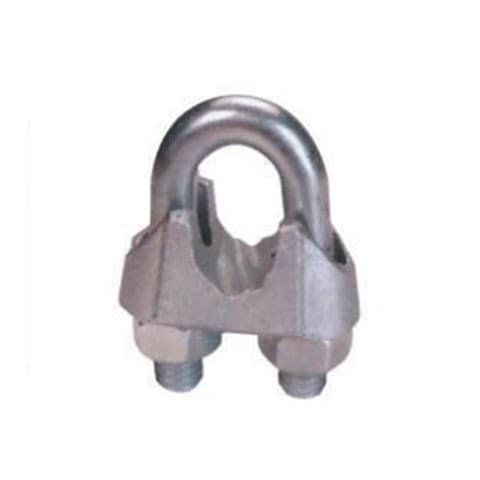
Malleable Wire Rope Clip — US Type, Zinc Plated, 1/16–1-1/8″
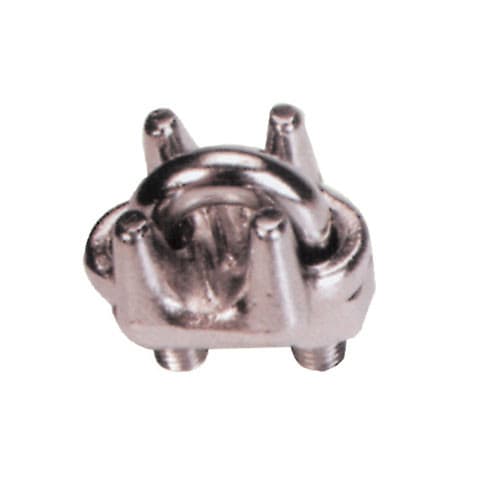
Stainless Steel Drop Forged Wire Rope Clip — US Type, 1/8–1″

Stainless Steel Duplex Wire Rope Clip
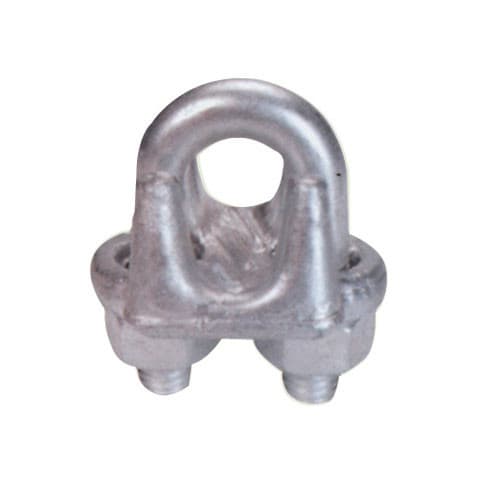
Stainless Steel Malleable Wire Rope Clip — US Type, 1/8–1″
Stainless Steel Simplex Wire Rope Clip — M4–M8

Stainless Steel Wire Rope Clip — DIN 1142 / EN 13411-5

Stainless Steel Wire Rope Clip — DIN 741, 3–40 mm
Stainless Steel Wire Rope Clip — JIS Type