
Senior Flexonics Cryogenic LNG Marine Transfer Hose
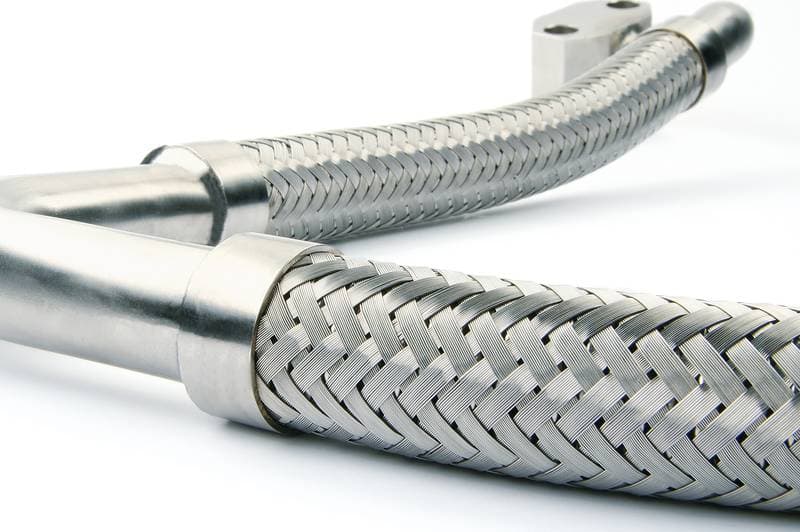
Senior Flexonics stainless metal hose assembly for LNG transfer. Insulation, end connections, pressure rating and class approval confirmed per build.
Key features
- Hose Family: Cryogenic Assembly
- Core Material: Type 316L SS
- Hose Family
- Cryogenic Assembly
- Construction Type
- Annular Corrugated
- Braid Configuration
- Double Braid
- Core Material
- Type 316L SS
Product description
A Senior Flexonics corrugated stainless hose assembly for LNG transfer, built to the bore, length, connections and approvals of the installation.
What to know
- Braided corrugated stainless steel hose for cryogenic liquid transfer.
- Insulation is either a foam cover over the braid or a vacuum jacket; vacuum-jacketed hose is a different, heavier build — say which the duty needs.
- End connections are matched to the gas so hoses cannot be cross-connected (CGA V-6 for nitrogen, oxygen and argon in North American practice).
- Working pressure, temperature range and bend radius depend on the bore and build and are confirmed per assembly.
- LNG bunkering hose is normally specified with a classification-society approval — state which one the vessel or terminal requires.
Applications
- LNG bunkering and tanker transfer
- Terminal and plant LNG lines
How to order
Send the fluid, its pressure and temperature, the bore, overall length, both end connections and any standard or certificate the project needs. We confirm the build and its ratings with the maker before quoting, and supply the test certificate with the assembly.
Identification
| Parameter | Value |
|---|---|
| Hose Family | Cryogenic Assembly |
| Construction Type | Annular Corrugated |
Construction
| Parameter | Value |
|---|---|
| Braid Configuration | Double Braid |
| Core Material | Type 316L SS |
| Braid Material | Type 316L SS |
Shipping & lead time
What is the Senior Flexonics Cryogenic LNG Marine Transfer Hose used for?▾
What sizes does the Senior Flexonics Cryogenic LNG Marine Transfer Hose come in?▾
can the Senior Flexonics Cryogenic LNG Marine Transfer Hose be supplied as part of a complete skid / cart?▾
Senior Flexonics Cryogenic LNG Marine Transfer Hose: how is the cryogenic insulation maintained?▾
What should I know before ordering the Senior Flexonics Cryogenic LNG Marine Transfer Hose?▾
what standards / certifications does the Senior Flexonics Cryogenic LNG Marine Transfer Hose meet?▾
What do I send to order the Senior Flexonics Cryogenic LNG Marine Transfer Hose?▾
Senior Flexonics Cryogenic LNG Marine Transfer Hose: what end fittings are used?▾
Senior Flexonics Cryogenic LNG Marine Transfer Hose: what is the operating temperature range?▾
Where is the Senior Flexonics Cryogenic LNG Marine Transfer Hose typically used?▾
Senior Flexonics Cryogenic LNG Marine Transfer Hose: what is the typical service life and maintenance schedule?▾
Is the Senior Flexonics Cryogenic LNG Marine Transfer Hose in stock in Dubai?▾
Shipped worldwide from our Dubai warehouse. Transit, routes and documentation for 136 destinations
From the blog
Written about this range
Industrial hose
Cryogenic, chlorine, steam-jacketed and heated metal hose: specialty assemblies explained
Some liquids cannot go through an ordinary hose: liquid nitrogen and oxygen at −196 and −183 °C, chlorine that attacks most metals, asphalt and sulphur that set solid if they cool. Specialty corrugated metal hose handles each — with CGA V-6 cryogenic ends and foam or vacuum insulation, all-Monel or Hastelloy construction to Chlorine Institute rules, a steam jacket or an electric heating cable. What each type is, the ratings makers publish, and what “CGA96” on a hose does and does not mean.
4 min read
Industrial hose
Cryogenic transfer hose: LIN, LOX, argon, CO₂ and LNG
At −196 °C rubber is glass, so cryogenic transfer hose is stainless metal hose — cleaned, braided and certified for the gas. The temperatures on our listings, the oxygen-cleaning rule, and the couplings that go with it.
3 min read
Industrial hose
Exotic alloy metal hose: Monel, Inconel, Hastelloy and bronze, and when stainless is not enough
When the medium attacks stainless — chlorine, hot chlorides, strong acids — or the temperature passes 650 °C, the core changes alloy. What each one is for, the limits on our listings, and the braid question.
4 min read
Engineers viewing this also looked at
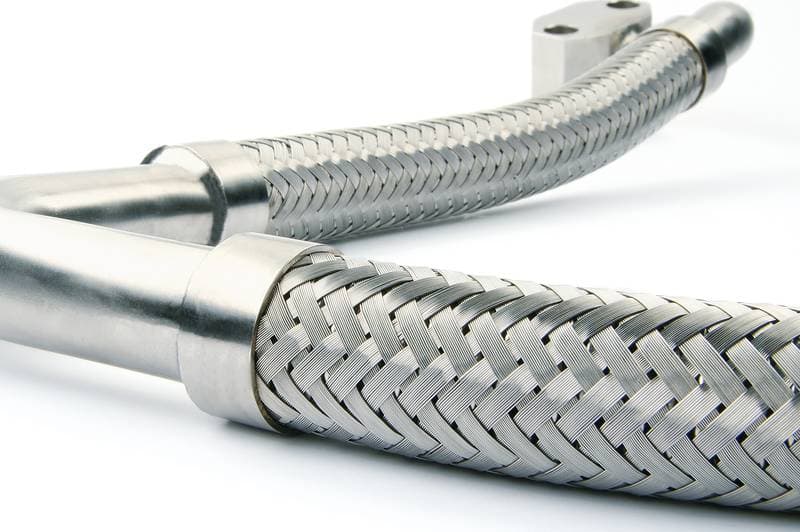
Senior Flexonics Steam-Jacketed Chemical Process Hose
Senior Flexonics
Thorburn CGA96 Industrial Oxygen Service Hose
Thorburn Flex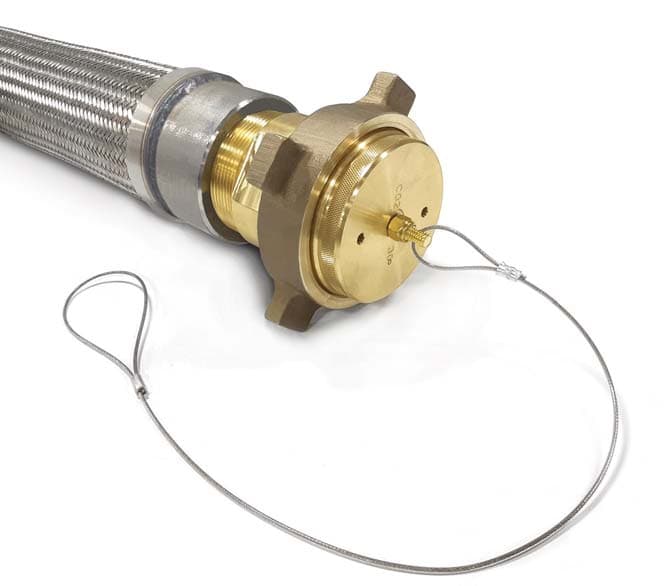
Thorburn Cryogenic CO₂ Connector — Dewar Transfer
Thorburn Flex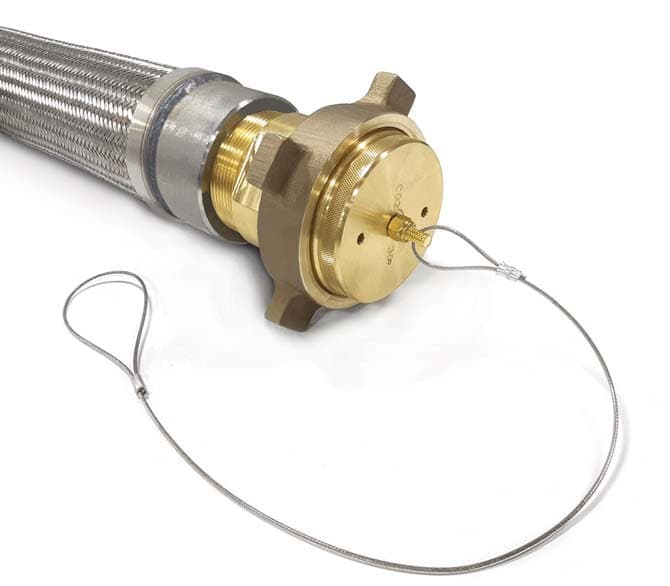
Thorburn Cryogenic CO₂ Connector — Process Plant
Thorburn Flex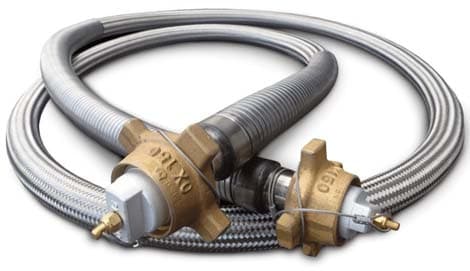
Thorburn Cryogenic Liquid Nitrogen (LIN) Transfer Hose
Thorburn Flex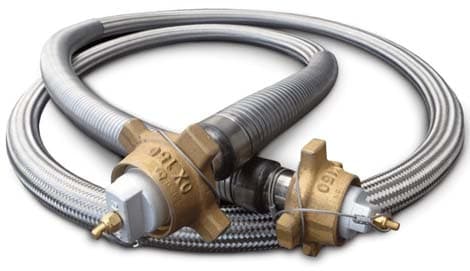
Thorburn Cryogenic LNG Unloading Hose
Thorburn Flex
Thorburn Cryogenic Liquid Oxygen (LOX) Transfer Hose
Thorburn Flex
Thorburn M96ZC Monel Chlorine Transfer Hose — Rail-Loading
Thorburn Flex