
Finned Tubes for Air-Cooled Exchangers
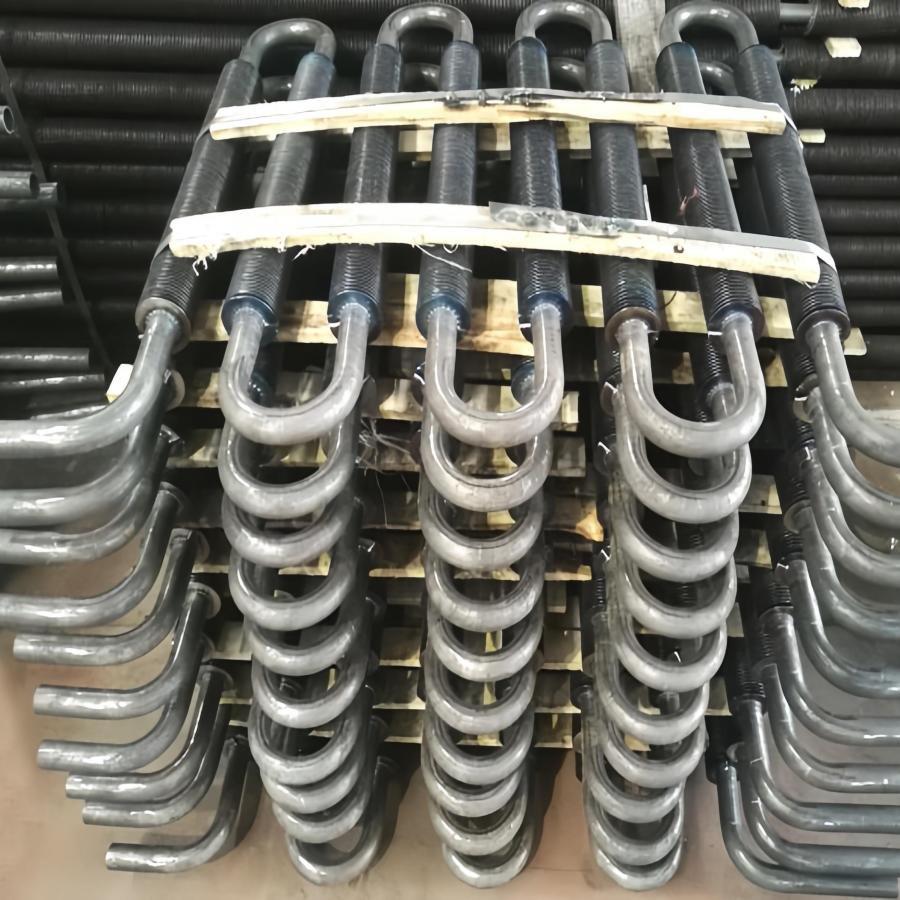
Round finned tubes for air-cooled exchangers and process coolers, in every common fin type, where the fin type is still to be chosen. Made to API 661 / ISO 13706. Supplied from Dubai with an Indus part number for each size and mill test certificates on request.
Key features
- Product type: Finned Tubes for Air-Cooled Exchangers
- Standards: API 661 / ISO 13706
- Base tube material: CS; stainless; admiralty; exotic alloys
- Fin material: Aluminium (almost always); steel for very high temperature
- Outside diameter: 15.9–152.4 (5/8–6 in); 25.4 (1 in) most common
- Fin geometry: height 7.9–25.4 (5/16–1 in); thickness 0.25–0.89 (0.010–0.035 in); density 7–11 FPI
- Product type
- Finned Tubes for Air-Cooled Exchangers
- Base tube material
- CS; stainless; admiralty; exotic alloys
- Fin material
- Aluminium (almost always); steel for very high temperature
Product description
Round finned tubes for air-cooled exchangers and process coolers, in every common fin type, where the fin type is still to be chosen. The range figures here cover the usual air-cooler geometry; the fin type pages set out the differences.
Specification
- Tube OD range (mm): 15.9–152.4 (5/8–6 in); 25.4 (1 in) most common
- Fin height (mm): 7.9–25.4 (5/16–1 in)
- Fin thickness (mm): 0.25–0.89 (0.010–0.035 in)
- Fin density: 7–11 FPI
- Tube length (m): 1.8–18.3 (6–60 ft)
- Extended / prime surface ratio: 7:1 to 25:1
- Bundle layout: 2–10 rows typical (up to 30), triangular pitch 2–2.5 tube diameters, ~50% net free area
Standards
API 661 / ISO 13706. Equivalent grades across ASTM, EN, DIN, JIS and GB/T standards are indicative; we check them against each tender.
Materials
- Tube: CS; stainless; admiralty; exotic alloys
- Fins: Aluminium (almost always); steel for very high temperature
Testing and documents
- Mill test certificate to EN 10204 3.1 on request; third-party inspection can be arranged against your inspection and test plan
Sizes
1 size, each under its own Indus part number in the size table. The table gives the range as limits; any size inside it is made to order.
Ordering
Quote the Indus part number from the size table, or send the standard and grade, the outside diameter and wall (BWG or millimetres, minimum or average wall), the length and the quantity, with the fin type, material, height, thickness and fins per inch, and the bare length at each end. We quote with the mill certificates and the inspection you need.
Identification
| Parameter | Value |
|---|---|
| Product type | Finned Tubes for Air-Cooled Exchangers |
Compliance
| Parameter | Value |
|---|---|
| Standards | API 661 / ISO 13706 |
Construction
| Parameter | Value |
|---|---|
| Base tube material | CS; stainless; admiralty; exotic alloys |
| Fin material | Aluminium (almost always); steel for very high temperature |
Dimensions
| Parameter | Value |
|---|---|
| Outside diameter | 15.9–152.4 (5/8–6 in); 25.4 (1 in) most common |
| Fin geometry | height 7.9–25.4 (5/16–1 in); thickness 0.25–0.89 (0.010–0.035 in); density 7–11 FPI |
| Length | 1.8–18.3 m maximum single length |
| Size table | Size range — discrete sizes on request |
Quality
| Parameter | Value |
|---|---|
| Certification | Mill test certificate to EN 10204 3.1 on request; third-party inspection by arrangement |
Shipping & lead time
Sizes & part numbers
1 size- Indus part no.IH-TF-FT-FIN-R1
- O.D. (mm)
- 15.9–152.4
- O.D. (in)
- 5/8–6
- Wall (mm)
- per spec
- Fin height (mm)
- 7.9–25.4
- Fin thickness (mm)
- 0.25–0.89
- Fins per inch
- 7–11
- Max. length (m)
- 18.3
O.D. (mm) — Outside diameter of the tube or pipe in millimetres. O.D. (in) — The same outside diameter in inches, as the trade orders it. Wall (mm) — Wall thickness in millimetres: minimum or average wall per the governing standard and the order. Fin height (mm) — Height of the fin above the tube surface in millimetres. Fin thickness (mm) — Fin strip or plate thickness in millimetres. Fins per inch — Fin density in fins per inch; a band means any density in it can be made. Max. length (m) — Longest single length usually made, in metres; longer on request.
These are typical sizes for the range, not a full mill list. Other diameters, walls, fin geometries and lengths are made to order: tell us the standard and grade, the O.D. and wall, and the length you need. Mill test certificates to EN 10204 3.1 are available on request.
What are finned tubes for air-cooled exchangers and what standard covers them?▾
What tube outside diameters and lengths are available for air-cooler finned tubes?▾
What fin heights, thicknesses and densities do air-cooler finned tubes have?▾
How is the part number IH-TF-FT-FIN-R1 for finned tubes organised?▾
What tube and fin materials are used for air-cooler finned tubes?▾
How many tube rows and what pitch does an air-cooler bundle with finned tubes use?▾
Which standard covers finned tubes for air-cooled exchangers?▾
What certificate comes with finned tubes for air-cooled exchangers?▾
Which fin type should I choose for air-cooled exchanger finned tubes?▾
How are air-cooler finned tubes kept clean in service?▾
Do you supply air-cooler finned tubes from Dubai?▾
What should I send to get a quotation for finned tubes?▾
Shipped worldwide from our Dubai warehouse. Transit, routes and documentation for 136 destinations
From the blog
Written about this part
Heat-transfer tubes
Finned and seamless heat-transfer tube: a buyer’s guide
How to specify tube for air coolers, shell-and-tube exchangers, condensers, boilers and fired heaters: the standard and grade, OD and wall, length, fin type and bend schedule — and what to send with an enquiry so the quotation matches the data sheet.
6 min read
Heat-transfer tubes
Replacing an air-cooler bundle: what goes on the data sheet
A replacement air-cooler bundle has to drop into an existing bay and do the same duty — or a better one. The data an enquiry needs, the choices worth revisiting while the old bundle is out, and how bundles are built and tested to API 661.
3 min read
Heat-transfer tubes
Extruded fin tube for coastal and offshore air coolers
Extruded aluminium fins cover the liner tube completely, which is why they are the usual choice for air coolers near the sea, offshore and in LNG and gas plants. How extruded tube is made, its limits, liner choices and sizes.
3 min read