
Continental Water Suction/Discharge Hose
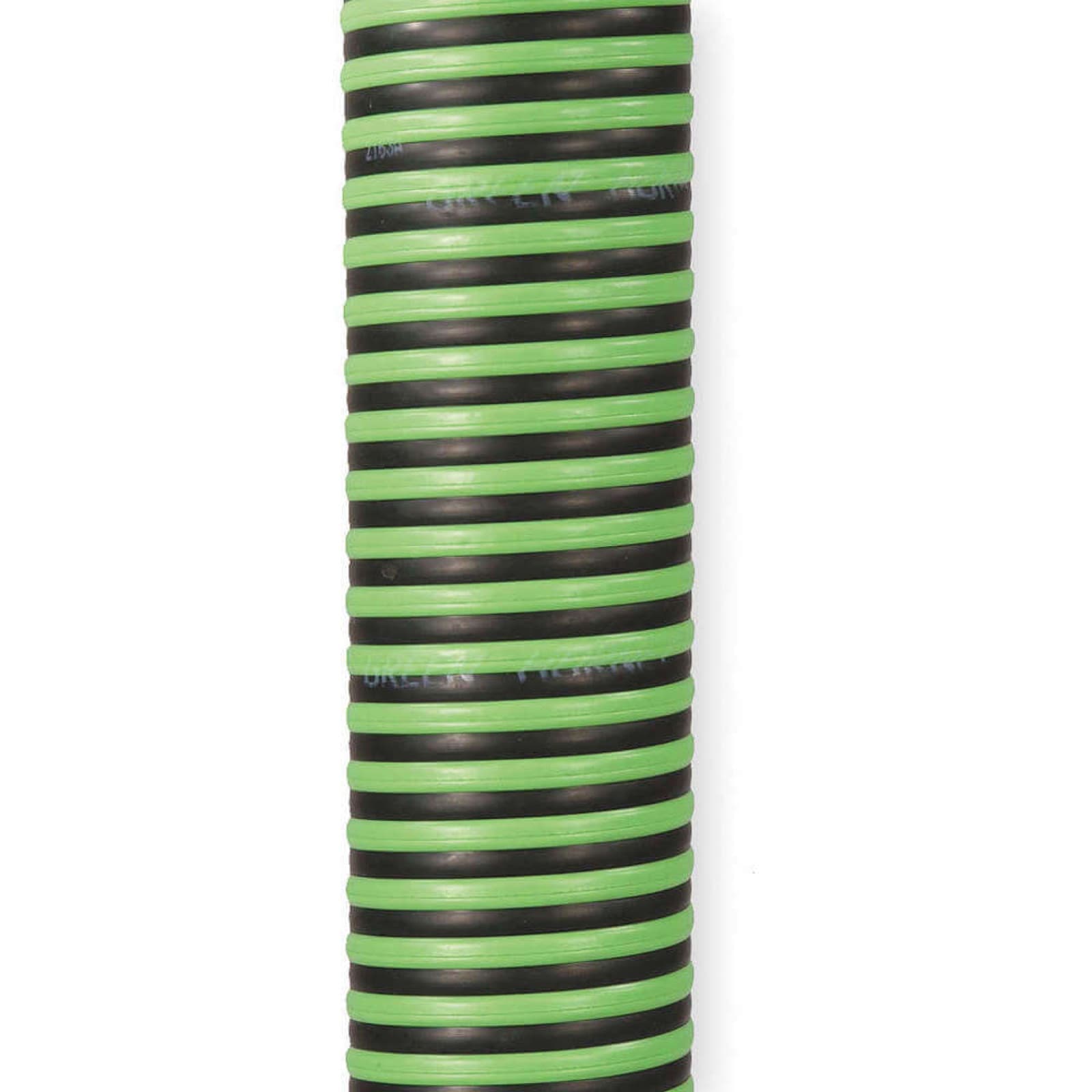
Continental Water Suction/Discharge Hose, 1 1/4" to 4": 46 part numbers.
Product description
Continental Water Suction/Discharge Hose, 1 1/4" to 4": 46 part numbers.
Specification
- Type: Water Suction/Discharge Hose
- Size range: 1 1/4" to 4"
- Part numbers: 46
Sizes and part numbers
The Sizes & Part Numbers tab lists every Continental part number in this range with its ratings. Ratings vary by size — check the row for the part you order.
Choosing the hose
Select hose on working pressure, bore, temperature and fluid. The working pressure in the size table is the maximum for continuous duty; burst pressure is a test figure, not a working limit. End fittings must be from the series the hose maker approves for that hose.
How to order
Quote the Continental part number. Price and lead time are confirmed with the quotation.
Specifications
| Parameter | Value |
|---|---|
| Bend Radius | 5" |
| Color | Black, Green |
| Max. Temp. | 180°F |
| Tube Material | Thermoplastic Rubber |
| Vacuum | 29 in. hg |
Shipping & lead time
Sizes & part numbers
46 sizes- Continental part no.20450351
- Description
- Suction Hose 3 Inch Id x 100 Feet 45 Psi Max
- Hose bore
- —
- Continental part no.GH300-50CE-G
- Description
- Suction Hose 3 Inch Id x 50 Feet 45 Psi Max
- Hose bore
- —
- Continental part no.4YLN9
- Description
- Suction/discharge Hose 3 Inch x 20 Feet
- Hose bore
- —
- Continental part no.SP150-20CN-G
- Description
- Suction Hose 1.5 Inch Idx20 Feet 89 Psi Max
- Hose bore
- -24 · 1 1/2"
- Continental part no.SP200-20CN-G
- Description
- Suction Hose 2 Inch Id x 20 Feet 79 Psi Max
- Hose bore
- -32 · 2"
- Continental part no.SP300-20CN-G
- Description
- Suction Hose 3 Inch Id x 20 Feet 65 Psi Max
- Hose bore
- -48 · 3"
- Continental part no.SP400-20CN-G
- Description
- Suction Hose 4 Inch Id x 20 Feet 55 Psi Max
- Hose bore
- -64 · 4"
- Continental part no.4YLN2
- Description
- Suction/discharge Hose 1 1/2 Inch x 20 Feet
- Hose bore
- -24 · 1 1/2"
Show all 46 sizesShow fewer sizes
Description — What this part number is, as the manufacturer lists it. Ask us for the dimension drawing if you need it stamped.
What is the Continental Water Suction/Discharge Hose and what is it used for?▾
How do I choose between the part numbers of the Continental Water Suction/Discharge Hose?▾
What sizes does the Continental Water Suction/Discharge Hose come in?▾
What working pressure does the Continental Water Suction/Discharge Hose have at each size?▾
What temperature range is the Continental Water Suction/Discharge Hose rated for?▾
What is the Continental Water Suction/Discharge Hose made of?▾
What safety factor and standard does the Continental Water Suction/Discharge Hose have?▾
What end fittings does the Continental Water Suction/Discharge Hose take?▾
What bend radius and installation care does the Continental Water Suction/Discharge Hose need?▾
Is the Continental Water Suction/Discharge Hose a suction hose, a discharge hose or both?▾
How does the Continental Water Suction/Discharge Hose compare with the Continental Discharge Hoses?▾
Is the Continental Water Suction/Discharge Hose in stock in Dubai, and can you ship it worldwide?▾
Shipped worldwide from our Dubai warehouse. Transit, routes and documentation for 136 destinations
From the blog
Written about this range
Industrial hose
Dewatering and water transfer hose: why suction is the whole specification
On a dewatering set the pump is rarely the problem. Suction hose that collapses, leaks air or sits above the water line accounts for most of the calls.
4 min read
Industrial hose
PVC or rubber suction hose: temperature, pressure and the Gulf summer
PVC suction hose is light, clear and cheap; rubber is heavier and tougher. The decision usually comes down to two numbers — the temperature the hose will see and the pressure at the largest bore.
5 min read
Industrial hose
Reading an industrial hose layline: pressure, vacuum, safety factor and standard
The print along an industrial hose carries its part code, working pressure, vacuum rating, safety factor and often its standard. How to read it, with real laylines from our range, and what to do when it is missing.
4 min read
Engineers viewing this also looked at

Gates Black Gold ABS Potable Water Hoses
Gates
Gates Water Master 150SD Hoses
Gates
Clear PVC Discharge Hose with Rigid Helix
Indus Hydraulics
Water Suction & Delivery Hose 10 Bar
Indus Hydraulics
Water Suction & Delivery Hose 16 Bar
Indus Hydraulics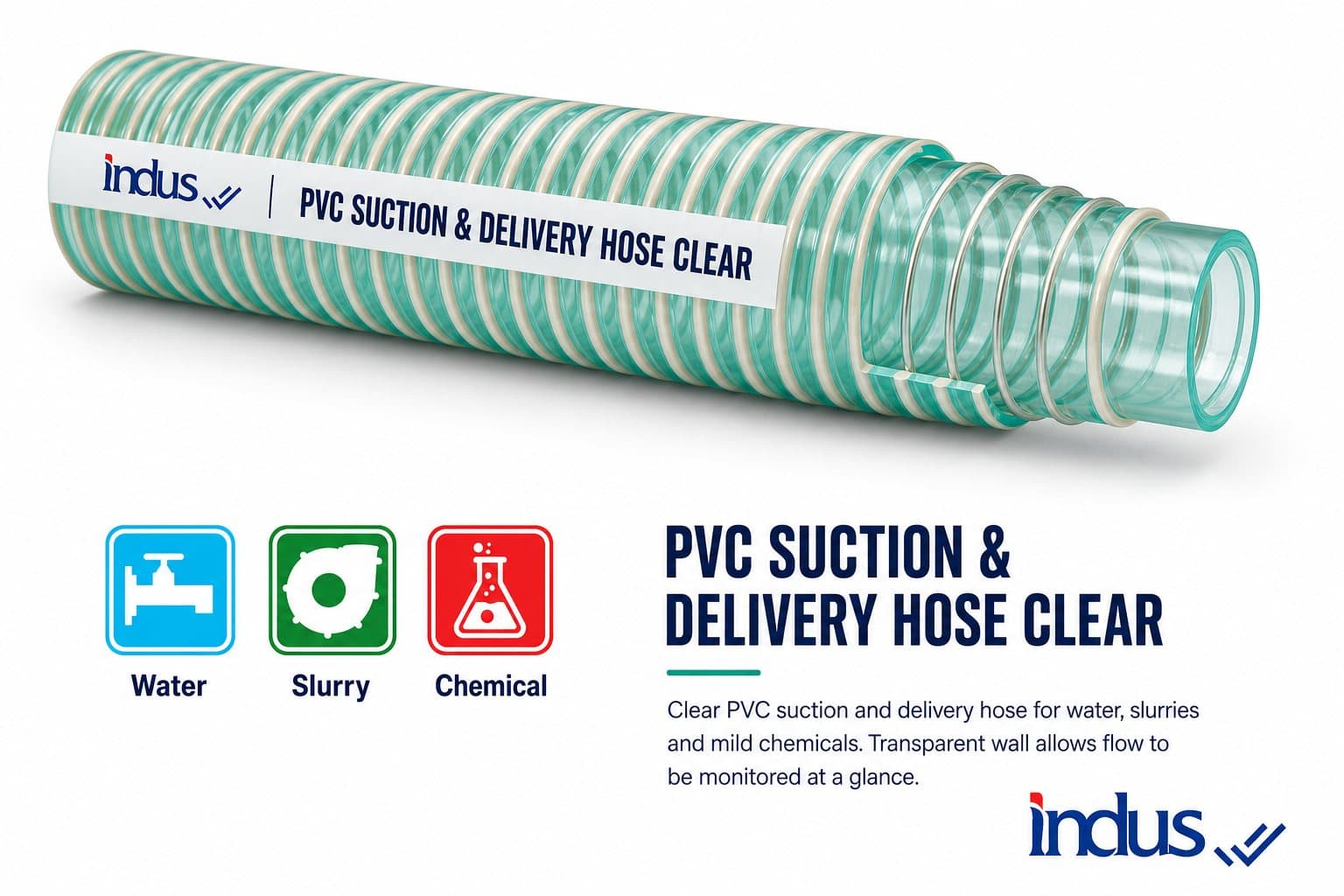
Clear PVC Suction & Delivery Hose
Indus Hydraulics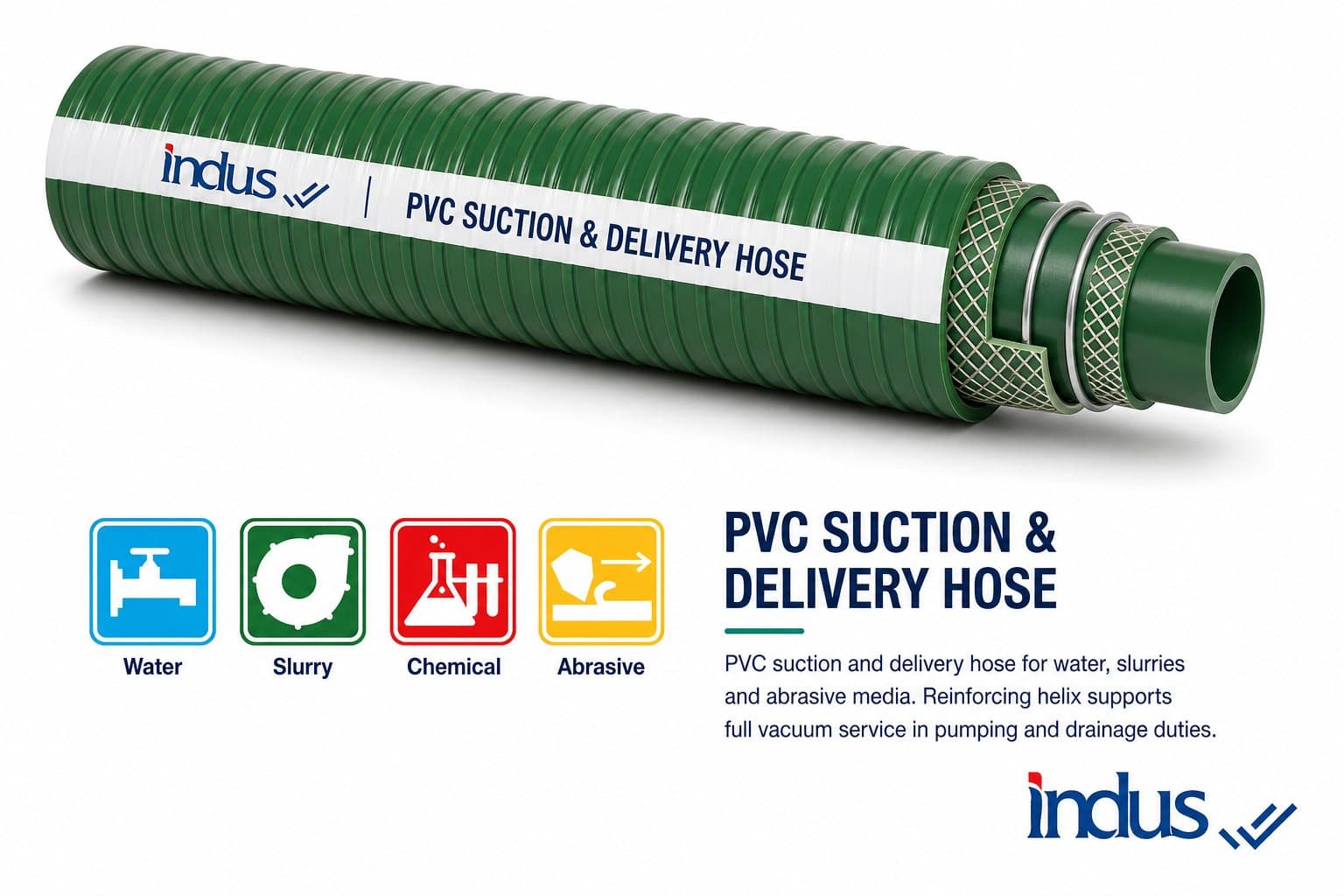
Medium-Duty PVC Suction & Delivery Hose
Indus Hydraulics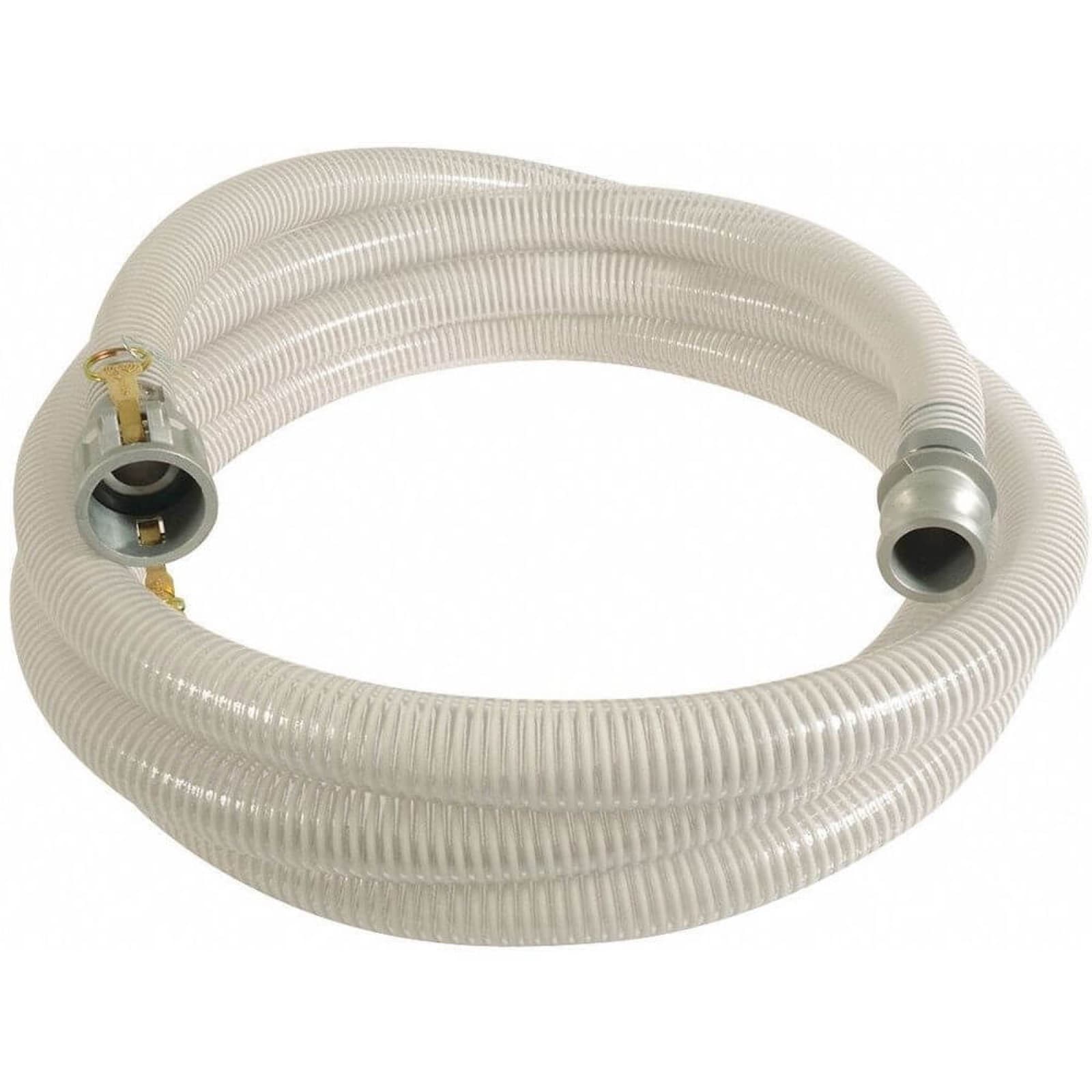
Kuriyama Water Suction Hoses
Kuriyama