
Adjustable Branch Tee, Male ORFS × Metric 24° × ORFS
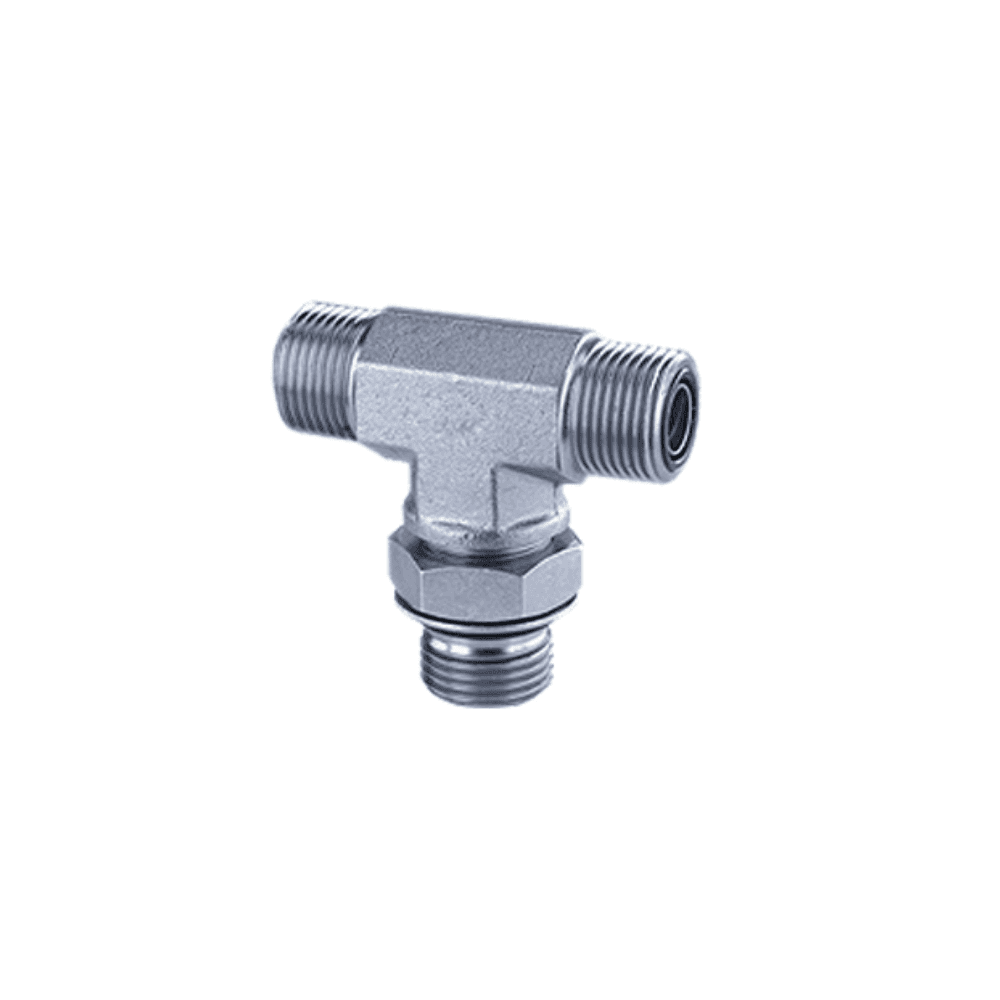
Adjustable Branch Tee, Male ORFS × Metric 24° × ORFS — ORFS family branch tee for hydraulic line interconnection. RFQ-only; standard Indus zinc-plated carbon-steel construction.
Key features
- Body Configuration: branch-tee
- Port A Thread: ORFS UN/UNF (9/16-18 to 1-7/16-12)
- Port A Sealing: orfs
- Nominal Size Range: -04 to -16
- Max Working Pressure: up to 415 bar (6000 psi)
- Body Configuration
- branch-tee
- Port A Thread
- ORFS UN/UNF (9/16-18 to 1-7/16-12)
- Port A Sealing
- orfs
- Nominal Size Range
- -04 to -16
- Max Working Pressure
- up to 415 bar (6000 psi)
Product description
The Adjustable Branch Tee m ORFS X m Metric X m ORFS is a Branch tee hydraulic adapter in the ORFS family. Adjustable Branch Tee m ORFS X m Metric X m ORFS — ORFS family branch tee for hydraulic line interconnection. RFQ-only; standard Indus zinc-plated carbon-steel construction.
Construction
- Body configuration: Branch tee (adjustable)
- Port A: Male — ORFS UN/UNF (9/16-18 to 1-7/16-12) (O-ring face seal (ORFS))
- Port B: Male — Metric M10×1 to M42×2 (24° cone) (24° cone (DIN bite-type))
- Additional ports: Third port: male ORFS — ORFS UN/UNF (9/16-18 to 1-7/16-12)
- Material: Carbon steel (stainless steel available on request)
- Surface treatment: Zinc-plated, Cr3+ passivated, RoHS-compliant
Performance
up to 415 bar (6000 psi). ORFS family — SAE J1453 / ISO 8434-3 — face O-ring seal on the male; flat face on the female. Leak-free under high vibration.
Applicable Standards
- SAE J1453
- ISO 8434-3
How to order
Specify (a) the host port size and thread spec on each end, (b) any special seal requirements (bonded seal vs ED seal vs cone seat), and (c) whether you need stainless-steel construction or non-standard surface treatment. Indus engineering will confirm the correct part number against your equipment.
Companion products
Pair with the appropriate Indus tubing or hose ends. For tube assemblies use Indus DIN 2353 cutting rings and end nuts. For hose assemblies pair with Indus crimp ferrules and the matching hose grade.
Identification
| Parameter | Value |
|---|---|
| Body Configuration | branch-tee |
| Adjustable | yes |
Port A
| Parameter | Value |
|---|---|
| Port A Thread | ORFS UN/UNF (9/16-18 to 1-7/16-12) |
| Port A Sealing | orfs |
| Port A Gender | male |
Port B
| Parameter | Value |
|---|---|
| Port B Thread | Metric M10×1 to M42×2 (24° cone) |
| Port B Sealing | 24-cone |
| Port B Gender | male |
Port C
| Parameter | Value |
|---|---|
| Additional Ports | Third port: male ORFS — ORFS UN/UNF (9/16-18 to 1-7/16-12) |
Dimensions
| Parameter | Value |
|---|---|
| Nominal Size Range | -04 to -16 |
Performance
| Parameter | Value |
|---|---|
| Max Working Pressure | up to 415 bar (6000 psi) |
Construction
| Parameter | Value |
|---|---|
| Material | Carbon steel (stainless on request) |
| Surface Treatment | Zinc-plated, Cr3+ passivated, RoHS-compliant |
Compliance
| Parameter | Value |
|---|---|
| Applicable Standards | SAE J1453, ISO 8434-3 |
Shipping & lead time
Sizes & part numbers
1 size- Indus part no.IH-ST-6169-10-10-22
- End 1
- 5/8" ORFS male (1-14)
- End 2
- 5/8" ORFS male (1-14)
- End 3
- M22×1.5 male metric, adjustable
End 1 — Thread or flange nominal size at this end, exactly as the manufacturer prints it. End 2 — Thread or flange nominal size at this end, exactly as the manufacturer prints it. End 3 — Thread or flange nominal size at this end, exactly as the manufacturer prints it. Ask us for the dimension drawing if you need it stamped.
Every size is available in 316 stainless steel on request — add “-SS” to the part number when you enquire.
What is the Adjustable Branch Tee m ORFS X m Metric X m ORFS used for?▾
How do I read part numbers such as IH-ST-6169-10-10-22 on the Adjustable Branch Tee m ORFS X m Metric X m ORFS?▾
What sizes does the Adjustable Branch Tee m ORFS X m Metric X m ORFS come in?▾
What working pressure does the Adjustable Branch Tee m ORFS X m Metric X m ORFS have?▾
What is the Adjustable Branch Tee m ORFS X m Metric X m ORFS made of?▾
Which standards does the Adjustable Branch Tee m ORFS X m Metric X m ORFS follow?▾
What does the Adjustable Branch Tee m ORFS X m Metric X m ORFS connect to?▾
How do I install the Adjustable Branch Tee m ORFS X m Metric X m ORFS so it seals?▾
Where is the Adjustable Branch Tee m ORFS X m Metric X m ORFS used?▾
How does the Adjustable Branch Tee m ORFS X m Metric X m ORFS differ from the Adjustable Branch Tee m ORFS X m SAE X m ORFS?▾
How is the Adjustable Branch Tee m ORFS X m Metric X m ORFS exported from Dubai and what documents come with it?▾
Do you stock the Adjustable Branch Tee m ORFS X m Metric X m ORFS in Dubai?▾
Shipped worldwide from our Dubai warehouse. Transit, routes and documentation for 136 destinations
The same part, in the designations used across European and Gulf trade catalogues.
- de
- T-Stück metrisch Außengewinde auf metrisch 24° Konus
- fr
- té métrique mâle sur métrique cône 24°
- es
- te métrica macho a métrica cono 24°
- it
- raccordo a T metrica maschio a metrica cono 24°
From the blog
Written about this range
Buying fittings & adapters
ORFS and ORB adapters: O-ring face seal and O-ring boss — ratings, torque, sleeves and O-rings
Most hydraulic leaks that come back after re-tightening are metal seats that never sealed. ORFS and ORB move the seal to an O-ring — and that makes the O-ring the part to stock. The steel ORFS and ORB range: unions, elbows, tees, bulkheads, swivels, adjustable elbows, braze and mechanical sleeves, plugs and O-ring kits, with Parker’s ratings (9,200 psi in the small sizes) and torque by dash size.
8 min read
Thread & fitting identification
Thread size and pitch, by family: the reference table for the bench
JIC 9/16"-18 and ORFS 9/16"-18 are the same thread. They will assemble, and one of them will leak. Every designation and pitch we stock, grouped by family, with the collisions marked.
6 min read
Thread & fitting identification
Fittings on American machines: the inch families, and what travels with them
JIC, ORFS, NPT, O-ring boss and split flanges arrive as a set. What each is for, which two are routinely confused, and the mistake that ruins a port rather than a fitting.
3 min read
Engineers viewing this also looked at
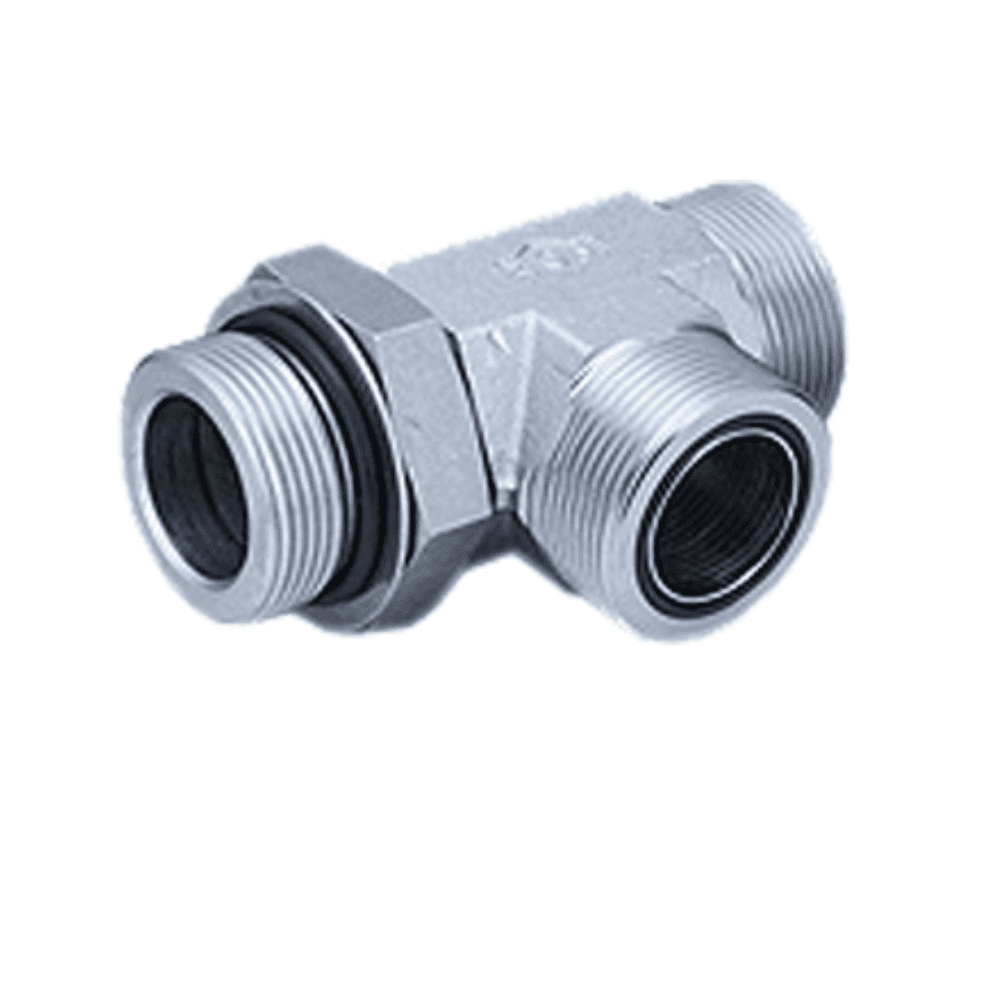
Adjustable Run Tee, Male ORFS × ORFS × SAE ORB
Indus Hydraulics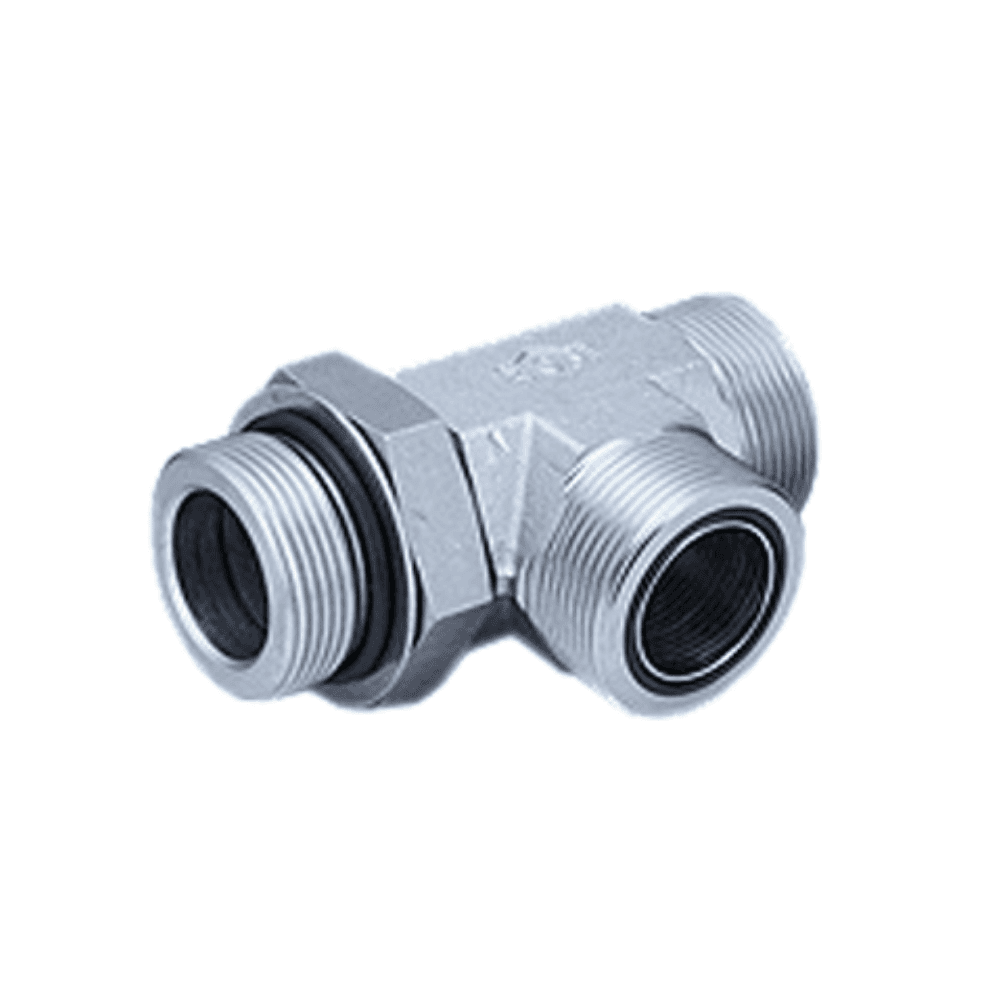
Adjustable Run Tee, Male ORFS × ORFS × Metric 24°
Indus Hydraulics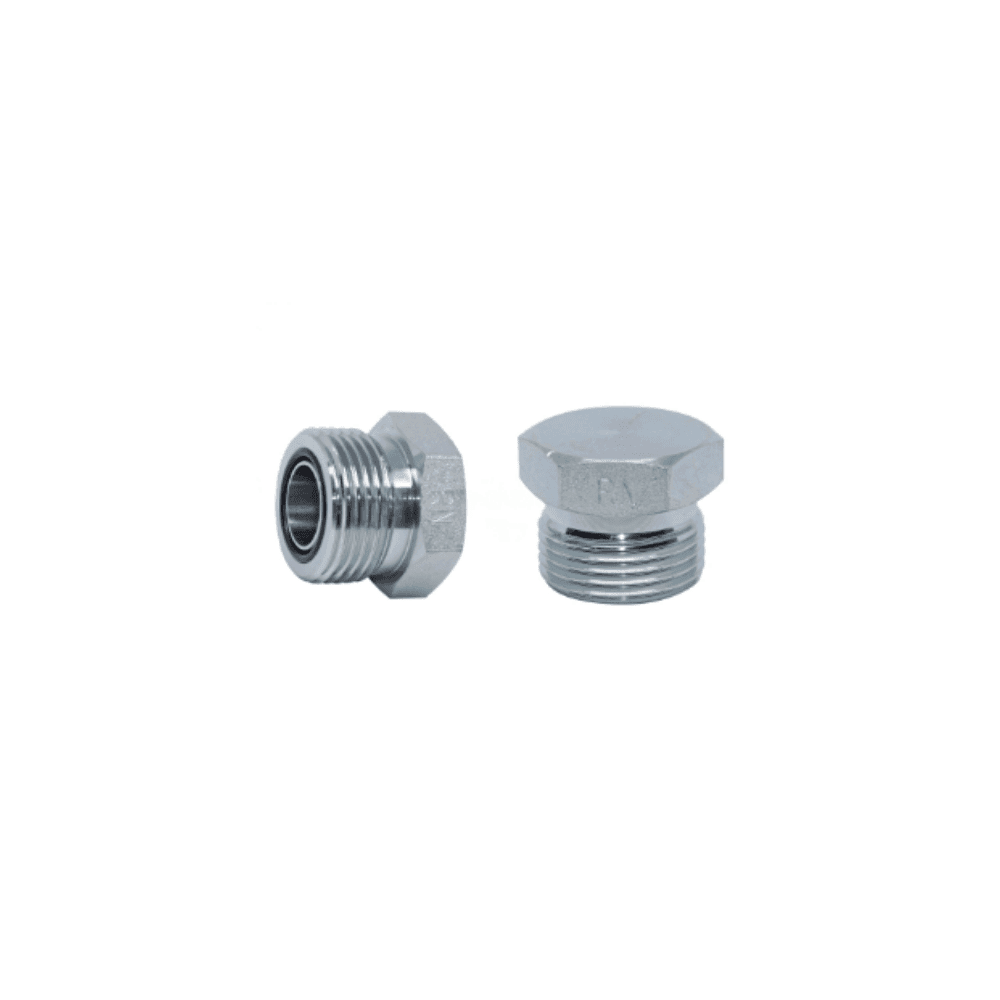
Plug ORFS
Indus Hydraulics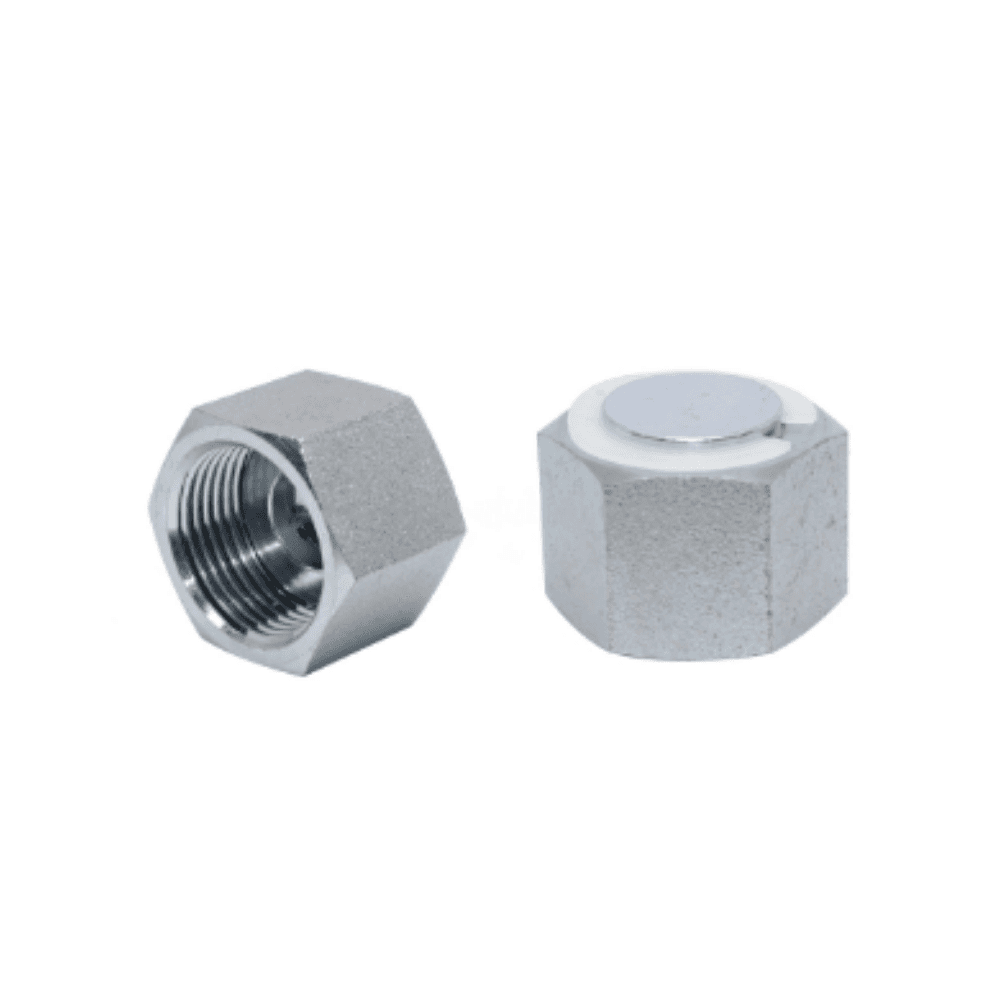
Swivel Cap ORFS
Indus Hydraulics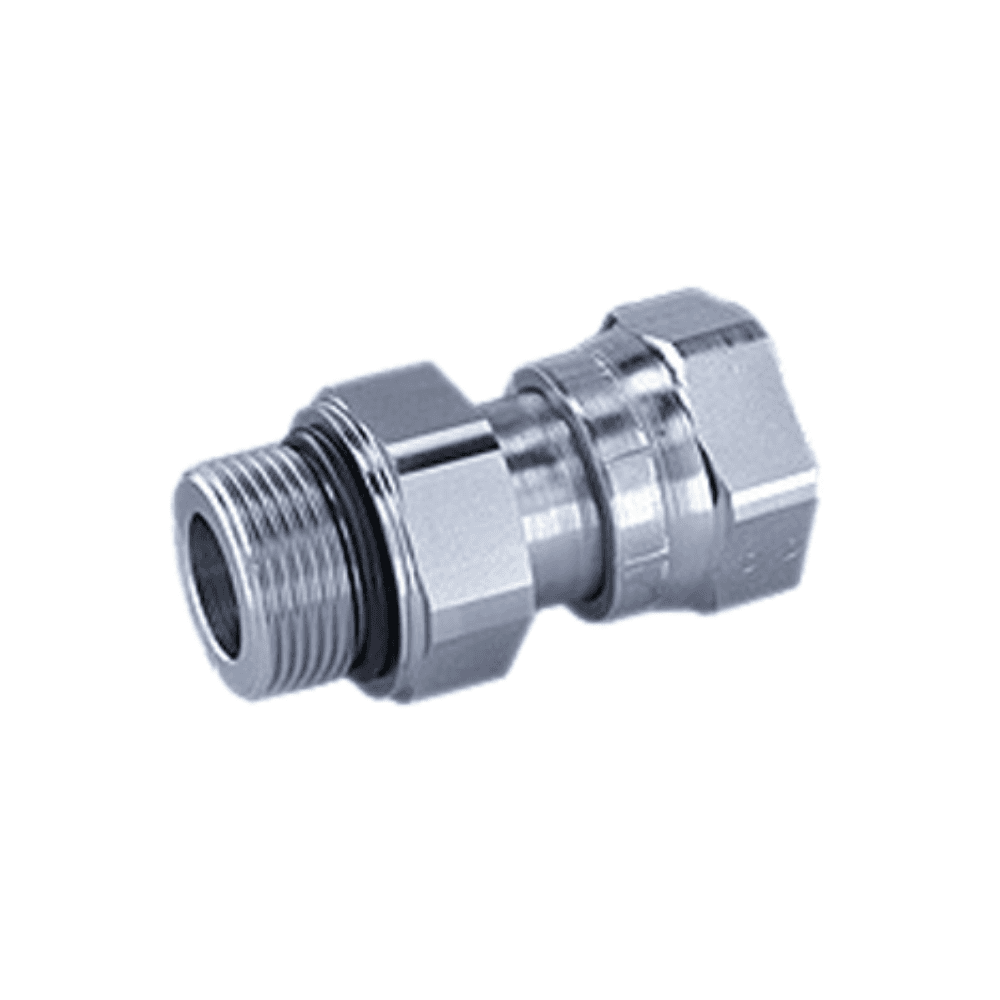
Male SAE ORB × Female ORFS Swivel Adapter
Indus Hydraulics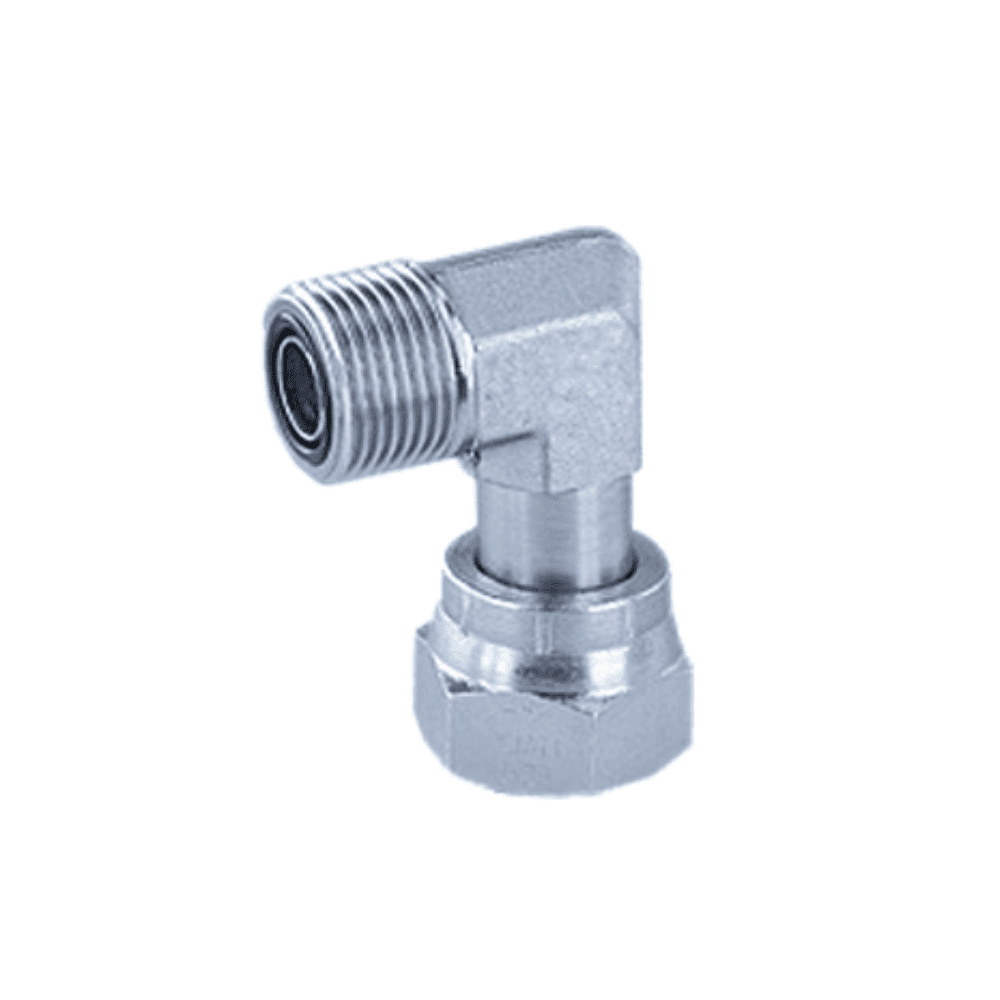
Male ORFS × Female ORFS Swivel 90° Elbow Adapter
Indus Hydraulics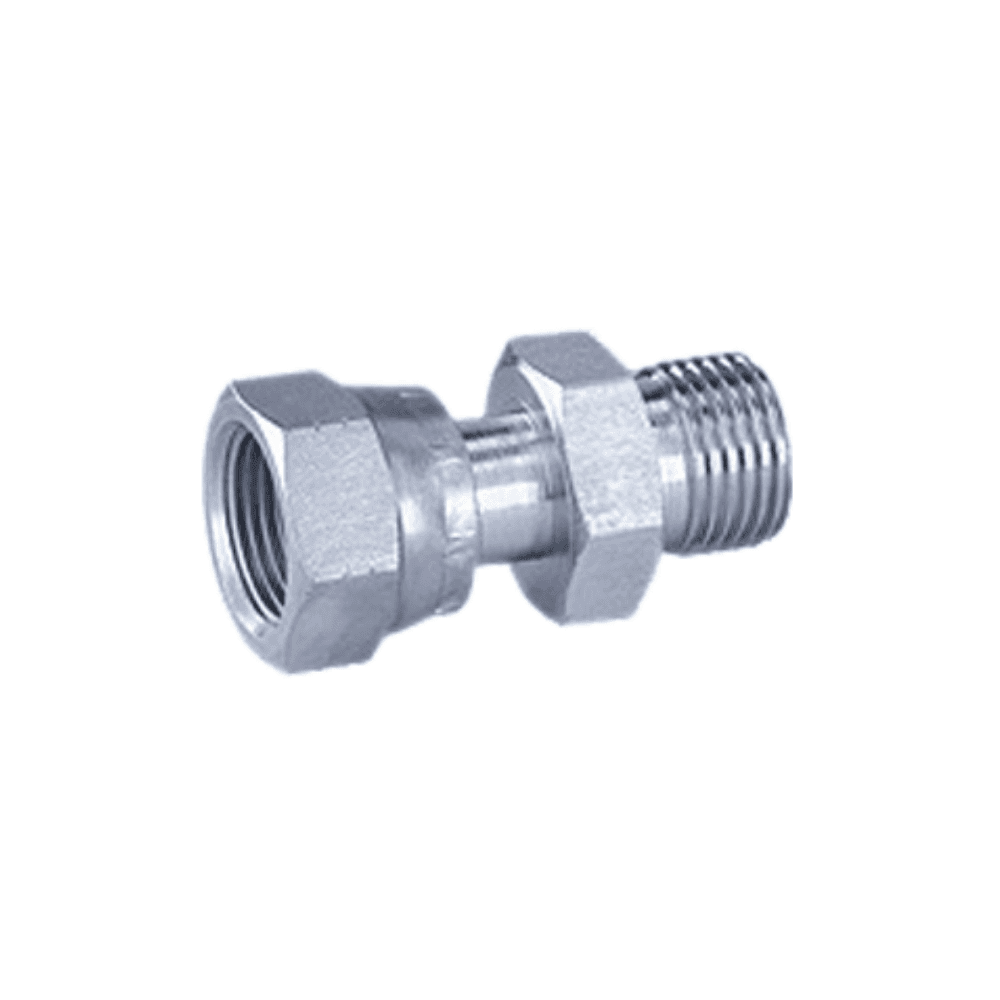
Male ORFS × Female ORFS Swivel Adapter
Indus Hydraulics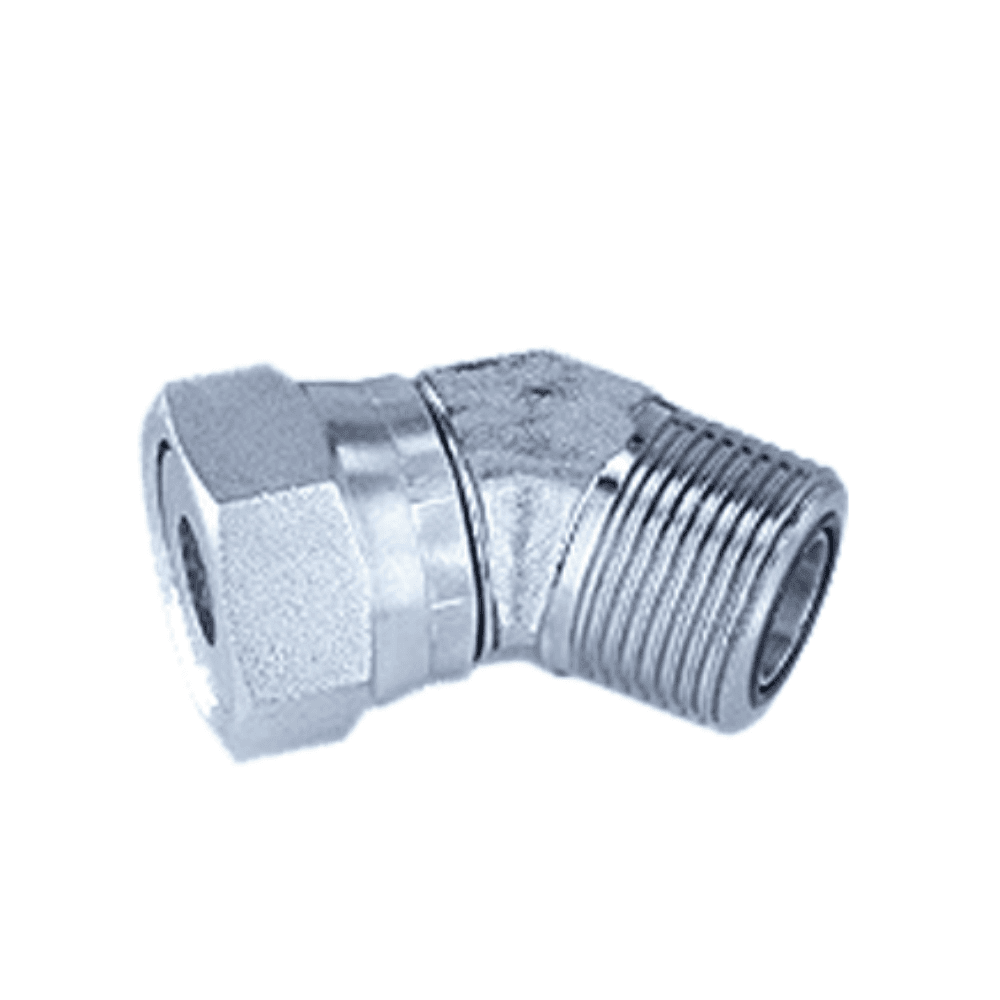
Male ORFS × Female ORFS Swivel 45° Elbow Adapter
Indus Hydraulics