
Parker T6C Vane Pump, 012 Cartridge, 37.1 cm³/rev
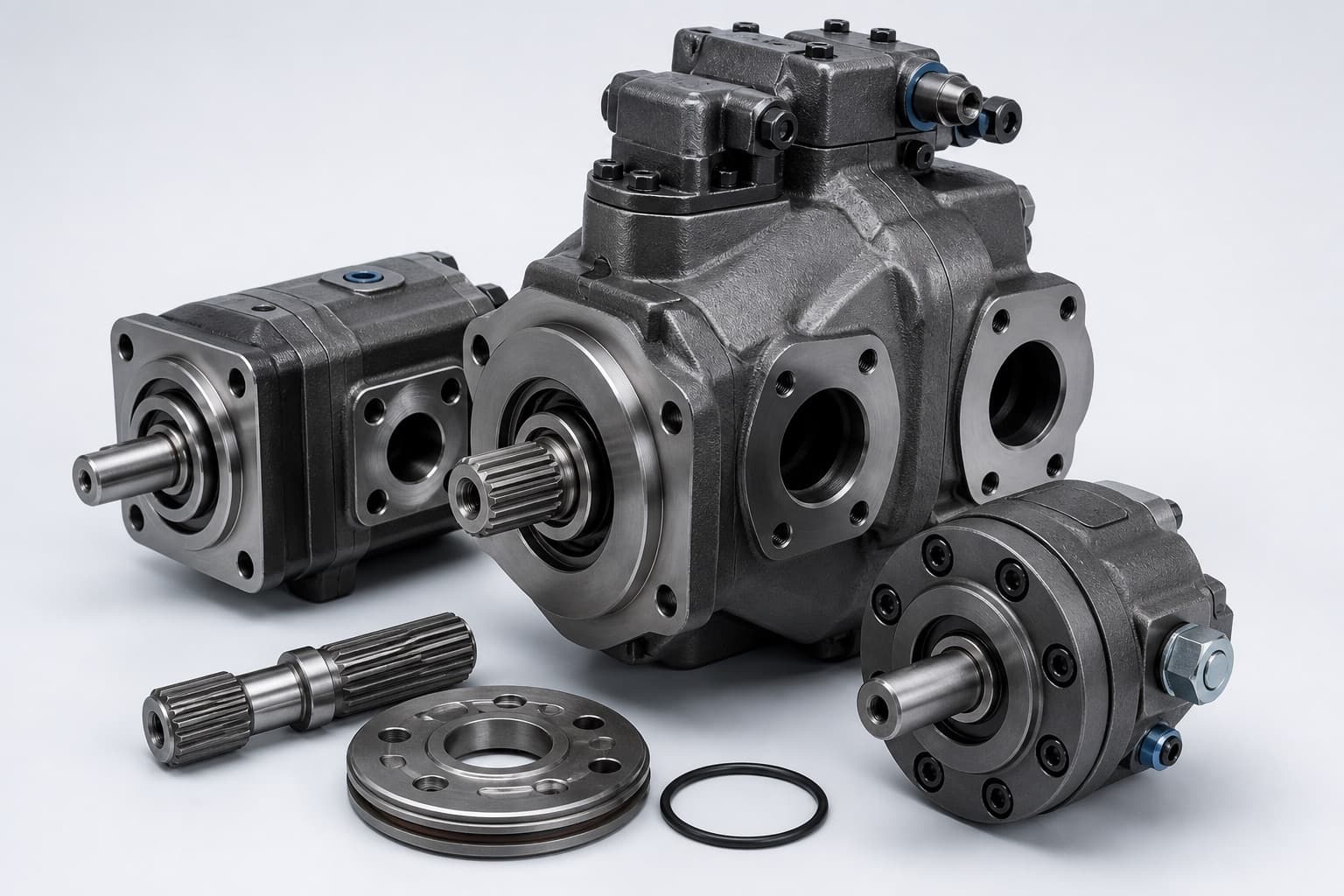 Category image · Hydraulic Pumps
Parker T6C-012-1R00-B1: a Denison-technology fixed-displacement single vane pump with the 012 cartridge, 37.1 cm³/rev, rated 275 bar intermittent and 240 bar continuous on antiwear oil, up to 2800 rpm. Supplied new.
Key features
- Displacement: 37.1 cm³/rev
- Pressure (peak): 275 bar
Product description
The Parker T6C is a fixed-displacement industrial vane pump from Parker's Denison-technology T7, T67 and T6 range, made in Vierzon, France. Its pumping parts sit in a replaceable cartridge, so the pump can be serviced or converted by changing the cartridge. The 012 cartridge displaces 37.1 cm³/rev — not 12 cm³, as this page used to say; Parker's current catalogue writes it B12.
The model code
- T6C — T6 single vane pump, C cartridge, SAE B two-bolt flange
- 012 — cartridge, 37.1 cm³/rev (B12 in current notation)
- 1 — keyed SAE B shaft, 22.2 mm
- R — clockwise rotation, viewed on the shaft end
- 00 — standard porting
- B — design letter
- 1 — S1 nitrile seals, for mineral oil
Ratings
- Pressure on antiwear mineral oil (HF-0, HF-2): 275 bar intermittent, 240 bar continuous
- On HF-1, water glycol (HF-4) and synthetic fluids (HF-5): 210 bar intermittent, 175 bar continuous; on invert emulsion (HF-3): 175 / 140 bar
- Speed: 600 to 2800 rpm on mineral oil; 1800 rpm on HF-3, HF-4 and HF-5
- Flow at 1500 rpm, 24 cSt: 55.6 L/min at 0 bar, 50.6 at 140 bar, 47.1 at 240 bar
- Input power at 1500 rpm: 14.4 kW at 140 bar, 24.1 kW at 240 bar
- Ports: suction 1 1/2 in, pressure 1 in, SAE J518 four-bolt flanges
- Weight: 15.7 kg
Single pump, not thru-drive
The plain T6C is a single pump with no rear drive. For tandem arrangements Parker sells the separate T6*R thru-drive series, with SAE A, B or C rear drives.
Ordering
Quote T6C-012-1R00-B1 or its current form T6C-B12-1R00-B1, or the code on your pump's nameplate if the shaft, rotation, porting or seals differ. We supply new pumps and confirm lead time on the quotation.
Hydraulic
| Parameter | Value |
|---|---|
| Displacement | 37.1 cm³/rev |
| Pressure (peak) | 275 bar |
| Speed (max) | 2800 rpm |
| Pump type | Vane, fixed displacement, single |
| Continuous pressure | 240 bar |
| Flow at 1500 rpm, 0 bar | 55.6 L/min |
Mechanical
| Parameter | Value |
|---|---|
| Mounting | SAE B two-bolt flange (SAE J744) |
| Rotation | Clockwise (R) |
| Weight | 15.7 kg |
| Shaft | Keyed SAE B, 22.2 mm |
| Seals | S1 nitrile (mineral oil) |
Shipping & lead time
What is the Parker T6C-012 vane pump with the 012 cartridge used for?▾
How do I read the model code T6C-012-1R00-B1 on this Parker pump?▾
Is the Parker T6C 012 cartridge a 12 cm³ pump?▾
What pressure is the Parker T6C-012 vane pump rated for?▾
How fast can the Parker T6C-012 vane pump run?▾
Which fluids and seals suit the Parker T6C-012 vane pump?▾
What are the port and flange sizes on the Parker T6C-012?▾
Can a second pump be driven from the Parker T6C-012?▾
How is the Parker T6C-012 vane pump serviced?▾
How does the Parker T6C-012 compare with the Parker T7B-B09 vane pump?▾
Where is the Parker T6C vane pump made?▾
Is the Parker T6C-012 vane pump in stock in Dubai?▾
Shipped worldwide from our Dubai warehouse. Transit, routes and documentation for 136 destinations
From the blog
Written about this part
Cylinders, pumps & motors
How to size a hydraulic pump: flow, pressure, drive power and the inlet nobody checks
A pump is sized by the flow the actuators need and the power the drive can give it, and it fails most often on the suction side. The formulas in litres and gallons, worked examples for electric motors, engines and PTOs, line sizing, and the checks that decide whether a pump lasts five years or five weeks.
13 min read
Cylinders, pumps & motors
Vane pumps explained: Vickers V10 and V20, double pumps, Denison T6 and T7, and reading the model code
Balanced vane pumps are quiet, compact and rebuilt by swapping a cartridge rather than the pump. How they work, the full Vickers V10 and V20 ring table with pressures and speeds, how to decode a V-series model number, changing rotation, double pumps, and where the Parker T6 and T7 families take over.
10 min read
Engineers viewing this also looked at
- Parker T7B Vane Pump, B09 Cartridge, 28.0 cm³/rev
Parker T7B Vane Pump, B09 Cartridge, 28.0 cm³/rev
Parker Hannifin 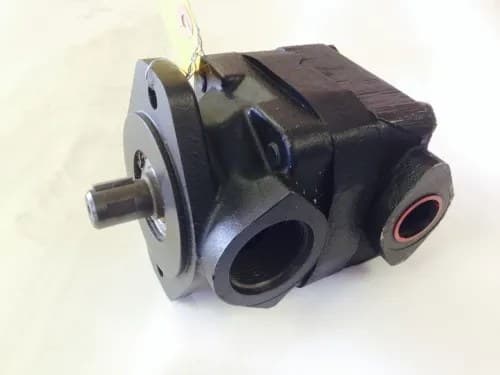
Vickers V10 and V20 Vane Pumps
Vickers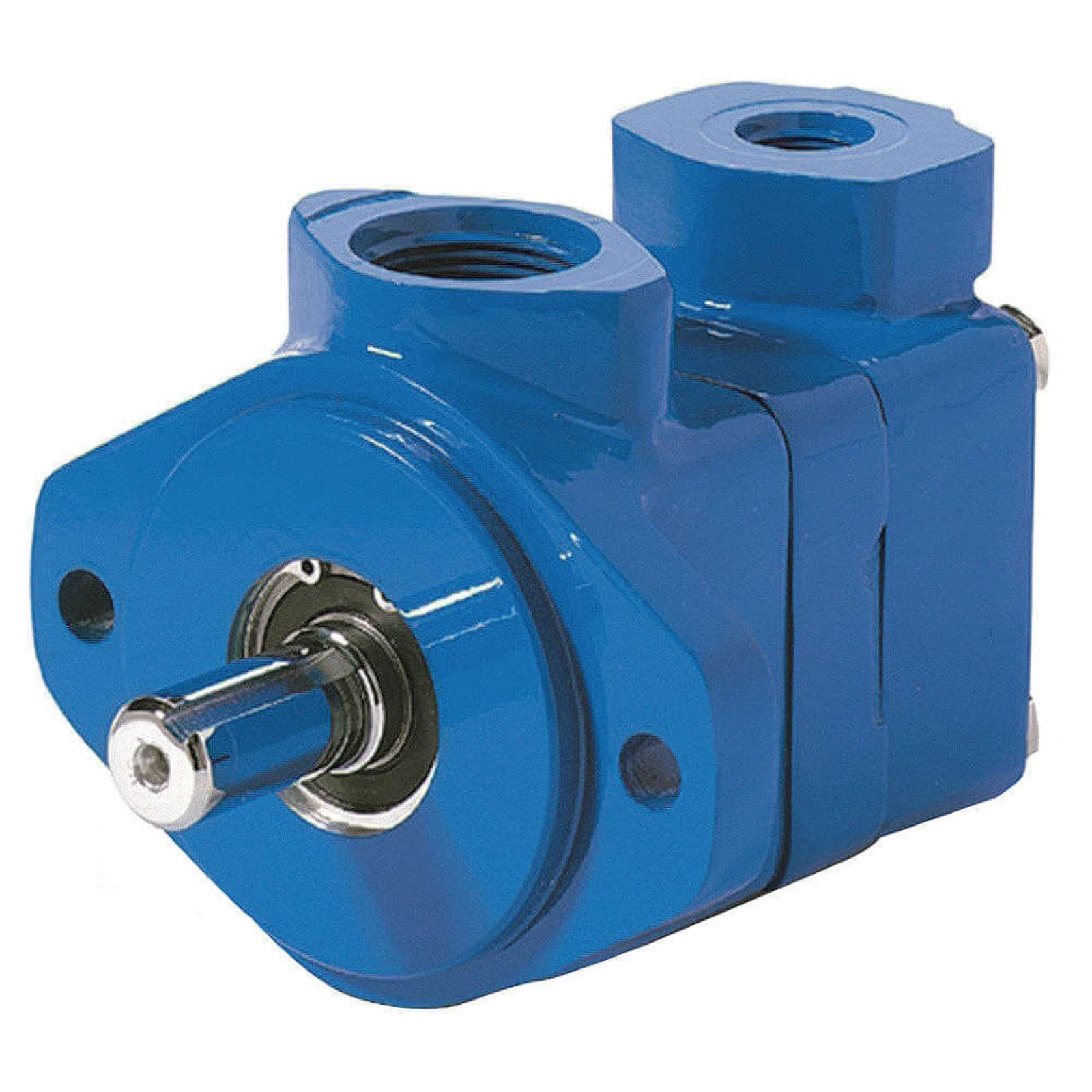
Vickers Fixed Displacement Double Vane Pumps
Vickers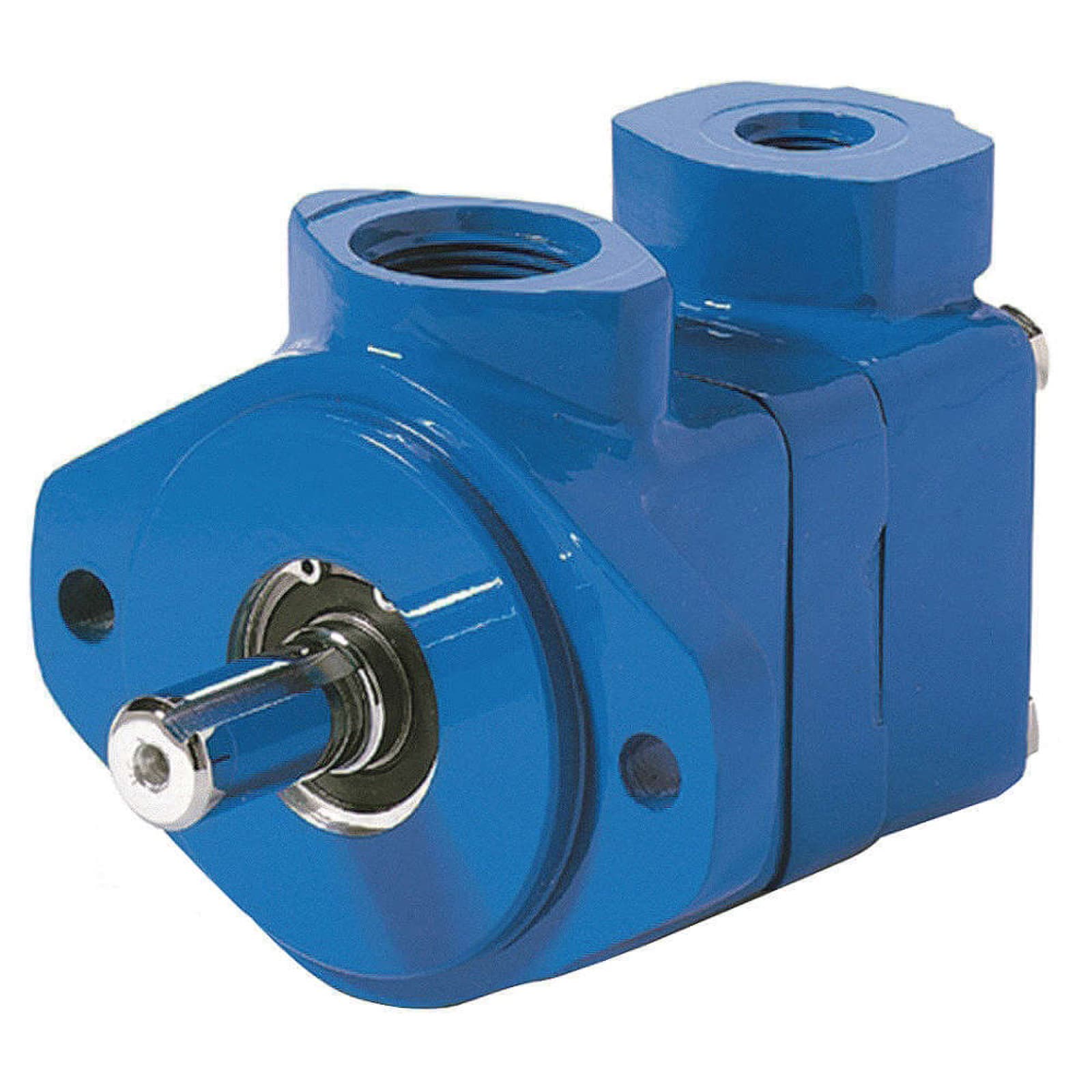
Vickers Fixed Displacement Single Vane Pumps
Vickers- Vickers Single Unit Thru-Drive Vane Pumps
Vickers Single Unit Thru-Drive Vane Pumps
Vickers 
Fluidyne V10 Vane Pumps, 13.1 cm³/rev
Fluidyne
Fluidyne V10 Vane Pumps, 16.4 cm³/rev
Fluidyne
Fluidyne V10 Vane Pumps, 19.5 cm³/rev
Fluidyne